Opossums live short, difficult lives, yet they spend their nights doing work many people never see.
Most only live about one to two years in the wild. They move through backyards, forests, roadsides, and neighborhoods after dark, searching for food while avoiding cars, dogs, predators, and harsh weather. Their lives are brief, but their role in nature is meaningful.
Opossums help clean the world around you. They eat pests, insects, carrion, and sometimes even venomous snakes. They also help reduce ticks, which can carry disease. In their quiet way, they support the balance of the places they pass through.
Still, many people fear them because of how they look or because they appear at night. But opossums are usually shy, gentle animals. When scared, they often freeze, hiss, drool, or play dead because they want to survive, not attack.
Kindness can be simple. Give them space. Do not harm them. Slow down when you see one near the road. Let them keep doing the work nature gave them.
Opossums may not live long, but they leave the world cleaner than they found it.
One of the greatest Kennedy Center Honors performances ever: Ann and Nancy Wilson of Heart, Jason Bonham on drums, and Shane Fontayne on electric guitar. It moved Robert Plant to tears as he watched alongside Jimmy Page and John Paul Jones.
Don't harm opossums! They’re harmless and actually really useful. They keep pests in check (eating ticks, roaches, rats, and scorpions), clean up dead animals, and help spread seeds. Basically, they’re nature’s cleanup crew
Stop feeding squirrels corn.
Squirrels need a calcium-to-phosphorus ratio of about 2:1 in their diet. Corn has the opposite. So do peanuts and sunflower seeds.
When a squirrel eats mostly corn, its body pulls calcium from its bones to keep blood chemistry stable. The result is Metabolic Bone Disease: soft bones, fractures, weakness, paralysis, seizures, death. It's slow and it's painful.
Wildlife rehabilitators see it constantly in young squirrels raised in yards with reliable corn feeders.
Improperly stored or buried corn also grows Aspergillus mold, which produces aflatoxins. Squirrels didn't evolve with corn and don't instinctively avoid the mold. One bad cob can cause acute liver failure.
If you want to feed squirrels, the right food is acorns, hickory nuts, walnuts in the shell, or apple and squash pieces.
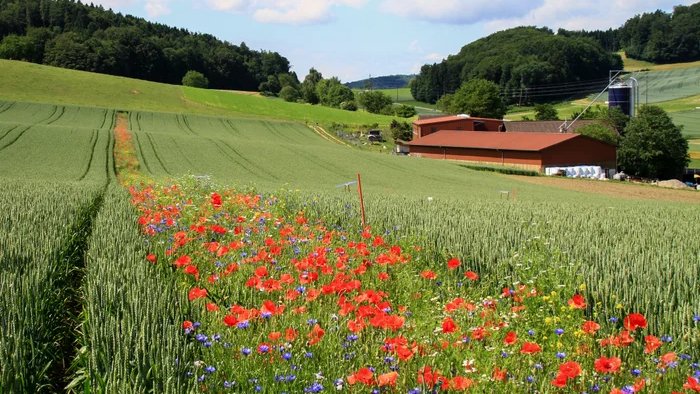
Farmers have figured out that the cheapest pesticide is a strip of flowers.
When you plant wildflowers through a crop field, not just around the edge but in strips running through the middle, you get ladybugs, lacewings, hoverflies, and parasitic wasps living in the field instead of visiting it.
They eat the aphids, the caterpillars, and the mites for free, all summer long.
In controlled trials, fields with tailored flower strips had leaf-beetle numbers 40 to 50% lower and crop damage cut by around 60%, enough to drop below the threshold where spraying was even considered worth it.
The flowers attract a standing army to our fields.
We spent decades engineering chemicals to kill the insects eating the crop, when the insects that eat those insects would have worked for the price of seed.
My heart melted here🥹😭
An dog adoption event was happening in Ohio where many people came to see the dogs.
There was an old man, 71-year-old Gerald, who also attended the event, but he was sitting far away in a chair.
His wife had passed away some time ago; a few days later, his dog also died.
Gerald, with a heavy heart, told a volunteer, "I don’t know why I came here; I just know that I can't bear the loneliness at home."
He just sat on a bench and was watching the people and the dogs with them.
After a while, a 3-year-old Blue Heeler dog named "Hank" was brought into the room, who was looking good and often didn’t go near anyone.
Hank ignored everyone who was standing near him in the room and walked over to Gerald, who was sitting on the bench.
He stopped next to him and sat down by his feet, as if he had found his person.
When Gerald saw him doing this, he became sad and started crying, and Hank was right there with him.
A little while before the event ended, Gerald adopted Hank.
The next morning, we received a message from Gerald, stating that Hank slept with him all night.
He mentioned that it was the first time in the last four months that he slept peacefully at night.
Please Be Kind To Moles.
They are beneficial to soil health, acting as natural aerators and pest control by consuming lawn-damaging grubs, beetles, and larvae.
They do not eat plants, and their removal often leads to new moles occupying the vacant tunnel system, making it a futile effort.
Apart from that, it is CRUEL!
Opossums are among the most unfairly maligned animals in North America. Their nocturnal habits, hissing, and toothy displays often lead people to view them as pests or threats. In reality, these quiet marsupials provide some of the most valuable services in urban and suburban ecosystems.
Contrary to popular belief, opossums very rarely carry or transmit rabies. Their lower body temperature makes it difficult for the virus to survive, making cases extremely uncommon.
They are also highly effective pest controllers. A single opossum can consume thousands of ticks per season, helping reduce the spread of dangerous tick-borne illnesses like Lyme disease. Beyond ticks, they act as nature’s sanitation workers, scavenging on carrion, insects, fallen fruit, and organic waste. This cleanup work helps limit bacteria and disease while keeping ecosystems balanced.
Their dramatic defensive displays, hissing, baring teeth, and even “playing dead” with a foul odor, are mostly bluffs designed to deter predators rather than signs of aggression.
Far from being a nuisance, opossums are beneficial neighbors quietly doing the dirty work that keeps our environment cleaner and healthier. The next time you spot one, there’s no need to fear or harm it, just let it continue its important nighttime duties.
Don't harm opossums! They’re harmless and actually really useful. They keep pests in check (eating ticks, roaches, rats, and scorpions), clean up dead animals, and help spread seeds. Basically, they’re nature’s cleanup crew
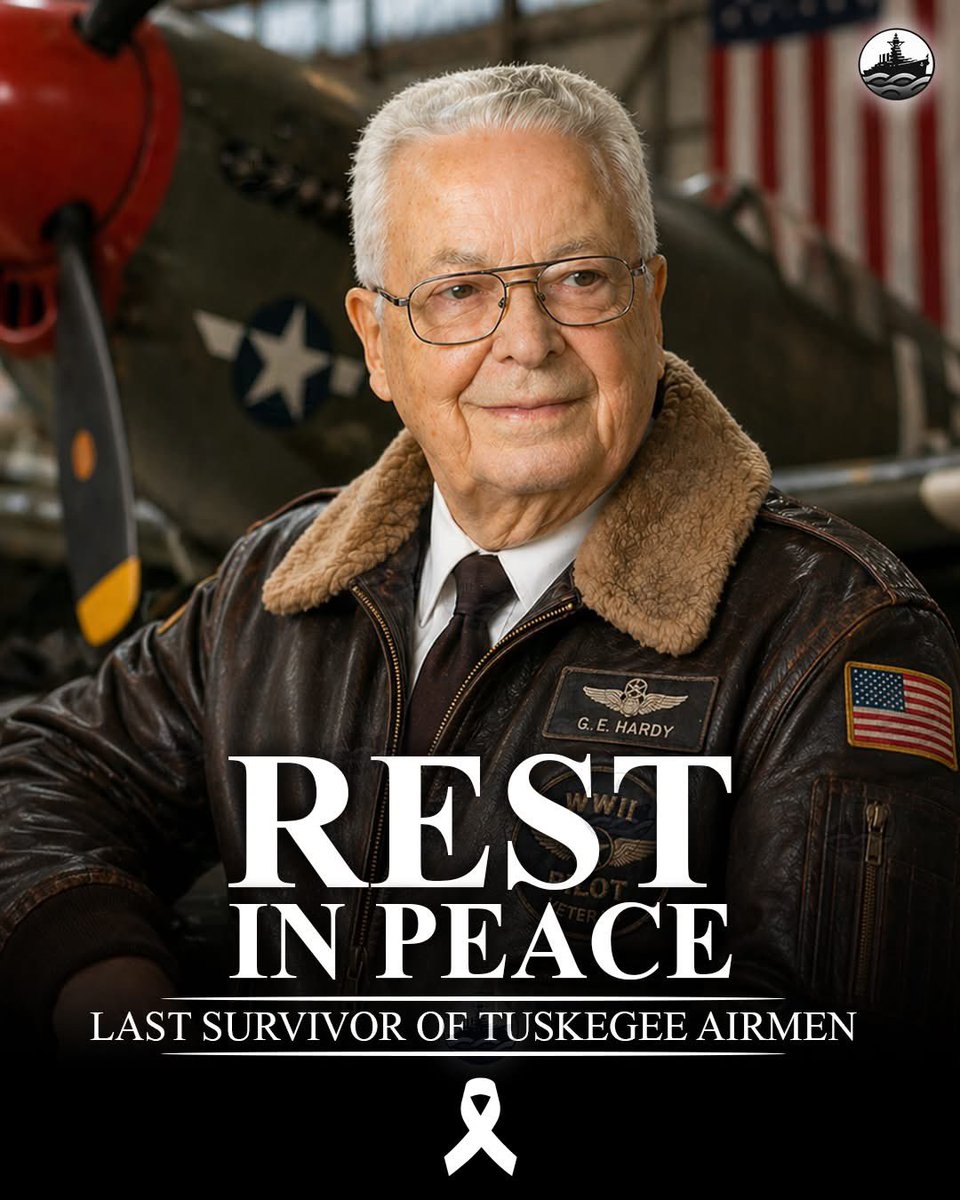
With deep sorrow, we say farewell to one of the final sentinels of the Tuskegee Airmen. George E. Hardy, who once danced across the skies of Europe in his Mustang has taken his final flight at the age of 100. Leaving behind a legacy forged in courage, resilience, and unwavering dignity.
It began in a quiet room in Philadelphia. A 16-year-old boy hunched over his homework as the radio crackled with the news of Pearl Harbor. In that instant, the world fractured, and George’s childhood evaporated. He didn't wait for history to call; he went to meet it.
Denied entry because of the color of his skin, he didn't retreat. He leaned into the wind. He joined the U.S. Army Air Forces, arriving at Tuskegee not just to learn the mechanics of flight, but to dismantle the mechanics of prejudice.
By 19, George was a "Red Tail," a guardian of the clouds. While the world below was segregated, the flak in the European theater was indifferent. He flew 21 combat missions over Nazi-occupied territory, a teenager in a cockpit proving that valor has no pedigree.
Most men would have seen enough of war. George was not most men.
- World War II: 21 combat missions in the P-51 Mustang.
- Korea: 45 combat missions, braving the dawn of the jet age.
- Vietnam: 70 combat missions, a veteran hand guiding a new generation.
For nearly thirty years, he wore the uniform of a country that didn't always love him back, yet he protected it with a devotion that shames the very idea of hate.
When he finally climbed out of the cockpit, he didn't stop serving. As a Lieutenant Colonel, he helped architect the military’s first global communication systems. He spent his sunset years ensuring that those who followed him would never be out of reach, never be truly alone in the dark.
"He rose above the clouds so we could finally see the light."
Today, we don't just salute a pilot. We salute a man who endured the sting of Jim Crow to earn the silver wings of a hero. He was the quiet defiance in the face of "no," the steady hand in the cockpit, and the humble heart in the room.
The "Red Tails" are thinning now, their formation heading into the eternal sunset. But as George E. Hardy crosses the ultimate horizon, he leaves behind a legacy etched not in ink, but in the very air we breathe.
Rest well, Colonel. The watch is ours. The sky is yours.
When we seem to be sinking, overcome by adverse forces, when everything appears bleak and we feel alone and weak, Jesus is always with us, stronger than any power of evil. In every storm, He comes to us and repeats: “I am here with you: do not be afraid.” With Him, we can get up after every fall and not allow ourselves to be stopped by any tempest. We therefore advance with courage and trust. #ApostolicJourney #Cameroon https://t.co/ANgV1LQAjr
MY SON, GEOLOGIST DANIEL ROBINSON, WENT MISSING IN THE SONORAN DESERT OF ARIZONA. I AM STILL SEARCHING FOR HIM. IF YOU HAVE ANY INFORMATION TO HELP BRING HIM HOME, CONTACT 803.200.7994 OR TIPLINE: 844.602.0660. YOU CAN REMAIN ANONYMOUS. I WON'T STOP! THANKS FOR YOUR SUPPORT!
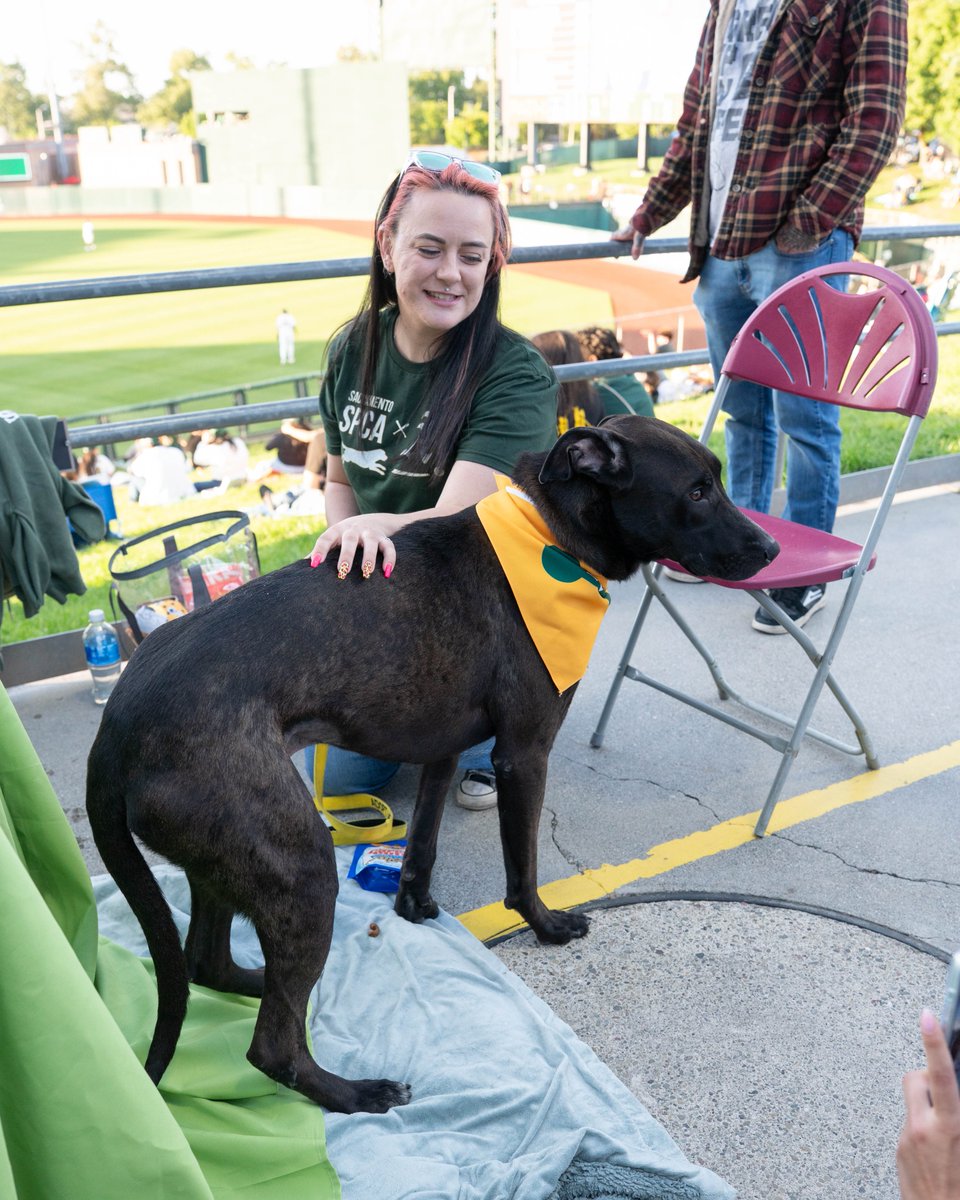
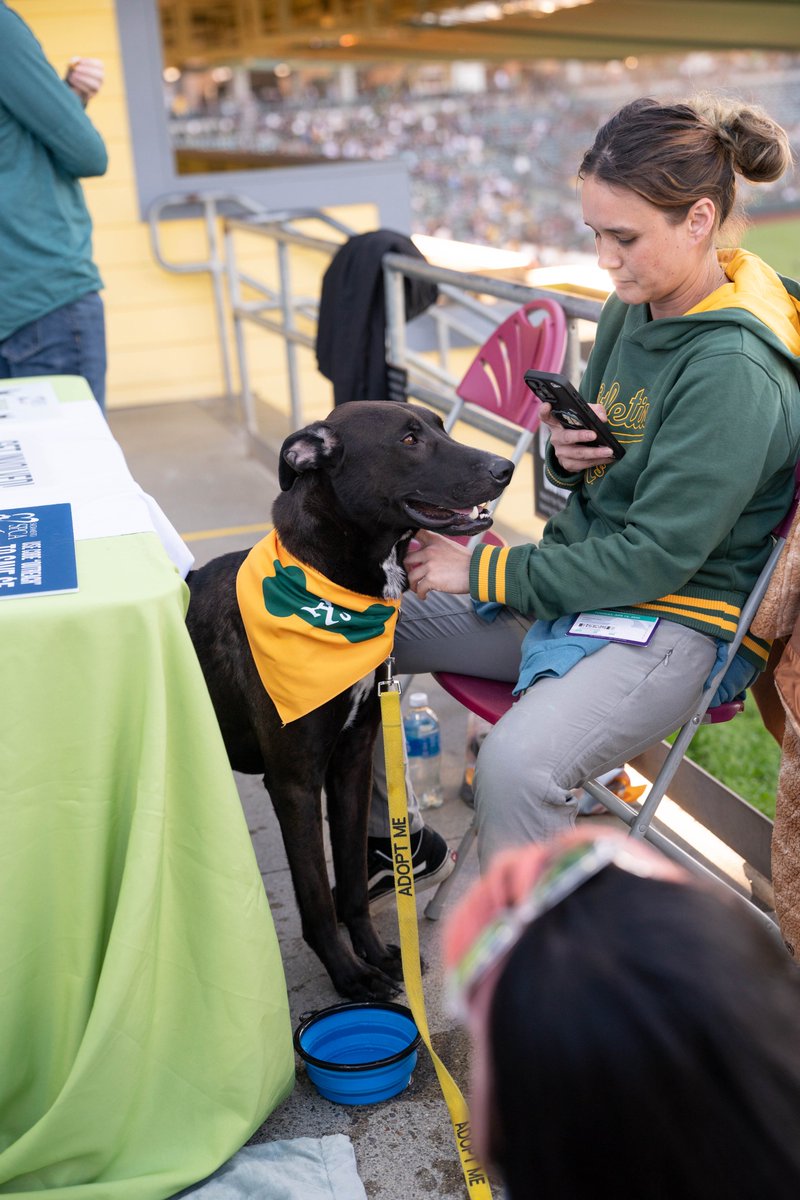
It's dog adoption day at the ballpark!!
Every home Tuesday in Sac we will be partnering with the @SacramentoSPCA to highlight a new pup in need of a home!
All adoption fees will be covered by the A's and any person who chooses to adopt will also receive two tickets to a future game 🐾
Hello everyone! It's been a while since we've posted on "X." We became discouraged no one seemed to want to help us feed & care for rescued horses anymore. We can't just turn our backs on them, they rely on us. Every dollar helps. Will you please? https://t.co/9NoR8lhaRU
#help
Lately, it’s become so much harder to reach people—and that’s been weighing heavily on us, because it directly affects the horses in our care.
Every post that isn’t seen… every story that doesn’t reach someone… it all adds up in a very real way here at Unbridled Spirits Thoroughbred Retirement Ranch.
Because for us, this isn’t about numbers or engagement—it’s about feed buckets.
It’s about making sure every horse gets their hay in the morning… their grain at night… and the specialized care that so many of them need after everything they’ve been through.
These horses came to us after their racing careers ended—some injured, some neglected, some simply forgotten. Here, they finally have safety, dignity, and a chance to just be horses again.
But that care depends entirely on support. This is where the GAP or lack of funding from horse racing, and breeding does not funnel into our USTRR Aftercare ~ which is challenging.
When fewer people see our posts, fewer people are able to help. And when that happens, we feel it immediately—in rising feed costs, in vet bills, in the daily effort to make sure no horse goes without.
We will always fight for them. That will never change.
But right now, we need help making sure their feed bins stay full and their care continues without compromise.
If you’ve ever believed in second chances… if you’ve ever looked into a horse’s eyes and felt that connection… please help us keep going.
Even sharing this post makes a difference. Or clicking on our donate button, makes a tremendous difference.
Because to them, it means another day of being safe, fed, and loved. ❤️
#unbridledspiritsthoroughbredretirementranch
#CompassionateCaregiving
#thoroughbredaftercare
#501c3nonprofitorganization
#14yearsstrong
#sanctuarylife