@GreekAnalyst The main barrier to entry in this sector is the insufferable, enormous amount of regulation. It makes sense when people's money is at stake, but it's a double-edged sword.
Agree for the 12-13 era. This is the only possible rational explanation. As for today, the competition on this sector might trigger changes. Revolut already has 2M customers and is expanding heavily. GenZ ages and below are the catalyst for this.
However key banking domains like corporate and lending are still heavily controlled by big4. This changes as well with Revolut for Business.
All in all, change is coming but is slow and it can't come by only one player.
These days, I'm deep in the hiring process for our open positions: https://t.co/AvqRvKYkMp
Want to guess how many applicants took the time to tailor their CVs to the specific role?
About 2 out of 100! 😳
There is no "one size fits all" CV.
Please invest some time and thought into tailoring your CV so that it answers, very clearly, the single most important question:
WHY ARE YOU A GOOD FIT FOR THIS ROLE?
Make it easy for the hiring manager to see the connection between your experience and what the position requires.
My surveillance Hard Disk fell dead yesterday so I searched for a new one. Last time I bought one it was about 70 euros.... Well not anymore.
Price evolution of a WD purple 2TB:
Source: @skroutzit
Comment: ouch!!
Do we still need Jira and Linear when AI agents write most of the code?
A small observation from the field. In teams that build with AI agents, the classic ticket is quietly turning into a short written description of intent. What problem are we solving, for whom, under which constraints, with which open questions. It lives next to the code, where the agent reads it directly.
So the tracker no longer has to hold the requirements. And some of its old rituals start to look odd. Estimating story points for work that now takes an afternoon is a bit like measuring a sprint with a calendar.
But let's not rule them out yet. The biggest job left is coordination. When five developers each run a few agents, a team suddenly has fifteen workers moving at once. Someone has to make sure they are not building the same thing twice, stepping on each other's code, or finishing pieces in the wrong order. More hands make coordination harder, not easier.
And the rest has not gone away either. Someone still has to decide what is worth building. Requests still arrive from customers, support and sales. Leadership still wants a roadmap rather than a commit history.
My diagnosis: project management tools will not disappear. They will get lighter. Less a place to describe the work, more a place to choose it.
Curious whether your team sees the same thing.
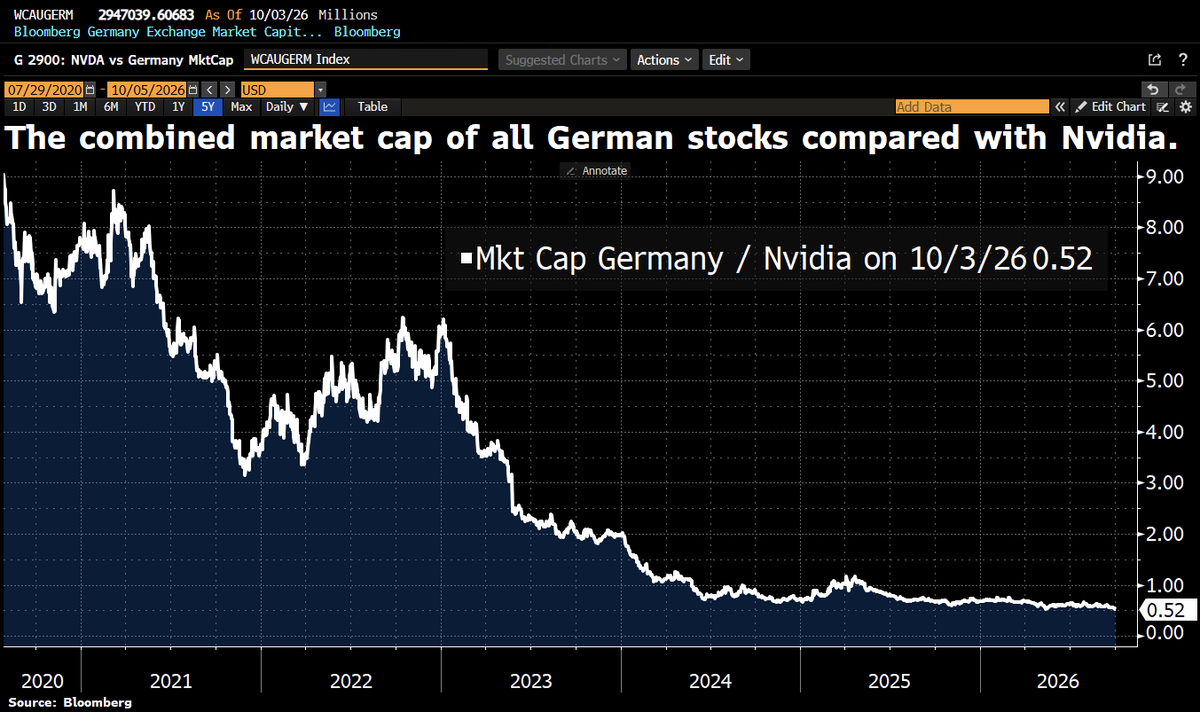
Good Morning from #Germany, where all listed stocks combined are now worth just 52% of Nvidia, a fresh relative low, down from roughly 9 times in 2020. All German stocks combined are worth <$3tn, vs $5.64tn for Nvidia alone. Germany’s stock market is missing the AI dream.
Where does money invested into the AI buildout actually go?
For every $100 flowing into the supply chain:
- $50 to chips
- $20 to power
- $15 to networking
- $15 to cooling, buildings, and land
More charts in State of Markets II: https://t.co/MTaxKUxa2w
🦔Meta classified its AI data centers as "experimental pilot facilities" on its tax return. That let the Nvidia chips inside them qualify for the federal research tax credit. Meta's research credit savings went from $700 million in 2023 to $3.9 billion in 2025 and its federal tax bill dropped nearly 71%. Meta's $3.9 billion is over 10% of the entire federal research credit, claimed by one company. The facilities include a 5-gigawatt campus in Louisiana that cost above $50 billion. Meta's own reserve for potential IRS challenges grew 45% to $18.74 billion.
My Take
Meta is calling a $50 billion data center campus an experiment. The research credit was designed in the 1980s for companies that tried things that might not work. Meta used it to write off Nvidia GPUs by the tens of thousands in facilities that power Instagram, WhatsApp, and a commercial AI product with 2.8 million downloads. Tax experts called the classification "kind of wild" and they're right.
$3.9 billion in tax savings is a lot of money. That's money the Treasury didn't collect from a company worth $1.5 trillion. Meta's own filings show they know this might not hold up because they increased their IRS dispute reserve by 45% to $18.74 billion. If the IRS challenges it and wins, Meta owes billions in back taxes. If the IRS doesn't challenge it, every other hyperscaler files the same claim next year. Either way this reshapes how AI infrastructure gets taxed. Communities already fight data centers over noise, water, and property values. Now the tax code hands them a $3.9 billion subsidy on top of it.
Hedgie🤗
📣 We're hiring!
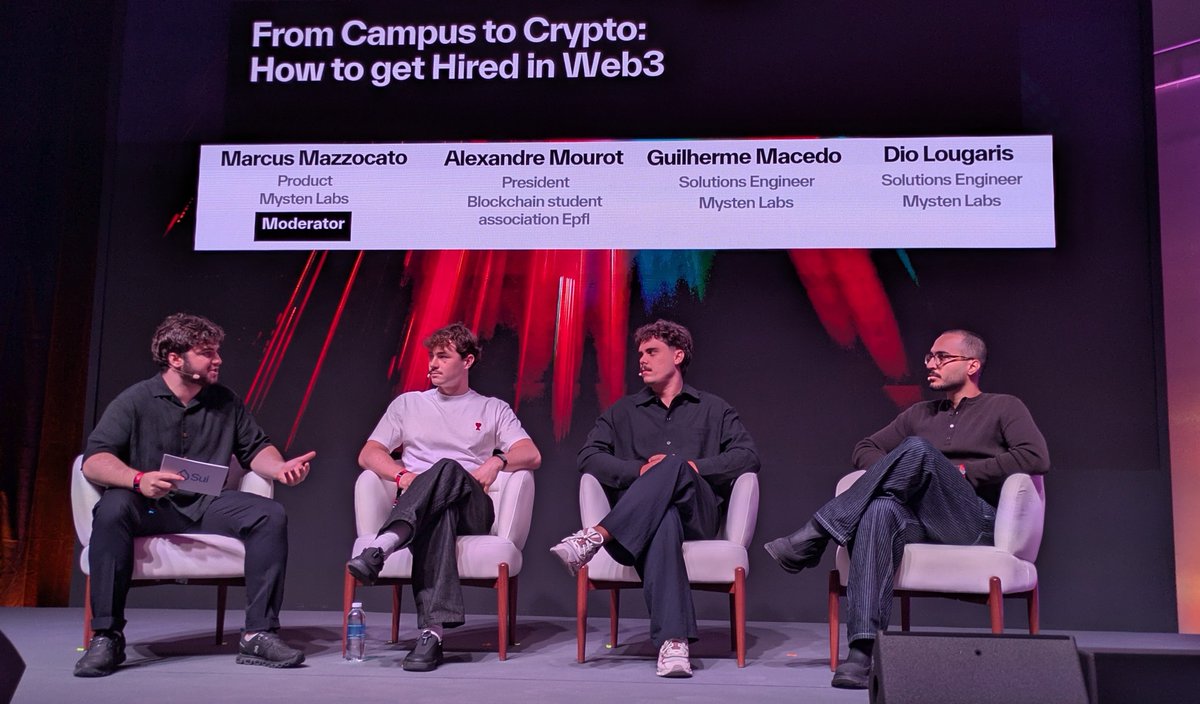
We’re growing the Solutions Engineering team at Mysten Labs and looking for a Software Engineer based in Greece 🇬🇷
Come build real world applications at the intersection of Sui, AI and modern software engineering.
Remote within Greece, with a preference for Athens or Thessaloniki.
Interested? Apply below 👇
https://t.co/AvqRvKYkMp
#Hiring #SoftwareEngineering #Sui #Greece
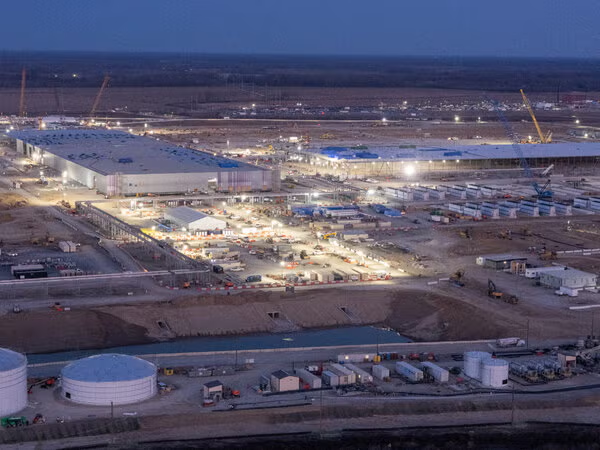
A 1 GW AI data center costs around $50 Billion to build.
Roughly 45% of that can go to NVIDIA GPUs alone.
That’s more than $20 billion in GPUs for a single data center.
Let that sink in for a moment.