Debian wants a piece of the gaming handheld market, which Fedora- and Arch-based distros have mostly had to themselves.
A new Debian Gaming Hardware Team will test Debian on devices like the Steam Deck, ASUS ROG Ally and Steam Machine, and track what works and what breaks.
Debian Maintainer Aryan Karamtoth, who started it, said gamers mostly use Bazzite, Nobara and CachyOS, and he "rarely" sees anybody talking about Debian for gaming.
The team plans to patch hardware issues, and maybe later build a Debian version that hardware makers could ship on handhelds. Anyone can join.
A new face in Middle-earth!
Anya Taylor-Joy plays Seren in The Lord of the Rings: The Hunt for Gollum. Some casting choices just feel right. This is one of them.
Here's my take on the character:
Came across this mixed reality clip and love the hand interactions!
Building a little house on a real table, then using your hands to defend it from a tiny army… circling a soldier with both hands to capture them is such a clever idea 👏
Hands-first MR on a tabletop has so much potential 🙌
💡 What's the most fun hand interaction you've seen in MR lately?
Omarchy v4.6.0 RC1 has been released! 🎉
Your coding agents can now run on local models, on your machine or across your tailnet. Plus Folio, Omaview, a rebuilt display panel, and plenty more.
Grab the ISO or hop on the RC channel and help us test!
https://t.co/se2DYO5dE2
The 1Password breach is the ultimate case study in why zero-knowledge client-side encryption matters:
Hackers compromised an employee GitHub account, penetrated internal CI/CD pipelines, exfiltrated source code, and even pushed malicious code into backend services.
Yet, customer vaults remained safe. Why? Because without your client-side Master Password + 128-bit Secret Key, a completely popped backend is just a pile of mathematically uncrackable ciphertext.
The crypto architecture held the line, but the supply-chain lesson is chilling: centralized password vaults will always remain the most targeted honeypots on the internet.
TSMC filed to build 25 miles from Elon Musk's fab.
In October, Musk said TSMC could only sublease space inside his Texas plant. TSMC chairman C.C. Wei refused to give up operational control.
Weeks later, TSMC crossed the county line and filed JETI application J0055 to build its own campus.
1. The memory squeeze forcing Musk's hand
On November 23, Musk confirmed Tesla's AI4 computer costs roughly doubled as global memory prices spiked.
Tesla cut planned AI4.5 memory by 25%, from 32GB down to 24GB per chip, while reserving AI5 for Optimus.
To escape supply bottlenecks, Tesla, SpaceX, and xAI are building Terafab in Grimes County, targeting $16.8 billion in Phase 1 and up to $119 billion through 2036.
Musk brought in Intel as a process partner with zero equity.
Intel Foundry lost $10.32 billion in 2025 and $1.85 billion to $1.9 billion in Q3 2026, so it needs a flagship customer more than ownership.
2. TSMC's Brazos County play
TSMC Arizona applied for a $22.6 billion Phase 1 fab on over 3,200 acres in College Station ISD, targeting 2,099 direct jobs averaging $133,000 a year.
It sits 20 to 25 miles west of Terafab, right next to Texas A&M engineering talent.
TSMC tied the project to a 10-year school property tax cap, using its July 2026 $265 billion Arizona commitment as leverage between two states.
3. Samsung's shrinking Texas buffer
Samsung committed $37 billion to its Taylor campus, anchored by a $16.5 billion Tesla AI6 deal through 2033.
TrendForce Q2 2026 data shows TSMC holds 72.5% of the global foundry market ($40.2 billion).
Samsung sits at 5.9% ($3.26 billion), just 0.5 points ahead of SMIC at 5.4%.
On November 25, Samsung shares fell 9.87% to 170,700 won in Seoul, while Intel dropped 8.15% to $54.80 and TSMC dipped 3.96% to $349.20 on November 24.
TSMC and Samsung are putting nearly $60 billion on the Texas table around Musk's $16.8 billion anchor, letting Tesla play all three foundries against each other.
The College Station school board holds its public hearing on December 10, with the governor's review window running through December 24.
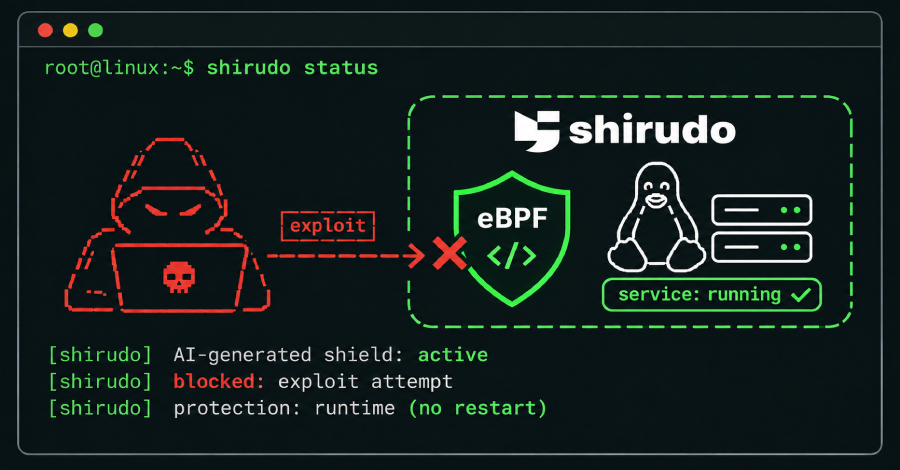
OpenAI y Cisco trabajaron juntos para crear Shirudo, una herramienta de código abierto de Linux que permite a agentes IA bloquear vulnerabilidades ANTES de que los parches se desplieguen, sin downtime.
O sea, si sale una vulnerabilidad y el parche todavia no existe (o todavia no tuviste tiempo de desplegarlo) podés bloquear la vulnerabilidad usando un mini parche a nivel eBPF para evitar que te ataquen y darte tiempo a parchar.
Estoy armando un video ahora de esto, con demo y todo.
https://t.co/VmPC6JPpFN
Our new engineering blog shares how we migrated the Claude Messages API from Python to Rust.
We share how we used the existing Python service to verify the migration, with teams of agents tracking down and fixing differences between the two versions.
https://t.co/mUti9MQ8wW
Steam is pitting its Game of the Year winners from the past 10 years against each other to find the ultimate champion.
- 2016 – Grand Theft Auto V
- 2017 – The Witcher 3: Wild Hunt
- 2018 – PUBG: Battlegrounds
- 2019 – Sekiro: Shadows Die Twice
- 2020 – Red Dead Redemption 2
- 2021 – Resident Evil Village
- 2022 – Elden Ring
- 2023 – Baldur’s Gate 3
- 2024 – Black Myth: Wukong
- 2025 – Hollow Knight: Silksong
Only one will be crowned the best game of the past decade.
Hoy en día el CGI lo resuelve todo a base de presupuesto, pero en 1997 Robert Zemeckis nos metió el mejor gol visual de la década usando una cámara, un espejo y mucha cabeza.
Fíjate bien en este plano de Contact. A simple vista no hay nada raro, una niña corre desesperada por un pasillo hacia el baño para buscar las medicinas de su padre mientras la cámara retrocede delante de ella.
El problema es que esa toma es físicamente imposible.
Cuando la mano entra en plano para abrir el botiquín, tu cerebro sufre un cortocircuito, todo lo que acababas de ver no estaba ocurriendo en el pasillo, sino dentro del reflejo del cristal.
Lo que más me fascina de esta escena no es el truco, sino la disciplina que exige engañar así al ojo sin un solo corte.
Tuvieron que rodar tres tomas distintas (la carrera con Steadicam, el baño con una pantalla azul en el armario y el reflejo inverso) y coserlas clavando al milímetro la velocidad de la cámara para que no hubiera saltos de escala.
Y aquí viene el detalle enfermizo que hace que esto aguante el paso del tiempo. En el microsegundo en que los dedos tocan el pomo del espejo, las capas chocaban. Tuvieron que reconstruir y animar sus dedos digitalmente fotograma a fotograma para que el contacto pareciera real.
Semanas de planificación matemática y retoques invisibles para apenas unos segundos de película que casi nadie del público notó. Ese nivel de obsesión es lo que echamos de menos hoy en el cine.