We’re announcing something new today: Motif - music that moves with your yoga class.
Instead of static playlists, the music follows the structure and energy of a class and adapts on the fly.
Have been doing some stem remixing work with Stable Audio 3.
📦 Medium model
🔉 init_audio holding the original audio file
😶🌫️ init_noise_level between 0.4-0.5 seems to be the sweet spot
🪄 Empty promps
i see ppl making chord generators with the
ableton extensions sdk
im making some everything generators with it
first up: stable audio 3
next up ace-step-1.5
I’ve been excited about many of the things we’ve shipped over the last year, across GitHub Copilot CLI, SDK, Cloud Agents, and more.
But I am even more excited about what we’re delivering now with the GitHub Copilot App.
This is the app that I use all day every day now.
It is, I believe, an ideal experience for anyone working on and around software engineering projects and wanting to work in the most agent-native way possible today.
A few of my favorite parts of the product in 🧵 below.
https://t.co/QxnYBermIU
Devin Desktop is our first product launch that’s fully agent-neutral. You can run your own custom background agents directly from the desktop app, Devin, or even Claude Code / Codex. Part of Cognition being the Independent Agent Lab is working well with all of the agents - excited to do more in this direction.
MiniMax M3’s frontend capabilities are pretty nice
very strong model for the price.
not lazy, thinks through the task (thinks a lot), and doesn’t just take the shortest path
M3 can reason between multiple design choices better than i expected
with the right skills around it, m3 seems strong model
will test backend tasks next.
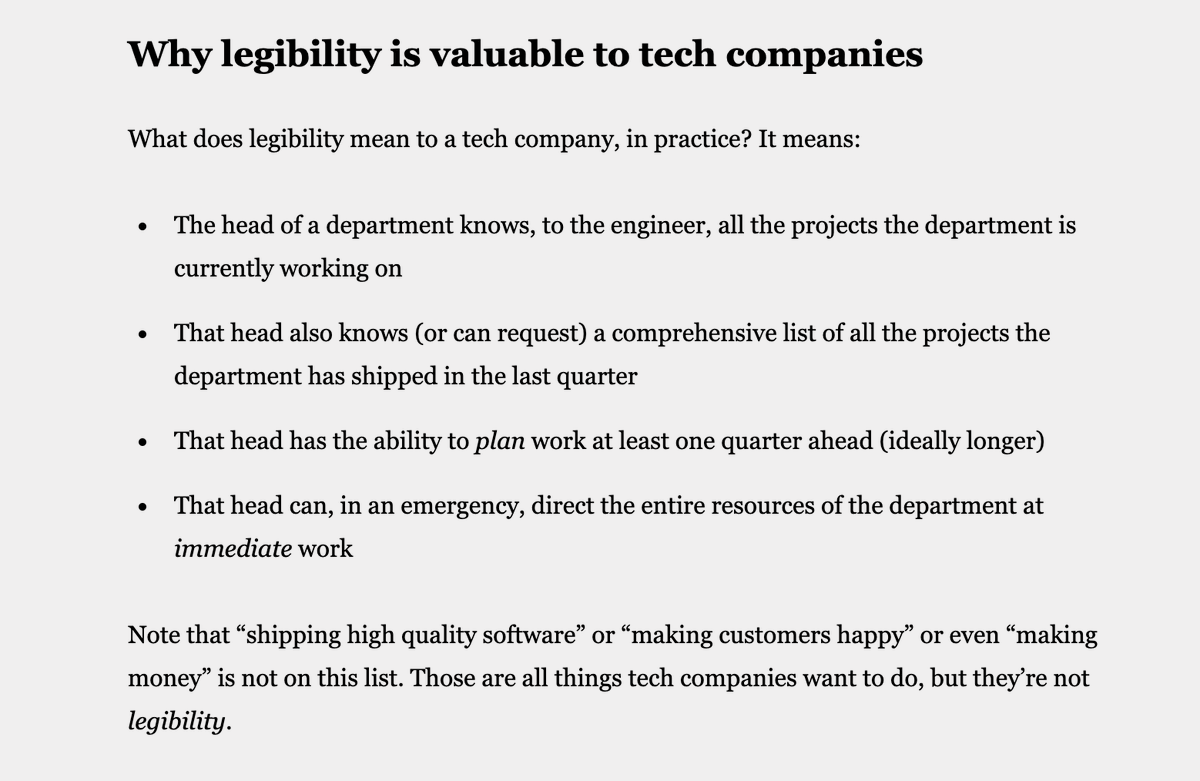
So many times I've felt the tension between "doing the actual work" and negotiating the superstructures you find yourself embedded in when "doing the actual work" needs to happen at scale. Understanding them for what they are is helpful.
"Typically, after a phase of random body babbling, the robot focuses on performing various kinds of actions toward objects, and then focuses on some objects with particular actions that it discovers are relevant for the object." Oydeyer et al.
Can a sentence carry a sound?
In Communicating Sound Through Natural Language, we introduce lexical acoustic coding (LAC): a way for LLM agents to transmit short sounds as structured English, then re-render the same audio back from that text.
(1/6)
it is both.
One property of this tool is that it can automate infinite images or sounds.
A property of the economy is that when something is abundant, its price falls. This makes whatever models can't supply (purpose, social connection and autonomous ingenuity - the human part) more scarce.
There is little anyone can do to prevent companies or anyone using closed or open models to flood the world with cheap images or music. That ship has sailed.
If all art or music were just pixels or samples, that would devalue them entirely.
But art and music is a lot more than pixels and samples, and some artists will use those same tools to make new and scarce things in a world where its effortless to make something meaningless.
“Even if you’re pro AI music, you can’t deny the fact that Suno has radicalised a generation of musicians and the general listening public against the very idea of AI music”
https://t.co/rSK3nD9bFY
I've got an agent in a loop optimizing a renderer with the goal to minimize frame times (and tests to measure). It got times down from 88ms to 2ms and allocations down from ~150K to 500. Sounds good, right? Wrong. This is exactly why agent psychosis is a big fucking problem.
As an experiment, I rewrote the Ghostty core render state in Go, with access to identically laid out data structures as Ghostty and the exact same validation tests. I made a purposely naive renderer (simple, correct, but slow). 88ms per frame with 150,000 allocations (horrendous, lol)!
I then kickstarted a Ralph loop to bring the frame times down. I told it it can't modify input data structures or the public API or tests (they're correct), but it can do anything else it wants. It got to work.
It has worked for about 4 hours. I've spent around $350 on this experiment so far. The results?
88ms => 1.5ms
150K allocs => ~500 allocs
Incredible right? Nope.
My hand-written renderer I ported has frame times (same benchmark) of ~20us (0.020ms) and 0 allocations in the update path.
This is the problem with psychosis and lacking systems understanding. If you don't understand the system, you're going to accept that this is an incredible result. If you understand the system, you'll see better solutions immediately and can do roughly 75x better on throughput.
The people who blindly trust agent output are in the former camp. They're sheeple, overdrinking from a fountain of mediocrity.
Standard disclaimer: I use AI all the time. I like AI. The point I'm making is to not blindly accept results. Think. Analyze. Learn.