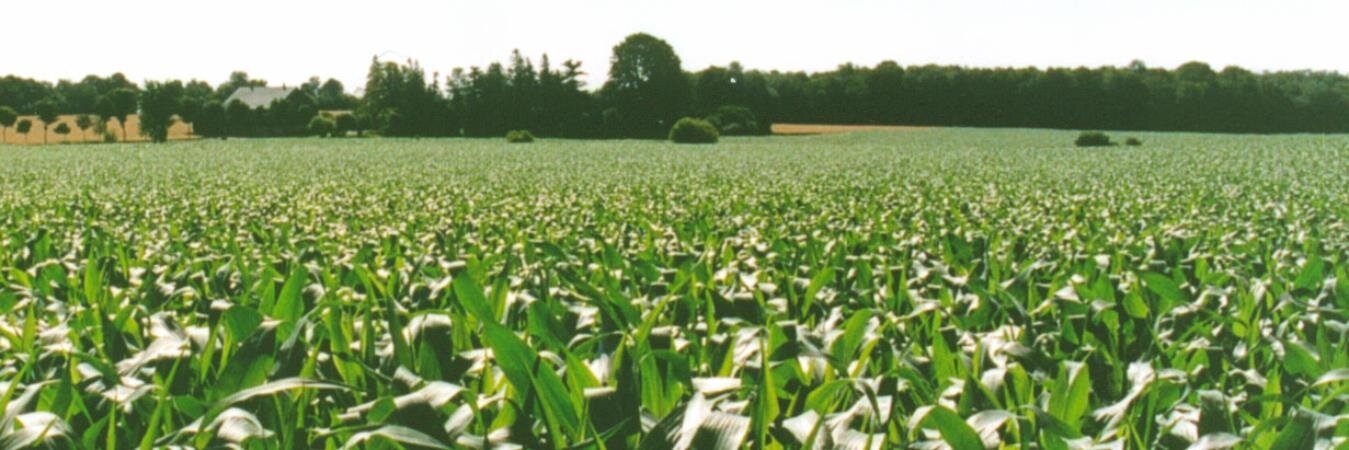
@agrivation1@KeithWells6 I know that the yield boost is less when yield of preceding corn crop is lower. My data were following a 220+ corn crop. But in one year with excessive spring rain and lots of slugs, our no-till soy crop was sure not pretty (unfortunately, no yield data that year).
@westernproducer For what it's worth: Virtually all varietal (hybrid) corn breeding in/for Canada is done by the private sector and farmers pay for it all.
Soybeans headed that way too.
@agrivation1@KeithWells6 I can only comment on our farms.
Once-over shallow tillage with vertical-till Landoll. Custom cost <$30/acre or about 2 bu/acre of soys. Rolled right after planting. No more stones. About 8 bu/acre more crop.
I love no till. But this is more profitable, and still lots of stalks.
@DrLizaMD Interesting sequel to battle at Quebec on Dec 31, 1775. My great-great-great grandfather fought on (successful) British side. No mention of small pox.
After years of debate, Europe is finally close to approving New Genomic Techniques (NGTs). A vote in the European Parliament is now just weeks away.
Yet the biggest threat to their adoption may no longer be an outright ban, but a growing web of bureaucracy.
As policymakers enter the final vote, they must ensure that Europe does not approve these technologies on paper while regulating them out of existence in practice.
Europe is facing an increasingly difficult agricultural challenge: producing enough food while reducing environmental pressures, adapting to climate change, and strengthening the resilience of its food system in a world that becomes more hostile by the day.
Innovations like NGTs are a critical part of the solution.
In February 2024, together with scientists across Europe, we urged MEPs to vote yes to supporting NGTs.
Now we need your help to finish the job.
Act now: https://t.co/arFh3kw4gH
Across the country, #corn growers are feeling squeezed from both directions and are looking at the deepest losses seen yet in this trail of negative returns, including losses of up to $100 an acre for the average #farmer.
https://t.co/9OdYAnwRed
@Lyonseed I don't object to people having personal causes. But Guilbeault lost my respect when he deliberately distorted facts; as one example: farmer attitudes to carbon tax. As for McKenna, all her shallow photo ops got to me. Trudeau, of course, never stopped being a drama teacher.
An inner group from a bygone era meets in Ottawa. Most still seem to miss this vital message: "[A] climate plan will only be effective if it earns the support of most Canadians, and if it respects their pocketbooks."
https://t.co/txUs5GEIIx
Will the European Parliament back Europe’s scientists?
After years of debate, Europe is finally close to approving the use of New Genomic Techniques, or NGTs, in agriculture.
These tools can help researchers and breeders develop crops that are more resilient to drought, heat, disease and pests. That means better food security, fewer losses for farmers, and more ways to reduce the environmental pressure of food production.
Across Europe, world-leading scientists, universities, public research institutes and plant breeders are ready to use these tools responsibly. The question is whether politics will let them.
The danger now is that NGTs are approved in theory, while being buried under traceability rules, labelling requirements and administrative burdens that make them too costly or legally uncertain to use in practice.
That would be a serious mistake.
NGTs should be regulated in a way that is proportionate, science-based and focused on the characteristics of the final plant, rather than the method used to develop it.
We therefore call on Members of the European Parliament to support the adoption of the Regulation on plants produced by certain New Genomic Techniques, in line with the compromise text agreed during trilogue negotiations in December 2025.
Europe has a chance to support better crops, stronger food security and better outcomes for the environment.
MEPs should take it.
@PurdueCorn@PurdueAg@PurdueAgronomy@PurdueExtension Tks! Tony Vyn and I planted plots with varying widths of tillage around corn row in the 1970s. 8" width gave full yield. However, we didn't repeat as company wanted their loaner rototiller with detachable blades returned, and we didn't see practicality. So much changed with GPS!
@WoodyVa2 Once-over vertical tillage meant 8 bu/acre more soybeans in a replicated trial with 15" rows seeded into heavy corn residue on our farm. That was the last of my years with no-till soys.
@Pembina It appears that the reported data are based largely on a "self-selected survey."
Hence, what do they really tells us?
I suspect that folks more concerned about climate change are more likely to answer a survey about climate change concerns.
Viewpoint: ‘Monsanto’ blues—Planned Netflix movie promises yet another round of anti-glyphosate disinformation https://t.co/jq9pkWACw2 via @GeneticLiteracy