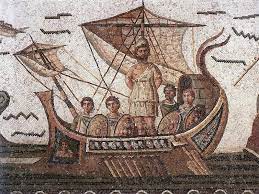
"La Odisea, posterior a la Ilíada, es una epopeya escrita alrededor del siglo VIII a. C. Ambas narraciones son el resultado de un larguísimo proceso de transmisión oral".
No dejes de leer el ensayo El viaje a la Odisea en la Revista Senderos Filológicos
👉https://t.co/OOUcAnYO2S
Tezcatlipoca, deidad prehispánica de lo negro, de la noche y de la obscuridad, tiene una dimensión luminosa: tezcanextia, “el espejo que manifiesta las cosas”. Su símbolo epónimo, el espejo, era un artefacto muy importante en Mesoamérica.
#UnDíaComoHoy de 2008, es publicada la Ley de Fomento para la Lectura y el Libro.
Establece que ninguna autoridad podrá prohibir, restringir ni obstaculizar la creación, edición, producción, distribución, promoción o difusión de libros y publicaciones peri��dicas.
¿Te has preguntado qué pasa en nuestro cerebro cuando leemos? Conoce qué descubrió la neurociencia.
@unamglobal
https://t.co/mmBoevmims
«No sólo se tiene la impresión de que hablar es para Echeverría una verdadera necesidad fisiológica, sino que está convencido de que dice cada vez cosas nuevas, en realidad verdaderas revelaciones».
Daniel Cosío Villegas
⏯️ https://t.co/xLezNcJ9jH
El 4 de julio de 1976 se llevaron a cabo elecciones federales. Se elegiría un nuevo presidente de la República y se renovarían las cámaras de diputados y senadores.
Competía por la Presidencia, es un decir, José López Portillo, candidato único postulado por el PRI, el PPS y el PARM.
https://t.co/KUZMeGou2V.
Yesterday I had the privilege of attending Marc Bloch's reburial ceremony at the Panthéon – Paris' monument to the most outstanding citizens of France. Bloch was honored not only as one of the greatest French historians, but also as a man who chose resistance over safety when his country fell into darkness.
Bloch fought in two World Wars, and received multiple awards for bravery. By the time the pro-Nazi Vichy regime came to power in 1940, Bloch was already recognized as perhaps the preeminent historian of medieval France. He continued to teach history, and during that time wrote 'Strange Defeat', a book explaining the French defeat in 1940, and 'The Historian’s Craft', a meditation on history and historiography. Bloch also joined the Résistance and became one of its leaders.
On March 8, 1944 Bloch was captured during a crackdown on the Résistance by the Nazis and their French collaborators. At the time, collaborationist French newspapers celebrated Bloch’s capture. They highlighted his Jewish identity, and referred to the historian as a traitor to France, describing the Résistance as a Jewish-Bolshevik terrorist organization. Bloch was imprisoned and tortured at the Gestapo headquarters in Lyon, and was executed on June 16, 1944, ten days after the Allied landing in Normandy.
I am a medievalist by training, and have been deeply influenced by Bloch. What moved me most about Bloch is his uncompromising commitment to truth. For him, history was never nostalgia or mythmaking, but a discipline of honesty – a way of resisting propaganda, prejudice, and the comfort of convenient fictions. For Bloch, truth was not just an intellectual position, but a spiritual practice. Anticipating his death at the hands of the Gestapo and the Vichy regime, the Jewish historian and freedom fighter left behind detailed instructions for his burial. He wrote:
“I have not asked to have read above my body those Jewish prayers to the cadence of which so many of my ancestors, including my father, were laid to rest. All my life I have striven to achieve complete sincerity in word and thought. I hold that any compromise with untruth, no matter what the pretext, is the mark of a human soul’s ultimate corruption. […] That is why I find it impossible, at this moment of my last farewell, when, if ever, a man should be true to himself, to authorize any use of those formulae of an orthodoxy to the beliefs of which I have ever refused to subscribe.
But I should hate to think that anyone might read into this statement of personal integrity even the remotest approximation to a coward’s denial. I am prepared, therefore, if necessary, to affirm here, in the face of death, that I was born a Jew: that I have never denied it, nor ever been tempted to do so. […] A stranger to all credal dogmas, as to all pretended community of life and spirit based on race, I have, through life, felt that I was above all, and quite simply, a Frenchman. A family tradition, already of long date, has bound me firmly to my country. I have found nourishment in her spiritual heritage and in her history. I can, indeed, think of no other land whose air I could have breathed with such a sense of ease and freedom. I have loved her greatly, and served her with all my strength. I have never found that the fact of being a Jew has at all hindered these sentiments. Though I have fought in two wars, it has not fallen to my lot to die for France. But I can, at least, in all sincerity, declare that I die now, as I have lived, a good Frenchman.”
By his request, a Latin epitaph was carved on Bloch’s grave: dilexi veritatem (“I have loved the truth”).
Watching Bloch's memory honored at the Panthéon yesterday did not feel like a tribute to the past as much as a challenge to the present. As dark clouds gather once again, how many of us today can demonstrate Bloch's level of integrity and fearlessness?
Bloch, el historiador que encarna como ninguno la figura del ciudadano ejemplar, entra al Panteón. Fue patriota antes que nacionalista, guerrero y mártir. Francia pone su excepcional talento para el ceremonial de Estado al servicio de una buena causa.
Conversatorio internacional "Del desastre 'natural' al riesgo socialmente construido: Vigencia crítica de los aportes fundacionales ante escenarios de riesgo complejo".
📅 2 de julio, 11:00 h
Formulario de Registro: https://t.co/mP6fw2Z05v
#AlertaVial | Estudiantes de la #ENAH bloquean la circulación en carriles centrales y laterales de Periférico Sur, a la altura de la calle Zapote, piden presupuesto y mejoras en las instalaciones.
La vialidad se ve severamente afectada.
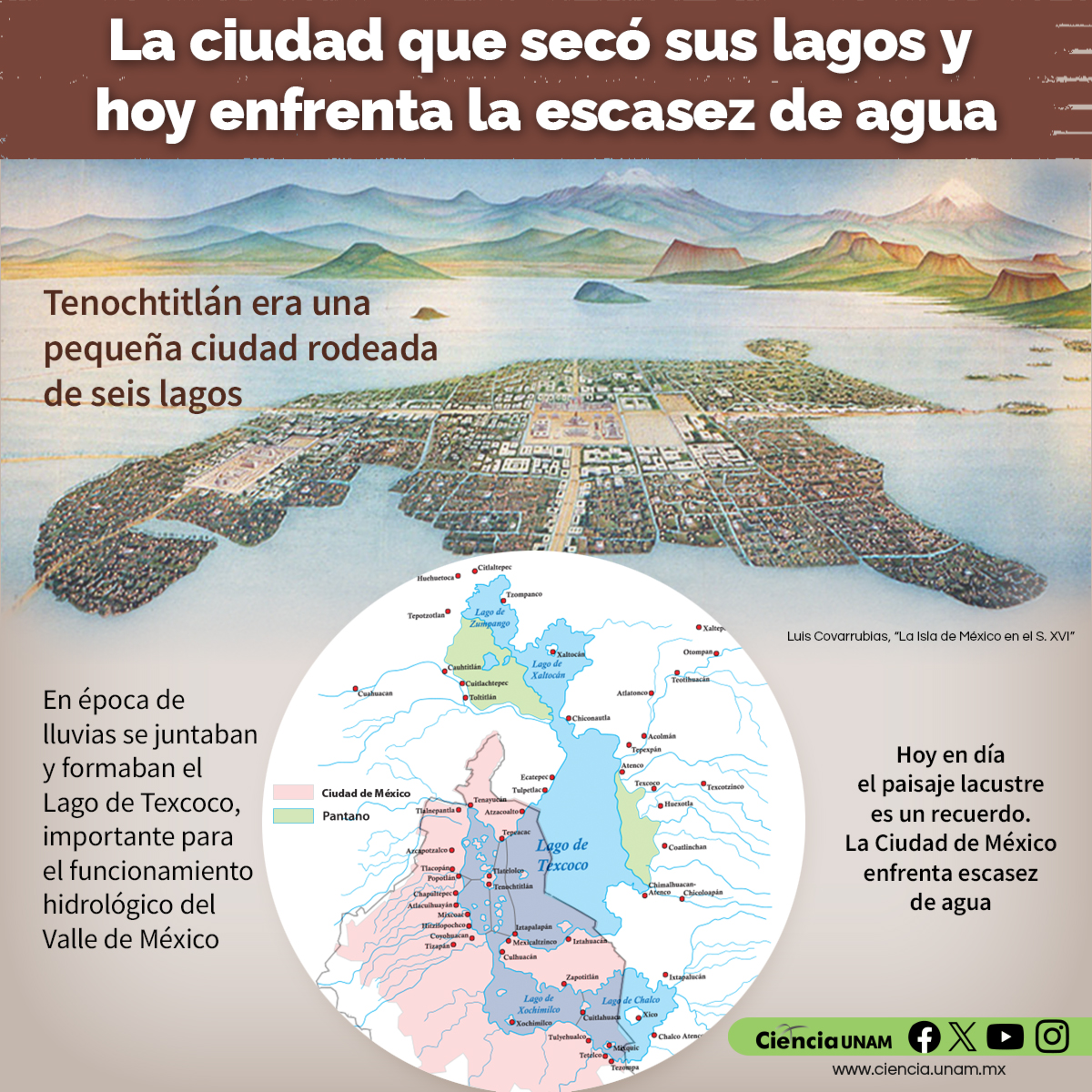
#AmbienteyNaturaleza | Los problemas #hídricos en la Ciudad de México han existido desde hace décadas…
Descubre de qué se trata en nuestro artículo: https://t.co/UEHbc9X58X
#Agua
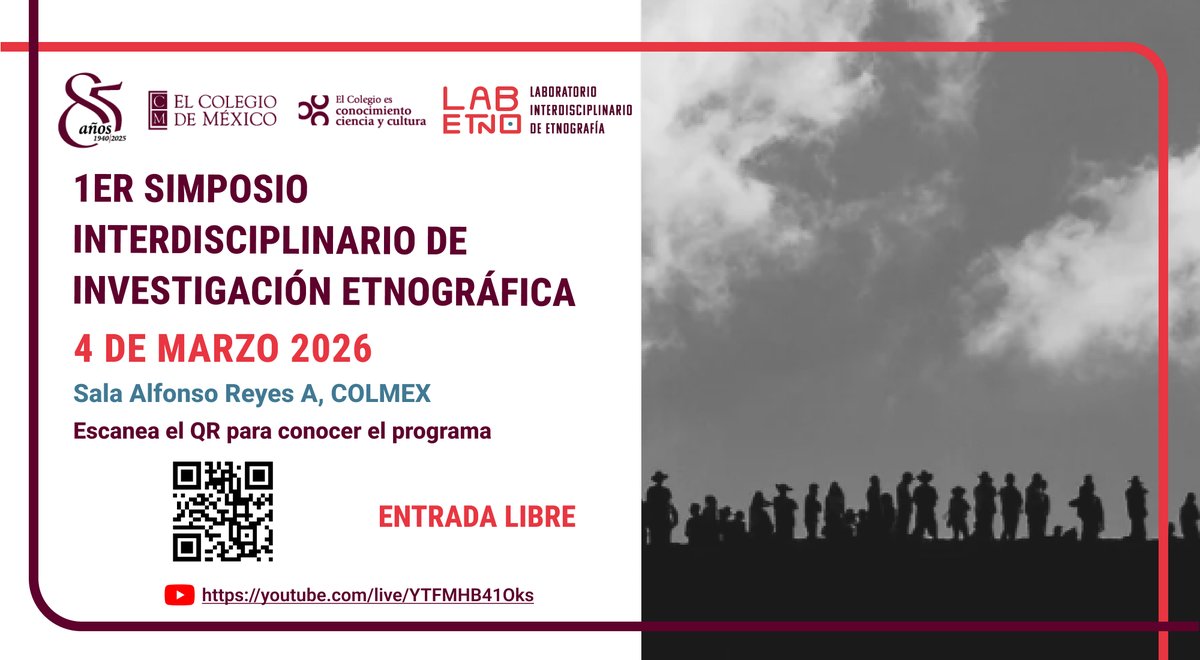
Si eres estudiante o investigador/a interesado/a en la etnografía, asiste al 1er Simposio Interdisciplinario de Investigación Etnográfica, un evento de #EntradaLibre que busca fomentar el diálogo entre la comunidad con experiencia en este campo.
👉 Consulta el programa en https://t.co/pZJMDO0R1P
Te esperamos el miércoles 04 de marzo a las 09:00 horas en la Sala Alfonso Reyes.
@LABETNOCOLMEX@Secihti_Mx@CEHColmex@CEDUAcolmex@CES_COLMEX@CEAAColmex@CEGColmex
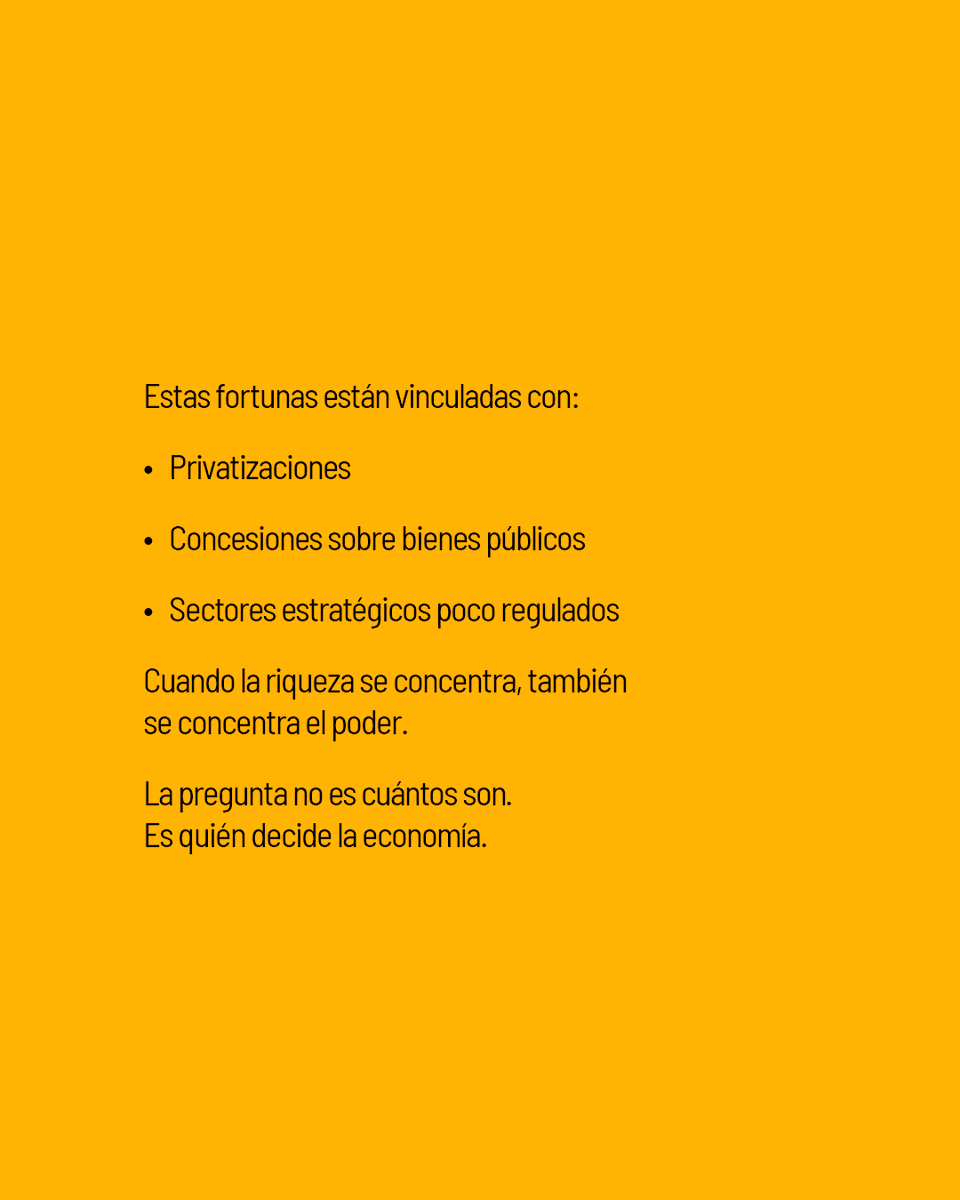
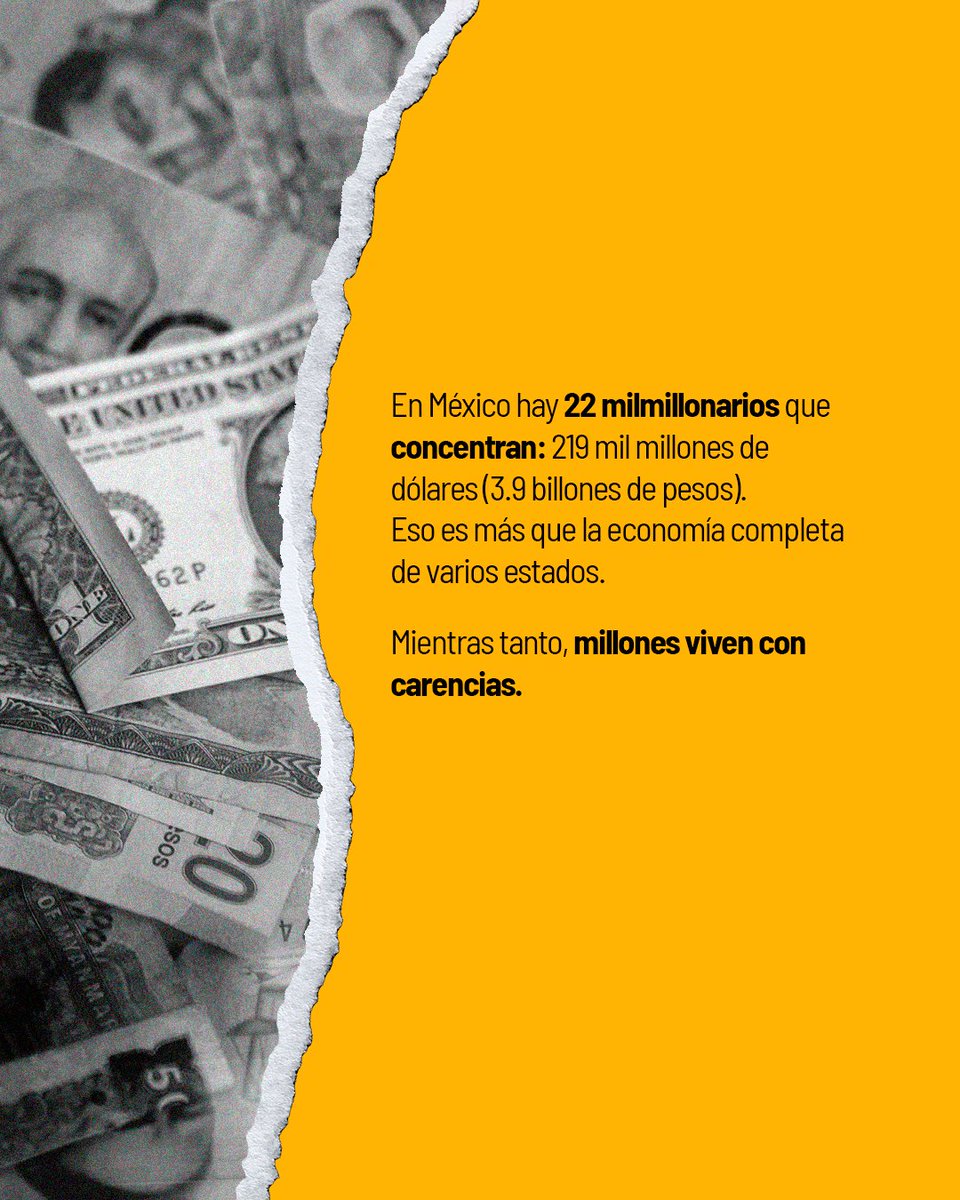
Desde la pandemia, la riqueza de 22 ultrarricos mexicanos creció 101%.
En casi 30 años, la economía del país no se ha duplicado.
• 71 años en promedio
• 3 de cada 4 heredaron su fortuna
¿Es esfuerzo individual o concentración estructural?
📄: https://t.co/wZ1WkomOPz
El registro fósil de peces en México es extenso, comprende desde el Paleozoico hasta el Pleistoceno.
📌Conoce más en el artículo de Katia Adriana González Rodríguez e Ihory J. Ponce Bustos, “Una panorámica de los peces fósiles de México” en nuestro número 196.
Una mujer wayuu binacional, nacida en
la frontera entre Colombia y Venezuela,
relata cómo la extracción de recursos
impacta a pueblos indígenas que habitan
estos territorios desde hace siglos.
El EZLN salió de la clandestinidad y se alzó en arm*s el 1 de enero de 1994. Con el tiempo, su lucha indígena cruzó fronteras, llegó hasta el Inter de Milán y el Subcomandante Marcos escribió una carta para el recuerdo.
Acá te contamos las curiosidades de ese acercamiento.
“Decimos que no hay un libro donde nos guiemos como hacer autonomía en nuestro gobierno, no hay un libro que nos dirija, vamos aprendiendo con el trabajo”.
#32AniverzarioEZLN
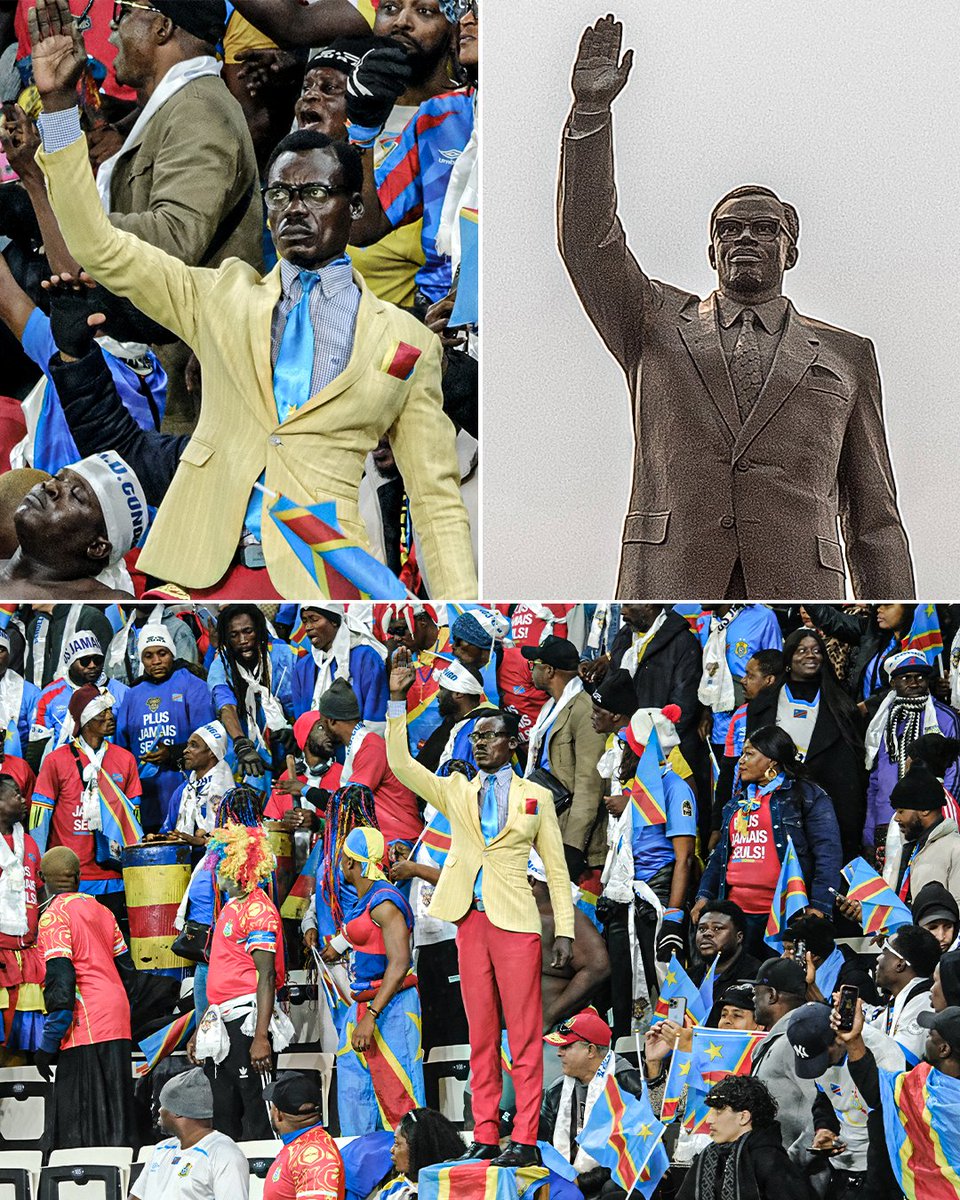
DR Congo fan Kuka Muladinga has been spotted standing in a powerful pose during their matches before and during AFCON.
He is imitating Patrice Lumumba, the country’s first prime minister in the early 1960s.
The stance mirrors the pose on Lumumba’s memorial statue in Kinshasa 🫡
Qué fue el Plan Cóndor, el sistema secreto de las dictaduras sudamericanas para perseguir a los exiliados políticos creado hace 50 años https://t.co/8TJezQet3h
Lucy habría convivido con ancestro humano desconocido
Un pie fosilizado guardó un secreto durante 3,4 millones de años. Ahora revela que #Lucy no estaba sola: otro ancestro, más primitivo, habitó a su lado en #Etiopía. #Australopithecus (few) https://t.co/9uzJ45DbWX
El legado de Núremberg hoy: la Corte Penal Internacional se creó para juzgar presuntos crímenes de guerra. Sin embargo, hoy en día, algunos de sus miembros a menudo incumplen sus obligaciones. ¿Tiene aún relevancia el legado de Núremberg?
#dwhistoryandculture#dwmagacines







![harari_yuval's tweet photo. Yesterday I had the privilege of attending Marc Bloch's reburial ceremony at the Panthéon – Paris' monument to the most outstanding citizens of France. Bloch was honored not only as one of the greatest French historians, but also as a man who chose resistance over safety when his country fell into darkness.
Bloch fought in two World Wars, and received multiple awards for bravery. By the time the pro-Nazi Vichy regime came to power in 1940, Bloch was already recognized as perhaps the preeminent historian of medieval France. He continued to teach history, and during that time wrote 'Strange Defeat', a book explaining the French defeat in 1940, and 'The Historian’s Craft', a meditation on history and historiography. Bloch also joined the Résistance and became one of its leaders.
On March 8, 1944 Bloch was captured during a crackdown on the Résistance by the Nazis and their French collaborators. At the time, collaborationist French newspapers celebrated Bloch’s capture. They highlighted his Jewish identity, and referred to the historian as a traitor to France, describing the Résistance as a Jewish-Bolshevik terrorist organization. Bloch was imprisoned and tortured at the Gestapo headquarters in Lyon, and was executed on June 16, 1944, ten days after the Allied landing in Normandy.
I am a medievalist by training, and have been deeply influenced by Bloch. What moved me most about Bloch is his uncompromising commitment to truth. For him, history was never nostalgia or mythmaking, but a discipline of honesty – a way of resisting propaganda, prejudice, and the comfort of convenient fictions. For Bloch, truth was not just an intellectual position, but a spiritual practice. Anticipating his death at the hands of the Gestapo and the Vichy regime, the Jewish historian and freedom fighter left behind detailed instructions for his burial. He wrote:
“I have not asked to have read above my body those Jewish prayers to the cadence of which so many of my ancestors, including my father, were laid to rest. All my life I have striven to achieve complete sincerity in word and thought. I hold that any compromise with untruth, no matter what the pretext, is the mark of a human soul’s ultimate corruption. […] That is why I find it impossible, at this moment of my last farewell, when, if ever, a man should be true to himself, to authorize any use of those formulae of an orthodoxy to the beliefs of which I have ever refused to subscribe.
But I should hate to think that anyone might read into this statement of personal integrity even the remotest approximation to a coward’s denial. I am prepared, therefore, if necessary, to affirm here, in the face of death, that I was born a Jew: that I have never denied it, nor ever been tempted to do so. […] A stranger to all credal dogmas, as to all pretended community of life and spirit based on race, I have, through life, felt that I was above all, and quite simply, a Frenchman. A family tradition, already of long date, has bound me firmly to my country. I have found nourishment in her spiritual heritage and in her history. I can, indeed, think of no other land whose air I could have breathed with such a sense of ease and freedom. I have loved her greatly, and served her with all my strength. I have never found that the fact of being a Jew has at all hindered these sentiments. Though I have fought in two wars, it has not fallen to my lot to die for France. But I can, at least, in all sincerity, declare that I die now, as I have lived, a good Frenchman.”
By his request, a Latin epitaph was carved on Bloch’s grave: dilexi veritatem (“I have loved the truth”).
Watching Bloch's memory honored at the Panthéon yesterday did not feel like a tribute to the past as much as a challenge to the present. As dark clouds gather once again, how many of us today can demonstrate Bloch's level of integrity and fearlessness?](https://pbs.twimg.com/media/HLliH6MWUAAvbZS.jpg)