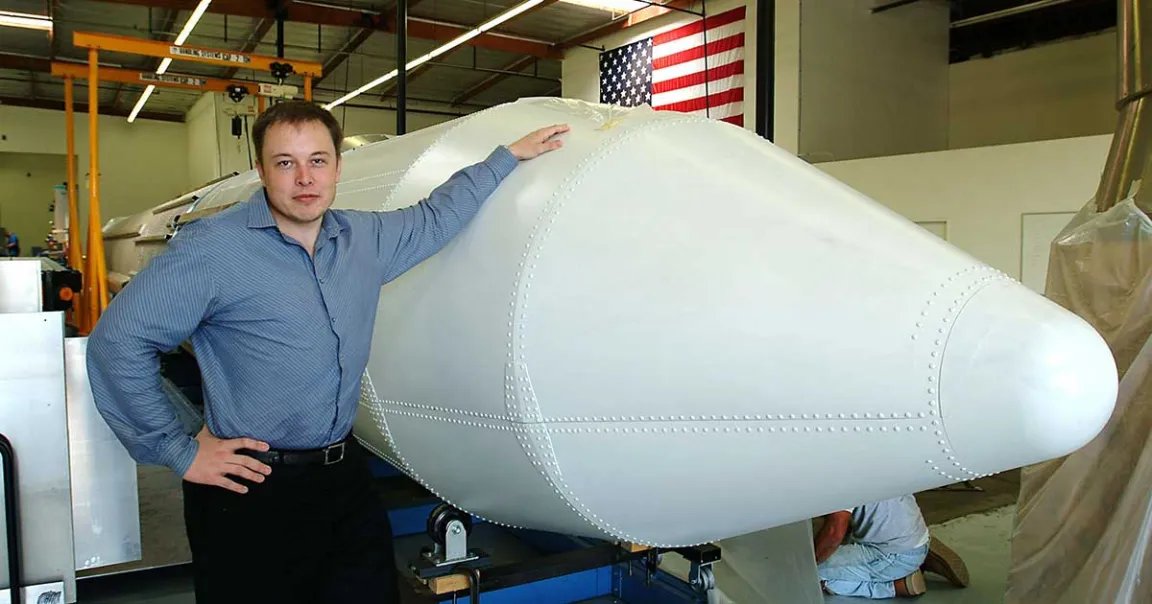
Elon Musk flew to Russia to buy a rocket and the Russians laughed in his face and spat on his shoes.
In 2001 Musk had a simple plan. Buy a refurbished intercontinental ballistic missile from Russia, strip out the warhead, and use it to send a small greenhouse to Mars. He thought it would cost about $20 million.
He flew to Moscow with Adeo Ressi and Mike Griffin. They sat in a meeting with Russian rocket engineers and military officials. Musk explained what he wanted. The Russians looked at each other and started laughing. One of them literally spat on the ground near his feet. They thought he was a joke. A tech millionaire playing astronaut.
They eventually offered to sell him one rocket for $8 million. Musk tried to negotiate. They raised the price to $10 million per rocket out of disrespect. They wanted to humiliate him into leaving.
On the flight home from Moscow, while his friends slept, Musk opened his laptop and started building a spreadsheet. He calculated the raw material cost of building a rocket from scratch. Aluminum. Carbon fiber. Fuel. Electronics. He realized the materials cost roughly three percent of what aerospace companies charged.
He closed the laptop and said to Adeo "I think we can build this ourselves."
SpaceX was born on that flight. Not in a garage. Not in a lab. On a plane ride home from being humiliated by Russians who thought he was a fool.
Most people experience rejection and go home. Musk experienced rejection and opened a spreadsheet. The entire commercial space industry exists because some Russian engineers decided to be disrespectful to a 30 year old with a laptop.
That’s right. Under budget AND ahead of schedule.
Looking forward to seeing the beginning of the world-changing Nancy Grace Roman Space Telescope NET August 30.
Long before @NASAAdmin lead NASA he was personally cheering on the industry after painful losses. the night after Ship 36 RUD'ed, Rook was there at Starfactory with several pallets of Dominos, taking over the cafeteria and personally giving all of us pizza.
I am grateful for his continued support.
NASA is aware of the anomaly that occurred tonight at Launch Complex 36 involving Blue Origin’s New Glenn rocket at Cape Canaveral Space Force Station. Spaceflight is unforgiving, and developing new heavy-lift launch capability is extraordinarily difficult. We will work with our partners to support a thorough investigation of this anomaly, assess near-term mission impacts, and get back to launching rockets.
We will provide information on any impacts to the Artemis and Moon Base programs as it becomes available.
The more you watch Elon Musk, the more obvious it becomes that this was never just about money. He could have walked away years ago and lived in total comfort for the rest of his life. Instead, he chose constant pressure, sleepless nights, and one impossible mission after another. He does it because he genuinely believes humanity can achieve so much more if we push ourselves harder.
He is 54 years old and still working with the intensity of someone half his age. Grinding until 3am at the office, working every waking hour seven days a week. People keep betting against him, and he keeps winning. You can disagree with him on things, but you cannot deny the level of dedication, sacrifice, and belief he has put into pushing humanity forward.
History is repeating itself once again.
Godspeed, SpaceXAI.
@zerohedge Once again, important to emphasize that there are two different systems: Starlink for civilian usage and Starshield that is built & operated for US govt.
We try hard to keep these separate.
Things you don’t have to worry about when you own a Tesla and charge while you sleep:
• credit card skimmers
• standing in oil, gas, and whatever mystery fluid is marinating at the pump
• random dudes asking for “just a couple dollars”
• dropping $50+ every few days
• touching a gas handle that’s probably seen more germs than a hospital waiting room
• being turned into a fireworks show by a guy chain-smoking next to Pump 6
Wake up. Unplug. Drive.
@Starlink@SpaceX I think it’s hilarious that the greatest tech company ever uses a kiddies’ paddling pool to mark the spot and carry Starlink and the cameras. Lesser companies would have spent a year or two designing and building something shiny and sleek-looking. Kudos.
New footage of Ship 39's landing during Starship Flight 12! It's mind-blowing that SpaceX can mount a Starlink terminal to a small floating platform and get fiber-like speeds in the open ocean. From this angle, the landing roll looks even more intentional.
📸@Starlink
Elon Musk was working at the SpaceXAI office until 2:45am tonight, leading from the front. Many engineers were still there grinding through the night.
This is real leadership.
Not sitting in a boardroom.
Not managing from a distance.
Not just giving speeches.
Elon is pushing the mission forward when most of the world is asleep.
That kind of work ethic is why his companies keep doing what others call impossible.
Elon Musk es de otro planeta...
La primera esposa de Elon Musk describió una vez lo que se siente al verlo fracasar.
Dijo que él no reacciona como la gente normal. Cuando un cohete explota, la mayoría de la gente en la sala se queda en silencio. Algunos lloran. Otros empiezan a calcular las pérdidas económicas.
Musk saca su teléfono y empieza a hacer llamadas. No llamadas emocionales. Llamadas técnicas. "¿Qué falló? ¿Cuándo podemos arreglarlo? ¿Cuándo es el próximo lanzamiento?". Su voz no cambia. Su rostro no cambia. El cohete que acaba de costar 60 millones de dólares ya es cosa del pasado. El siguiente es lo único que importa.
Dijo que fue lo más inquietante que jamás había presenciado. No porque fuera frío, sino porque realmente no le afectaba. El fallo no se percibía como un fallo, sino como datos. Un experimento que produjo resultados. Resultados que sirven de base para el siguiente experimento.
Por eso gana. No porque no fracase. Fracasa de forma más espectacular que nadie en la historia. Gana porque el fracaso no ocupa ningún espacio psicológico. Entra como datos y sale como acción.
La mayoría de la gente pierde no porque falle, sino porque pasa semanas procesando el fracaso antes de volver a actuar. Musk pierde cero segundos. El lapso entre el fracaso y el siguiente intento es una llamada telefónica.
One of the best things about SpaceX is they just TELL you what happened instead of posting some long winded "incident report" or "our team always strives to blah blah blah"
It's just "yeah the pin got stuck, we're gonna see if we can fix it for tomorrow"
Based.