Are you interested in innovations in single-cell genomics? Join us on the 15th & 16th of May at the ISCO conference in Berlin! We have a set of amazing speakers and plenty of room for fun networking and contributions from junior scientists (1/4). https://t.co/oUfIFZKRa5
We are hiring! A fully funded PhD position is available in my lab at the @MaxPerutzLabs in Vienna. If you are curious about how DNA moves in nature and in applications, contact me by e-mail and apply through the VBC program! Please RT
Are you looking for an opportunity to combine #singlecell#spatialtranscriptomics and clinical data? Join my new group in Computational Oncology at Charité as a PhD student! 💻🔬🩺 https://t.co/pPECtGOuXU Please RT and/or apply! #cancer#jobs@ChariteBerlin @berlinnovation
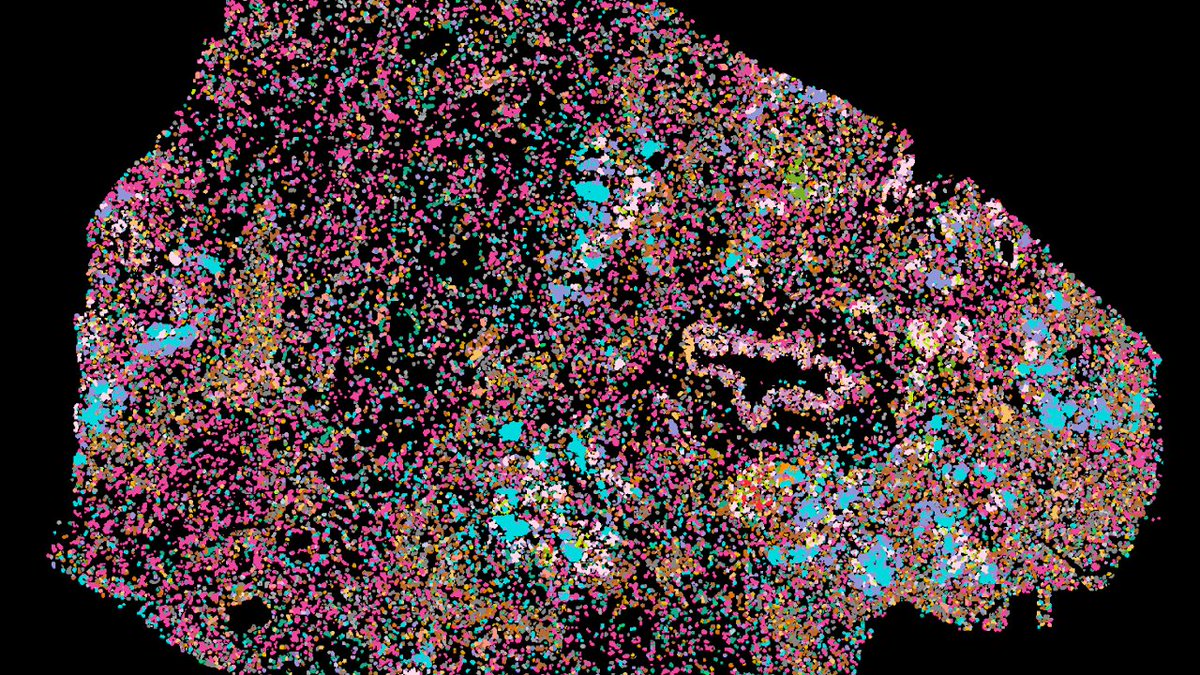
#PancreaticCancer comes in many shapes. We used #InSituSequencing to define spatio-transcriptional subtypes with prognostic relevance - now on bioRxiv: https://t.co/8Etpl6T38d - with @LxSudy @ltosti88 @kaehde @sky7christian @CaptainSysBio @berlinnovation
@fabian_theis Are we allowed to use the operators multiple times? Like sqrt(sqrt(432+432+432))=6 ? Then any 2^(2^n)*3^(2^n-1) (for integer n>0) should work..
Cool paper about cell state heterogeneity in PDAC from my colleagues. For everyone interested in #SingleCell and #PancreaticCancer#Organoids @berlinnovation @DKFZ
https://t.co/y5hrCVRz1C
New publication from our lab looking at lung adenocarcinoma of smokers and never smokers at the #SingleCell level: https://t.co/Tj7BLbLUDx Tumour architecture looks broadly similar but immune modulation differs. Great work by lead author @TrefzerTimo!🧑🔬🧬
Our paper on transcriptional heterogeneity and drug responses in pancreas cancer organoids is now public! Predicted to be 2nd leading cause of cancer mortality by 2030. Hope this will be of use.
Single-cell analysis of patient-derived PDAC organoids reveals cell state heterogeneity and a conserved developmental hierarchy https://t.co/5Rk8vMNNdu
(Some) brain #stemcells continue #neurogenesis throughout life - out today in @PNASNews is our study on how they regulate each other: https://t.co/WzMKMvs0Jr