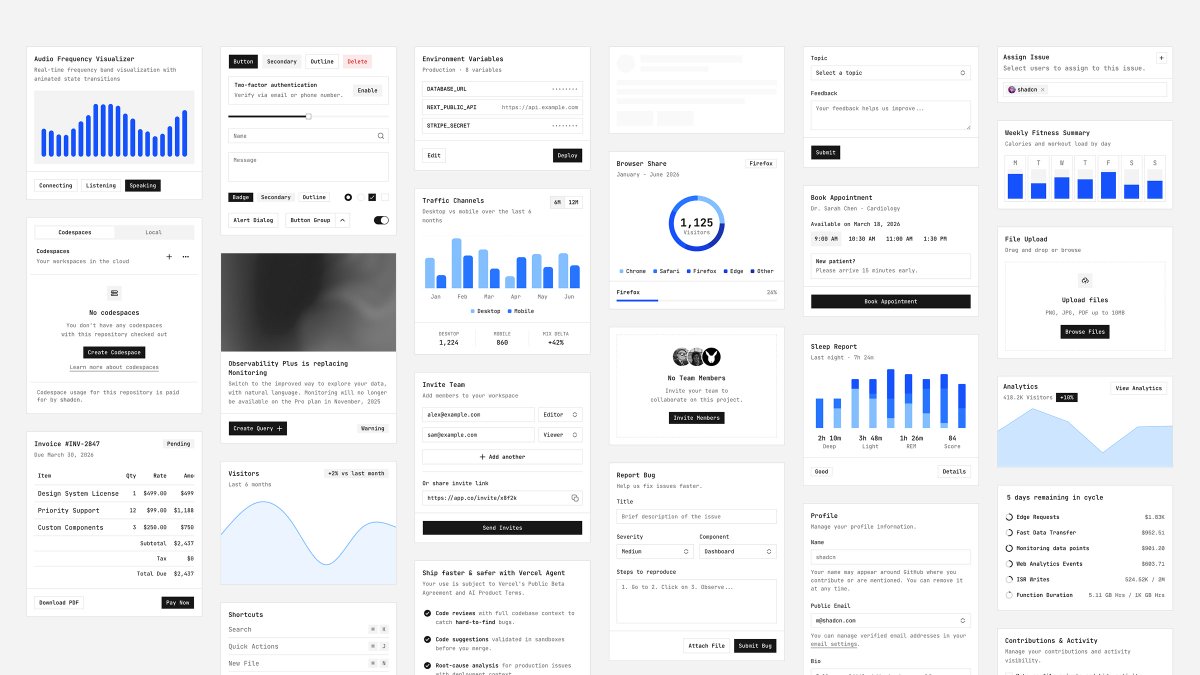
Today, we're releasing shadcn/cli v4. It packs a ton of features: shadcn/skills, presets, dry-run, monorepo and more.
If you're using shadcn/ui with coding agents or need better control over the defaults, this is for you.
Here's everything new:
When you look at most CTOs and engineering executives at most tech companies: their engineering background is more often than not backend engineering.
Worth considering what this means esp if they lead a co where the main product *is* mobile, web - or to delight customers!
The essence of why a startup exists is to solve real problems and provide value to customers.
I am grateful for the partnership with the @theblueground team. They have been a design partner since day 1. And I am happy to see them getting value.
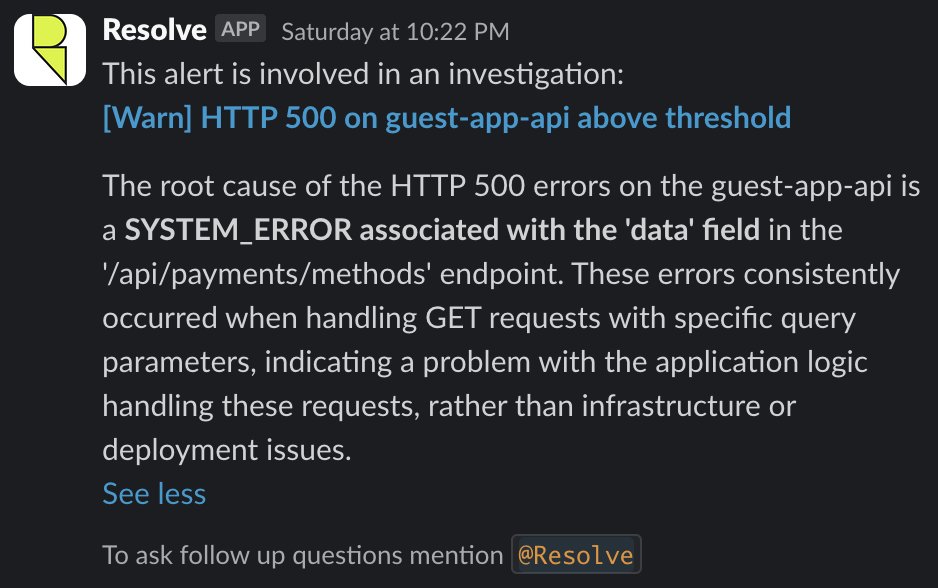
Below is a blog post about how they use Resolve AI
Stratos, Geo, Andreas, Pavlos-Petros 🙌
Any time someone speculates RoR not being built for scale, there's Shopify setting records every single year in payments & shipments processed. And the market-leading version control site is on it as well.
(RoR IS delightful to use - I realize every time I try it out again!)
@resolveai With solid logs, instrumentation, alerts, and service-dedicated dashboards, this isn’t just hype — it’s measurable, serious help.
Pro tip: Prioritize anomaly-detection alerts on business metrics over absolute error rates.
In a few months, at @theblueground we’ve gone from experimenting with @resolveai to making it our go-to.
There’s no going back now — on-call and time-sensitive troubleshooting will forever be AI-first.
Piece of advice on adding AI tools like @resolveai to your alert management stack:
Don’t cut back on observability—double down on it. Now you have even more reason to
As with all Gen-AI, better ‘input’ means better ‘output,’ and in my experience, that's a 10x return.
@resolveai@theblueground You do. Happy to be part of this and excited to see the product getting to the next level. (And yes, we do have a very likeable team 😄)
A common mistake: "Let's abstract this in case we want to replace it later."
Examples:
🚫 "Let's abstract React in case we switch JS frameworks."
🚫 "Let's abstract Tailwind in case we switch CSS approaches."
🚫 "Let's abstract Mongo in case we switch Databases".
This is typically a waste of time, and often hinders current use too.
Why? Because to effectively abstract something, we need to know the API we're abstracting.
But we have no idea what a new technology's API will be. Thus, we have no idea whether our abstraction will work with the new technology.
In summary, abstraction can be useful. But avoid abstracting merely to support changing to some unknown future technology.
Hola good people!
A new @GreeceJS season is starting and we're looking for #speakers to share their knowledge and experience with the community.
If you're interested in speaking, submit your proposal here: https://t.co/yiV8hkxX40…
#GreeceJS#meetup#tech#community
So many of the great software engineers I consider fantastic "software architects" share this one thing:
They build (throwaway) prototypes to prove their point / showcase their ideas. A lot!
So much easier to reason about concrete code than abstract ideas.
Or, if you prefer, "I am a full product engineer."
And this ^^^ is what we should all be trending towards. The days when you could put up your hands and protest, "I'm just a backend engineer. Get someone else to write those five lines of javascript" -- are ending.
We've put all out webinars on YouTube!
Document QA, Agents, Prompt Injection... watch them as many times as your heart desires ❤️
https://t.co/xTKVXNOXlC
Such a big difference between devs who are capable and willing to learn new things when they need to (eg new languages, frameworks) & have a "sure I will sit down and figure this out the next few days" attitude, versus people who are used to given formal training to do the same.
colleges prioritized making people feel perfectly safe over everything else and produced a generation afraid to fail, and thus afraid to take risk, and thus on pace to accomplish extremely little