Γράφει στο fb η Vasiliki Kostopoulou:
Με λένε Βασιλική Κωστοπούλου.
Είμαι στο φάσμα του αυτισμού, έχω αγχώδη διαταραχή, ΔΕΠΥ και υποτροπιάζουσα κατάθλιψη.
Έχω δίπλωμα οδήγησης. Μαγειρεύω. Περπατάω. Μιλάω. Τελείωσα το σχολείο, σπούδασα, πήρα τα πτυχία μου. Έχω 143 IQ, αλλά δεν θεωρώ ότι είμαι «υψηλής λειτουργικότητας» — γιατί δεν λειτουργώ με τα δικά σας στάνταρ. Πέρα από τα δικά μου 10 ζώα, βγαίνω πολλές φορές και το βράδυ και ταΐζω αδέσποτα, κρατώντας σακούλες — για να μη με κυνηγούν οι μη φιλόζωοι αυτής της πόλης, γιατί σίγουρα κινούμαι ύποπτα. Ή μπορεί να με δείτε να κοιτάζω κάτω από τα αμάξια σας, γιατί άκουσα ένα γάτο εγκλωβισμένο.
Είμαι από αυτούς που «δεν φαίνεται ότι είναι αυτιστικοί».
Υπάρχουν μέρες που δεν έχω τόσο μεγάλη υπερφόρτωση και μπορώ εύκολα να κρύψω την αναστάτωσή μου — να σας φαίνομαι «φυσιολογική». Αλλά υπάρχουν δυσκολίες που οι περισσότεροι δεν θα καταλάβουν ποτέ:
Δεν αντέχω το τηλέφωνο.
Η ζέστη με εκνευρίζει πολύ .
Δεν αντέχω τους απότομους θορύβους.
Έχω μισοφωνία.
Δεν αντέχω το δυνατό φως.
Οταν περνάει το απορριμματοφόρο, τρέχω μέσα στο σπίτι κλείνοντας τα αυτιά μου .
Δεν μπορώ να με αγγίζουν, να με αγκαλιάζουν ή να με φιλάνε — αλλά αγκαλιάζω, αγγίζω και φιλάω εγώ, αν νιώθω άνετα με το άτομο .
Στο φως του ήλιου πονάνε τα μάτια μου.
Αν έχεις υψίτονη φωνή, είναι σχεδόν αδύνατο να επικοινωνήσουμε .
Δεν συγκρατώ σχεδόν τίποτα από προφορικές οδηγίες , πρέπει να μου δώσεις χρόνο να τις γράψω — χρειάζομαι χρόνο να κατανοήσω τον προφορικό λόγο.
Δεν μπορώ να μου διαβάσεις κάτι ,δεν θα το συγκρατήσω με τίποτα .Χρειάζεται να μου δώσεις κάτι γραπτό, να το διαβάσω μόνη μου.
Αγχώνομαι παρά πολύ ακόμα κι όταν κάποιος μου λέει απλώς «θέλω να σου πω κάτι» — χωρίς να μου δίνει καμία εικόνα για το τι έρχεται.
Δεν ξέρω να μιλάω σε αγνώστους — χάνω τα λόγια μου.
Μπορεί να περιμένω τον κούριερ όλη μέρα στην καρέκλα μέχρι να έρθει, γιατί μόνο έτσι μπορώ να βγω από την παύση της αναμονής — μια παύση στην οποία δεν μπορώ να κάνω τίποτα άλλο, ακόμα και κάτι τόσο απλό όσο να πλύνω πιάτα.
Πολλές φορές δεν καταλαβαίνω κάτι αν δεν το δω σε εικόνα.
Και για το τέλος άφησα μία από τις μεγαλύτερες δυσκολίες μου.
Θα την περιγράψω με ένα πραγματικό γεγονός.
Και η ειρωνία είναι ,ότι αυτό το γεγονός,συνεβει στο σούπερ μάρκετ που βρίσκεται εκεί που πυροβολήθηκε ο Θοδωρής.
Μια κοπέλα με γυαλιά ηλίου, μαύρα ρούχα , ακουστικά , μπλε μαλλιά, σκουλαρίκι στη μύτη, τατουάζ, μπαίνει στο σούπερ μάρκετ. Κινείται περίεργα. Έχει πανιάσει, έχει ιδρώσει, ζαλίζεται , κάνει βιαστικές κινήσεις βάζοντας πράγματα στο καλάθι της.
Πίσω της, ο security την ακολουθεί — αδιάκριτα, χωρίς να της μιλήσει.
Σχεδόν τρέχει παράλληλα στον δίπλα διάδρομο Κ τη κοιτάζει επίμονα .
Ο κόσμος γυρίζει και κοιτάζει, άλλοτε εκείνον, άλλοτε εκείνη.
Στο τέλος αφήνει το καλάθι της και βγαίνει έξω, έτοιμη να λιποθυμήσει.
Ο security, με βλέμμα νικητή, νομίζει ότι έκανε τη δουλειά του. Ότι προστάτεψε την επιχείρηση και τους πελάτες — από μια κοπέλα που απλώς την είχε πιάσει κρίση πανικού.
Και σε λίγο θα περάσω κι από το ΚΕΠΑ, για να «αποδείξω» σε χαρτί το ποσοστό αθροιστικής αναπηρίας μου, με όλες τις συνοδές ασθένειες — σαν να μην έφτανε η καθημερινή μάχη, θέλει και επίσημη κρίση αν αξίζω αναγνώριση. Μια αναγνώριση που για τους άλλους σημαίνει : μη λειτουργική. Ανίκανη .
Αυτή η πόλη τους αυτιστικούς- επίσημα πλέον- δεν τους προστατεύει και δεν τους καταλαβαίνει.
Τους πυροβολεί από πίσω, στο κεφάλι και δίνει και τα εύσημα στον θύτη .
Γι' αυτό τα γράφω όλα αυτά.
Για να ξέρετε ποια είμαι και τι κάνω, από πρώτο χέρι, εγώ.
Αν με στοχοποιήσουν λέγοντάς μου Τουρκάλα, γύφτισσα, Αλβανίδα, Ρωσοποντία — σαν να είναι αυτό από μόνο του έγκλημα — ή αν με πουν εγκληματία, κλέφτρα, αν βρεθώ κι εγώ με μια σφαίρα στο κεφάλι, αν τύχει και αρχίσω να τρέχω στον ήχο του απορριμματοφόρου, ή αν με δείτε να κρατάω τον σουγιά που κουβαλάω πάντα μαζί μου, για ασφάλεια — θέλω να θυμάστε το όνομά μου…
"Σηκώστε με σεμνότητα το χρέος που σας ανήκει. Φανείτε εις μικρόν γενναίοι"
Δημήτρης Μαρωνίτης.
Ήταν επίλογος στην τελευταία του διάλεξη παρακαταθήκη στους φοιτητές του, πριν απόλυθεί από την χούντα.
Δεν κρύφτηκε στα δύσκολα & δεν δίστασε να αναλάβει το κόστος.
Σαν σήμερα σίγησε
In 1995, Rory Gallagher lay dying in a London hospital.
His liver was failing.
He was only 47 years old.
The transplant surgery succeeded.
Then, while recovering in the ICU, he caught MRSA.
He slipped into a coma and died weeks later.
Outside Ireland, most people barely know his name.
But ask almost any legendary guitarist about Rory Gallagher…
…and watch their face change.
Brian May said Rory helped shape Queen’s sound.
Slash said the same about Guns N’ Roses.
Johnny Marr called him “the man who changed my musical life.”
The Edge said it too.
Even The Rolling Stones tried to recruit him.
He turned them down.
Rory Gallagher was born in Ireland in 1948 and grew up in Cork.
At age 9, he got his first guitar.
At 15, he bought a battered 1961 Fender Stratocaster for £100.
He would play that same guitar for the rest of his life.
By the end, most of the paint had literally worn off from sweat and constant touring.
He started playing tiny clubs as a teenager before forming a blues-rock band called Taste.
By 1969, Taste was exploding across Europe.
They opened for Cream’s farewell concert.
Toured America with Blind Faith.
Played the Isle of Wight Festival.
Then it all collapsed.
The band broke apart in 1970.
Rory went solo.
And this is where his story became unusual.
He never tried to become a celebrity.
No flashy image.
No rock-star persona.
No tabloid life.
Just jeans, a checked shirt, and a guitar.
While most bands avoided Ireland during The Troubles, Rory toured there constantly.
Belfast.
Derry.
Dublin.
Catholics and Protestants standing together in the same audience during one of the most violent periods in Irish history.
Music first.
Always.
Offers kept coming.
Cream wanted him.
Deep Purple wanted him.
Canned Heat wanted him.
Then, in 1975, Mick Jagger personally invited him to audition for The Rolling Stones after Mick Taylor left.
Rory flew out.
Played with the Stones.
Then quietly left for another tour commitment without ever really answering them.
Ronnie Wood got the job instead.
By the late 1980s, everything started changing.
Synth-pop replaced blues-rock.
Record sales dropped.
Rory developed a severe fear of flying.
Doctors prescribed heavy sedatives.
He mixed them with alcohol while continuing relentless tours.
Night after night.
Year after year.
The combination slowly destroyed his liver.
Still, he kept performing.
Because the stage was the only place he truly seemed alive.
Offstage, he was intensely shy.
No marriage.
No children.
No celebrity lifestyle.
Just crime novels, isolation, and music.
His final concert was January 10, 1995, in the Netherlands.
He looked visibly ill.
The tour was cancelled.
Weeks later, his brother found him gravely sick in his apartment.
Doctors said only a liver transplant could save him.
The operation worked.
Then the hospital infection killed him instead.
Ireland mourned like it had lost family.
Thousands lined the streets for his funeral in Cork.
Today, Ireland has:
• statues of Rory
• streets named after him
• commemorative coins
• annual festivals in his honor
Yet outside Ireland, many people still have no idea who he was.
But musicians do.
Because Rory Gallagher became something rarer than fame:
A guitarist’s guitarist.
A man who loved music more than celebrity.
And played until his body finally gave out.
🚨BREAKING: Former Newcastle manager Kevin Keegan has got stage 4 cancer and wishes to say goodbye to his beloved Newcastle before he passes away.
“I've got stage four cancer. It's been a really tough time - I need to say goodbye to Newcastle United properly... just promise not to build a statue of me at St James' Park until I'm gone”
We are heartbroken to hear this news and wish his family and friends the best at this very difficult time. 💔
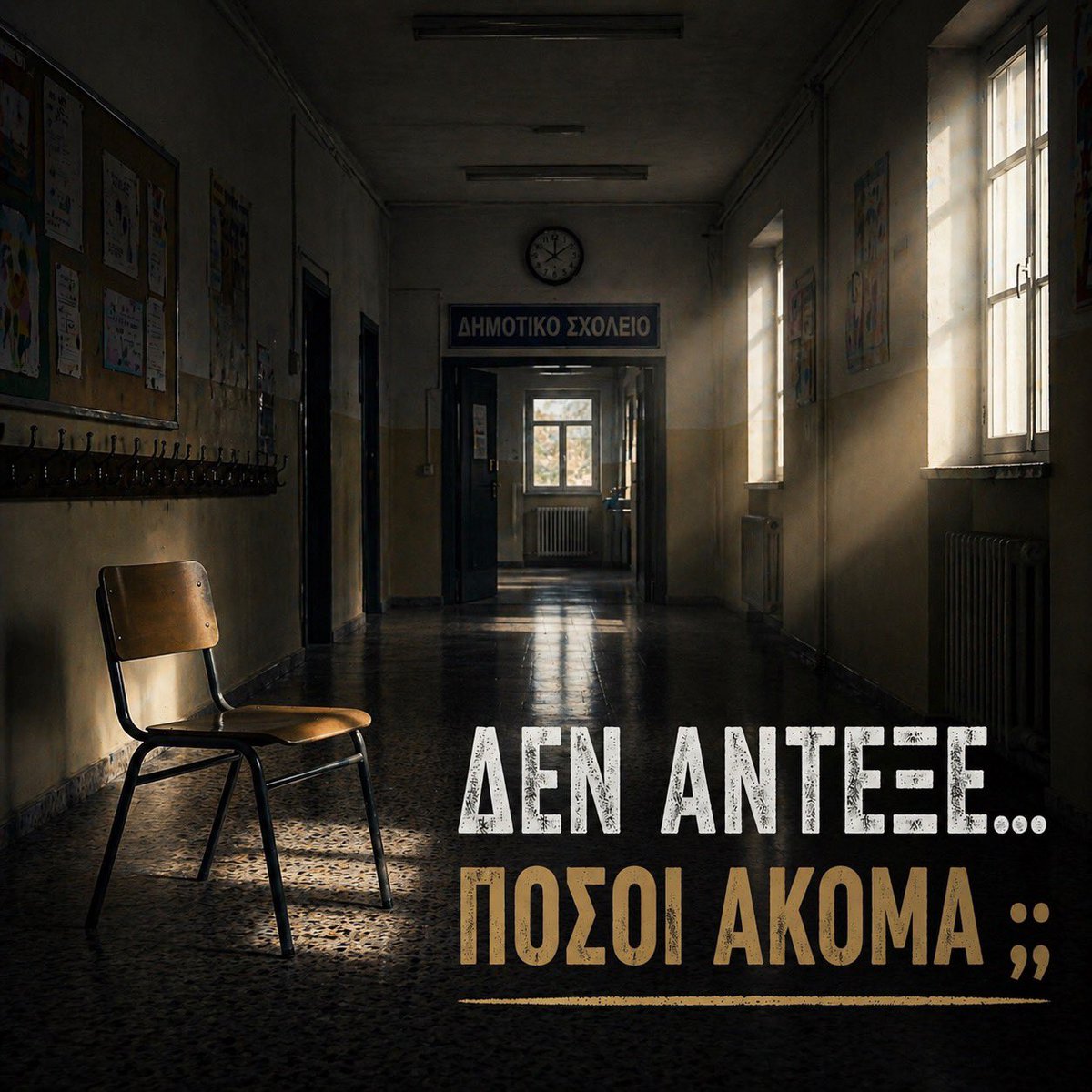
❗️Σήμερα το πρωί, μια συνάδελφος… μια διευθύντρια σχολείου… μια γυναίκα που για χρόνια στάθηκε όρθια μέσα στις πιο δύσκολες συνθήκες της εκπαίδευσης… δεν άντεξε.
❗️Έπεσε από την ταράτσα του σπιτιού της και έφυγε από τη ζωή, αφήνοντας πίσω της ένα τεράστιο «γιατί».
❗️Δεν ήταν απλώς μια είδηση. Ήταν ένας άνθρωπος που γνώριζα. Μια συνάδελφος με την οποία συναντιόμασταν όλα αυτά τα χρόνια στις συναντήσεις διευθυντών, ανταλλάσσοντας σκέψεις, προβληματισμούς, λύσεις.
❗️Ήταν μια αξιόλογη εκπαιδευτικός. Μια διευθύντρια που πάλευε.
❗️Ήξερα ότι υπήρχαν δυσκολίες. Όλοι τις ξέρουμε.
❗️Αυτό που ίσως δεν ξέραμε… είναι πόσο βαθιά μπορούν να φτάσουν.
❗️Τα σχολεία έχουν αλλάξει.
❗️Η διοίκηση έχει μετατραπεί σε ασφυκτικό μηχανισμό πίεσης.
❗️Οι διευθυντές και οι εκπαιδευτικοί δεν λειτουργούν πια ως παιδαγωγοί, αλλά ως διαχειριστές κρίσεων, εντάσεων, καταγγελιών, απαιτήσεων.
❗️Και το χειρότερο; Είναι μόνοι.
❗️Απροστάτευτοι από την πολιτεία.
❗️Απροστάτευτοι από τους θεσμούς.
❗️Απροστάτευτοι απέναντι σε ένα σύστημα που ζητά συνεχώς περισσότερα και δίνει όλο και λιγότερα.
❗️Και αυτή δεν είναι η πρώτη φορά.
❗️Πριν λίγο καιρό, μια άλλη εκπαιδευτικός κατέρρευσε μετά από bullying μέσα στην τάξη της.
❗️Τώρα, μια διευθύντρια δεν άντεξε.
❗️Πόσες ακόμα «σιωπηλές κραυγές» χρειάζονται για να καταλάβουμε τι συμβαίνει μέσα στα σχολεία;
❗️Το θέμα δεν είναι ατομικό. Είναι βαθιά συστημικό.
❗️Και η πολιτεία οφείλει – επιτέλους – να σκύψει πάνω σε αυτό πριν θρηνήσουμε κι άλλους.
❗️Γιατί πίσω από κάθε «είδηση» υπάρχει ένας άνθρωπος.
❗️Και πίσω από κάθε άνθρωπο, μια ιστορία που δεν αντέχει άλλο βάρος.
❗️Today, a colleague… a school principal… a woman who stood strong for years under the pressure of the education system… could not endure any longer.
❗️She fell from the roof of her home and lost her life, leaving behind a devastating “why”.
❗️This is not just news. It is a human loss. Someone I knew.
❗️A dedicated educator, a principal who struggled daily.
❗️Schools have changed.
❗️The system has become suffocating.
❗️Teachers and principals are no longer just educators – they are crisis managers, constantly under pressure, often alone.
❗️Unprotected by the state.
❗️Unprotected by institutions.
❗️Left to carry unbearable weight.
❗️And this is not an isolated case.
❗️Another teacher recently collapsed after prolonged bullying.
❗️Now, a principal could not go on.
❗️How many more tragedies are needed before we act?
❗️This is not personal failure. It is systemic failure.
❗️And it demands immediate attention.
#εκπαίδευση #σχολεία #εκπαιδευτικοί #πίεση #κοινωνία #mentalhealth #teachers #education #greece
Η Γυναίκα που Έσωσε το Φως: Ιωάννα βαν Γκογκ
Οι φίλοι και η οικογένειά της τής έδωσαν αυτή
τη συμβουλή:
«Ξεφορτώσου τα», είπαν. «Πιάνουν χώρο και δεν έχουν καμία αξία».
Μιλούσαν για εκατοντάδες σκονισμένους καμβάδες καλυμμένους με παχύ, στροβιλιστό χρώμα.
Του ζήτησαν να μαρτυρήσει.
Δε μίλησε.
Του τσάκισαν τα δόντια.
Του τσάκισαν τα δάχτυλα.
Του τσάκισαν τα πλευρά.
Σιωπούσε.
Του ‘καψαν το στήθος...την κοιλιά.
Δε μαρτυρούσε..
Του συνθλίψαν τους όρχεις. Αυτός σιωπούσε.
Κοίταζε μόνο.
Αιώνες μακριά
Με τα μάτια
Του Ιησού
Tου Α. Δωριάδη
Ιn memoriam
"Συντάσσω τη διαθήκη μου με σκοπό να χρησιμέψει η μικρή περιουσία μου & μετά το θάνατό μου για να συνεχιστεί το έργο που θεωρώ από τα πιο απαραίτητα για την καλλιέργεια του εθνικού μας πολιτισμού & πνευματική πρόοδο του λαού μας"
Σαν σήμερα..
Άλλης ποιότητας άνθρωποι.
In Nazi-occupied Athens, a Gestapo officer sat across from a small woman in a nun’s habit.
He asked his question.
She stared back with a blank, uncomprehending expression.
He asked again, sharper this time.
She tilted her head, straining as if the words were slipping away from her.
Still nothing.
Frustrated, he raised his voice, leaning in close. She watched his lips with the same helpless confusion.
Finally, the officer gave up in disgust, gathered his papers, and stormed out.
What he never knew—what almost no one in Athens knew—was that this woman was Princess Alice of Battenberg, great-granddaughter of Queen Victoria, born at Windsor Castle into the beating heart of European royalty.
She had been profoundly deaf since childhood. But her royal family had refused to hide her. Instead, they taught her to lip-read in English, German, French, and Greek. She became one of the finest lip-readers in Europe.
She understood every single word the Gestapo officer said.
And at that very moment, she was hiding a Jewish family—Rachel Cohen and her two children—in her home.
Princess Alice had already lived a life few royals could imagine.
During the Balkan Wars and the First World War, she left palace comforts behind to nurse the wounded near the front lines, earning the Royal Red Cross from King George V.
She married Prince Andrew of Greece and gave birth to five children, including a son named Philip, born on a kitchen table in Corfu in 1921.
But revolution, exile, poverty, and heartbreaking betrayal followed. Her husband abandoned the family.
At forty-five, she suffered a severe mental breakdown and was forcibly committed to a Swiss sanatorium.
When she finally emerged, she returned alone to Athens, converted to Greek Orthodoxy, and lived as a nun—dressed in simple gray, serving the poor with quiet devotion.
Then came the German occupation in 1941.
When the Nazis began rounding up Greek Jews for deportation and death, Princess Alice did not hesitate. She opened her door to the Cohen family, old friends of the Greek royal house. For over a year, she sheltered Rachel, Tilde, and Michael in her small residence while the terror outside grew ever closer.
She sold her last pieces of jewelry to buy food—not only for those she hid, but for starving neighbors as well. In her nun’s habit, she moved through the city like a ghost, working with the Red Cross to deliver aid, all while protecting her secret guests with calm, unshakable resolve.
When suspicion finally brought the Gestapo to her door, Princess Alice performed her greatest act of courage. The woman who could read lips in four languages sat silently before the officer, pretending to be nothing more than a frail, confused old nun.
She said nothing.
And because of that sacred silence, the Cohen family survived until Athens was liberated in 1944.
Years later, in 1947, she stood quietly at her son Philip’s wedding to the future Queen Elizabeth II—thin, dressed in gray, a figure of sacrifice amid the royal splendor.
She spent her final years in Athens, founding a nursing order and giving away everything she had. When a military coup forced her to leave Greece in 1967, she reluctantly joined her son at Buckingham Palace. She died there in 1969 at the age of eighty-four, leaving behind no possessions—only a legacy of love and quiet bravery.
Her final wish was fulfilled in 1988 when her remains were laid to rest in Jerusalem, on the Mount of Olives.
In 1994, Prince Philip accepted Israel’s highest honor on her behalf: Righteous Among the Nations. He later reflected that it never occurred to his mother that what she had done was extraordinary. To her, helping those in mortal danger was simply what a human being—especially one who feared God more than the Nazis.
Princess Alice of Battenberg, born into the grandeur of Windsor Castle, chose instead the path of radical compassion. When the Gestapo came looking for the truth, they found only silence.
BRAVA!❤️