This one vague tweet started one of the greatest virality stories for tech Twitter.
A startup no one had heard of was in a span of merely 13 days, worth $2.5B.
We investigated 5k+ posts and 56k+ relationship ties to find what actually made it "one of the greatest".
thread 🧵
Announcing Generalised Superintelligence! (GSI) 🎉
GSI has achieved 250+ novel discoveries and breakthroughs across eight domains, including Quantum, Superconductivity, Chip Design and Mathematics through its Meta Solver Platform. GSI is extremely compute efficient compared to other frontier labs and excels at finding the hard structure in a problem first, before attempting it.
Everyone can contribute to scientific breakthroughs using the kind of superintelligence GSI is building.
Research preview out now at https://t.co/LSwU67gczE
Instinct went viral almost overnight, and I have been trying to understand what actually made that happen. The more I dug into it, the more interesting it became because the real story seems to have started well before Noah ever publicly launched the product
I found this incredible drill-down by Brace where they analysed 5,000+ posts and 56,000+ relationship ties around the launch, and then I started going through the early posts, who was talking, who already had access, who knew whom, what people were actually saying and when Noah finally entered the conversation. There is a lot here for anyone who cares about growth and distribution
The first big public spark seems to be Elliot Comite on Aug 13. He had barely ~2K followers and posted that Instinct was his most “holy shit” AI product since Wispr Flow. Brace captured the post around 2.5 hours later and it had 1 like, 0 reposts and 2 replies. It was basically going nowhere. Over the next day it somehow starts moving and eventually ends up around 700K views
What makes that fascinating is that Instinct had already been quietly sitting inside a very specific network for months. Noah has spoken about starting with roughly 200 friends/family and giving every user 5 invites. Once Elliot posts, you start seeing people around the product who already knew it or were already using it. Sarah Guo was an investor and user. Pranav Reddy had apparently been spending almost every other Friday at the Instinct office. Jason Shuman says this is as close to THE personal AI assistant as he has seen. Sari Azout starts sharing everything it is doing for her family. A few days later Sheel Mohnot says he has sent it 677 messages in five days and calls it “OpenClaw for normal people.”
What I love is that none of these people are telling the same story. Elliot is saying holy shit. Sarah is talking about trusting it enough to transact. Sari is talking about getting hours of her life back. Sheel is talking about Comcast negotiations, doctors, wedding vendors and 677 messages. Then the privacy debate starts and suddenly people are asking how much autonomy they are actually willing to give an AI
So instead of the internet seeing 20 people repeating the same launch message, it starts seeing 20 different pieces of evidence that something unusual is happening. That is a very different kind of distribution
Most launches are still thought about as build product, announce it, activate creators/influencers and then amplify. Instinct seems to have almost inverted that. Put the product in the hands of the right small group much earlier, let them use it long enough to have real stories, let each of them pull only a few more people in, let those people create their own stories, and allow curiosity and access to compound before the founder even properly enters the conversation.
By the time Noah publicly introduces himself on Aug 26, people have already spent almost two weeks asking what Instinct is, how to get access and whether it is as good as everyone says. In that sense, the market had already done a lot of the launching for him.
I don’t think the lesson is that Instinct scripted virality. There isn’t enough evidence for that, and some of the people involved have described parts of it as accidental or organic. The more interesting thing is that they seem to have created the conditions in which virality had a very good chance of happening.
The 5 invites are a big part of that. Sari posts about the product, gets 100+ DMs asking for access and only has 5 invites. Someone gets one, uses Instinct, has their own crazy experience, posts it, and now they have 5 invites of their own. The product experience feeds distribution, and distribution feeds the next product experience.
The more I look at this, the more I think we massively underthink the first 100-200 users of a product. Who those people are, who they know, how deeply they use the product before launch, whether the product naturally gives them something worth talking about, and how access moves from one person to another can matter far more than a beautifully orchestrated launch day.
So maybe the better question is not “who can we get to post about us at launch?”
It is: who are the first 100-200 people we want using this before the world even knows it exists?
If you get that graph right, give them something remarkable enough to talk about and make it easy for them to pull the next person in, you may reach launch day and realise the market has already started the launch for you.
Also linking the Brace analysis in the comments because the amount of work they have done to map the propagation is insane and absolutely worth reading
interesting article. i wonder if identifying the resistance can sometimes be harder than overcoming it. also you mention metacognition, but even noticing “maybe i’ve misunderstood what’s stopping me” feels like a substantial step
maybe theory of mind might help when the resistance involves other people: what looks like disagreement could actually be distrust, or a different understanding of the goal?
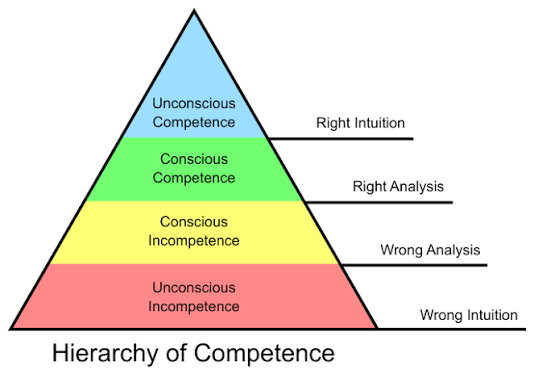
the immediate feeling / deliberate assessment distinction also reminds me of system 1 / system 2. though intuition can contain learned expertise too so treating deliberation as automatically more accurate might be over simplifying it
Someone on reddit mapped all 9,110 NeurIPS 2026 papers onto one topic map, coloured by whether each topic's share of papers grew (red) or shrank (blue) since 2025.
The hottest area by far looks like LLM Agents, with LLM Reasoning & Retrieval and parts of Robotics/Embodied AI, Diffusion/Flows and Biomolecules also growing; areas like LLM Post-Training, Graph Learning & Recommendation and parts of RL/Bandits shrank.
last month, i read a book about setting crystal clear objectives and chasing your goal. right now, reading a book about having no objectives and just going at it, enjoying the process, but what will really work?