Good news.
If you are interested in attending the free lecture on low back pain on the 23rd October but can't get to Sydney, there is now an option to register for the live-stream of the event. Follow the QR code in the image below, or register here: https://t.co/7FZiEZBl3T
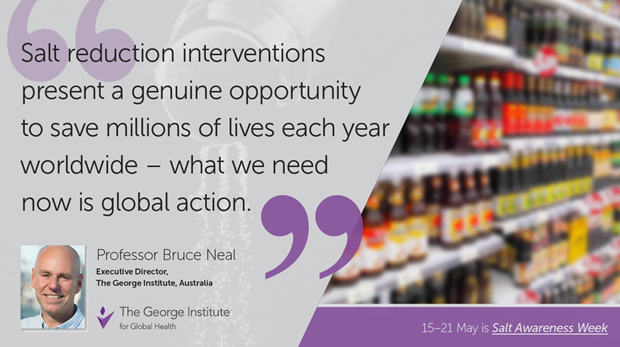
Cutting down on salt is one of the simplest ways to improve health and reduce risk of heart attacks & strokes
This World #SaltAwarenessWeek explore our research looking at the life-saving potential of reduced-sodium added-potassium ‘salt substitutes' ↠
https://t.co/VE3Gb37Tmw
@DaleThompsonDC Fascinating. 101 million records is a dataset that makes a difference! How common do US HP diagnose LDH/LSR clinically without MRI (misdiagnosis?) "data entered in pt record may not be accurate, leading to an information bias in the aggregated health records data."
@adamdobson123 She has heaps of great discussions with others. If you haven't heard it, this debate a few weeks ago is really interesting where she and a critic discuss nociception, embryology, neural pathways. A good one about pain science. https://t.co/Cdfb4zKVc4
Recently I had a 90-minute discussion with @Mark_Solms, a neuropsychologist who plans to critique my research and who proposes natural kind categories of affect (which in my view the data do not support). We recorded the discussion for anyone interested. https://t.co/zgb8JIdGEF
My life mission is to implement the American College of Physicians Guideline for low back pain. Read why and how! @medpagetoday and @genevievefri @DukeMSK @DukeMargolis https://t.co/Hc4lNuWi9g
@adamdobson123@19Sos82@Radiopaedia I tend to agree Adam, however, I have also read research suggesting quite different findings from supine to prone. May I ask for a reference that suggests imaging is normal when comparing/contrasting? Seems to me emerging evidence has a role for pathology https://t.co/9lsjNSPrdY
What happens when a scoping review, mapping review and evidence and gap map walk into a bar? They try to work out their differences....
Read our new article: https://t.co/m1gkm2YuOQ
@ZacMunn@ATricco@Hanan2000Khalil@AshritaSaran#JBIScoping
A systematic review of Clinical Practice Guidelines for persons with non-specific low back pain with and without radiculopathy: Identification of best evidence for rehabilitation to develop the WHO's Package of Interventions for Rehabilitation
https://t.co/cejTqCFXuu
@adamdobson123@GregLehman Thoughts on this paper? simple design, prone position change for MRI and found a correlation with symptoms/structure not present supine. https://t.co/9lsjNSPrdY. also seems to be a trend away from NSLBP acknowledged here in Raine. Incomplete story? https://t.co/Uwd180GfNk
Scoping review or Systematic Review, which one is appropriate for your research question? This is a great presentation from JBI. https://t.co/KUCIAqyxHY Includes links to decision making tools: https://t.co/r4pB7Gkmep Plenty of papers to read in the presentation.
@keithfrankish May I ask what you think of the iasp definition of pain paper? (or, what is your definition of pain)? The demon thought experiment seems to contradict several consensus points, such as believing the self-report. https://t.co/IgLoZBXiCp
@keithfrankish Demon in your example sounds like pain neuroscience education. A lot of pne is reframing to, 'these nociceptors are danger signals, not pain signals.' Pain being biopsychosocial, it is open to suggestion and context, eg placebo and nocebo. I'd be better off listening to demon.
@Retlouping Post-positivism acknowledges the subjectivity of human understanding and the role that personal and cultural experiences play in shaping our perspectives. A qualitative study will narrow in on the subjective experience and often sits in post-positivist knowledge production.
@Retlouping Positivism is a philosophy of science that holds that the only authentic knowledge is scientific knowledge, and that such knowledge can only come from positive affirmation of theories through strict scientific method. Often uses hypothesis testing and attempts to refute it.