Know the real number before you decide.
Every day I break down UK money numbers properly. Tax, pensions, mortgages, car finance, investing. Free calculators ↓
Waiting for the Bank of England to cut before you fix your mortgage? You might be watching the wrong number.
Fixed rates track swap rates, the market's bet on future rates. They can drop months before the base rate moves.
By the time it cuts, the cheap fix is often gone.
Everyone says wages haven't kept up. For the lowest paid, they've pulled ahead.
The minimum wage was £5.05 an hour in 2005. It's £12.71 now. Even after inflation, that's about a third more in real terms.
The squeeze is real. It just isn't coming from the minimum wage.
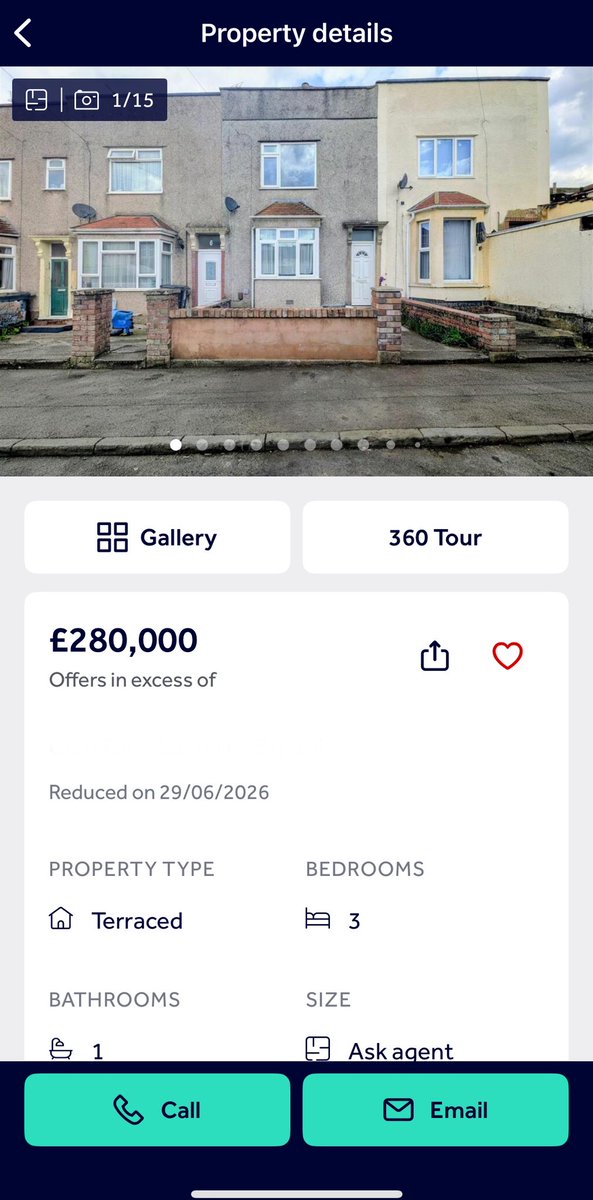
This is the number behind it. A home in England cost about 3.5 times the average salary in the late 90s, when their parents were buying. It's around 7.6 times now.
Same job, same effort, a ladder more than twice as tall.
Roughly one in three UK adults aged 20 to 34 still lives with their parents.
Not students. Grown adults with full-time jobs, plenty of them in their thirties, sleeping in the room they grew up in because a one-bed flat costs more than they bring home.
Their parents had left home, married and bought a house by the same age.
Nothing about that generation was more capable. They just got there before the ladder went up.
The daft part is the rule behind it. The bank isn't testing the £900 you'd actually pay. It's testing whether you'd still cope if your rate hit 7 or 8%, way above what you'd be charged.
Your £1,300 rent proves you'd manage exactly that. The test just doesn't count what you already pay.
@ItsJamesHall Buy. On a spreadsheet, renting and investing the difference often wins. But almost nobody actually does the investing part, and the mortgage is the one version where the saving happens whether you're disciplined or not.
The real answer to what's wrong is that we barely build.
Planning rations the land, so UK puts up nowhere near enough homes. That American house sits on land nobody's fighting over.
@JGreenCrypto That's cheap land more than a cheap house. America has space and builds on it, so £220k buys a home, while here that money is mostly the plot it stands on.
@DividendDrip Monthly, and it's just assets minus liabilities.
Any more often and you're only watching it wobble. Checking daily stresses you out for nothing.
@earnlearninvest Love this. The one nobody admits is just being scared it'll drop. It will, that's normal, and it's only a loss if you sell. Solves that too.
Maddening, and it's not even the worst of it. The full state pension is now £12,547 a year, just £22 under the frozen tax-free allowance.
One more triple lock rise tips it over the tax-free line.
UK state pension is £241.30 per week after 35 years of National Insurance contributions.
The guaranteed minimum income for someone who has paid nothing into the system is £238.00 per week.
That means if you do the right thing, work and pay into the system you benefit by £3.30 per week 🤯
Just how is this right?
#Pensions
@2147mill £50's a solid start honestly. Small enough you'll keep it going even when money's tight, which is really the whole point. Bump it up as you earn more.
The bags make the point, but the quiet one nobody mentions is fiscal drag.
Your pay rises, the tax-free allowance stays frozen since 2021, so more of each raise just gets taxed away.
In 2015, the UK introduced the 5p charge for plastic carrier bags.
Back then, the minimum wage was £6.70 an hour, meaning one hour's work could buy 134 carrier bags.
Fast forward to 2026.
Minimum wage is £12.71 an hour, but carrier bags now cost around 40p each.
That same hour of work now buys just 31 carrier bags.
So while the price of carrier bags has increased by 700%, minimum wage has only gone up by around 90%.
If minimum wage had kept pace with the price of carrier bags, it wouldn't be £12.71 today...
It would be £53.60 an hour.
Tell me again that wages have kept up with the cost of living.
One for anyone thinking of going freelance. The IFS found more than 3 in 4 people who were consistently paying into a pension stop once they become self-employed.
No auto-enrolment, so nobody sets it up for you.
@DividendDrip Those two circles are the whole point. Each one felt like the top at the time, and now they're just bumps near the bottom of the chart. Every all-time high looks terrifying until it becomes the middle of the graph.
@ukhpinfo This always sounds wrong because the real growth is recent. Pay fell in real terms through 2022-23, so people remember the squeeze, not the recovery that followed. The average recovered faster than the feeling did.
Premium Bonds get sold as savings with a bit of fun attached. In practice plenty of holders win nothing for months on end, and the headline rate quietly assumes you're luckier than most.
Fine as a flutter. Savings account, or raffle ticket?
@GrahamCompton Global tracker, mostly because I'd fiddle with anything else. And only £20k of it fits in an ISA this year, so the other £30k goes into a pension.
@fynnvestor £385k for the cheapest 3 bed is grim. Houses were about 4x average earnings in the mid 90s and about 8x now. Same house, double the salary.