Climate change is here—bringing heatwaves, wildfires, droughts, water insecurity, and ecosystem degradation.
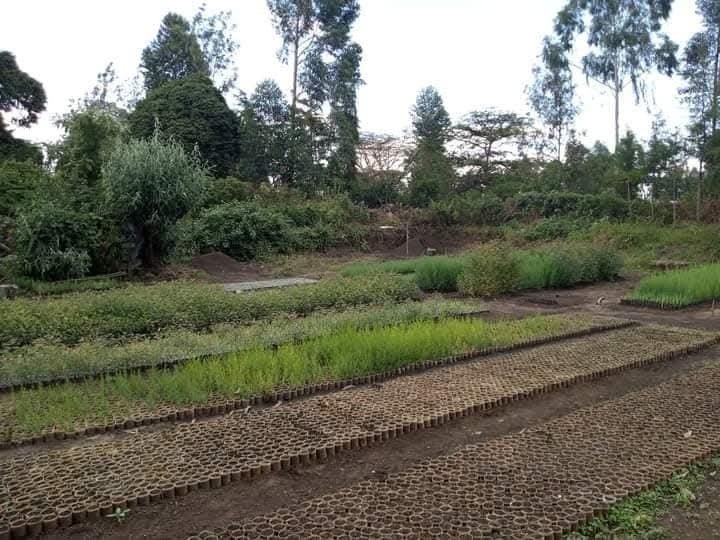
The Kehosa Water and Reforestation Project is taking action through water access, reforestation, mangrove restoration, regenerative agriculture, and renewable energy.
Reforestation restores degraded landscapes by planting trees where forests have been lost to logging, mining, wildfires and other human activities.
VOLUNTEER, GET INVOLVED or 💚 DONATE to #1BillionTreesChallenge and #KehosaWaterProject in #Kenya via https://t.co/3VYssjeg2D
Top 15 Countries, Petrol Cars Share of New Car Sales, July 2026:
1 Norway 0.9%
2 Denmark8%
3 Netherlands 9% (H1 2026)
4 France 14%
5 Portugal 20%
6 Thailand 21%(H1 2026)
7 Iceland 24% (H1 2026)
8 Spain26%
9 Switzerland 27% (H1 2026)
10 Germany 31%
11 Ireland 33% (Jan to Jul 2026)
12 Austria 34% (Jan to Jul 2026)
13 China 35%
14 Poland 35% (Jun 2026)
15 Finland 37%
The petrol engine is dying by a thousand cuts
Europe led major markets on EV sales in H1 2026, up 30% yr on yr. EVs are now 30%+ of EU sales, 38% in the UK.
But the real story is global.
Outside the major markets, sales rose ~75%. Latin America more than doubled. India +90%. Colombia +300%.
Centre of gravity is shifting.
2027 is likely to be WAY worse than this 2026 in terms of extreme heat, drought, fires, crop losses. WAY worse. In the Northern hemisphere, we have half a year to prepare for next summer and save some lives.
Everyone is acting like 2026 is a blip. No: far worse is to come.
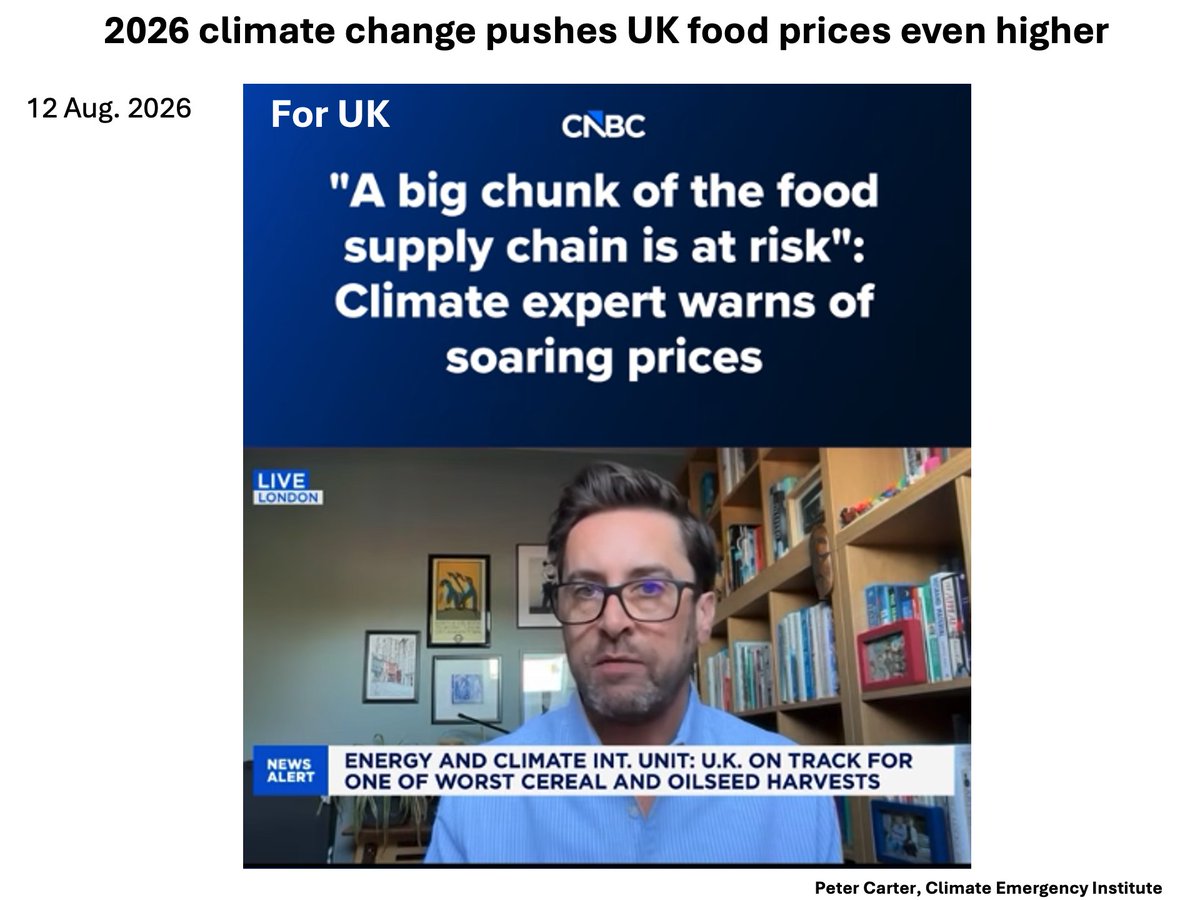
2026 UK EXTREME CLIMATE CHANGE TO PUSH UK FOOD PRICES HIGHER
Youtube short, 2026 UK extreme weather bound to increase food prices more in the UK
#foodsecurity#climatechange#globalwarming
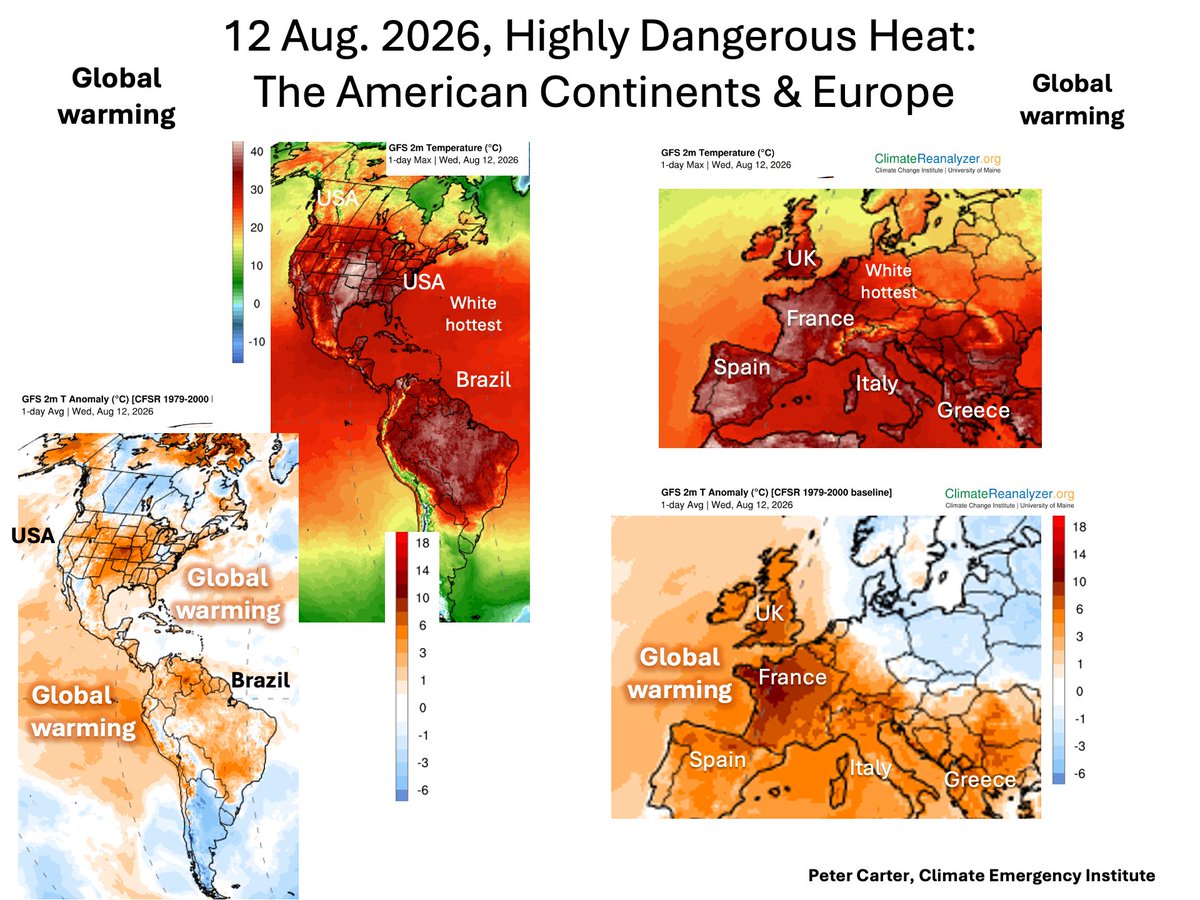
12 AUG. HIGHLY DANGEROUS HEAT - AMERICAS & EUROPE
US central heat dome persists. Another on the way
El Nino drives increasing South America heat
Western Europe heat dome intensifies- will increase more
12 August 2026, Climate Reanalyzer
#heatwave #climatechange. #globalwarmingeven
NASA GISS, JULY 2026: 1.55°C AND JUNE 1.51°C
July 2026 warming is 1.55°C by NASA GISS
GISS had June 2026 at 1.51°C. (Berkeley Earth was 1.49°C)
With El Nino, it looks like 2026 could be a new record; the 2024 record was 1.55°C.
https://t.co/MQemTqIOyO
#climatechange #globalwarming
5TH HEAT DOME EXPANDS ACROSS EUROPE. 40°C+
Severe Weather Europe, 12 Aug. 2026
40°C+ Highs Target Western and Central Europe
Lack of nighttime cooling will increase health and wildfire hazard
https://t.co/8mk9SjDd7J
#heatwave#climatechange. #globalwarming
Water Is Life, Every Drop Counts! Without Water, You Cannot Make Coffee, Swim or Grow Trees or Food!
Take action today for Kehosa Water and Reforestation Project by @TheClimateFund
Volunteer, Get Involved or DONATE via link:
https://t.co/FaYaOvuXwf
#KehosaWATERProject
#DIKISSStatecraft/#DIKISSGeopolitics-Africa and the Arctic: Emerging Frontiers of 21st-Century Geopolitical Competition: Africa and the Arctic represent two very different—but increasingly interconnected—arenas of 21st-century geopolitical competition.
Africa is emerging as a critical geopolitical theater because of its concentration of strategic resources, rapidly expanding markets, demographic weight, maritime corridors and growing importance to global energy and critical-mineral supply chains. Competition for access to resources, infrastructure, ports, technology, markets and political influence is likely to intensify as major powers seek to secure long-term strategic advantages across the continent.
The Arctic, meanwhile, is undergoing a profound transformation. Climate change is reducing the physical barriers historically imposed by ice, potentially increasing access to natural resources, maritime routes and strategically important military geography. As Arctic accessibility increases, the region's significance to global security and economic competition is likely to expand.
The Arctic's importance could increase further as competition over critical minerals, energy resources, strategic supply chains and emerging maritime corridors intensifies. Control, influence or reliable access to these assets could become increasingly important to national security and economic resilience.
The Arctic is therefore evolving into a potential theater of great-power strategic confrontation. Competition among Russia, the United States, China and European/NATO powers could increasingly revolve around strategic geography, critical minerals, energy security, maritime access, military infrastructure, technological capabilities and nuclear deterrence.
The most consequential dynamic may be the interaction between these two theaters. Africa's mineral resources and maritime infrastructure could become increasingly relevant to the same global competition for resilient supply chains that is driving interest in the Arctic. At the same time, Arctic developments could reshape global energy, shipping and mineral markets, with consequences extending far beyond the polar region.
The central strategic question is no longer whether Africa and the Arctic matter to global geopolitics, but how competition in these two regions will interact to reshape the distribution of economic, technological and strategic power.