@polymathinvest1 Hi Polymath,
I’m sad to have found out you’d blocked me on Substack — this is a bit of a shock as we hadn’t interacted before and I’d always enjoyed your content.
Please let me know if there’s a way we could resolve this.
All the best, and happy new year :)
After 2.5 years, I returned to this.
Left at 1992. Will now try to get to 2025.
This book is single-handedly worth courses, books, and whole degrees. I’m not even kidding. No one has amassed as much business/investing knowledge as Warren all throughout history.
Ed Thorp is a true master at probability games and really an exceptional individual.
Notes and systems from his autobiography to think in new ways:
- 'It felt good to know that, just by sitting in a room and using pure math, I could change the world.'
- Guiding questions to make a decision:
1) If you do this, what do you want to happen?
2) If you do this, what do you think will happen?
- 'I was learning things out for myself, not limited by prompting from teachers, parents, or the school curriculum.'
- When he was thinking about beating roulette, he came across Feynman once and asked him if it was possible. Feynman said it wasn't.
Thorp was actually encouraged by that.
- A small change in a problem can transform it from easy to solve to unsolvable.
- 'The surest way to get rich is to play only those gambling games or make those investments where I have an edge.'
- Adjust how much to bet based on odds.
- When he tried to beat Blackjack, Thorp realized that the system could have infinite complexity. With that in mind, he set to simplify it, deleting rules and creating shortcuts.
- Betting too much, even when odds are in your favor, can be ruinous.
- Extreme events are real, account for them.
- People tend to make the error of seeing patterns or explanations when there aren't any.
- 'I preferred to treat LPs as I wish to be treated in their place'.
- If you can't make a rational case for why you have an edge, then you probably don't.
- 'What we learn from history is that we don't learn from history'.
- Education is like software for your brain.
- 'To preserve the quality of my life and to spend more of it in the company of people I value and in the exploration of ideas I enjoy, I chose not to follow up on a number of business ventures'.
In celebration of the 35th anniversary of @HowardMarksBook's memos, we released the first and only complete collection of all the memos in a single volume, from the first one in 1990 to the latest as of publication.
Read now: https://t.co/Mbjt9pqU1O
#AlternativeInvesting
Yeah-for example where do you store your watchlists, where do you keep track of company updates, do you use screeners/ranking systems? How do you find new opportunities?
Koyfin's great. Interesting, thank you, Tiho.
Has AI become a larger part of your process? I'm still reluctant with it and haven't quite figured how to use it without sacrificing my own thought processes.
Thanks
@Ikkenospes Such enjoyable music. Autumn (what us Brits call fall) is so underrated, such a great time of year. Much easier to read and work when it’s a little cold outside.
@Ikkenospes I’m glad.
Nice, I’m currently listening to both! Thomas Dybdahl is a new name for me; I love Hermanos Gutierrez.
Love it when the season changes and warrants a new genre a music to be heard.
Distorted risk perception has always fascinated me.
We view risk inversely to its reality. When prices rise we relax our tolerance for risk, which is odd because a higher price comes with additional risk.
From Excess Returns
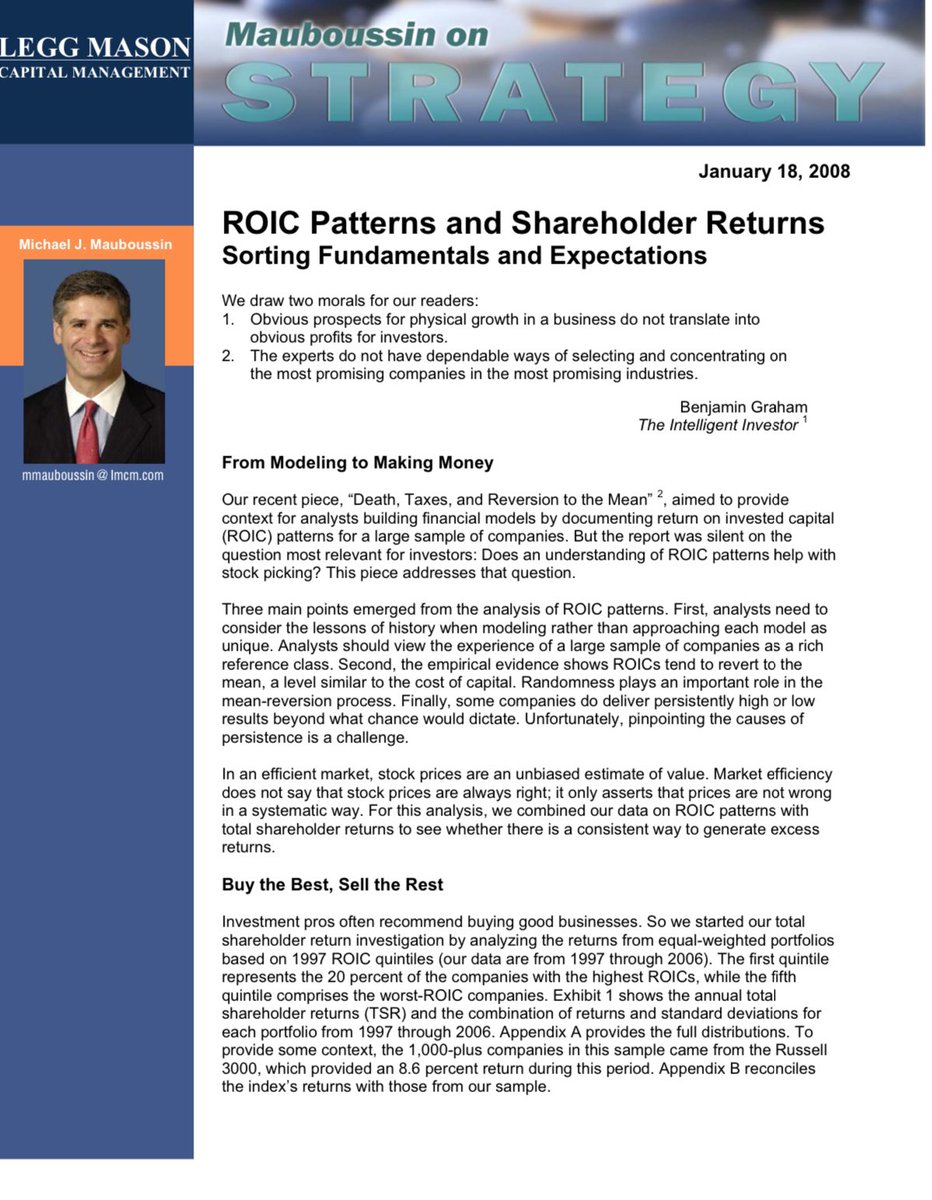
In a paper by Mauboussin, he brilliantly goes through why the market is better viewed through the lens of a complex adaptive system.
Fascinating stuff.
Paper: Revisiting Market Efficiency: The Stock Market as a Complex Adaptive System