Key takeaway:
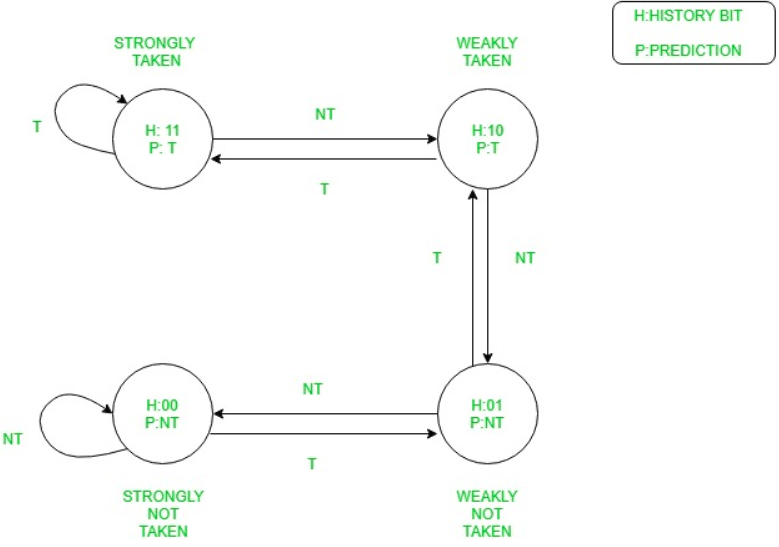
Branch Prediction guesses the future.
Speculative Execution acts on that guess.
Together, they keep modern CPUs moving instead of waiting.
❤️ Like | 🔁 Repost if this helped.
Next: Architecture Explained #012 - Register Renaming: How CPUs Eliminate False Dependencies.
#ArchitectureExplained #ComputerArchitecture #Semiconductor
Architecture Explained #011
Speculative Execution: When CPUs Execute Before They Know
Imagine your friend always orders the same coffee. Before they even reach the counter, the barista starts making it.
If they’re right - time is saved.
If they’re wrong - the coffee is thrown away.
Modern CPUs work surprisingly similarly.
#ArchitectureExplained #ComputerArchitecture #CPU
Speculative Execution doesn’t make the CPU smarter. It makes it bolder.
Instead of waiting for certainty, it takes a calculated risk to keep the pipeline busy.
Most of the time, that gamble pays off.
#Microarchitecture#Semiconductor#CPU
🇮🇳India’s next big chip move is smart, realistic & high-impact
Under Semicon 2.0, India is set to double down on what actually moves the needle right now:
Legacy-node fabs (28–110 nm) – the real “sweet spot”
Advanced packaging & more OSAT facilities
ISM CEO Amitesh Kumar Sinha told Moneycontrol:
“The sweet spot is 28 nanometre to 110 nanometre and a lot of demand is coming… This is an opportunity for India. We have a good footprint in legacy fabs.”
Why this matters:
~70% of global chip demand is still in mature nodes
Companies are actively diversifying manufacturing away from concentrated geographies
Advanced packaging is the fastest way to boost performance & self-reliance without chasing ultra-expensive cutting-edge nodes yet
Semicon 2.0 will also:
Carry a much larger financial outlay
Support R&D + IP creation
Simplify approvals for faster clearances
Build on the one commercial silicon fab already approved
6–7 Indian design startups are already approaching tape-out. The ecosystem is maturing.
India is not trying to leapfrog to 2 nm overnight.
It’s building a solid, demand-driven, full-stack semiconductor base - design → fab → packaging.
This is how you go from “aspirational” to “reliable partner” in the global supply chain.
Source: Moneycontrol (31 July 2026)
https://t.co/rsJJpl5Upz
#SemiconIndia #Semicon2.0 #MakeInIndia #Semiconductor #AtmanirbharBharat
Key takeaway:
Branch Prediction doesn’t know the future.
It makes smart guesses so the CPU rarely has to stop.
❤️ Like | 🔁 Repost if this helped.
Next: Architecture Explained #011 - Speculative Execution: When CPUs Execute Instructions Before They Know They’re Needed.
#ArchitectureExplained #ComputerArchitecture #Semiconductor
Architecture Explained #010
Branch Prediction: How CPUs Predict the Future
Imagine you’re reading a book.
You reach the sentence:
“If it starts raining…”
Your brain is already expecting what comes next.
CPUs do something surprisingly similar.
They predict the future.
#ArchitectureExplained #ComputerArchitecture #CPU
Modern processors achieve remarkably high prediction accuracy.
Not because they can see the future…
but because most programs repeat similar patterns.
The better the prediction, the faster the processor feels.
#Microarchitecture#CPU#Performance
Key takeaway:
A fast CPU isn’t one that never waits.
It’s one that keeps making progress while waiting.
❤️ Like |🔁 Repost if this helped.
Next: Architecture Explained #010 - Branch Prediction: How CPUs Predict the Future.
#ArchitectureExplained#ComputerArchitecture #Semiconductor
Architecture Explained #009
Out-of-Order Execution: How CPUs Keep Working While Waiting
Imagine you’re in a supermarket.
The first customer forgets their wallet.
Should everyone behind them wait?
Of course not.
The cashier serves the next ready customer.
Modern CPUs do something remarkably similar.
#ArchitectureExplained #ComputerArchitecture #CPU
Today, virtually every high-performance processor uses Out-of-Order Execution.
🍎 Apple
🟦 Intel
🟥 AMD
🐉Qualcomm
Different designs. Same fundamental idea:
Never let execution units sit idle if useful work is available.
#AppleSilicon#AMD#Intel#Qualcomm