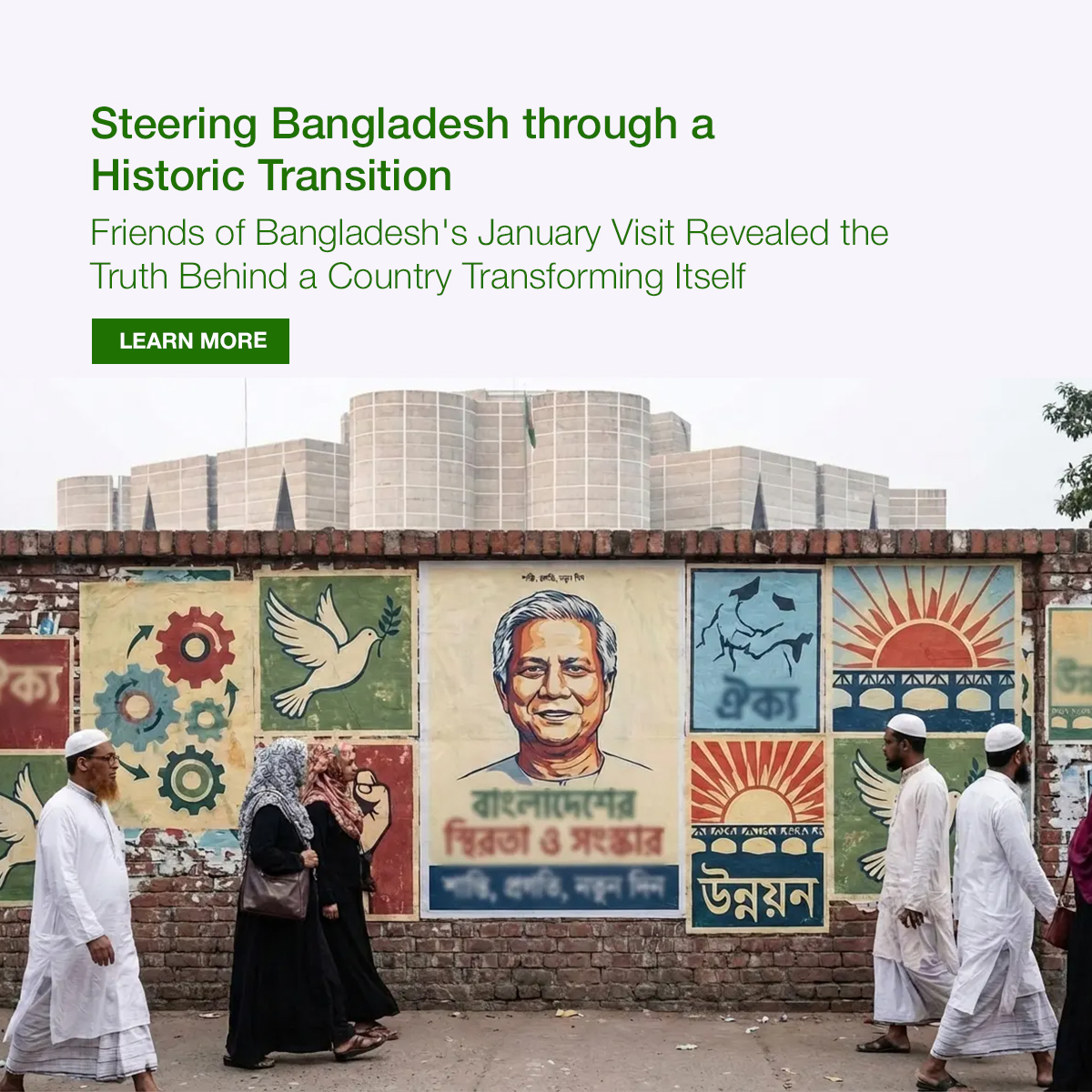
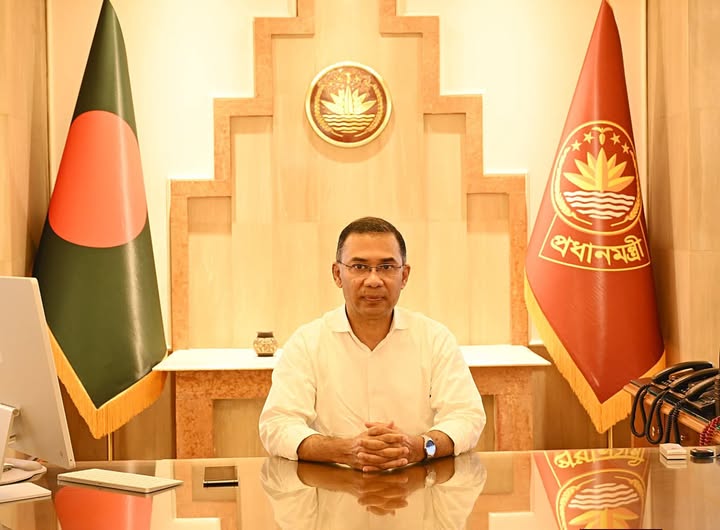
Our recent visit to Bangladesh revealed a country far more hopeful and organized than many outside narratives suggest. Here's what we saw on the ground. Read the full blog https://t.co/KZEqRx3NZK
আমাদের সাম্প্রতিক বাংলাদেশ সফরে দেখা গেছে, বাইরের অনেক বর্ণনার বিপরীতে, একটি দেশ যা অনেক বেশি আশাবাদী ও সংগঠিত। মাটিতে নেমে আমরা যা দেখেছি, তা ভিন্ন এক বাস্তবতার গল্প বলে।
সম্পূর্ণ ব্লগটি পড়ুন: https://t.co/KZEqRx3NZK
#FriendsofBangladesh #Bangladesh #transition #truth
@ChiefAdviserGoB | @Yunus_Centre
A notable shift has recently been made visible in how influential Indian voices are responding to #Bangladesh’s official remembrance of March 25 – Genocide Remembrance Day or Genocide Day.
In the last few days, several prominent Indian journalists and academics have publicly welcomed the message from Bangladesh Prime Minister @trahmanbnp marking the occasion. Some like journalist @ShekharGupta described the statement as “wise” and “mature”, while academic-activist @ashoswai praised it for “telling the history as it is” – juxtaposing it against what he deems attempts by Islamists trying to rewrite Bangladesh’s history after the fall of Sheikh Hasina.
Major Indian media outlets also amplified the message, signalling a warmer tone in public discourse after nearly eighteen months of strained relations between the two neighbouring nations.
For many on both sides of the border, this change in tone is encouraging. A more constructive engagement with Bangladesh’s historical memory – particularly around the events of March 25, 1971 and Operation Searchlight – can help rebuild trust and create space for deeper regional cooperation.
Yet the contrast with last year is striking. On the Genocide Day last year, Chief Adviser Muhammad Yunus had issued a strongly worded statement honouring the martyrs and reaffirming the centrality of the Liberation War’s legacy in shaping a just, democratic Bangladesh. At a time when fears of “revisionism” were arguably at their peak in Indian commentary, that message received little attention from major Indian media or influential public voices.
This raises an uncomfortable question: were concerns about an “Islamist transformation” in Bangladesh so dominant that they prevented a fair assessment of the interim administration’s positions and actions?
If the current moment represents a thaw, it should also be an opportunity for reflection. Genuine understanding between #India and Bangladesh cannot be built on selective listening or narrative frames that obscure complexity. It requires consistent engagement, intellectual honesty, and respect for the historical experiences and democratic aspirations of the Bangladeshi people.
Recognizing the pain of the past – and acknowledging each other’s political realities in the present – is the first step toward a more stable and cooperative future for the region.
✅ BREAKING PODCAST REVELATION 🔥
Sheikh Hasina has completely broken down. She is extremely disappointed and shattered.
From ordinary citizens to the entire nation — and even her own Awami League party members and family — she is now openly abusing everyone, calling them “gadhdar” and “beiman” (traitors and betrayers).
In a recent podcast with US-based journalist Sultana Ahmed, senior Awami League intellectual Mohammad Ali Arafat directly quoted Sheikh Hasina and revealed her current mental state.
He said: “She has expressed deep dissatisfaction even with her own party leaders and workers. Not even 10,000 people came out on the streets to protest her death sentence — this has left her utterly disappointed.”
He further revealed: “Despite having lakhs and crores of leaders and activists, no one — neither in the country nor abroad — has come out in her support. She can’t even drink a single cup of tea served by her own daughter-in-law. There is literally no one around her. Her son and daughter have refused to take responsibility for the party. She is profoundly broken.”
In her own words (as quoted): “After religious leader Delwar Hossain Sayeedi’s verdict, hundreds of people sacrificed their lives for him. Yet my party’s leaders and workers didn’t even step onto the streets for me. Haven’t I done anything for them?”
The once “iron lady” who ruled Bangladesh with absolute power now finds herself isolated, abandoned, and emotionally devastated — even by those who once worshipped her.
This is not hearsay. This is coming directly from a senior Awami League figure in her inner circle.
Source: Sultana Ahmed’s Podcast (Mohammad Ali Arafat interview)
Picture: Collected from @MAarafat71
#SheikhHasina #AwamiLeague #JulyUprising #BangladeshPolitics #PostRevolutionBD @albd1971
Bangladesh’s recently elected prime minister, Tarique Rahman, and his Bangladesh Nationalist Party government face many urgent challenges but can use this opportunity to bring lasting protections of human rights: message from nine rights groups. https://t.co/TPcxqBPGxh
It was a great honor to represent @rtoforg at the opening session of Bangladesh’s 13th Parliament. The mood at Parliament was festive with both government and opposition underscoring their commitment to seeing the institution function as intended. My congratulations to the newly elected Speaker and Deputy Speaker as well as all the Members of Parliament. Now the real work begins.
This is Tarique Rahman and BNP's challenge. Assuming this attack happened as being suggested, will he/the party rein in their activists or allow its own student wing/activists to function in the same was as the Awami League student wing often used to?
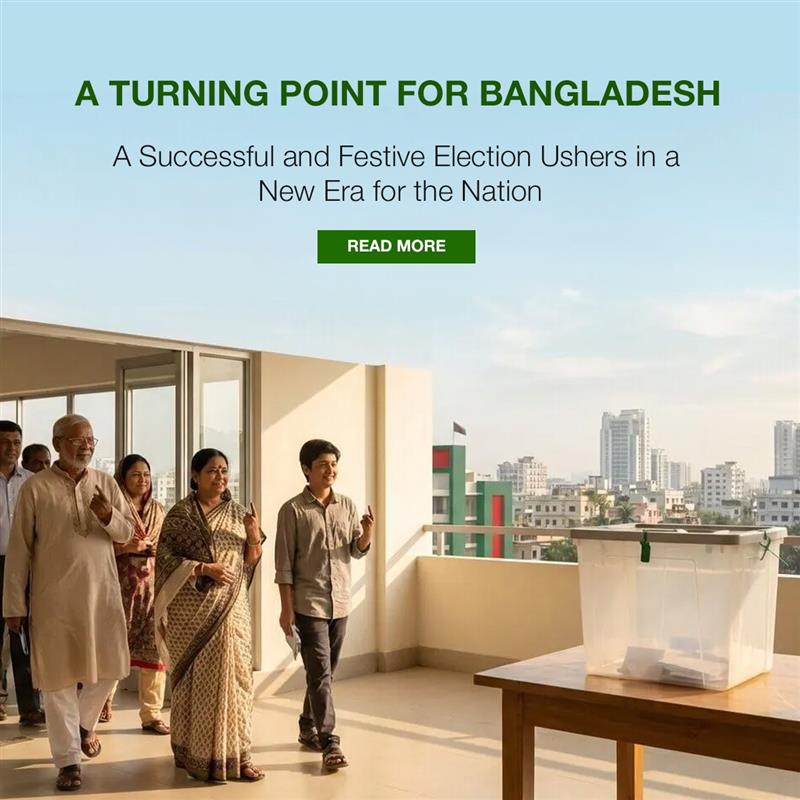
This February 12 election marked a pivotal shift, where leaders, ordinary people, institutions, and civic pride converged to open exciting new possibilities for Bangladesh. The country's democratic renewal is complete--thanks in large part to the work of the Interim Government and gracious statements from the parties that will be in opposition. Learn more from our latest blog post! https://t.co/k19LNIjZLO
১২ই ফেব্রুয়ারির এই নির্বাচন এক গুরুত্বপূর্ণ পরিবর্তনের সূচনা করে, যেখানে নেতা, সাধারণ মানুষ, প্রতিষ্ঠান এবং নাগরিক একত্রিত হয়ে বাংলাদেশের জন্য নতুন সম্ভাবনার দ্বার উন্মোচন করে। দেশের গণতান্ত্রিক পুনর্নবীকরণ সম্পূর্ণ হয়েছে - অন্তর্বর্তীকালীন সরকারের কাজ এবং বিরোধী দলগুলির সদয় বক্তব্যের জন্য বৃহৎভাবে ধন্যবাদ। আমাদের ব্লগ পোস্ট থেকে আরও জানুন! https://t.co/k19LNIjZLO
@ChiefAdviserGoB | @Yunus_Centre
#Bangladesh #FriendsofBangladesh #progress #democracy
Those like Laura Loomer, Randy Fine, Valentina Gomez. and Amy Mek who are demonizing fellow citizens and callimg for them to be deported because of their Muslim faith are themselves un-American and should be denounced. Islamophobia is as unacceptable as anti-semitism.
It is refreshing to hear saner voices speaking out on Bangladesh-India relations. It is a shame that the last 18 months were lost to the extreme voices in India.
https://t.co/ID6bBKMPwG
Tarique Rahman’s first decisions send a powerful anti-corruption message. 🌾🇧🇩
Leadership is judged not by promises, but by lifestyle, conduct, and use of power. On Day One, PM Tarique Rahman cut luxury convoys, limited VVIP motorcades, kept roads open, and rejected lavish state perks—restoring citizens’ dignity and challenging a culture of excess.
From using simple vehicles to reducing protocol and moving governance back to institutions, the signal is clear: public office is for service, not privilege. Corruption isn’t only about money—it’s also about abuse of power.
These symbolic steps may cost little financially, but their moral value is huge. If sustained, they can rebuild trust, reflect the aspirations of youth for a fair state, and move Bangladesh toward accountable, modern governance. ✊✨
#Bangladesh 🇧🇩 #GoodGovernance #AntiCorruption #LeadershipByExample #InstitutionalReform #CitizensFirst #Democracy #ShobarAgeyBangladesh #BNP #YouthAspiration 🌾
In a historic FIRST, Bangladesh Jamaat-e-Islami led by Dr Shafiqur Rahman has paid tribute at the Shahid Minar in Dhaka to mark February 21 Bhasha Dibosh.
It is deeply symbolic as Jamaat has historically shunned this event. But as the principal opposition party now, it has had to accept the changed political reality.
Bhasha Andolon marks the rise of Bengali nationalism in erstwhile East Pakistan as native Bengalis asserted their ethnic identity and cultural pride agaist the Islamist Pakistani regime.
It is the "Ekushey" spirit is at the core of the very existence of Bangladesh.
More great commentary about the success of the #Bangladesh election in @Deseret including a quote of @JonFDanilowicz - suggests that Bangladesh can serve as a role model and inspiration for the USA! https://t.co/t4y1iRJlGz
Wow, Bangladesh is changing in some very positive ways. Applause for gracious winners and runners up in the election, and to the Interim Govt for helping make this possible.
আমরা দুটি দল এ ব্যাপারে একমত হয়েছি যে সকলে মিলে একসাথে একটি নতুন বাংলাদেশ আমরা গড়ে তুলবো
-ডাঃ সৈয়দ আবদুল্লাহ মোহাম্মদ তাহের
সম্মানিত আমীরে জামায়াত ডা. শফিকুর রহমান-এর বসুন্ধরাস্থ কার্যালয়ে বিএনপি'র সম্মানিত চেয়ারম্যান জনাব তারেক রহমান এর সৌজন্য সাক্ষাৎ পরবর্তী সংবাদ সম্মেলন
Thank you very much, Honourable @narendramodi. We greatly appreciate your kind acknowledgment of Mr. Tarique Rahman’s leadership in securing the BNP’s decisive win in the national elections. This outcome reflects the trust and confidence the people of Bangladesh have placed in our leadership and in the democratic process.
Bangladesh remains committed to upholding democratic values, inclusivity, and progressive development for all its citizens.
We look forward to engaging constructively with India to advance our multifaceted relationship, guided by mutual respect, sensitivity to each other’s concerns, and a shared commitment to peace, stability, and prosperity in our region.
Congratulations to @trahmanbnp on his party's victory, and to all the parties and candidates for participating vigourously and in the spirit of a vibrant democracy. Bangladesh has a bright future! Kudos to the Interim Government for managing the election well and so much more.
What next for Dr Yunus?
Whilst it seems polls have suggested that Muhammad Yunus and the interim government remained popular throughout its 18 months in power, at least amongst civil society in Dhaka and its social elite there was rarely a good word said about him.
Before July/August 2024, the country's elite civil society respected Yunus, but did not necessarily warm to him. Now he has -- rightly or wrongly -- also lost a lot of that respect.
In part that is the nature of governing, as it forces leaders to make a lot of difficult decisions. Reform, accountability, and stability are objectives that do not always sit comfortably together, and in attempting to balance them, Yunus inevitably alienated some who had initially placed hope in his leadership.
And in part, it is because Yunus did make some controversial calls.
Amongst them was his perceived closeness to the student and populist movements which created the impression -- fair or not -- that he had inappropriately allied with them.
At the same time, his government’s apparent tolerance of widespread arbitrary detentions under its watch raised very uncomfortable questions about civil liberties and due process. For a figure long associated with ethical leadership and social justice, these allegations struck at the heart of his public image.
That said, Yunus does not appear overly concerned with elite opinion, particularly if he believes -- as he may do -- that many within civil society failed to defend him when he himself was under pressure during the Awami League’s time in power. Moreover, he is aware that he has cultivated new alliances and friends.
In their meeting in London, Tarique Rahman reportedly offered Yunus the post of the presidency if BNP came to power. Whether explicitly stated or implicitly conveyed, the possibility was clearly raised.
Those close to Yunus deny that he is interested in such a role -- even assuming the offer remains open -- suggesting instead that he intends to return to the type of work that defined his earlier career.
Moreover, with the proposed constitutional changes giving more powers to the post of President, Rahman may now realise he wants someone more compliant, something which Yunus is unlikely to be.
Nevertheless, a Yunus presidency could arguably benefit Bangladesh considerably. Despite domestic criticism from certain groups, he continues to command considerable respect internationally, and no other Bangladeshi figure possesses comparable global stature.
A domestic focused Prime Minister operating with an internationally-minded President could be what the country needs.
https://t.co/Nb9CpogxwN