I gave up my dream of being a designer because of AI. I'm taking it back for the same reason.
Not because I fell out of love with it. Because the first time I watched an AI tool make something genuinely decent, I did the math. Most clients would never be able to tell the difference. For their purposes, it didn't matter whether it came from me or a machine.
So I walked away after years of doing what I loved. It felt like the only rational move.
Here's what I got wrong, and the one thing I got right.
What I got right is that I felt something missing from the machine's work before I had words for it. Everything it made was competent, but nothing it made meant anything to me, and I could see where it was headed: leave it alone long enough and everything starts looking the same.
I look around today and I see it happening. Scroll the top brands. Everything's becoming interchangeable, and you can feel the human draining out of it.
What I got wrong is that I thought the answer was to quit. Instead I went to understand AI. Not nearly every inch of it, but enough to know what it is and what it isn't. If I couldn't beat it, I had a responsibility to understand it well enough to come back and shape what happens next.
And somewhere in the middle of that, I remembered why I cared in the first place.
Every piece of art that ever worked had a perspective behind it. A point of view it was trying to hand to you. Even the work that refuses to say anything is saying something: you figure it out. "Art asks questions and design answers them." The work was never the pixels. It was always the thinking that chose the pixels.
Two lines I keep coming back to:
Martin Scorsese said "the most personal is the most creative." Nobody else on earth could have made his films. That isn't a style choice. That's the whole game.
David Carson said people don't want your software. They want the one human piece of your work that actually tells a story.
So here is the flip.
AI didn't kill design. It killed the parts of design that never mattered: the production work, the process theater, the competent average. What survived is the only part that ever did. A person with a perspective, deciding what something should mean.
The future was never going to belong to the technology alone, or to the art alone. It belongs to where the two meet. To the people who understand the machines and have something to say through them.
Which is the part that should sting a little.
If you are an artist or a designer, the next era of this industry is yours to shape. Nobody is coming to do it for you. The good news is that the capabilities that used to require an engineering team now sit on your laptop. You get to shape the next paradigm of this craft, one where real design thinking and real perspective finally connect, and none of your life goes to the parts that never mattered.
I don't have all the answers, but I am confident the creative opportunities will expand yet again. The tech is ready. What we do with it is up to us.
The only question left is whether you have something to say.
I honestly don't understand many new design tools. There are Pencil, Paper, Elyx, MagicPath, and many more launching each month. Great designers are behind them, and it feels like many people use them. But I feel so disconnected from their approach to design.
Let me share my thoughts.
They all have a middleman issue. What you design is not what you ship. We're in the age of AI. I want to see the exact behavior of my components, I want to see the exact "rendering"/"look" of my components. Why do I need a canvas that shows me just "designs"? We had that already in Figma for many years. Authors of those tools can argue with me, saying, "But we're much closer to the code than Figma. We use HTML/React or whatever to render your designs." Great, but it's not the same code anyway.
From that issue comes another one, a lack of a single source of truth. Design lives in two places again. Users see the one that is built in code, while designers look at their versions on the canvas.
Then you can tell me, "Come on, I'm a designer, not a developer. I need a canvas. Those apps give me a canvas." Do you know that you can ask AI to bring you a canvas into the actual project you're working on?
"But building code is slow, I need something simpler just to quickly iterate on my design ideas." Again, what's the problem with asking your Claude/Codex to solve that thing for you? AI can stop running tests/linters/performance checks, or simply make some drafts on that canvas for you in plain HTML/CSS, exactly like those tools do. But if you want to do something more complicated, nothing can stop you.
Which brings us to another point. Those are closed-source tools. I like to adapt my environment to my needs and my tasks. I don't want to wait anymore for companies to decide to prioritize or build something that's important to me, or support the AI client that someone uses (recent Figma drama). Software development has become cheap. Bringing any controls or canvases into your environment is not an issue if you need them.
I still use Figma, more like a sketchpad or for some brand work, but I don't understand why I would want to switch to something else if those tools fundamentally have the same problem as Figma.
For me, those tools still feel like they're made for designers who haven't figured out yet what AI is capable of. And I'm not talking about letting AI design instead of you. I'm talking about letting AI create the environment for you, which can be much more powerful and more efficient for the exact tasks that you or your team work on.
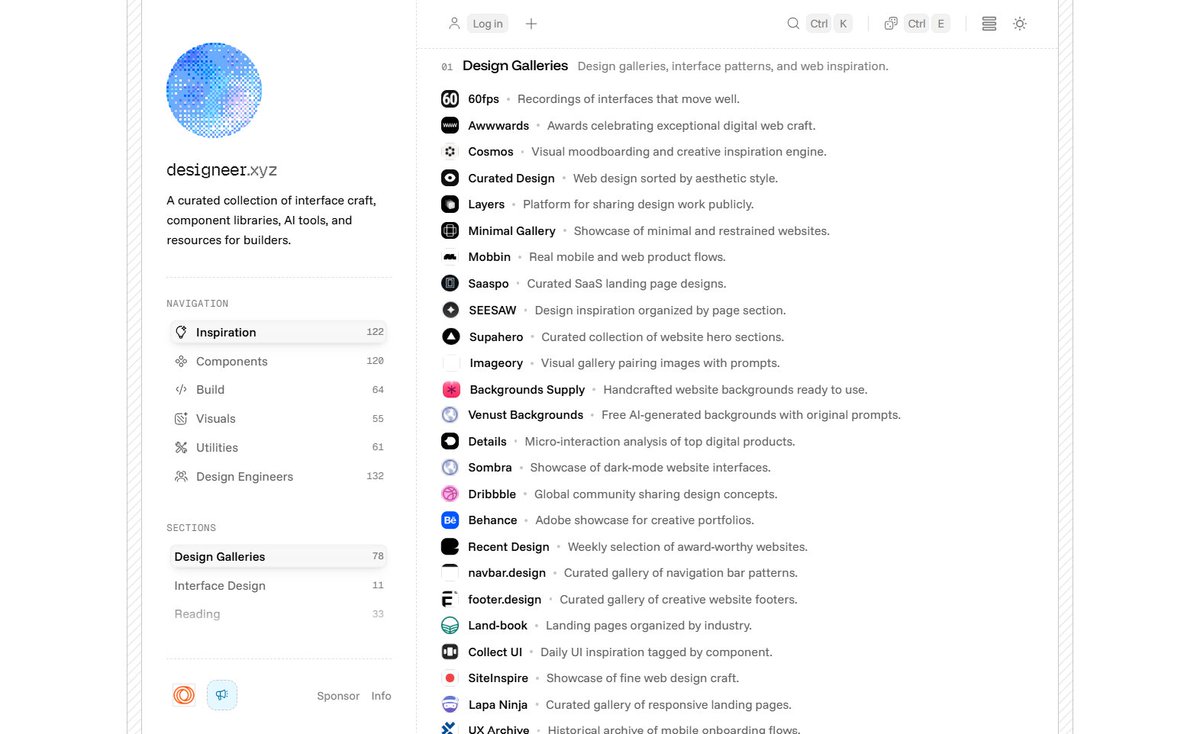
i was just saying the other day how much i liked https://t.co/FtLqWaiTDI. and how i respected @dhruvtwt_ for having the idea and just shipping it.
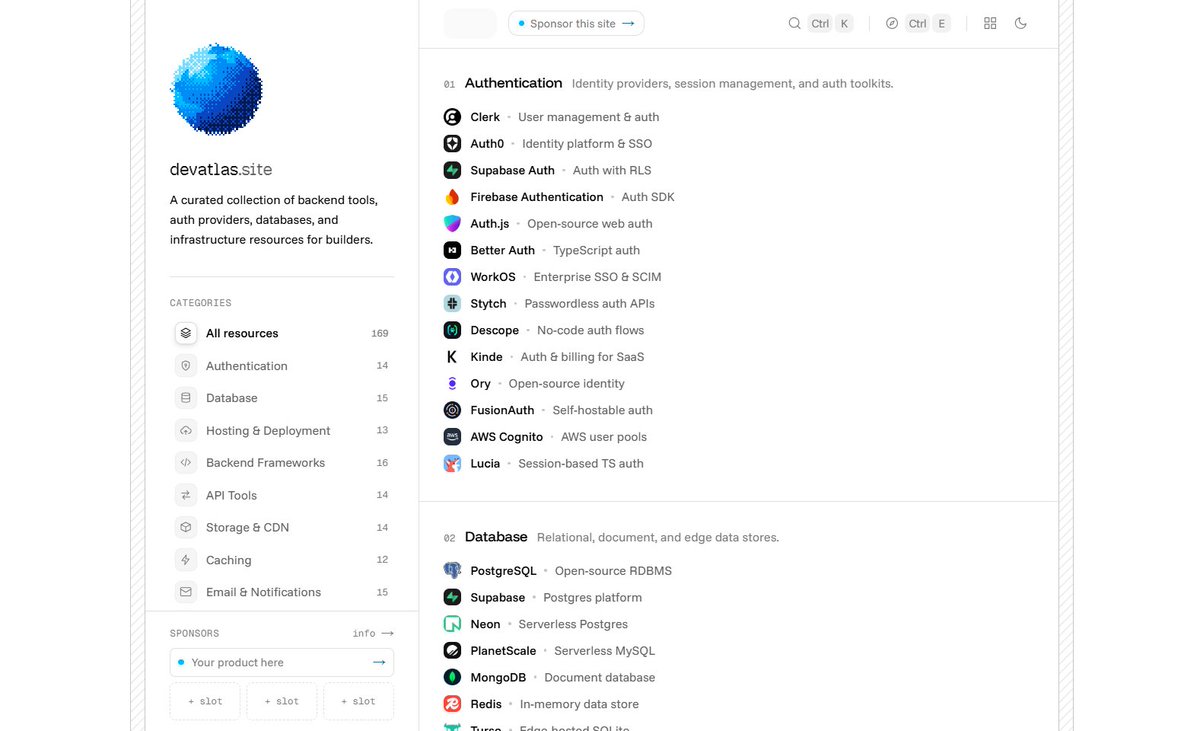
unfortunately, the clone shipped just as fast, and we are moving into an era where we will see more and more of this.
so the job falls on us. when anyone can ship a copy overnight, we have to reward original thought.
amplify the source, not the clone.
@FastCompany says good taste won't save designers. i think they're half right.
taste was never about making things pretty, and that's the part the models just got pretty good at.
what survives is understanding what the thing is for. knowing why you're making it; answering a question for someone before they ask it; having something to say without spelling it out; knowing how something should feel. and in order to know that, you have to be able to feel.
all of it comes back to the same piece: to answer a human question you need human experience (a perspective).
if none of that sounds like your job, the article was about you.
ai will have its own perspective very soon. i'd bet it'll be very very different from ours.
my whole feed is holding a funeral for designers. these opus clips are phenomenal, but without your taste everyone's bringing the same casserole to dinner. someone’s still gotta season it.
the hours that used to go to setting keyframes manually can now go to making MORE.
feels like a new start with a lot of possibility to me. I say get stoked designers.
Okay, motion designers are 100% cooked.
Saw on x that Opus 5.5 could do advanced animations and I was skeptical at first.
So I gave it a one sentence prompt, and it one shot this in 15 minutes.
Will add the prompt below, but this is genuinely mind blowing.
This level of work would have costed $8,000 - $10,000 with a motion design team and 3-4 week turnaround with multiple revisions.
Claude did it in one go with this prompt:
"make a dynamic 15-second motion graphics video that shows what an incredible motion designer you are, like it's your showreel for a résumé. go all out."
The only thing remaining for humans is creativity and critical thinking.
This is INSANE!!
Opus 5.5 on MAX, motion designing in one prompt (sound ON)
prompt- 'make a dynamic 15-second motion graphics video that shows what an incredible motion designer you are, like it's your showreel for a résumé. go all out'
I gave up my dream of being a designer because of AI. I'm taking it back for the same reason.
Not because I fell out of love with it. Because the first time I watched an AI tool make something genuinely decent, I did the math. Most clients would never be able to tell the difference. For their purposes, it didn't matter whether it came from me or a machine.
So I walked away after years of doing what I loved. It felt like the only rational move.
Here's what I got wrong, and the one thing I got right.
What I got right is that I felt something missing from the machine's work before I had words for it. Everything it made was competent, but nothing it made meant anything to me, and I could see where it was headed: leave it alone long enough and everything starts looking the same.
I look around today and I see it happening. Scroll the top brands. Everything's becoming interchangeable, and you can feel the human draining out of it.
What I got wrong is that I thought the answer was to quit. Instead I went to understand AI. Not nearly every inch of it, but enough to know what it is and what it isn't. If I couldn't beat it, I had a responsibility to understand it well enough to come back and shape what happens next.
And somewhere in the middle of that, I remembered why I cared in the first place.
Every piece of art that ever worked had a perspective behind it. A point of view it was trying to hand to you. Even the work that refuses to say anything is saying something: you figure it out. "Art asks questions and design answers them." The work was never the pixels. It was always the thinking that chose the pixels.
Two lines I keep coming back to:
Martin Scorsese said "the most personal is the most creative." Nobody else on earth could have made his films. That isn't a style choice. That's the whole game.
David Carson said people don't want your software. They want the one human piece of your work that actually tells a story.
So here is the flip.
AI didn't kill design. It killed the parts of design that never mattered: the production work, the process theater, the competent average. What survived is the only part that ever did. A person with a perspective, deciding what something should mean.
The future was never going to belong to the technology alone, or to the art alone. It belongs to where the two meet. To the people who understand the machines and have something to say through them.
Which is the part that should sting a little.
If you are an artist or a designer, the next era of this industry is yours to shape. Nobody is coming to do it for you. The good news is that the capabilities that used to require an engineering team now sit on your laptop. You get to shape the next paradigm of this craft, one where real design thinking and real perspective finally connect, and none of your life goes to the parts that never mattered.
I don't have all the answers, but I am confident the creative opportunities will expand yet again. The tech is ready. What we do with it is up to us.
The only question left is whether you have something to say.
Someone built a plain directory of design resources this week. 104K views. 32,000 visitors in 72 hours. No agent, no model, no manifesto. Just a useful thing, made well and easy to share.
I've been thinking about it all morning. Good reminder to just build and ship when you have an idea. People react to useful things, and god damn, this is useful.
Kudos @dhruvtwt_
Bringing the best of the internet together.
Introducing https://t.co/SH2fSWEajr
A curated place to discover exceptional interface craft, design systems, component libraries, AI tools, inspiration and design engineers worth learning from.