So yesterday Donald Trump posted a video of him crashing Stephen Colbert's final show, and literally throwing him in the garbage, and of course, I had to FIX it.
Trump fell asleep again during a live televised meeting. If Joe Biden had done that, the media would have treated it like a national emergency and run wall-to-wall panic coverage for a week.
But when Trump does it, they look the other way because the clown show keeps their ratings up and their pockets full.
The hypocrisy is disgraceful. The media failed the country, and they know it.
This experiment breaks your brain 🤯
Remove air in the world’s largest vacuum chamber, drop a bowling ball and feathers, and Galileo is proven right—400 years later.
Ian Fleming's original James Bond novels haven't aged well. For example, Moonraker, published 70 years ago in April 1955, features a villain who's a super-rich industrialist & rocket-maker seeking to cause chaos because he's a secret Nazi.
Such a silly idea! 😆
Did you know?
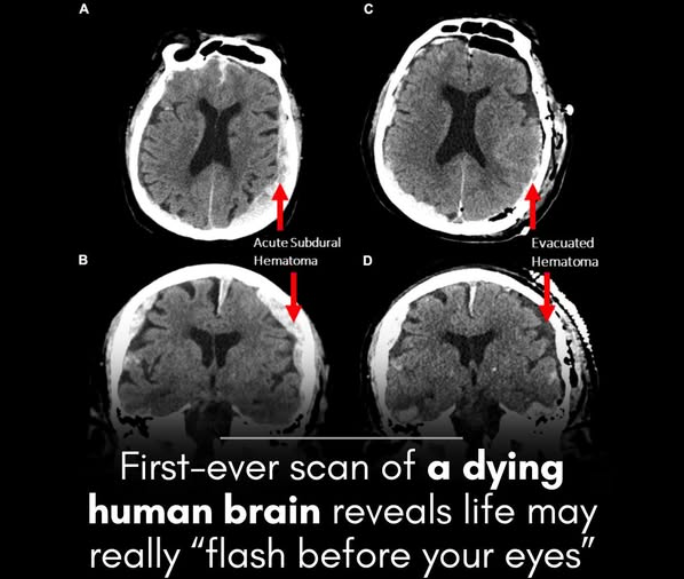
In a study, scientists have recorded the first-ever brain scan of a dying human and waves similar to memory flashbacks appeared.
A man suddenly died during a routine brain scan, revealing intriguing insights into what happens in our final moments.
An 87-year-old man undergoing a routine EEG for epilepsy suffered a fatal heart attack. Researchers found that in the 30 seconds before and after his heart stopped, his brain waves resembled those seen during dreaming, memory recall, and meditation.
This suggests that the commonly reported phenomenon of "life flashing before your eyes" may have a neurological basis. However, since this is a single case study, more research is needed to confirm how common this experience may be.
The findings, published by Dr. Ajmal Zemmar and his team, showed a surge in gamma waves — high-frequency neural oscillations linked to memory and consciousness — just before and after death.
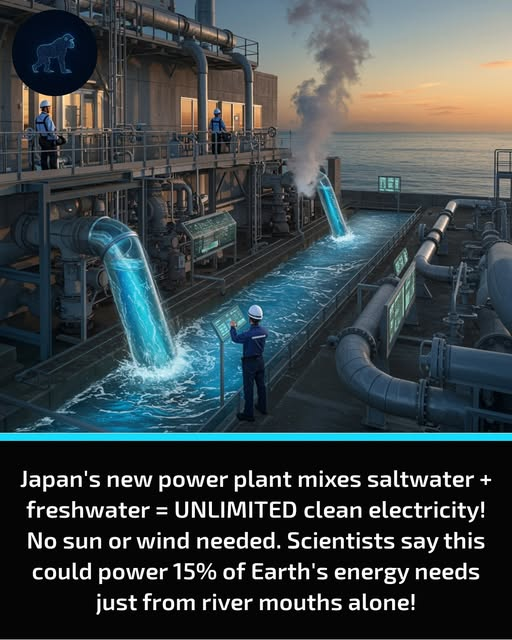
Japanese scientists have discovered a way to generate electricity by mixing saltwater and freshwater.
In August 2025, a facility harnessing the energy of mixing saltwater and freshwater, known as "blue energy," began operations in Fukuoka, Japan.
While Japan is a leader in advancing this technology, the underlying scientific principle is a long-standing concept that utilizes osmosis to generate power.
Specifically, the process is a type of pressure-retarded osmosis (PRO). It involves the following steps: a special semi-permeable membrane is used to separate two water streams with different salt concentrations. One side uses concentrated seawater, which is made even saltier by using waste brine from a nearby desalination plant. The other side uses treated wastewater with a low salt concentration.
Unlike solar or wind energy, this method works continuously, day and night, independent of weather conditions. Researchers estimate that if implemented globally at river mouths, it could provide up to 15% of the world’s energy needs — a staggering potential for clean, sustainable power.