At around 2.30pm on 24 May 2026, a white Toyota Hilux double cab, registration number AGA 1443, arrived at Zuva Service Station in Machipisa, where a cross-border bus from Botswana had stopped to drop off passengers returning from a long journey.
Shortly after the vehicle arrived, two casually dressed middle-aged men got out of the Hilux and walked towards the bus. They approached one of the bus crew members and held a private conversation away from the passengers.
Moments later, information began circulating that the men were allegedly officials linked to the @ZACConline_ who had followed the bus. It was also alleged that they threatened to make arrests and said the bus could be taken to storage unless an arrangement was made.
A uniformed officer from the @PoliceZimbabwe was also seen standing next to the Toyota Hilux holding a firearm, a situation that reportedly created fear and panic among the passengers and bus crew.
After some time, the bus crew member who had been speaking with the men returned and informed passengers that everyone was required to contribute US$10 each, including people whose luggage was still on the bus even though they had already reached their destination. According to the crew member, the men were demanding US$700 to “settle the matter” and leave without taking further action.
Passengers eventually paid the requested US$10 contributions, and after receiving the money, the men left the scene in their vehicle.
The incident left many passengers confused and unsettled, with no official explanation provided at the time about what had actually happened.
Dear @JacintaNgobese,
Please STOP inciting violence against Nigerians living in South Africa by using fake videos to spread the false claim that Nigerians are currently burning South African shops in Nigeria.
What you are doing is not only illegal, but also cruel and dangerous. Targeting a group of people using lies and misinformation can have serious consequences in a country that has already experienced Afrophobic violence.
It is wrong, and if anything happens to Nigerians because of your despicable post, you will carry responsibility for helping inflame those tensions.
Please take the post down and stop spreading falsehoods. There is no xenophobia that has started in Nigeria! STOP spreading lies!
Zimbabwe’s Minister of Justice, Legal and Parliamentary Affairs, and ZANUPF Secretary for Legal Affairs, Ziyambi Ziyambi, has made it clear that Members of Parliament will not be allowed to vote by secret ballot when deciding the fate of the highly controversial Constitutional Amendment Bill No. 3 (CAB 3). He said those who don’t tow the party line will be recalled from parliament.
CAB 3 is one of the most contentious constitutional proposals in Zimbabwe’s recent history.
Among other things, critics argue that it seeks to fundamentally alter the country’s democratic framework by transferring the future election of presidents from ordinary citizens to Parliament, while also creating pathways that will extend President Emmerson Mnangagwa’s political influence and term of office beyond existing constitutional limits without a referendum.
Calls for a secret ballot had emerged amid growing concerns that MPs, particularly those from ZANUPF, would not be able to vote freely under an open voting system due to fear of intimidation, punishment, or losing their parliamentary seats for defying the party line.
A secret ballot would have allowed MPs to vote according to conscience without political consequences or pressure from party leadership. However, under an open vote, ZANUPF MPs are widely expected to support the bill publicly after the Justice Minister warned that those who fail to follow the party position will be withdrawn from Parliament.
In many democratic jurisdictions around the world, constitutional amendments involving major structural changes to governance are often handled through either secret ballots in legislatures, free votes that suspend strict party discipline, or national referendums that allow citizens themselves to decide directly.
In other countries, parliamentary systems permit conscience votes on highly sensitive constitutional, ethical, or national questions.
In other jurisdictions, constitutional amendments affecting presidential terms, electoral systems, or the balance of power usually require referendums to ensure direct democratic legitimacy.
The growing controversy around CAB 3 has now become far bigger than a routine parliamentary process. It is now a defining battle over constitutionalism, executive power, democratic accountability, and the future direction of Zimbabwe’s political system.
Former South African President Thabo Mbeki yesterday delivered a striking reflection on African leadership while speaking at an event commemorating NEPAD, using a historical anecdote from Zambia that carries strong parallels with the growing controversy around Zimbabwe’s Constitutional Amendment Bill No. 3 (CAB 3).
Mbeki recalled how former Zambian President Frederick Chiluba once attempted to extend his stay in power by seeking a third presidential term in violation of Zambia’s constitutional framework. According to Mbeki, leaders within the Southern African Development Community (SADC) quietly intervened to stop the move in defence of constitutionalism and democratic order.
He said regional leaders at the time looked among themselves for someone with the moral authority and political credibility to confront Chiluba directly. They settled on former Botswana President Festus Mogae, whom Mbeki described as clean and respected. Mogae was then tasked with delivering a firm message to Chiluba that the region would not tolerate the undermining of constitutional term limits.
Mbeki used the story to argue that Africa’s leadership standards have sharply declined, saying the continent has regressed and no longer demonstrates the same collective political courage that once existed within the region.
His remarks inevitably draw parallels with developments in Zimbabwe, where critics argue that CAB 3 seeks to fundamentally reshape the country’s democratic framework while creating pathways for President Emmerson Mnangagwa to extend his political influence and remain in power beyond existing constitutional limits.
Indirectly, Mbeki’s remarks amount to a devastating commentary on the current state of leadership in Southern Africa. The former South African leader was effectively suggesting that today there is no respected regional statesman willing, or able, to stand up and stop what is unfolding in Zimbabwe.
The regression Mbeki spoke about is now visible in real time, where regional leaders increasingly watch constitutional manipulation unfold in silence, avoiding confrontation while democratic institutions are weakened before their eyes.
Former South African president Thabo Mbeki has condemned rising anti-migrant sentiment and warned against blaming African migrants for South Africa’s economic and social problems.
Speaking during a public discussion on migration and African integration, Mbeki said many South Africans fail to understand that the continent collectively supported South Africa’s liberation struggle during apartheid. He argued that African countries came to regard the anti-apartheid struggle as an African struggle, not merely a South African one.
Mbeki said this historical connection explains why many Africans continue to move to South Africa and feel a sense of belonging to the country. He warned that unemployment and other economic challenges would not be solved through hostility towards foreign nationals.
The former president also expressed concern over what he described as a decline in the spirit of African solidarity and integration that characterised the post-apartheid era.
“There is a regression that is taking place,” Mbeki said. “That sense of African integration that we had 25 years ago, I think has receded.”
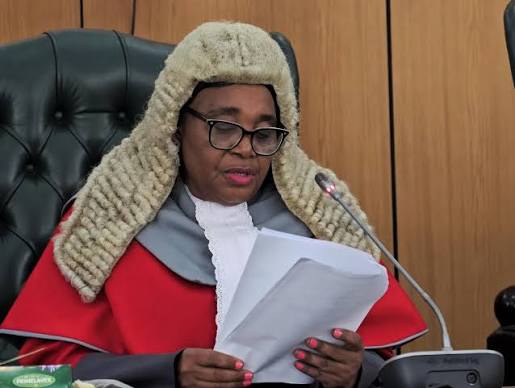
It is with regret that the Chief Justice refused a live broadcast of the CAB3 case. In South Africa almost all court proceedings are broadcast on live TV.
Bad start by the CJ Gwaunza
Zimbabwe’s biggest funeral assurance group, Nyaradzo, has bought the Glen Forest cemetery, which will now be called the Sahwira Glen Forest Memorial Park.
The Nyaradzo Group was founded by Zimbabwean serial entrepreneur Philip Mataranyika.
The new Sahwira Glen Forest Memorial Park is being designed as far more than just a cemetery. The plans show a major transformation into a modern memorial estate with luxury-style gated entrances, landscaped gardens, a full crematorium, a large contemporary chapel complex and even a restaurant and bar overlooking water features and green spaces.
Nyaradzo said it will create a peaceful, dignified environment where families can gather, remember loved ones and spend time together, rather than simply visiting a traditional burial ground.
The architectural designs show that Nyaradzo wants to introduce a completely new standard for memorial parks in Zimbabwe, combining remembrance, hospitality, ceremony and modern infrastructure in one integrated space.
The development also includes the construction of new paved internal roads, landscaped driveways, modern parking areas, pedestrian walkways and controlled access infrastructure designed to improve accessibility and the overall visitor experience, alongside water features and carefully planned green spaces aimed at creating a peaceful and organised memorial environment.
It gives me great pleasure to see Zimbabweans building companies from scratch, which is exactly what Philip Mataranyika did, turning Nyaradzo into an international company operating across different countries.
More often than not, we do not celebrate each other enough, yet every Zimbabwean should be proud to see companies like Nyaradzo achieving things like this. Congratulations to the Nyaradzo Group, and I wish you even more success in the future.
Mataranyika has shown that black businessmen can create generational businesses capable of outliving their founders, something Zimbabwe desperately needs if it is to become a true economic success story. Building institutions that survive beyond individuals is how strong economies are created. Well done, Nyathi.
QUESTION OF THE DAY | Democratic Republic of Congo's president, Felix Tshisekedi, has hinted at extending his stay in power for a third term by a delay of the elections and a people's referendum. Do you think this trend among African leaders is a threat to democracy?
Do you think this trend among African leaders is a threat to democracy? #UnWrapAfrica @ThembiMrototo
WATCH | Presidential spokesperson Vincent Magwenya said the South African President, Cyril Ramaphosa, visited Zimbabwe over the weekend at the invitation of President Emmerson Mnangagwa. He said the President is concerned and was not aware that one of the Zimbabwean delegates, Wicknell Chivayo, is a person of interest in South Africa.
🔸Good day President @CyrilRamaphosa,
Do you have a team that does some advance work and vetting of the people you meet or is it a free for all? Don’t you think a basic google search could have avoided this embarrassment and unseemly interaction between you and a convicted fraudster who’s now famous for dodgy dealings with African heads of state?
We need new leaders.🇿🇼
The Justice Uchena Commission of Inquiry into the Matter of Sale of State Land in and Around Urban Areas Since 2005 summary presentation has been released and its findings are shocking! The report is yet to be released after a court ordered its immediate release.
The summary presentation says the Zimbabwean State lost almost US$3 billion through unpaid intrinsic land value, with the exact prejudice put at US$2,977,072,819 according to the report.
The twenty two page summary also says many people were settled on urban state land without basic services like clean water, sewer systems and roads. Some houses were built on wetlands, under power lines, over sewer lines, and on land meant for schools, clinics and public facilities.
The summary also points to political abuse, land barons, illegal sales of state land, weak government controls, poor record keeping, undervaluation of land, corruption, and politically connected individuals using names of top ruling party leaders to influence government processes.
Another major hazardous issue is the public health risk. Pit latrines were built close to water sources, creating a danger of underground water pollution and outbreaks of cholera and typhoid.
The summary shows massive corruption, political interference, institutional failure, illegal land sales, poor urban planning, and a huge financial loss to the State and people of Zimbabwe.
It took a High Court application and years of pressure before President Emmerson Mnangagwa was ordered to release the Uchena Report into the looting of state land. It is yet to be released. The fact that citizens had to go to court to force the publication of a report commissioned by the President himself says everything about how politically sensitive the findings were.
Please find the twenty two page summary via my Telegram link👉🏿 https://t.co/f3TcNRwoAl
WATCH THIS SPACE…
Over the next few days, I’ll be sharing a series of videos about why I am against #CAB3, why I think it’s bad for Zimbabwe, and what we can do about it.
#NoToCAB3
I refuse to stand by while failure and dictatorship are codified into law. I will be counted among those who say no to Constitutional Amendment Bill No. 3. #ZimSaysNo
The President of a newly formed political party, NPD Togara Fambi, is arrested . He is detained by CID Law and Order Masvingo on allegations of cyberbullying. He is very vocal against CAB3 and is now being persecuted for that. @daddyhope@ZLHRLawyers
The President of a newly formed political party, NPD Togara Fambi, is arrested . He is detained by CID Law and Order Masvingo on allegations of cyberbullying. He is very vocal against CAB3 and is now being persecuted for that. @daddyhope@ZLHRLawyers
#BhaskorONews!!
🔹Another failed assassination attempt on VP Chiwenga’s life on 17/04/2026! Albert Tizwa, Military Intelligence Officer (MIO) Presidential Guard Harare Region, who was supposed to be busy at the Independence Day celebrations in Mapisa, but instead was busy running Kubakwake’s dirty errands. Tizwa is supervised by Brig Gen Mhonda, and he was caught in Newlands carrying a bag of money coming from the offices of Kubakwake, the TEMU president. The money has been confiscated, and he is under arrest and investigation. Tizwa was resisting arrest from the ZRP crack team, and he pulled out an AK47, in law, the officer of his rank is supposed to be in possession of a pistol, not an AK47.
🔸The information with V11 indicates that he was on a mission to assassinate VP Chiwenga and Gen Sanyatwe with instructions coming from his handlers. Both Kubakwake and his sidekick, Brig Gen Mhonda, have been trying to force the police to release him to no avail, thanks to Commissioner of Police Mutamba for heeding the call of duty. TEMU president has crossed the Rubicon, and I wonder what he is hoping to achieve with this. Tizwa is the same guy who led the beating of Professor Madhuku during the #CAB3 consultations, which was one of the 24 operations assigned to him by his handlers, the TEMU president and his sidekick Mhonda. For more news, stay tuned at #BhaskorONews, the Champions of the beckoning future ZW🫶🇿🇼! #NoTo2030!!
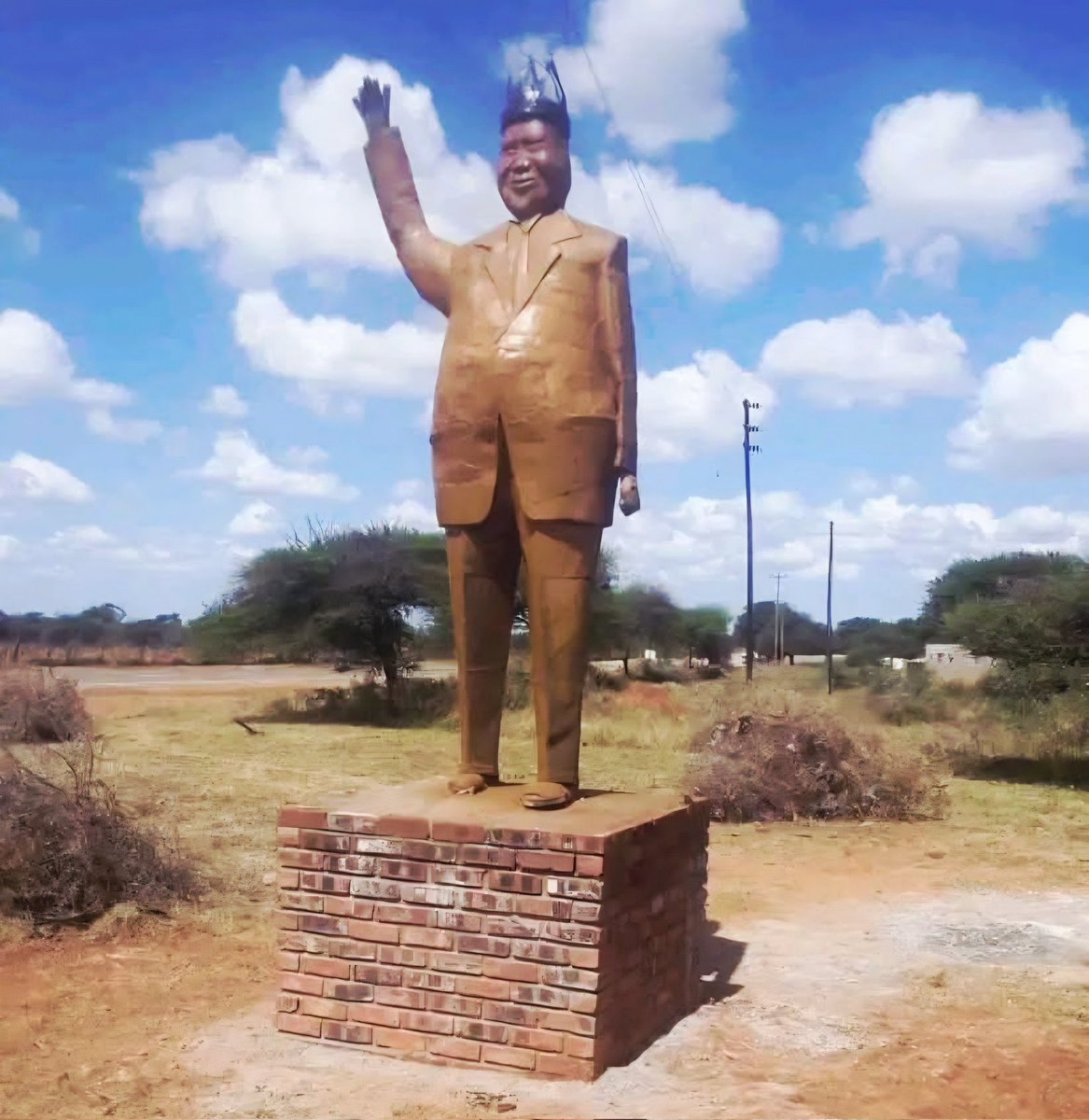
This statue of Zimbabwean hero and late Vice President Dr Joshua Nkomo is an insult to the memory of Father Zimbabwe and everything he stood for. I know that incompetence runs riot inside ZANUPF, but doing this to one of our founding fathers is an unforgivable insult.
Surely you cannot tell me that there are men and women who looked at this and signed it off as work done. This is a stain on Baba Nkomo’s illustrious fight against oppression. Mediocrity has reached shocking levels.
This is not just about a statue, it is about respect, history, and national dignity. You do not honour a giant of the liberation struggle with something that looks careless, rushed, and devoid of pride. You honour him with excellence, because that is what he represented.
What this shows is a deeper crisis, a collapse of standards, a culture where anything passes, where accountability is nonexistent, and where those entrusted with preserving our national heritage have no sense of responsibility.
If we cannot even get something as symbolic as this right, what does it say about everything else that is being done behind the scenes?
If indeed it is true they want to pass CAB3 by 18 May and should we allow it to happen. We as Zimbabweans (including Zanupf) will be really cooked.
Please let this sink, we cannot allow this to happen.