As America marks 250 years, what does Muslim flourishing in the United States look like?
Drawing on Muhammad Ali’s landmark Supreme Court case, @isakhtar argues that the next chapter of American Islam is not merely belonging—but helping safeguard the belonging of others through a vision of covenantal pluralism, conscience, and shared civic responsibility.
A timely and thought-provoking essay in Maydan: https://t.co/eCnPOq5nsw
#America250 #MuhammadAli #AmericanIslam #ReligiousFreedom #Pluralism
I am happy to share this obituary I wrote on my father, M. Yaqub Mirza (1946-2025). My father taught me so many things, but one of the key ones was to be generous, generous with your time, knowledge, expertise and wealth. He understood that generosity was not only about money but spending time with people, hearing them out and forming deep and sustaining relationships. My desire to build bridges and create partnerships can be directly traced to his guiding hand and mentorship.
https://t.co/tVX4qHn72M
Remembering Hedwig Klein: a Jewish scholar of Islam, a victim of the Holocaust, and a reminder of the fragile histories of knowledge.
A conversation between SherAli Tareen @SheraliTareen and Sabine Schmidtke.
https://t.co/ONsjDcRgfc
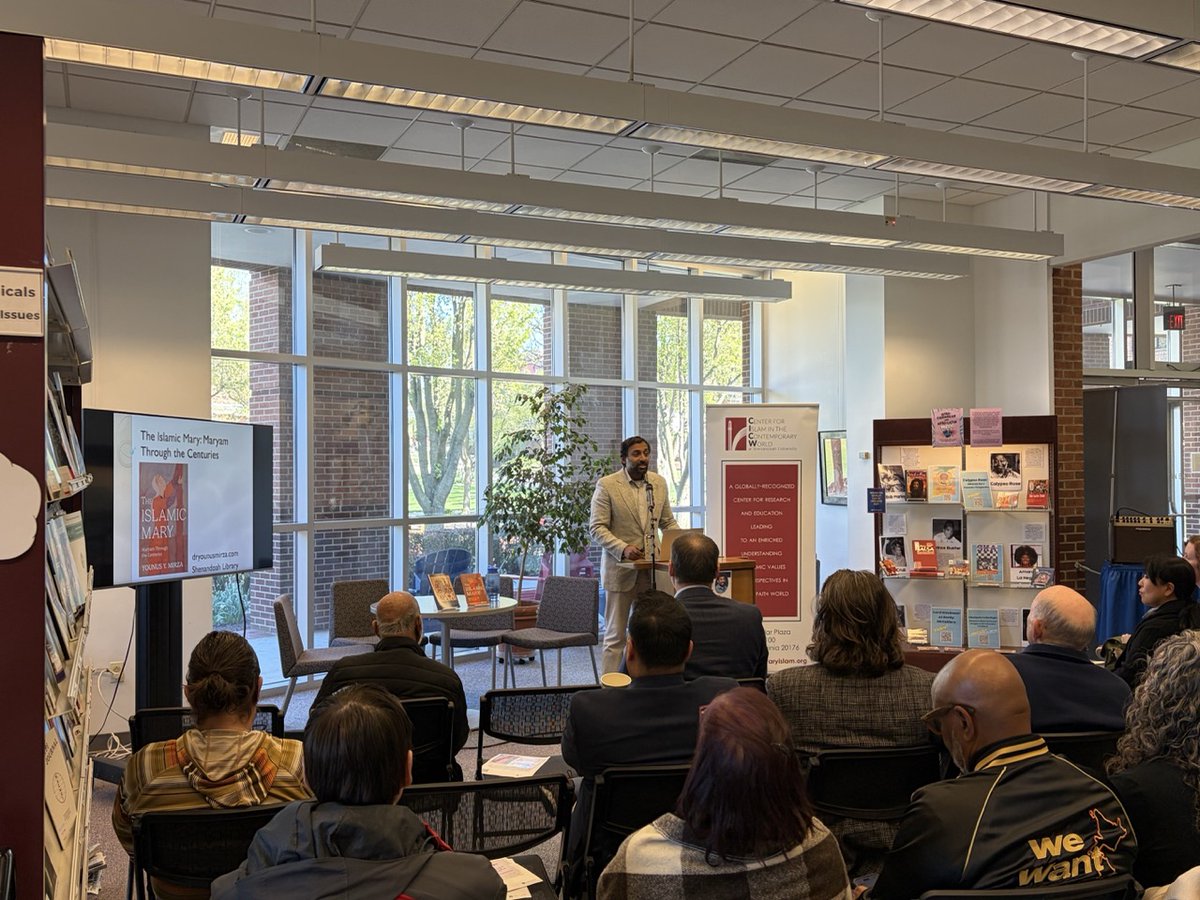
We had a great book talk at Shenandoah University's library the other week on my book "The Islamic Mary: Maryam Through the Centuries"! I enjoyed speaking about the origins of my book, Mary/Maryam in the Qur'an and why she matters today. I came of age in an era of the "Clash of Civilizations" and shared figures allow us to think of what relationships, bridges and partnerships are possible. The Barzinji Institute for Global Virtual Learning continues and implements much of my work in religious and interreligious studies. The Questions and Answers period was dynamic and I shared how the Islamic Mary even helps various Christians think about the role of Mary within their own traditions.
I want to thank Andy Kulp for opening up the Library for us and making the space an area of intellectual exchange. I always enjoy going to the Library, interacting with the staff and organizing research sessions there. I also want to thank Ermin Sinanovic from @CICWatSU (CICW) for moderating and sponsoring the event. One of CICW's goals is to bring interesting and innovative programming to Shenandoah's campus and invite new and stimulating speakers. Thank you all to those who made the event possible!
In this essay, Associate Professor Dr. Khalif Muammar A. Harris examines the intellectual legacy of Professor Syed Muhammad Naquib al-Attas (1931-2026), whose contributions continue to shape contemporary Muslim thought.
On The Maydan: https://t.co/SNBENzPyhO
The countdown to the 2026 Annual Conference starts now! 🗓️
Mark your calendars and grab your seat before registration closes. We can't wait to see you there.
https://t.co/ICHwPnuoQp
In this compelling essay, Tarek Ghanem @taghanem theorizes the emergence of “Gaza literature” as a distinct corpus—defined by immediacy, fragmentation, and writing under conditions of ongoing violence.
A vital intervention for scholars of literature, memory, and war:
https://t.co/Ya9ZqH1Vl9
#gaza #literature #memory
I am happy to share that we have reached 10 episodes of the “A Common Word” podcast, which is hosted by Maydan through AbuSulayman Center for Global Islamic Studies at George Mason University! The experience has been great, as I have been able to interview authors and activists from around the world in the fields of bridge-building, peace studies, and social justice. The interviews range from discussions of Muslim-Christian relations to Qur’anic Studies to Interreligious Studies. Many of the discussions have been with friends and colleagues, as well as with senior scholars whom I have been following for a long time. It is always nice to actually talk to an author and ask them questions that emerge after you finish reading their work. There is always something that I want to further understand or discuss.
One of the things that I love about podcasting is that it amplifies somebody’s voice. There is something special about the human voice: you can connect with it through its sound, expressions, and even melody. Podcasting further allows various people to participate in the larger public discussion. Instead of focusing solely on mainstream media, podcasting allows a range of folks, from students to experts, to share their thoughts, knowledge, and insights. Now, people from different backgrounds can share their expertise without necessarily aligning with larger corporate and business interests.
Academic podcasting has been particularly rewarding because it makes elite and high-level discussions accessible to the average person. Few people have the time to read an entire academic book full of jargon designed for specialists. However, it is more feasible to listen to a podcast while driving, working out, or doing chores. Moreover, new insights emerge in the interview that don’t always appear in the book, as discussions often go “between the lines” to reveal the author’s real motives and goals.
I look forward to the next 10 episodes of the “A Common Word” podcast!
@themaydan
https://t.co/SAzKNcDFE6
We're very excited to announce the publication of the first issue of Islamic Intellectual Traditions! In print and online (open access).
Wonderful articles in this issue, so please have a look:
https://t.co/Uit0ccb1Iv
Here is a digital catalog of Ottoman books, documents, and periodicals, often with free PDFs—an essential tool for researchers.
#ottomanstudies#history#literature
https://t.co/5xRVHPv6lT
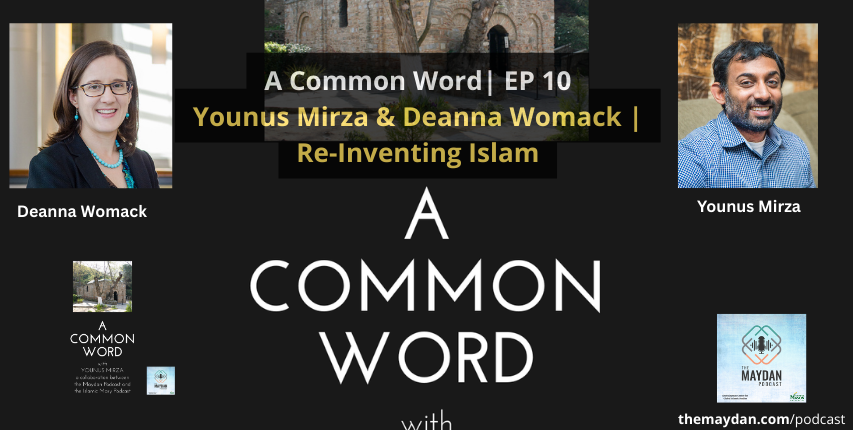
In this episode of A Common Word, Dr. Younus Mirza @ymirza3131 hosts Dr. Deanna Womack--https://t.co/jsE8beDvIx
I have always wondered about the roots of modern day #Islamophobia? When did it start? How did it develop? How was it formed? In this interview, Deanna Womack takes us into her new book "Re-inventing Islam: Gender and the Protestant Roots of American Islamophobia" where she examines the connection between the history of #missions and contemporary Islamophobia.
Along the way, she provides a more nuanced understanding of missionaries, their lives, goals and aspirations. Many of them would eventually became champions of interfaith dialogue and build bridges between the civilizations.
Excited to share this podcast on the "Inner Dimensions of Fasting" through the @themaydan. Enjoyed being on a panel with Celene Ibrahim, Oludamini Ogunnaike with host Roshan Iqbal. We speak about both the inner and out dimensions of fasting in the Qur'an and mystical traditions. Enjoyed learning from the other participants on how to better understand fasting in classic and modern times.
https://t.co/vIGEqoJdaA
Ramadan is this week so I am happy to share some resources on the month! First is a blog that I wrote regarding "Maryam's Fast" or how the word sawm or fasting is used in the Qur'anic story of Mary. Maryam is told to take "a vow of fasting" and not speak to anyone that day. Frequently, folks think of "fasting" as related to food and the month of Ramadan but the story of Maryam takes us back to its original meaning of refraining from something for a larger spiritual benefit. There is a long history in Islamic tradition regarding "fasting of tongue" (sawm al-lisan) and using the month of Ramadan to be conscious of your thoughts, actions and words. The blog helped inspire my book "The Islamic Mary: Maryam Through the Centuries." I wish you a blessed month!
@themaydan
https://t.co/CJgM969kuw
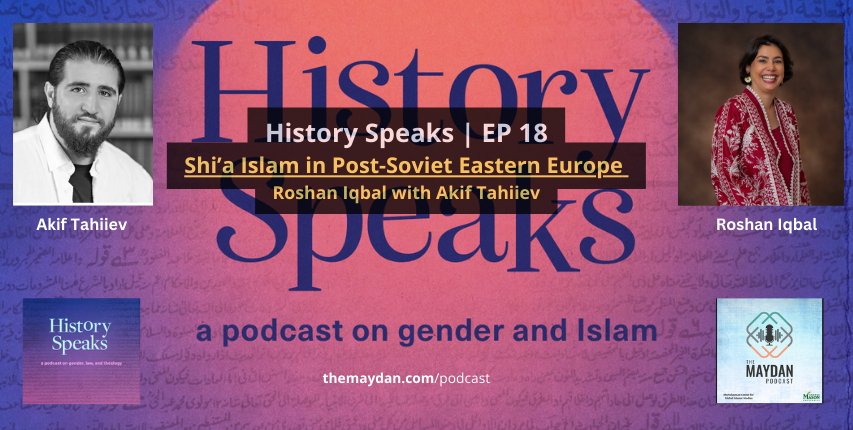
History Speaks EP 18 | Shi’a Islam in Post-Soviet Eastern Europe | Roshan Iqbal with Akif Tahiiev
https://t.co/HPGFK8DvGy
In this episode of History Speaks, Dr. Roshan Iqbal is joined by Dr. Akif Tahieev to explore a topic that rarely appears in mainstream scholarship: Shia Muslim communities in post-Soviet Eastern Europe. Together, they discuss who these communities are, how they live and practice their faith, and why their stories have been overlooked in both Islamic studies and European studies. From questions of identity and conversion to the impact of recent conflicts, this conversation opens a window onto a world many listeners may not know exists.
https://t.co/BB9ppf4fz1
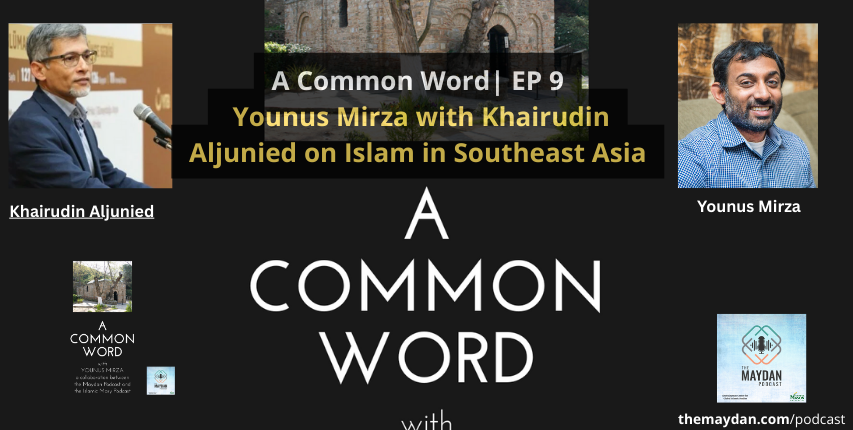
In this episode of A Common Word @themaydan Podcast, Dr. @ymirza3131 hosts Dr. Khairudin Aljunied, one of the foremost experts in Islam in Southeast Asia, to better understand the region and Islam’s relationship with other faiths.
Join us tomorrow for the 8th Annual Graduate Student Book Review Colloquium on Islamic and Middle Eastern Studies on Zoom. Register @ACGISGMU https://t.co/d4Oxboi32D