#InCaseYouMissedIt
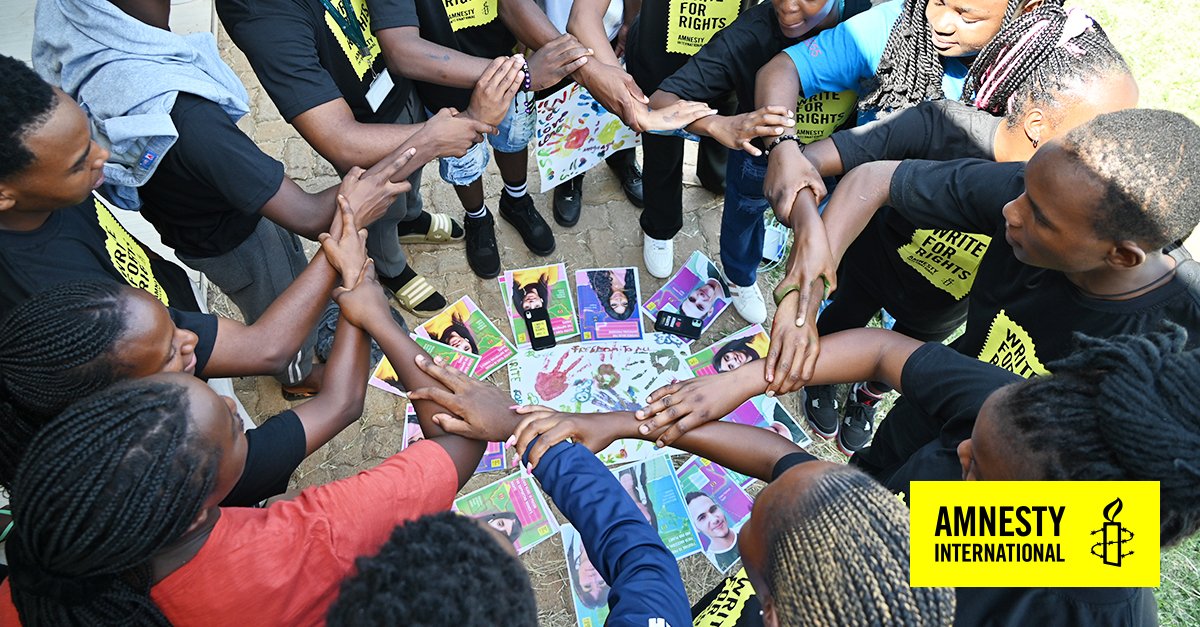
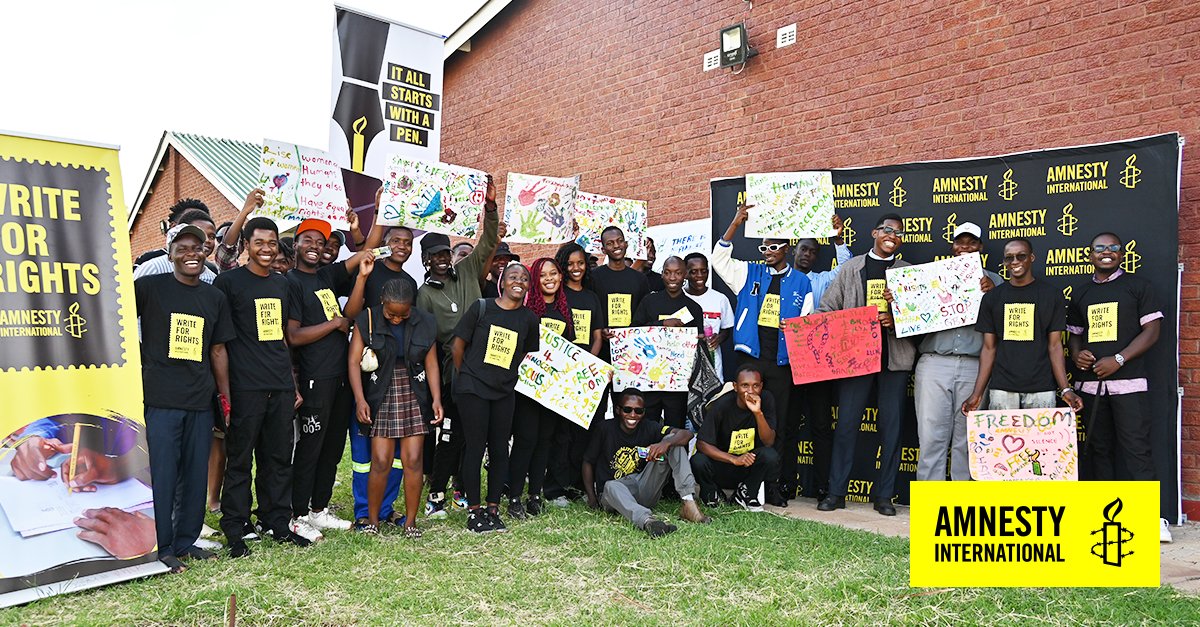
Yesterday, Amnesty International Zimbabwe officially launched the 2024 #Write4Rights Campaign at Bindura University of Science Education.
Students took action through writing letters and signing online petitions.
#Write4Rights is Amnesty International’s largest annual letter-writing campaign.
Each year, Amnesty International uses the power of words to help free people who are unjustly imprisoned by inviting millions of people to write letters demanding action.
For over 20 years, Amnesty International’s annual Write for Rights campaign has transformed the lives of people whose rights have been wronged.
Using the power of their words, Write for Rights supporters have united behind a common purpose: together, we can change lives for the better.
By writing a letter, sending a tweet, or signing a petition you can change a life.
Write a letter. Change a life.
Get involved!
Take action today: https://t.co/GQUP5LUy7p
#W4R24 #Write4Rights✍️
TGT conducted an awareness campaign meeting in Tsholotsho Ward 13, targeting young women and PWDs to raise awareness on information disorders, their causes, effects and to equip them with skills to identify, verify, and counter information disorders. TGT engaged an expert on Media and Information literacy to facilitate the training.
#HerVoice
Join Us: Repeal Vagrancy Act!
Did you know that Zimbabwe still enforces vagrancy laws that punish homeless individuals?
The Vagrancy Act [Chapter 10:25] states that a vagrant is any person with no settled or fixed place of abode or means of support, wanders from place to place, and maintains himself by begging or in some dishonest or disreputable manner. The Act also allows a police officer to arrest without a warrant any person he reasonably suspects to be a vagrant. It also criminalises any person who assists or encourages vagrancy.
ZimRights Calls on Zimbabwe to Repeal the Vagrancy Act
and for Stronger Protection of Vulnerable Communities
Please join us by signing the petition below.👇👇
https://t.co/ZKuNZOmv4j
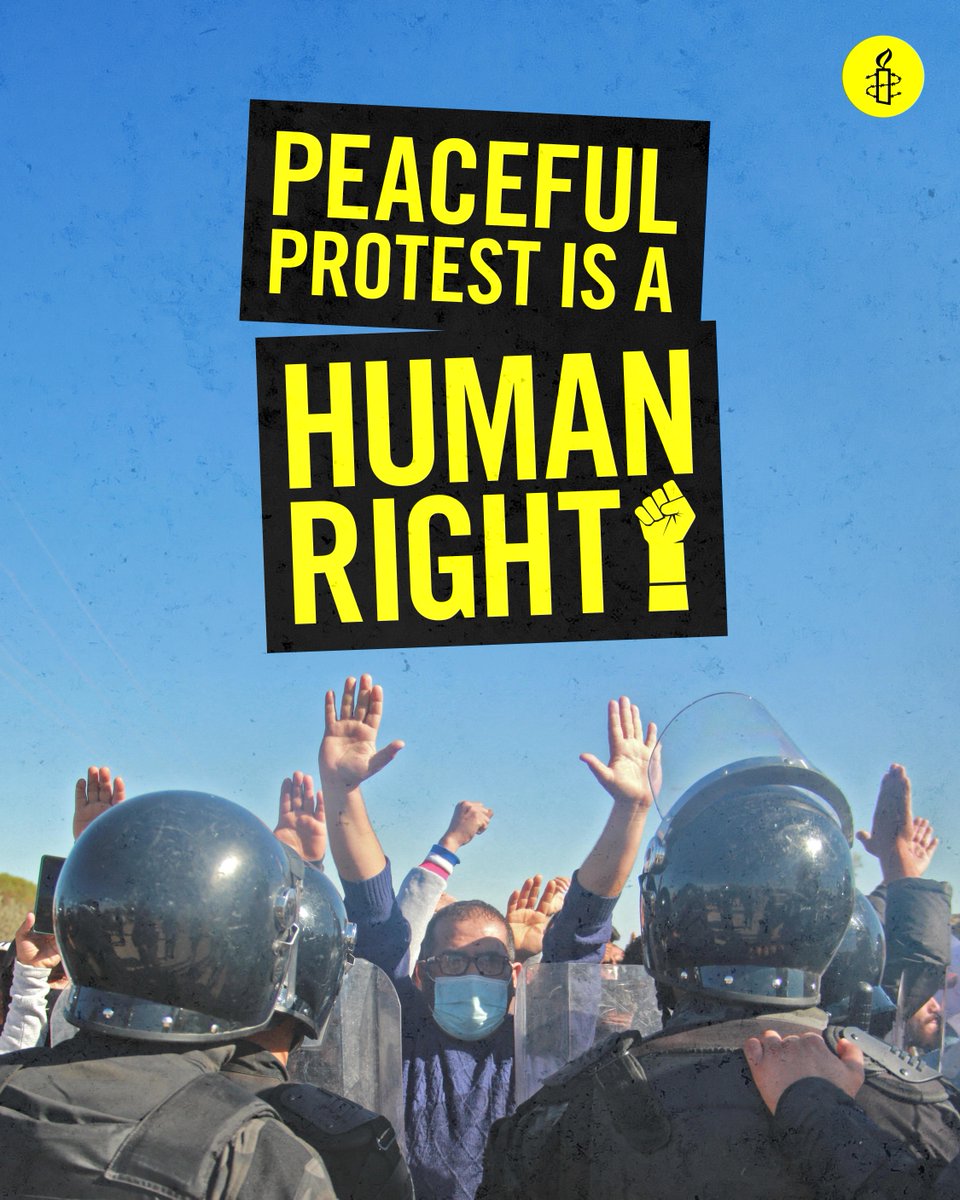
Around the world, the right to protest is under attack.
We're here to remind you that today, and every day, peaceful protest is a human right.
#ProtectTheProtest
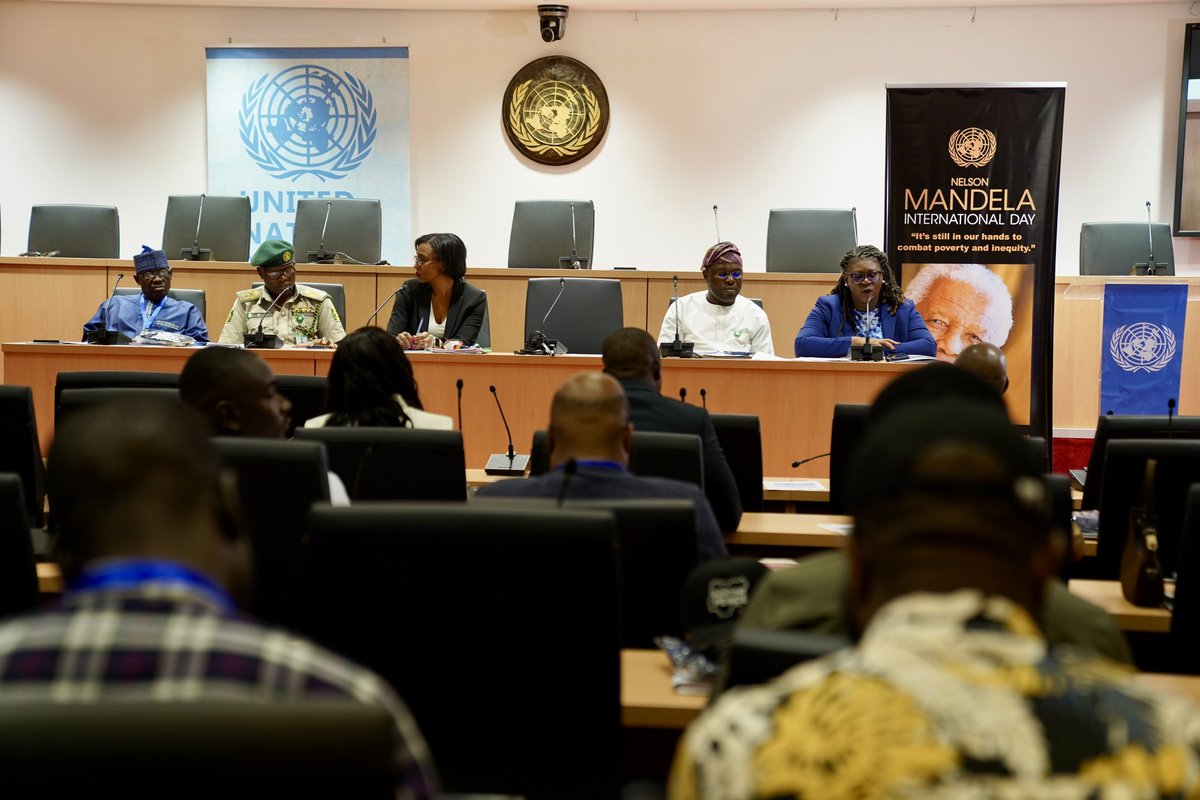
What an inspiring #Mandela week it has been! From Borno state, northeast 🇳🇬 to the UN House in Abuja, promoting the practical application of the #MandelaRules because #PrisonersMatter! Grateful to wake up and do what I love every day!
Bekezela interviews Chelesani Ndlovu to understand how young women can effectively mobilize for peace in their communities. Chelesani mentions several women, both in Zimbabwe and internationally, who have made notable efforts in peacebuilding.
#HerVoice
In this podcast, Princess Ndlovu interviews Nhlanhla Ndlovu and Gloria Nyathi to discuss the impact of corruption on achieving quality education for all. They also mention lack of transparency in appropriation of funds by schools.
#SIYA#HerVoice#Youth4Intergrity
Don’t forget to read our ZimRights March Human Rights Round-Up!
We have captured the month’s key human rights stories in an easy-to-digest format.
Highlights Include:
An In-Depth Analysis: “The Controversy Surrounding Zimbabwe’s Communal Land Act.”
Exclusive Interview Summary: A cheat sheet of @dzikamaibere’s interview with @TrevorNcube.
Community Watch: Initiatives in Gokwe making strides in human rights.
Blog Insight: @PhilFungurai examines women’s representation in Parliament on International Women’s Day.
Stay Informed, Stay Involved. Your guide to the human rights landscape is here. Make sure to read our comprehensive round-up for a concise and crucial understanding of the developments.
👉 Read the March Round-Up
https://t.co/K4a6iqGphm
4 years after Levison Ncube, a victim of police brutality died, his family hasn't received justice and closure. Levison's brother narrates how the death has impacted their family....
Let us honor his memory by advocating for change and holding those responsible accountable. 🕊️ #JusticeForLevison #EndPoliceBrutality
We have come to the end of another week of fighting for human rights. Thank you for believing in human rights. Let’s continue to take action.
#ThePeoplesHumanRightsManifesto
Our space has crashed. We would like to thank Ibhetshu likaZulu for partnering with us to host the space, our guests and speakers who gave insightful views, and everyone who joined and made it a success. We appreciate you. Happy Independence Day.
Today, on #YourRightsWednesday, we reflect on Section 68 of the Constitution of Zimbabwe, right to administrative justice.
Every person has a right to administrative conduct that is lawful, prompt, efficient, reasonable, proportionate, impartial, and both substantively and procedurally fair.
It also states that any person whose right, freedom, interest, or legitimate expectation has been adversely affected by administrative conduct has the right to be given promptly and in writing the reasons for the conduct. Furthermore, it states that an Act of Parliament must give effect to these rights and must provide for the review of administrative conduct by a court or, where appropriate, by an independent and impartial tribunal.
In the case of the Citizens Coalition for Change party's recent recalls and court proceedings, the court has the responsibility to review the administrative conduct of Sengezo Tshabangu and the Zimbabwe Electoral Commission and to determine whether they have acted in accordance with the principles of administrative justice as enshrined in the Constitution.
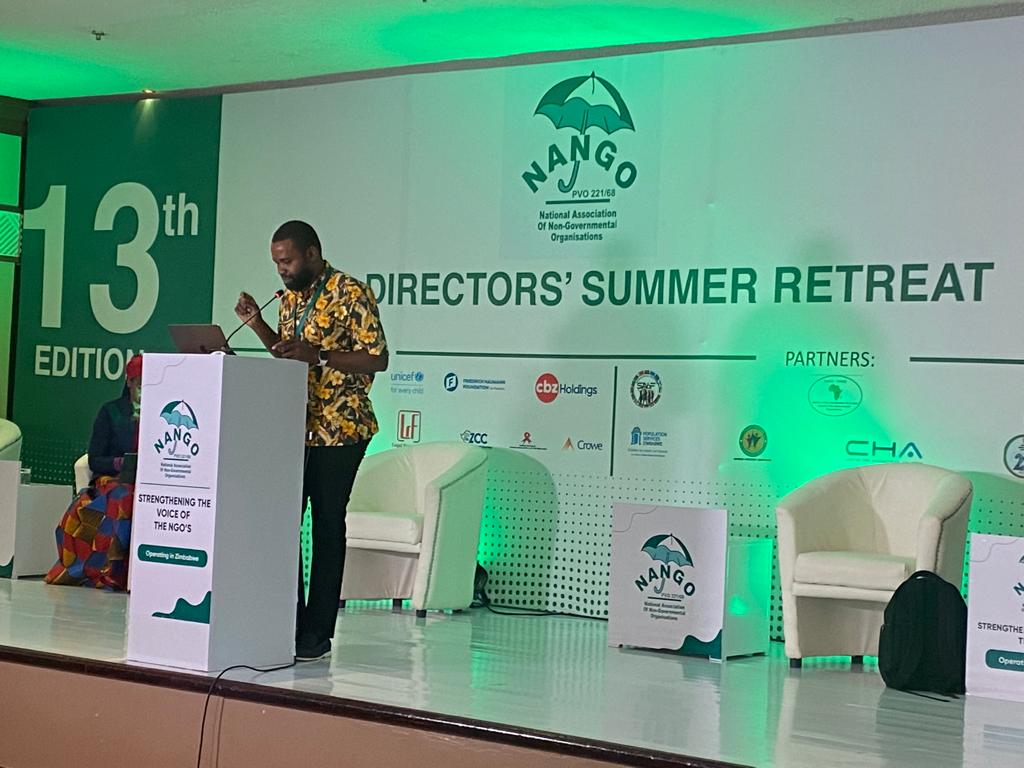
At the ongoing NANGO Director’s Summer Retreat, ZimRights National Director Dzikamai Bere made a presentation during the session on ‘Building a Strong Civil Society Movement in the Quest for an Enabling Environment’. He highlighted that what builds a strong civil society movement is not merely the operating environment, but also the actions and practices of the actors in the civic space.
“If we, as civil society, are committed to changing the world we live in, then we must implement in our own backyard the world that we seek to see in our front yard. We are fighting systems of oppression and inequality that have existed for centuries. Such systems have been traditionally challenged by violence to loosen their grip. With frustration increasing, we need higher levels of innovation, accountability, and effective partnerships to convince the emerging generations that non-violence is a viable option,” he said.
@nangozimbabwe
𝗬𝗼𝘂 𝗰𝗮𝗻 𝗯𝗲𝗰𝗼𝗺𝗲 𝗮 𝗺𝗲𝗺𝗯𝗲𝗿 𝗼𝗳 𝗭𝗶𝗺𝗥𝗶𝗴𝗵𝘁𝘀 𝘁𝗼𝗱𝗮𝘆!
ZimRights is Zimbabwe’s first post-independence indigenous grassroots human rights advocacy organisation, registered as a Private Voluntary Organisation (PVO Reg No. W/O 3/93.) ZimRights brings together ordinary people, who work together to advance the cause of human rights in Zimbabwe. Since its formation in 1992, we have built a movement for all Zimbabweans who believe in human rights, democracy, and accountability. You too can be part of that movement today. Email [email protected] or send a WhatsApp message with the words 'join' to https://t.co/XdZWBud8Sn #MobilisationActionZone
Today, Zimbabwe Human Rights Association (ZimRights), joins the rest of the world in celebrating the International Day of Persons with Disabilities. This day is about recognizing the achievements and contributions of persons with disabilities, and raising awareness of the challenges they face in accessing their human rights. As the Zimbabwe Human Rights Association, we are committed to advancing the inclusion and empowerment of persons with disabilities in our country and beyond. We believe that persons with disabilities are not only beneficiaries of development, but also agents of change and innovation. We call on all stakeholders to work together to ensure that persons with disabilities are fully and equally involved in the implementation and monitoring of the Sustainable Development Goals (SDGs), and that no one is left behind. The theme of this year’s International Day of Persons with Disabilities is “United in action to rescue and achieve the SDGs for, with and by persons with disabilities”. This theme reflects the urgent need to accelerate and intensify our efforts to achieve the SDGs for all, especially for persons with disabilities who have been disproportionately affected by the multiple crises we are facing today.
#PWDs
#UNITEDINACTION
The International Federation for Human Rights (FIDH) President, Alice Mogwe expressed a very special solidarity message with the people of Zimbabwe, calling on the government of Zimbabwe to repeal the patriotic law, free political prisoners, among other demands.
@fidh_en@ACHPR@achpr_cadhp
Human Rights Education and Awareness.
Makoni📍
Educating people about Human rights is not 'talking politics', however, participants should not be afraid to discuss with their peers how human rights also include the right to freely participate in the politics of their country.
The difference between human rights education and 'talking politics' is that human rights education does not push the agenda of any specific political party or ideology but seeks all citizens to be able to participate in civic life.





![ZimRightsLIVE's tweet photo. Join Us: Repeal Vagrancy Act!
Did you know that Zimbabwe still enforces vagrancy laws that punish homeless individuals?
The Vagrancy Act [Chapter 10:25] states that a vagrant is any person with no settled or fixed place of abode or means of support, wanders from place to place, and maintains himself by begging or in some dishonest or disreputable manner. The Act also allows a police officer to arrest without a warrant any person he reasonably suspects to be a vagrant. It also criminalises any person who assists or encourages vagrancy.
ZimRights Calls on Zimbabwe to Repeal the Vagrancy Act
and for Stronger Protection of Vulnerable Communities
Please join us by signing the petition below.👇👇
https://t.co/ZKuNZOmv4j](https://pbs.twimg.com/media/GS2QD7yXAAAq70B.jpg)