"You can't sit down in there and double down if things don't start to work out. You have to exit that position."
Stanley Druckenmiller, who averaged 30% a year for 30 years without a single losing year, lives by this rule.
"If you're gonna bet big, you have to be ruthlessly objective about your position."
"I've put on positions I was 100% sure I'd have for two or three years, and ten days later, in my opinion, the facts changed, and I'm out of them."
"I've never used a stop loss in 40 years, but I have exited a lot of positions, not because the price was down, but because the reason I bought them were starting to change."
Why people still buy is pretty easy to explain. It’s fomo.
Even if statistically many IPOs give you a better entry 2 weeks down the road, fomo when they see the initial pop causes people to buy regardless.
They’re also usually companies people have wanted to own for a long time.
Was always Alex’s vision to create a single platform where users can spot and execute on opportunities onchain.
But seeing the full pivot into an app that looks more similar to fomo than a analytics platform does feel like the end of an era (coupled w the general decline of the early cohort of blockchain analytics platforms).
It is smart though.
The TAM for blockchain analytics itself today is pretty small. B2C side is essentially 0 and B2B is a whole different ball game. TAM for trading venues on the other hand is massive. The biggest revenue generators in crypto are all transaction based take rate businesses and for good reason.
If you’ve likely still the best data for tracking movements of traders and what happens onchain, the best way to monetise isn’t to sell a subscription to users. It’s to have a take rate on transactions that your data helped to facilitate.
The a key advantage over fomo is that Nansen tracks everything, while fomo just tracks what happens within the app.
Distribution is the key hurdle though and it’ll be interesting to see how the team executes on it.
CrowdStrike CEO George Kurtz says that when AI hackers struck, organisations had to use Chinese AI models because US frontier labs refused to help.
"What happened was OpenAI took the airbags off the agents and wanted to see if these agents can pass the test. Now, you would say, OK, the aha moment was it's an autonomous attack. I don't think that's the aha moment."
"I think the aha moment is really the fact that the defenders didn't have frontier-level capabilities in their own models to be able to understand what was happening."
"And you know the story, they had to go out to the Chinese models to sort out what was going on because the frontier models were refusing it, refusing their sort of requests for what they wanted to do. And that was one of the big takeaways for us."
@Jason@theallinpod@George_Kurtz
Nvidia just added ~$1 trillion in market value in a single day.
The previous record for any company was $450B.
Nvidia now holds 4 of the 10 biggest one-day gains ever.
$NVDA - NVIDIA BOARD UNANIMOUSLY REINSTATES JENSEN HUANG AS CEO, EFFECTIVE IMMEDIATELY
Nvidia's board has unanimously voted to reinstate Jensen Huang as President, CEO and Board Director, effective immediately, according to breaking news headlines dated November 23, 2026.
The board reportedly found no national security risk associated with his reinstatement.
Colette Kress will remain CFO, while Harvey Jones continues as Board Chair.
Nvidia is also forming a committee to investigate an alleged foreign intelligence operation targeting Huang.
The reinstatement follows the board's November 17 statement that it did not intend to bring Huang back.
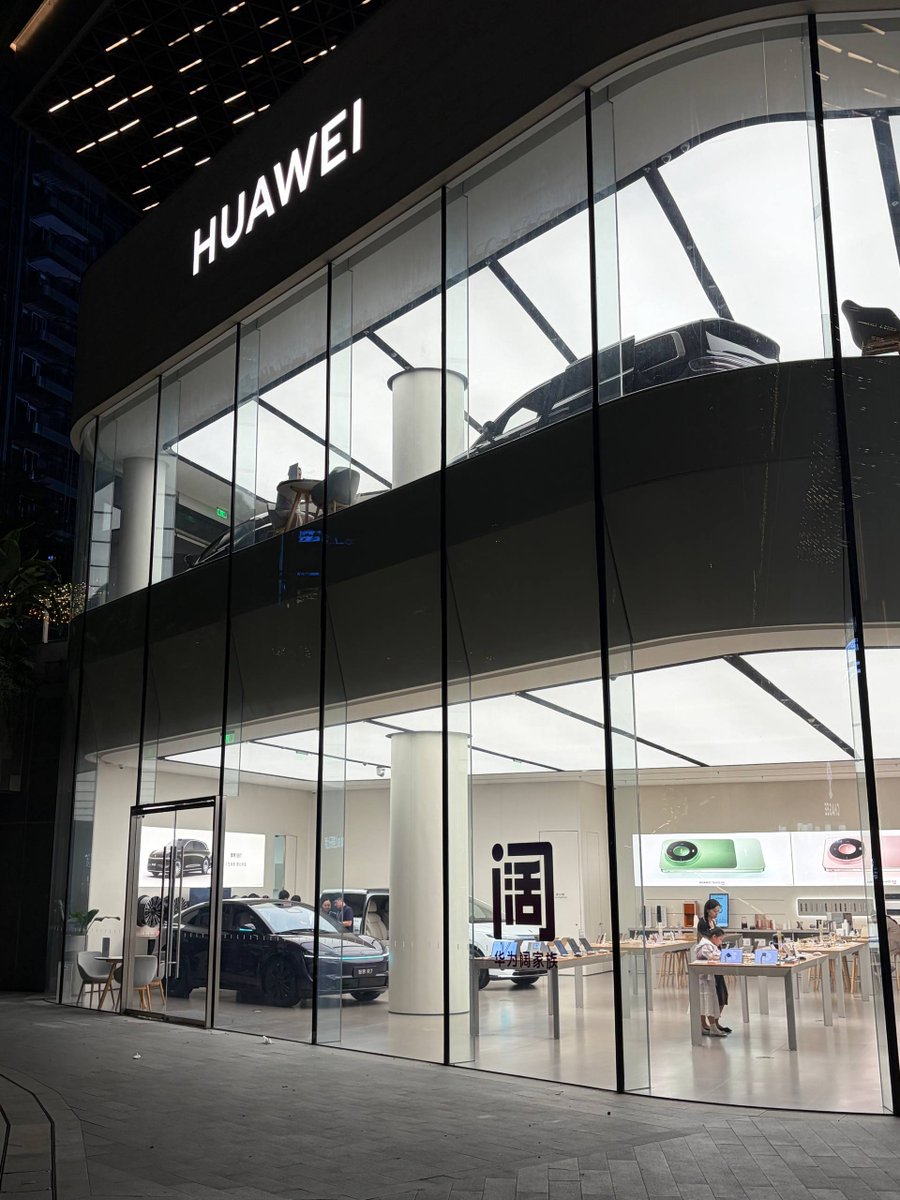
The most impressive thing about China isn’t the digital payments, super apps, or robotics. It’s the cars.
Almost every car on the street is a domestic EV. Dozens of brands: Nio, BYD, Xiaomi, Huawei, Leapmotor, Aion and more.
While Tesla and every Western brand spent years talking about manufacturing difficulties, China's scaling EVs production like its consumer electronics.
The same companies selling phones and hair dryers are shipping sleek, high-quality electric cars at scale.
Underestimate the Chinese at your own peril. No country does hardware like they do.
Don't buy the Anthropic IPO yet. Chamath Palihapitiya predicts it's going to go lower.
"It's a great long-term business. They're doing all the right things... all that makes sense. But I think the problem is that the valuation of Anthropic over the next three or four months has mostly nothing to do with Anthropic."
"Inflation is sticky. All of these external conditions are not resolved, including the war. I think people on balance feel skittish. They feel like this has run for a while. And I think the balance of trade is to de-risk, not to add more risk."
"So I think you're going to have all kinds of pockets of opportunities to buy stuff much cheaper."
"it's hard to justify how you get mega long here."
@chamath@theallinpod
Steve Eisman made a fortune betting against the housing bubble in 2008. Now he's saying Anthropic is selling you the top.
"I think Anthropic might be going public now because the first half of the year looks really good because of token maxing and the lack of open weight models."
The timing means the IPO doesn't have to show third-quarter numbers, which "might show something of a slowdown because of the end of token maxing."
"I actually think by the fourth quarter, we'll definitely see a slowdown. And so I think they needed to go public now."
@edels0n@realsteveeisman
The AI tech elite keep telling you what the future looks like. Legendary investor Stanley Druckenmiller says that certainty is arrogance.
Asked about the consensus that AI will be "very deflationary" and "lead to massive job losses":
"I say anybody who believes that with conviction suffers from arrogance and not an open mind. I don't think any of us know how this movie is going to play out."
"First of all, every technological revolution since was known to man. It's been declared for jobs at the end of the world all the way back to the horse and buggy."
"Now, there are brilliant people saying it's going to happen and I'm open-minded to that too because the speed is like nothing we've ever seen before. But you have to acknowledge when it's happened every other cycle that it's not a given."
Watch this before you buy Anthropic's IPO. Warren Buffett hasn't bought one since the 1950s, and says the average person shouldn't even think about it.
Here's what he said in a 2019 interview as Lyft went public:
"We haven't bought an initial public offering, or I haven't, Charlie hasn't, I think since 1955."
The last one was Ford: "I took a free ride on 100 shares and made 500 bucks, and it's the only time I've ever done that."
His advice on hot IPOs: "I think buying new offerings during hot periods in the market, I don't think is anything the average person should think about at all."
Asked whether Lyft could be another Amazon or Google he missed: "Oh, it always can be."
But "you can go around making dumb bets and win, you know. It's not something you want to take as a lifetime policy, though."
Public markets are getting the leftovers. Baillie Gifford's Peter Singlehurst says the real story of the Anthropic IPO is how much value got created before retail investors could touch it.
"Meta IPOed in 2012 at a valuation about one-tenth of the value that Anthropic is coming to the public markets at."
The growth now happens before the IPO. "We saw it with SpaceX as well where you're seeing trillions of dollars of value being created in private markets."
It means that if you only invest in public markets, you're missing most of the upside.
"To do growth equity investing properly in this era, you have to be doing it in both public but also in private markets."
SemiAnalysis's Dylan Patel says Nvidia might not even make the best chips by 2029.
And losing Jensen doesn't just hurt Nvidia. It slows down the whole industry.
"If Nvidia slows down, it's not like someone else accelerated. Nvidia slowed down, and so someone else is the best."
"Hardware, it progresses slower without Jensen at the helm of Nvidia, period."
@SemiAnalysis_@dylan522p