UPDATE!!
Specific Knowledge Newsletter has just been rebranded. From now on, it's The Network Bits. It has also been moved to a new platform. Click here to know why.
https://t.co/OkkIKf6GAR
1. I don't aim to teach you everything. I only aim to provide the glue to help you connect pieces of information to create a wholesome understanding.
Subscribe to the newsletter:
https://t.co/kObLXsQQuC
Join us on Telegram.
https://t.co/Yhb7Ip0aXR
@suryanox7 Because the default header {"alg":"HS256","typ":"JWT"} base64url-encodes to eyJhbGciOiJIUzI1NiIsInR5cCI6IkpXVCJ9...
Every JWT starts with “ey” unless you use a weird header!
@Akintola_steve ... frontend principles unless he does that, fine. But I'd feel dread if I knew nothing and wanted to dedicate time to HTML now that AI is doing more complex and sophisticated tasks. A non-technical person can do it too.
@Akintola_steve He could really learn HTML as he's building something else. And he'll know all he needs to know. He can then go back and fill the holes. HTML is not that important to spend all that time dedicating to it. Before, yes. Now, that's comedy. But if he wouldn't understand
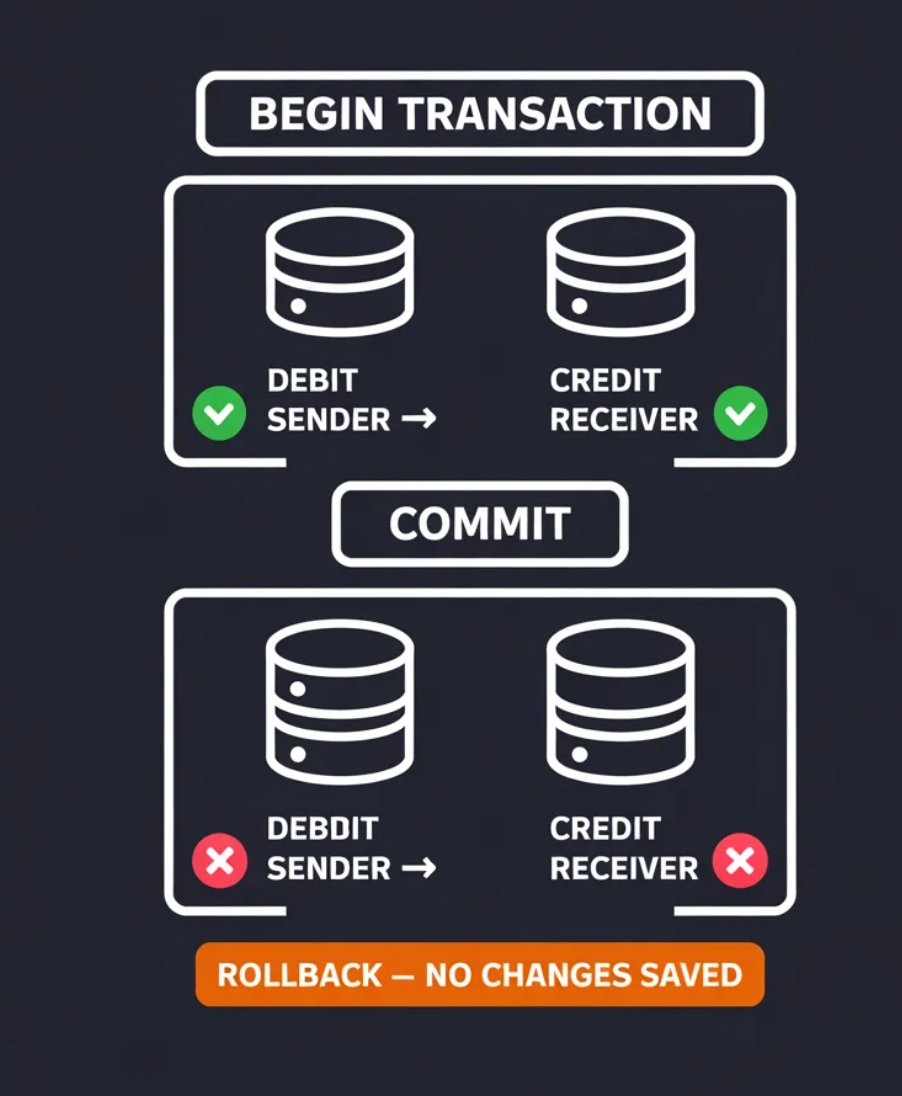
This is an atomicity failure. And the fix is simple if you know it.
Whether you're on Prisma, TypeORM, Sequelize, or raw SQL, the rule is the same:
Any operation touching more than one record? Wrap it in a transaction.
If one part fails, everything rolls back. Nobody loses a kobo.
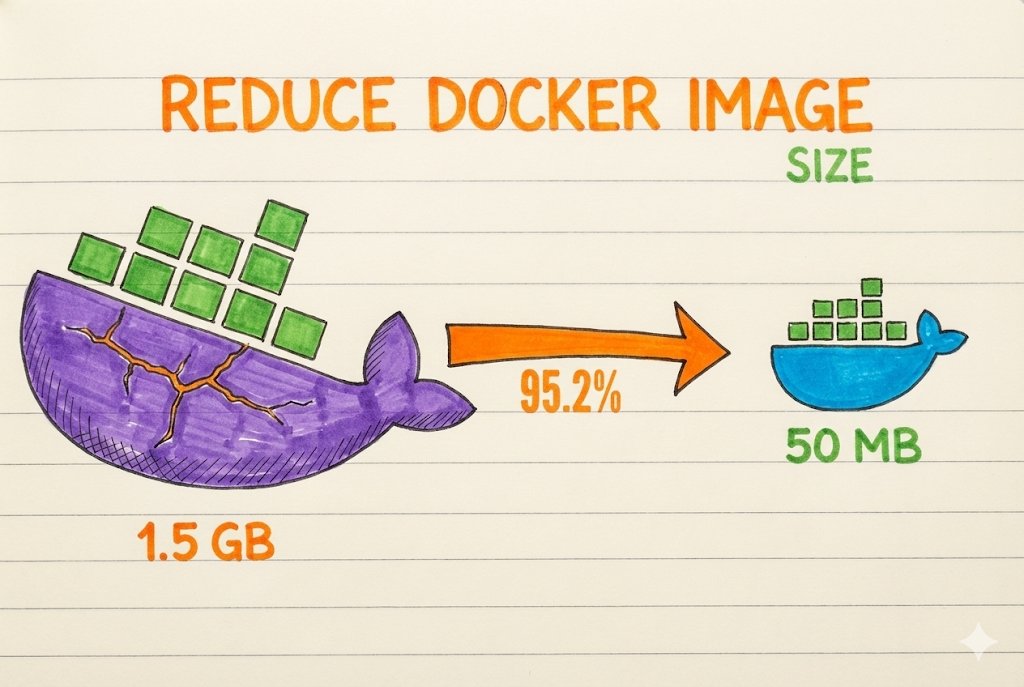
Most asked DevOps interview Q: How to make Docker containers lightweight ? (Real-world DevOps practice)
Here’s how I keep my Docker images small & production-ready 👇
Why lightweight containers matter :
- Faster container startup
- Quicker image pulls & deployments
- Lower storage & memory usage
- Better cloud performance + cost efficiency
📢Best practices I follow:
1️⃣ Use small base images → Prefer alpine or slim instead of full OS images
2️⃣ Multi-stage builds → Separate build & runtime stages so only required artifacts go into final image
3️⃣ Install only what’s needed → No extra tools in production images
4️⃣ Clean cache files → Remove package manager caches to reduce image size
5️⃣ Minimize Docker layers → Combine commands to keep images clean & small
6️⃣ Use .dockerignore → Prevent unnecessary files from entering the image
7️⃣ Avoid running as root → Improves container security.
I’m actively applying these techniques while building real-world Docker & DevOps projects.
Please add anything if I missed its a learn in public anyone can add any point.
Save this if you work with Docker
🔁 Repost to help others ship better containers.
How do you restrict network access to a Linux machine? And how to the firewalls work? In this article, I explore iptables, the basic concepts and everything you need to know to start using it effectively.
#Linux#Netfilter#DevOps#iptables
https://t.co/HYWnvvrjIm…
Caching (Redis, Memcached)
What is Caching?
Caching is the process of storing frequently accessed data in a temporary storage (cache) so future requests can be served faster. Instead of querying the database every time, the system retrieves data from the cache, reducing response time and server load.
Why Caching is Important
→ Improves application performance.
→ Reduces load on the database.
→ Enhances scalability and user experience.
→ Useful in real-time applications where speed is critical.
Redis
Redis (Remote Dictionary Server) is an open-source, in-memory data store often used as a cache, database, and message broker.
→ Stores data in key-value pairs.
→ Supports complex data structures like lists, sets, and hashes.
→ Provides persistence options (data can be saved to disk).
→ Commonly used in session storage, leaderboards, and pub/sub systems.
Advantages of Redis
→ Very fast (in-memory).
→ Rich data types and features.
→ Persistence support (RDB, AOF).
→ Suitable for real-time analytics.
Memcached
Memcached is a high-performance, in-memory caching system designed for simplicity and speed.
→ Stores data in key-value pairs.
→ Focuses only on caching (no persistence, fewer data structures).
→ Commonly used for caching database queries, HTML fragments, or session data.
Advantages of Memcached
→ Simple and lightweight.
→ Extremely fast read/write operations.
→ Scales horizontally across multiple servers.
Redis vs Memcached
→ Redis: Feature-rich, supports persistence and advanced data types.
→ Memcached: Lightweight, purely focused on caching.
→ Redis: Best for applications needing caching + extra functionality.
→ Memcached: Best for simple caching with minimal overhead.
Real-World Examples
→ Redis: Storing user sessions in large-scale apps like Twitter.
→ Memcached: Caching product details on e-commerce sites for faster page loads.
Download The Backend Ebook ( it covers everything above and more)
https://t.co/QdeNEmpNfI
How do you restrict network access to a Linux machine? And how to the firewalls work? In this article, I explore iptables, the basic concepts and everything you need to know to start using it effectively.
#Linux#Netfilter#DevOps#iptables
https://t.co/9wh5BJq0kd
How do you restrict network access to a Linux machine? And how to the firewalls work? In this article, I explore iptables, the basic concepts and everything you need to know to start using it effectively.
#Linux#Netfilter#DevOps#iptables
https://t.co/9wh5BJq0kd