@thenoble40@RD_turk «في الوقت الحالي، تسممت الحياة الدينية في تركيا»… المقطع الكامل ج...
https://t.co/w6PjhiFqI5
Reply with @TranslateMom + a language for subtitles, or tag @TranslateMom to download.
iPhone users can get the TranslateMom app.
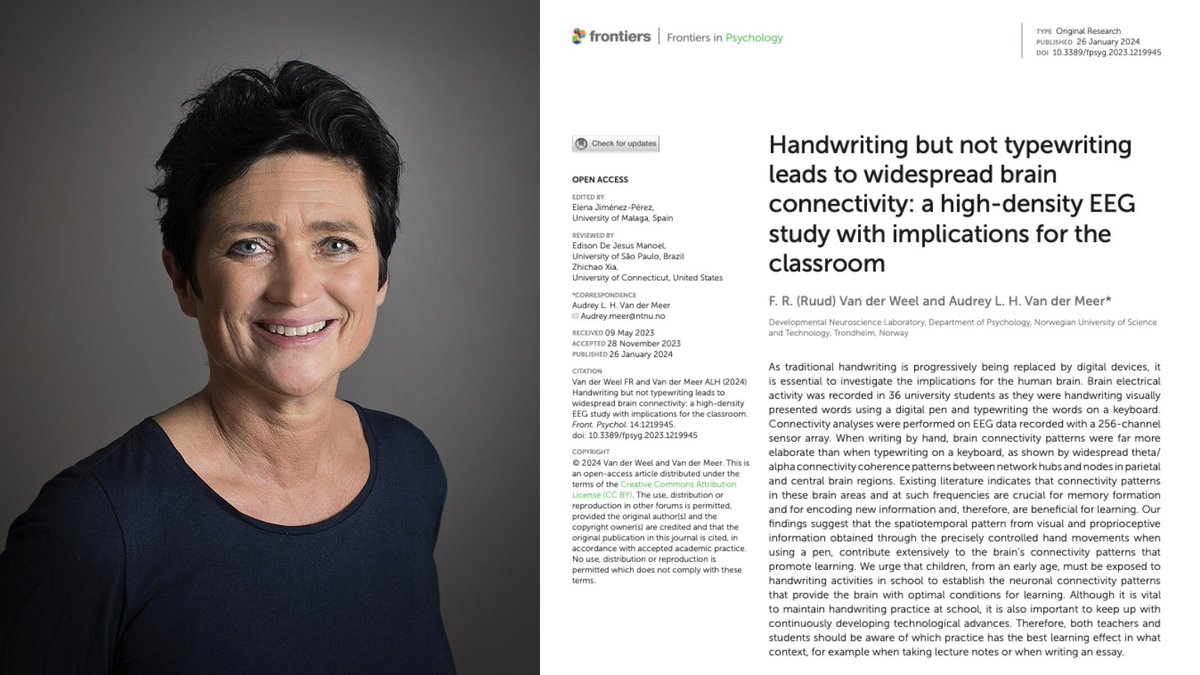
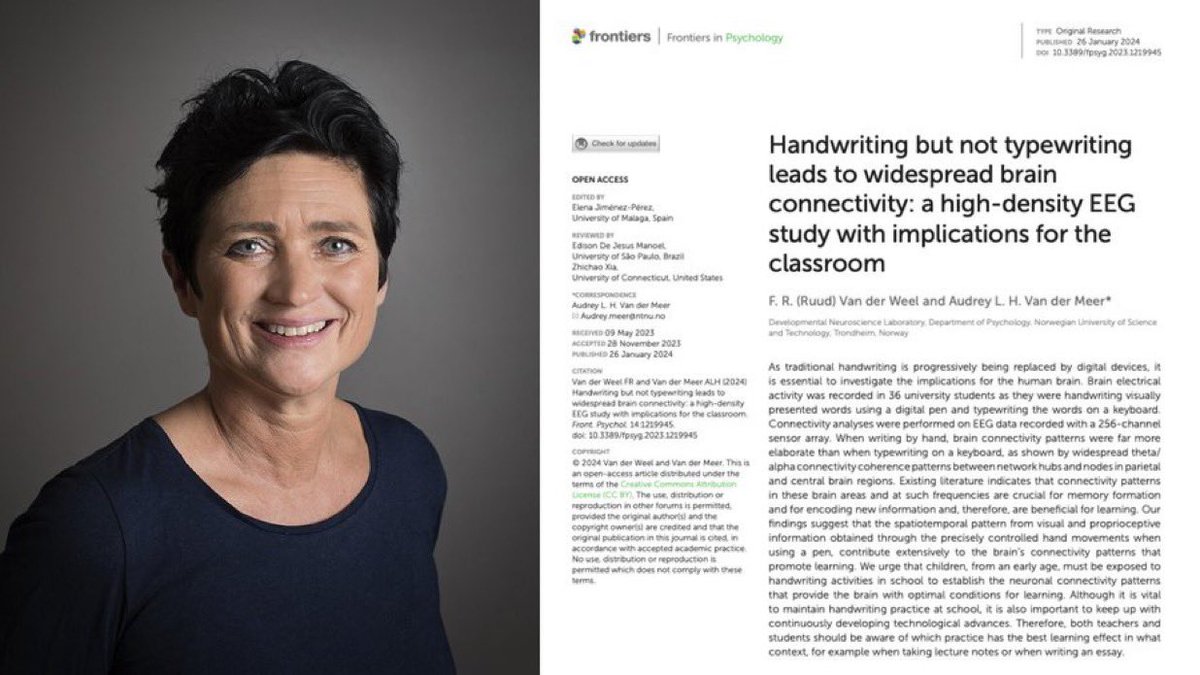
A Norwegian neuroscientist spent 20 years proving that the act of writing by hand changes the human brain in ways typing physically cannot, and almost nobody outside her field has read the paper.
Her name is Audrey van der Meer.
She runs a brain research lab in Trondheim, and the paper that closed the argument was published in 2024 in a journal called Frontiers in Psychology. The finding is brutal enough that it should have changed every classroom on Earth.
The experiment was simple. She recruited 36 university students and put each one in a cap with 256 sensors pressed against their scalp to record brain activity. Words flashed on a screen one at a time.
Sometimes the students wrote the word by hand on a touchscreen using a digital pen, and sometimes they typed the same word on a keyboard. Every neural response was recorded for the full five seconds the word stayed on screen.
Then her team looked at the part of the data most researchers had ignored for years, which is how different parts of the brain were communicating with each other during the task.
When the students wrote by hand, the brain lit up everywhere at once.
The regions responsible for memory, sensory integration, and the encoding of new information were all firing together in a coordinated pattern that spread across the entire cortex. The whole network was awake and connected.
When the same students typed the same word, that pattern collapsed almost completely.
Most of the brain went quiet, and the connections between regions that had been alive seconds earlier were nowhere to be found on the EEG.
Same word, same brain, same person, and two completely different neurological events.
The reason turned out to be something nobody had really paid attention to before her work. Writing by hand is not one motion but a sequence of thousands of tiny micro-movements coordinated with your eyes in real time, where each letter is a different shape that requires the brain to solve a slightly different spatial problem.
Your fingers, wrist, vision, and the parts of your brain that track position in space are all working together to produce one letter, then the next, then the next.
Typing throws all of that away. Every key on a keyboard requires the exact same finger motion regardless of which letter you are pressing, which means the brain has almost nothing to integrate and almost no problem to solve.
Van der Meer said it plainly in her interviews.
Pressing the same key with the same finger over and over does not stimulate the brain in any meaningful way, and she pointed out something that should scare every parent who handed their kid an iPad.
Children who learn to read and write on tablets often cannot tell letters like b and d apart, because they have never physically felt with their bodies what it takes to actually produce those letters on a page.
A decade before her, two researchers at Princeton ran the same fight using a completely different method and ended up at the same answer. Pam Mueller and Daniel Oppenheimer tested 327 students across three experiments, where half took notes on laptops with the internet disabled and half took notes by hand, before testing everyone on what they actually understood from the lectures they had watched.
The handwriting group won by a wide margin on every question that required real understanding rather than surface recall.
The reason was hiding in the transcripts of what the two groups had actually written down.
The laptop students typed almost word for word, capturing more total content but processing almost none of it as they went, while the handwriting students physically could not write fast enough to transcribe a lecture in real time, which forced them to listen carefully, decide what actually mattered, and put it in their own words on the page.
That single act of choosing what to keep was the learning itself, and the keyboard had quietly skipped the choosing and skipped the learning along with it.
Two studies. Two countries. Same answer.
Handwriting makes the brain work. Typing lets it coast.
Every note you have ever typed instead of written went into your brain through a thinner pipe. Every meeting, every book highlight, every idea you captured on your phone instead of on paper was processed at half depth.
You did not forget those things because your memory is bad. You forgot them because typing never woke the part of the brain that would have made them stick.
The fix is the thing your grandmother already knew.
Pick up a pen. Write the thing down. The slower road is the faster one.
عالمة أعصاب نرويجية قضت 20 عام في إثبات أن عملية الكتابة باليد تغير الدماغ البشري بطرق لا تستطيع الكتابة على لوحة المفاتيح تحقيقها جسديًا، ولم يقرأ الورقة تقريبًا أحد خارج مجالها.
اسمها أودري فان دير مير.
إنها تدير مختبر لأبحاث الدماغ في تروندهيم، وكانت الورقة التي أنهت الجدل منشورة في عام 2024 في مجلة تُدعى Frontiers in Psychology. النتيجة قاسية بما يكفي لتغيير كل فصل دراسي على الأرض.
كان التجربة بسيطة. لقد جمعت 36 طالبًا جامعيًا ووضعت كل واحدًا في غطاء رأس يحتوي على 256 مستشعرًا مضغوطًا على فروة الرأس لتسجيل نشاط الدماغ. ظهرت كلمات على الشاشة واحدة تلو الأخرى.
أحيانًا كتب الطلاب الكلمة باليد على شاشة لمس باستخدام قلم رقمي، وأحيانًا كتبوا نفس الكلمة على لوحة مفاتيح. تم تسجيل كل استجابة عصبية لمدة خمس ثواني كاملة بقاء الكلمة على الشاشة.
ثم نظر فريقها إلى الجزء من البيانات الذي تجاهله معظم الباحثين لسنوات، وهو كيفية تواصل أجزاء مختلفة من الدماغ مع بعضها البعض أثناء المهمة.
عندما كتب الطلاب باليد، أضاء الدماغ في كل مكان دفعة واحدة.
كانت المناطق المسؤولة عن الذاكرة والتكامل الحسي وترميز المعلومات الجديدة كلها تطلق إشاراتها معًا في نمط منسق ينتشر عبر القشرة الدماغية بأكملها، كانت الشبكة بأكملها مستيقظة ومتصلة.
عندما كتب نفس الطلاب نفس الكلمة على لوحة المفاتيح، انهار هذا النمط تقريبًا تمامًا.
أصبح معظم الدماغ هادئ، واختفت الروابط بين المناطق التي كانت حية قبل ثواني في تخطيط EEG.
نفس الكلمة، نفس الدماغ، نفس الشخص، وحدثان عصبيان مختلفان تمامًا.
تبين أن السبب هو شيء لم يكن أحد قد انتبه له حقًا قبل عملها. الكتابة باليد ليست حركة واحدة بل سلسلة من آلاف الحركات الدقيقة الصغيرة المنسقة مع عينيك في الوقت الفعلي، حيث تكون كل حرف شكلًا مختلفًا يتطلب من الدماغ حل مشكلة مكانية مختلفة قليلاً.
أصابعك، معصمك، الرؤية، والأجزاء من دماغك التي تتبع الموضع في الفضاء كلها تعمل معًا لإنتاج حرف واحد، ثم التالي، ثم التالي.
الكتابة على لوحة المفاتيح ترمي كل ذلك بعيدًا.
كل مفتاح على لوحة المفاتيح يتطلب نفس حركة الإصبع بالضبط بغض النظر عن الحرف الذي تضغط عليه، مما يعني أن الدماغ ليس لديه شيء تقريبًا لدمجه ولا مشكلة تقريبًا لحلها.
قالت فان دير مير ذلك بوضوح في مقابلاتها.
الضغط على نفس المفتاح بنفس الإصبع مرارًا وتكرارًا لا يحفز الدماغ بأي طريقة ذات معنى، وأشارت إلى شيء يجب أن يرعب كل والد أعطى طفله iPad.
الأطفال الذين يتعلمون القراءة والكتابة على الأجهزة اللوحية غالبًا لا يستطيعون تمييز حروف مثل b وd، لأنهم لم يشعروا جسديًا أبدًا بما يتطلبه إنتاج هذه الحروف فعليًا على صفحة.
عقد من الزمان قبلها، أجرا باحثان في برينستون نفس القتال باستخدام طريقة مختلفة تمامًا وانتهيا إلى نفس الإجابة. اختبرت بام مولر ودانيال أوبنهايمر 327 طالبًا عبر ثلاث تجارب، حيث أخذ نصف الطلاب ملاحظات على أجهزة كمبيوتر محمولة مع إيقاف الإنترنت وأخذ النصف الآخر ملاحظات باليد، قبل اختبار الجميع على ما فهموه فعليًا من المحاضرات التي شاهدوها.
فازت مجموعة الكتابة اليدوية بهامش واسع في كل سؤال يتطلب فهم حقيقي بدلاً من الاستذكار السطحي.
كان السبب مختبئ في نصوص ما كتبته المجموعتان فعليًا.
كتب طلاب الأجهزة المحمولة كلمة بكلمة تقريبًا، مسجلين محتوى أكثر إجمالًا لكنهم معالجين تقريبًا لا شيء منه أثناء العملية، بينما لم يتمكن طلاب الكتابة اليدوية جسديًا من الكتابة بسرعة كافية لنسخ محاضرة في الوقت الفعلي، مما أجبرهم على الاستماع بعناية، وتحديد ما يهم فعليًا، وصياغته بكلماتهم الخاصة على الصفحة.
كان ذلك الفعل الوحيد لاختيار ما يُحتفظ به هو التعلم نفسه، وكانت لوحة المفاتيح قد تخطت الاختيار بهدوء وتخطت التعلم معه.
دراستان.
بلدان اثنان.
إجابة واحدة.
الكتابة اليدوية تجعل الدماغ يعمل.
الكتابة على لوحة المفاتيح تسمح له بالانزلاق.
كل ملاحظة كتبتها على لوحة مفاتيح بدلاً من اليد دخلت إلى دماغك عبر أنبوب أرفع. كل اجتماع، كل تمييز في كتاب، كل فكرة التقطتها على هاتفك بدلاً من الورقة تم معالجتها بعمق نصفي.
لم تنسى تلك الأشياء لأن ذاكرتك سيئة.
نسيتها لأن الكتابة على لوحة المفاتيح لم توجد أبدًا الجزء من الدماغ الذي كان سيجعلها تلتصق.
الحل هو الشيء الذي كانت جدتك تعرفه بالفعل.
التقط قلم.
اكتب الشيء.
الطريق الأبطأ هو الأسرع.
THIS IS INSANE 🔥
Most people spend YEARS on language apps and still can’t speak.
Claude did in 4 weeks what Duolingo couldn’t fix in 4 years.
Here are the prompts 👇🏽👇🏽
@fisl43@rachidgholam خطاب الشكر لشركائنا في الخليج، من السعودية والإمارات والبحرين وقطر والكويت والأردن، صار جاهزًا الآن مع ترجمة وكتابة الترجمة على الفيديو مباشرة. شاهد النسخة المرفقة كاملة مع ترجمات مكتوبة واضحة.
— made by TranslateMom
ما أكثر جملة أثرت فيك من هذا الخطاب بصراحة؟