Wake up babe, there are now THREE types of delayed sequence intubation (DSI)
Following the PREOXI trial, BiPAP preoxygenation has become standard in many ICUs. BiPAP allows patients to remain well recruited and oxygenated, even if they aren't awake and breathing hard. This opens up the door to a variety of types of delayed-sequence intubation.
These techniques involve the same exact materials as a standard intubation, and similar medications. They represent ways to slow down the intubation process and proceed in a more stepwise fashion. This can be helpful for the physiologically challenging airway.
[1] DSI-Oxygenation
🫁 Classic & most common type of DSI (what most people refer to when they say "DSI").
🫁 This is fundamentally sedation to allow the patient to tolerate preoxygenation
🫁 Used for patients who are too agitated or anxious to tolerate BiPAP preoxygenation
[2] DSI-Sedation
💉 Patient is placed on BiPAP and receives titrated doses of sedation to gradually promote unconsciousness.
💉 This is useful for patients who are hemodynamically tenuous, for two reasons. First, it minimizes the sedative dose to what you actually need (often very little, for sicker patients). Second, it allows you to observe how the patient responds to some sedation and positive-pressure ventilation.
💉 Sometimes BiPAP plus sedation will elicit severe hypotension! You have time to resuscitate the patient further before proceeding to paralysis and positive-pressure ventilation (which could make things worse).
💉 This could also be used for a patient with a history of being very difficult-to-sedate, because it allows you to be confident that the patient is unconscious prior to paralysis.
[3] DSI-NPV (DSI to facilitate Negative Pressure Ventilation
🫀This is most often used for patients who are at the highest risk of hemodynamic collapse following positive pressure ventilation (e.g., severe PE, tamponade, refractory cardiogenic shock). It could also be useful in severe DKA (to maximize spontaneous minute ventilation post intubation). The goal is to preserve negative-pressure ventilation, which may improve hemodynamics and pCO2.
🫀You start out with DSI-Sedation as discussed above: initiate BiPAP and titrate sedatives to the point of unconsciousness. Follow hemodynamics and resuscitate further as needed.
🫀Then push rocuronium, intubate, then immediately give sugammadex to reverse the rocuronium. You end up with an intubated patient who is spontaneously breathing with negative pressure ventilation (e.g., on 5 cm of CPAP).
🫀This is one type of Hemodynamically Neutral Intubation as described by Weingart (the goal is intubation without perturbing hemodynamics). DSI-NPV is technically easier than an awake intubation. Unless you're insanely great at awake intubation, DSI-NPV will be easier and less likely to go sideways.
#1/2, links in the next post.
Today's Paper of the Day is:
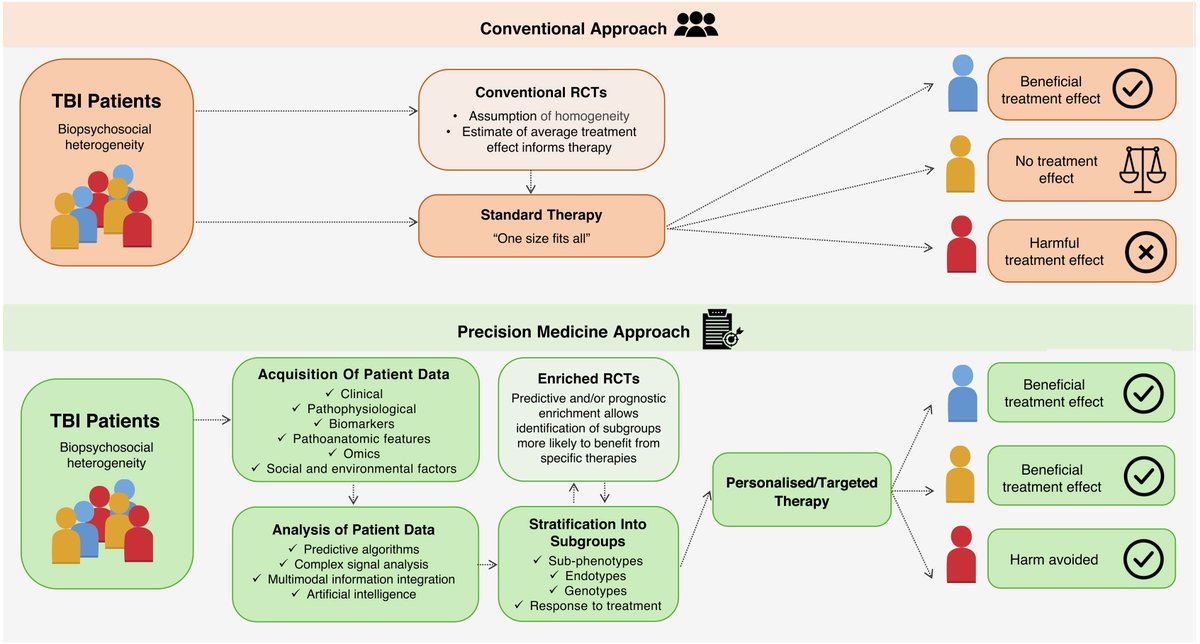
Early management of adult severe traumatic brain injury: What researchers and clinicians must know
https://t.co/JKgcYjlUQ5
Join us to read 1 paper per day and stay up-to-date as we cover the spectrum of critical care across 2026
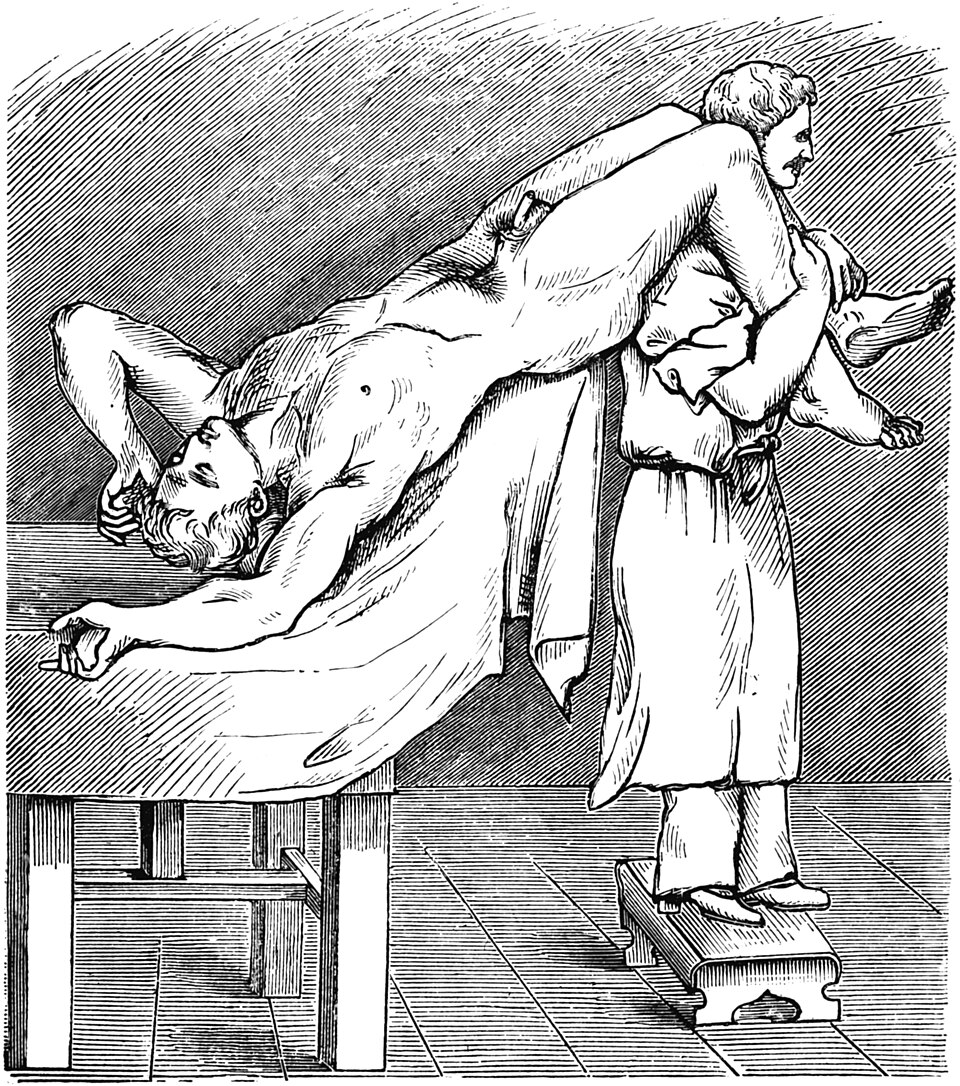
What do tactile fremitus and OR fires have in common? Why we keep doing things that don't make sense: radial art lines, NPO after midnight, Trendelenberg position, etc?
Checkout my new blog post about Ritual and Reason in Medicine.
https://t.co/JJ3dUDzozK
@DrRJWebb@LeDyslexicMedic@Asiritrauma1@YorksAmbulance A mix in reality…. certainly doing subclavian US CVCs gives you the tactile feel and memory for doing the skill. Then a mix of simulated, theatre and some on the unit also. But it certainly is a dying skill because on the unit you have time and US so hard to justify anatomical
@DrRJWebb@LeDyslexicMedic@Asiritrauma1@YorksAmbulance But in PHEM land I use the landmark clavicle walking technique (due to speed and urgency - and I’d say I’m pretty good with an ultrasound) and can say I’ve not had a arterial placement (and we have a good feedback system in our service)
@DrRJWebb@LeDyslexicMedic@Asiritrauma1@YorksAmbulance Broadly it’s normally technique and that we know the anatomy is “broadly” consistent. Walking the needle on the underside of the clavicle, following the trajectory of the notch. Now personally I do subclavians with US (if we’re being pedantic it enters the axillary) in hospital
🚑 Can you deliver ICU care at 60mph?
ACCESS is recruiting Doctors – August 2026.
✔ Largest Critical Care Transfer Service in the UK
✔ Complex inter-hospital transfers
✔ QI, governance & research
Not routine ICU. ICU in motion.
#ICU#CriticalCare#RetrievalMedicine#MedJobs
.@BSEcho have launched a new Level 1 library🚀- developed by Jen Gosling, @EchoFoundations, et al, which will support practitioners of emergency echo
The first 30 cases are FREE!
Find out more: https://t.co/7bKXKHDOEk