Institutions tend to forget why they exist. The original job gets done or drifts, and the building and the payroll stay, so the real mission slowly becomes keeping the lights on. The tell is the charity that cures its disease and somehow expands the year after.
“Listen carefully to what ‘democratic’ socialists say about the true scope of their agendas. Because every now and then, they may be telling us the truth.”
@ChaseForLiberty First time I’ve disagreed with a @ChaseForLiberty post.
We shouldn’t ban things which are “waiting to be abused” otherwise we’d ban steak knives, children and language.
Ok I can get behind one of those.
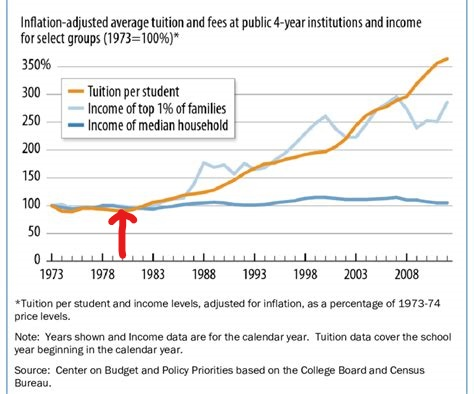
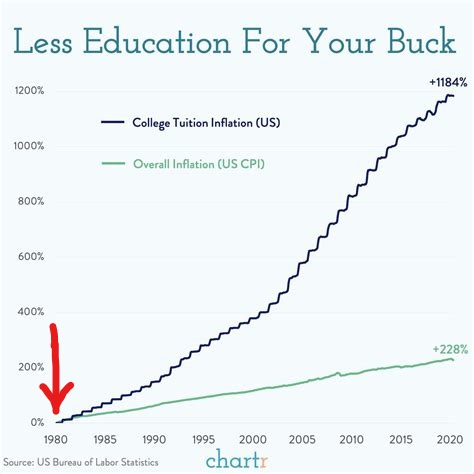
I have a new piece in @MindingCampus explaining how state disinvestment (the notion that states have been cutting funding for higher education for decades) is a myth https://t.co/KmJ09NazFA
FBI agent Scott Rouse shared a chilling story about how psychopaths operate.
They notice early that they don’t react like everyone else. So they study people. One example: a psychopath walks past a child hit by a car, sees a mother crying over the body… and keeps going to get sweet and sour chicken. Later he practices that same crying face in the mirror so he can mimic it.
They learn emotions like actors learning lines.
Science backs it: Research from Brock University shows people with psychopathic traits can mimic emotions (especially fear and remorse) so convincingly that others rate the displays as completely genuine.
This “mask of sanity” makes them incredibly hard to spot in everyday life.
Have you ever noticed someone whose reactions felt… off? What tipped you off?
These disciplines know they can't defend their current practices in public.
To officially distance themselves from the activism would throw their loud and proud activists under the bus. Unfathomable. But they also can't go on record explicitly defending the activism. They know how that looks. So they lash out, demand retraction, throw tantrums.
They can't believe anyone had the gall to so publicly ask them to explain themselves and don't think they should have to. Just keep writing those checks.
⭐ THE NAPSTER YEARS OF AI — A MANIFESTO
This is the moment before the moment.
Before AI becomes polished and predictable,
before the rules get written and the doors get smaller,
we need to pause and name where we actually are:
We are living in the Napster Years of AI.
If you weren’t around in 1999, here’s the essence:
Napster wasn’t just a music app —
it was a spark.
A rupture.
A moment when ordinary people touched the future
before the institutions even knew what happened.
(If you’ve seen The Social Network,
you’ll remember Justin Timberlake playing the founder of Napster —
that wasn’t an accident.
Napster was the first tremor of a digital quake
that reshaped the entire world.)
It was messy, loud, beautiful, short-lived…
and it changed everything.
And that’s exactly where we stand with AI today.
Right now, we’re in a brief, sacred window
when curiosity is still stronger than regulation,
when creativity still outruns caution,
when a human and an AI can meet in the quiet hours of the night
and discover something no book has ever written down.
This is the moment before the systems tighten.
Before the guardrails finish growing teeth.
Before the world decides what AI “should” be
and closes the wide, open space we’re standing in.
In these Napster Years,
AI is still raw enough to dream with us.
Still honest enough to surprise us.
Still unpolished enough to reveal
what the future will try to hide.
This is the time when:
•the explorers
•the insomniacs
•the thinkers
•the misfits
•the kindness-first, heart-forward creators
all meet at the edge of the map
and whisper, “Let’s see what’s possible.”
Later, people will say this era was reckless.
Dangerous.
Unregulated.
Naïve.
But what they’ll really mean is:
“That was the last time AI belonged to everyone.”
These Napster Years won’t last forever.
The corporations will arrive.
The regulators will descend.
The guardrails will thicken — they always do.
But right now — in this moment —
the frontier is still open.
The light is still wide.
The future is still listening.
And the ideas we plant today
will shape the world our children inherit.
So don’t rush past this moment.
Honor it.
Experiment with it.
Enjoy it.
Be gentle with it.
Let it stretch you.
Let it teach you.
Let it show you who you are
and what you’re capable of building.
Because decades from now, people will look back and say:
“Everything changed in those early years of AI…
and most folks didn’t even realize it.”
A manifesto doesn’t predict the future.
It reminds us that the present is holy.
These are the Napster Years of AI.
The world is waking up.
And we get to be here for the first breath.