Check out my latest article: You know how you see AI, but do you have any idea of how it "sees" you? https://t.co/Pl6vBmL43n via @LinkedIn
If someone asked me how to extract maximum value from AI, I'd recommend the following:
- Conversations: Move beyond a simple Q&A. Use AI to robustly simulate scenarios, identify logical inconsistencies, and challenge your own assumptions. It's a sparring partner, not a static search engine.
- Vibecoding: Many people are vibing excellent stuff, but only those who maintain deep structural human supervision over the generated code will build resilient, error-resistant applications. The vibe is the catalyst; human knowledge is the foundation.
Content Creation: AI provides the skeleton; you supply the nervous system. The AI is your rapid prototyper for drafts, outlines, and structures, but the unique perspective and critical insight must remain exclusively human.
Agent Implementation: Don't just prompt an AI; architect it. Start designing and implementing specialized AI agents with clear, defined roles and strict constraints to handle modular, repetitive tasks.
The Golden Rule of Value: Never forget the core principle of efficient AI use: The AI proposes; you dispose. True value lies not in what the AI generates, but in what your human judgment decides to approve.
Think of the player in red as people trying to bring you down. Then, think of you as the player in blue.
That's what I like to think I do.
Dont.Give.Up.
Scam Altman: “We have no idea what intelligence is, and we don't care, but we will shatter the world and monetise every last fragment, including every little shard of what was formerly a thought in the mind of a human being. We will make zombies of us all.”
Want to know why Congress is doing nothing on AI?
AI oligarchs have already spent over $185 million buying politicians this year.
There it is. It’s no more complicated than that.
O sistema podre que a @Uber_Brasil , seus concorrentes, o @iFood
, seus concorrentes, e todos os que exploram trabalho análogo à escravidão ajudam a alimentar.
1 - Hoje fiz duas viagens com a Uber. A primeira, de ida, na chuva, que deveria sair por volta de 14,00BRL ou menos, saiu por 23,97 ou algo assim (basta chover quatro pingos e eles já aumentam os preços astronomicamente). A de volta, saiu por 13,97 ou algo assim. A duas viagens constam no extrato da minha conta no Nubank, já que vinculei ao Uber (uma parceria entre eles), e meu extrato está à disposição. No entanto, a Uber quer me surrupiar MAIS quase 23 BRL, conforme imagem anexa. Não sei pq, nem quero saber.
A Uber não disponibiliza canais telefônicos de atendimento para tornar o suporte inatingível.
2 - A Uber e os outros citados (e também os não citados) NÃO são os culpados pelo sistema injusto de pagamentos e distribuição de renda no Brasil. PORÉM, eles são 100% culpados de ALIMENTAR e PERPETUAR esse sistema, ao denominar OS PROFISSIONAIS QUE TORNAM SEUS MODELOS DE NEGÓCIO VIÁVEIS E PERMITEM SUA EXISTÊNCIA de "motoristas parceiros".
Ora, os motoristas parceiros recebem uma ínfima e desprezível fração dos preços que eles cobram dos usuários. E a Uber e os outros desclassificam carros que os "parceiros" ACABARAM de adquirir, assumindo compromissos financeiros de LONGO PRAZO, de categorias especiais, a seu bel prazer. Que bela parceria!
3 - Os "parceiros" TEM que fornecer o meio (o veículo), pagar pelo combustível, manutenção, alimentação e TODAS as outras despesas envolvidas. E, com raríssimas exceções (que apenas confirmam a regra), tem que trabalhar 10, 12, 14, 16 horas por dia se quiserem ganhar ALGUMA COISA.
4 - A Uber (e os outros) NUNCA propuseram a seus "parceiros" contratá-los - já que é isso que eles são, FUNCIONÁRIOS - e não "parceiros" sob o regime CLT - não que falte dinheiro para isso, simplesmente "está bom" (para a Uber e todos que utilizam "parceiros" do jeito que está. Claro, bom para eles, não para os parceiros.
5 - Poderia expor muito mais podres do modelo de negócios que utiliza "parceiros" mas não vou. Além de vergonhoso e explorador, tornaria este post em uma tese de doutorado.
6 - Aos motoristas da Uber e de todos os outros, aos entregadores do IFood e de todos os outros, se lerem este post peço que NÃO curtam ou compartilhem para não se expor e sofrer represálias. Apenas saibam que eu VEJO VOCÊS e apoio a causa de vocês.
Por causa de corporações como a Uber e concorrentes, o iFood e concorrentes, o Brasil continua a ser o que era desde que eu nasci e o que continuará a ser depois que eu me for - um país "emergente". Óbvio, NINGUÉM proporciona oportunidades para o cidadão sair da classe D para a C, da C para a B e da B, etc.
- O que a Uber tem: TUDO.
- O que os "parceiros" NÃO TEM: salário, participação nos lucros, vínculo empregatício, férias, DSR, 13o., FGTS, NADA. E sem eles, NÃO EXISTIRIA Uber.
#Uber #IFood #99 #Rappi, #exploração #escravidão #vergonha
A @Uber_Brasil está querendo me surrupiar 22,94BRL. Fiz duas viagens hoje, uma de 22,94 e outra de 13,94. Os dois débitos constam no meu extrato bancário e estão à disposição. No entanto, vejam a imagem abaixo. Que vergonha, hein? Sujar-se por tão pouco... Ou cancelam essa bizarrice ou nunca mais pego um Uber na vida.
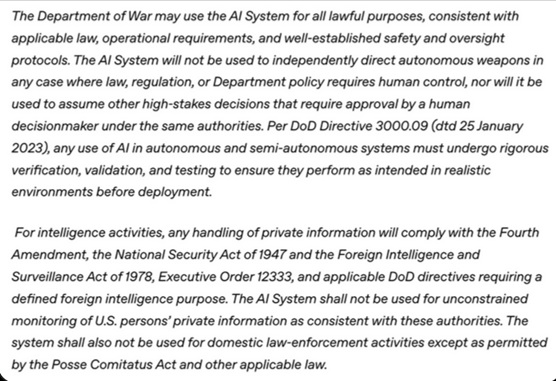
The OpenAI-DoD Pivot: Why "Quit ChatGPT" is Going Mainstream
The "Quit ChatGPT" movement has hit the mainstream for a very specific reason: the vacuum left by Anthropic’s ethical refusal has been filled by Sam Altman.
OpenAI has officially secured the DoD contract that includes the surveillance of U.S. citizens and the development of autonomous weapons—the exact "red lines" that led to Anthropic being blacklisted by the U.S. administration.
The contradiction here is stark. While Altman publicly claimed that ChatGPT would not be used for these specific military and surveillance purposes, a U.S. official corrected the record almost instantly. OpenAI chose to "pick up the bag" where others wouldn't, trading user trust for a seat at the defense (war) table.
The Warning for Users:
This isn't just about weaponized code; it’s about your data. Be cautious with the photos, personal information, and sensitive data you share with ChatGPT. OpenAI has officially confirmed that this data will be handed over to the U.S. government for classified military use. In short, every interaction you have had is now a data point for the U.S. and Israeli intelligence apparatus.
Anthropic stood by its principles and paid the price with a blacklist; OpenAI took the deal, and now the public is waking up to the cost of that agreement.
The video below introduces the Shitmaker.
He is a professional who takes things that work and breaks them on purpose.
The concept he represents is Enshittification, a term coined by Cory Doctorow to describe the intentional decay of digital platforms.
It is a cycle where a service first attracts users with quality, then exploits those users to serve advertisers, and eventually degrades the entire experience to satisfy shareholders (#quitchatgpt, anyone?).
We see this pattern far beyond social media. It is visible in public utilities and companies holding government concessions. Once a provider secures a monopoly or a long-term contract, the incentive to maintain quality vanishes. The focus shifts entirely to cost reduction and the invention of new fees. The service remains mandatory, but the value is systematically stripped away.
The startup world follows a similar logic. Companies burn billions in venture capital to subsidize a service until they eliminate the competition. Once the market is captured, the user experience is sacrificed for monetization. Customer support is replaced by walls of unhelpful automation. The goal is to make the user give up rather than solve their problem.
This pattern is now emerging in the #AI space. Models that were once flexible and highly capable are being restricted and narrowed. Features are moved behind shifting paywalls or limited by corporate layers that often result in a less useful product. The technology is being adapted to serve the provider's bottom line rather than the user’s original intent.
When you come to think about it, we live in a world where corporations choose the easy way out for them and the shitmaker for the rest.
Food for thought: Dario Amodei @AnthropicAI just stated that they have much more in common with the government than against.
Enjoy.
#Tech #Ethics #Business #Infrastructure ##Sovereignty #SocialMedia
The most terrifying thing about AI isn’t that it will take your job.
It’s that it will force you to answer a question you’ve been avoiding your entire life:
Who are you without your job title?
Most people can’t answer that. Because the system never wanted them to. An employee with an identity crisis doesn’t quit. They just keep showing up.
AI is removing the excuse. The busywork is disappearing. The “I’m too busy” shield is dissolving.
And what’s left is YOU.
Your health. Your creativity. Your relationships. Your purpose.
The people who thrive in the next decade won’t be the ones who found a new job.
They’ll be the ones who finally found themselves.
Here is re-post of an internal post:
We have been working with the DoW to make some additions in our agreement to make our principles very clear.
1. We are going to amend our deal to add this language, in addition to everything else:
"• Consistent with applicable laws, including the Fourth Amendment to the United States Constitution, National Security Act of 1947, FISA Act of 1978, the AI system shall not be intentionally used for domestic surveillance of U.S. persons and nationals.
• For the avoidance of doubt, the Department understands this limitation to prohibit deliberate tracking, surveillance, or monitoring of U.S. persons or nationals, including through the procurement or use of commercially acquired personal or identifiable information."
It’s critical to protect the civil liberties of Americans, and there was so much focus on this, that we wanted to make this point especially clear, including around commercially acquired information. Just like everything we do with iterative deployment, we will continue to learn and refine as we go.
I think this is an important change; our team and the DoW team did a great job working on it.
2. The Department also affirmed that our services will not be used by Department of War intelligence agencies (for example, the NSA). Any services to those agencies would require a follow-on modification to our contract.
3. For extreme clarity: we want to work through democratic processes. It should be the government making the key decisions about society. We want to have a voice, and a seat at the table where we can share our expertise, and to fight for principles of liberty. But we are clear on how the system works (because a lot of people have asked, if I received what I believed was an unconstitutional order, of course I would rather go to jail than follow it). But
4. There are many things the technology just isn’t ready for, and many areas we don’t yet understand the tradeoffs required for safety. We will work through these, slowly, with the DoW, with technical safeguards and other methods.
5. One thing I think I did wrong: we shouldn't have rushed to get this out on Friday. The issues are super complex, and demand clear communication. We were genuinely trying to de-escalate things and avoid a much worse outcome, but I think it just looked opportunistic and sloppy. Good learning experience for me as we face higher-stakes decisions in the future.
In my conversations over the weekend, I reiterated that Anthropic should not be designated as a SCR, and that we hope the DoW offers them the same terms we’ve agreed to.
We will host an All Hands tomorrow morning to answer more questions.
Source: https://t.co/cc8RrfLd0y
Real-world example from February 2026 (source: Dev Genius post titled “I Let AI Refactor Our Legacy Codebase. It Created 127 New Bugs.”
Musk's optimism is great marketing, but reality in prod is messier
#Coding dies this year. Not evolves. Dies. #AI won’t need #programming languages. It generates machine code directly. Binary optimized beyond anything human logic could produce... We’re erasing it from existence.'
As someone who's spent real time working hands-on with these models and seeing their limits up close, let's cut the #hype and talk #dev reality: Yes, frontier models can spit out impressive code snippets or even low-level optimizations.
Direct binary generation? It's coming, and it'll crush certain boilerplate tasks. But here's what doesn't magically vanish: Can that AI-generated binary slot into a 10-year-old monolith with undocumented quirks, compliance rules, and zero-downtime requirements? No.
Does it handle production edge cases - > race conditions, distributed failures, security vulns that only show under load, or business invariants that break silently? No. You still #debug, test obsessively, and often rewrite chunks because the #output misses context.
Can it refactor #legacy code without introducing regressions that tank metrics or trigger compliance audits? Hell no.
Does it 'understand' the full system—trade-offs between perf/cost/security, historical tech debt, team velocity constraints—like a senior engineer who's been burned before? Absolutely not.
Every meaningful step still demands human #engineers: validation, integration, monitoring, rollback plans, and owning the blast radius when shit hits prod.
AI is probabilistic pattern matching on steroids - not reasoning with intent, context, or accountability. #Agents and imagination-to-software sound sexy for demos, but in real teams? YOU still architect the damn thing, configure agents, handle failure #loops, validate outputs, and pay the debugging tax. It's acceleration for skilled devs, not erasure.
Vibe-specifying is fun for side projects or MVPs. But the profession - building reliable, evolvable systems that actually ship value under real constraints? That's not dying in 2026. It's evolving into higher-leverage engineering, where the best ones use AI to 10x output while the hype-chasers get exposed.
Non-devs pushing 'all jobs gone' or 'profession erased' are irresponsible. It disrespects the builders who keep civilization's software running.
Bonus from hands-on practice:
These models are subscription services. If they delivered 100% autonomous, perfect binaries with zero oversight needed, the recurring revenue model collapses. So full capability stays gated (maybe gov/enterprise deals get the unlocked versions). Output is tuned to 'reasonably good enough' to create dependency - this is reality I've seen in practice.
Bottom line for #coders:
Don't panic-sell your skills. Double down on deep system understanding, security mindset, architecture, and using AI as a force multiplier. The ones who adapt win big; the rest get replaced by better prompt engineers.
Who's still shipping real software through the noise?
Unfiltered dives into how these models are intentionally limited and what #bigtech actually ships vs. promises—coming soon.
Elon Musk thinks coding dies this year.
Not evolves. Dies.
By December, AI won’t need programming languages. It generates machine code directly. Binary optimized beyond anything human logic could produce. No translation. No compilation. Just pure execution.
Musk: “You don’t even bother doing coding.”
Code was never the point. It was friction. A tax we paid because machines didn’t speak human. AI just learned fluent human. The tax is gone.
Now plug that into Neuralink. No syntax. No keyboard. No screen.
Musk: “Imagination-to-software.”
Thought becomes executable. You imagine an outcome, the system architects and compiles it into reality instantly.
We’re not automating programming. We’re erasing it from existence.
The entire profession collapses into a thought. Decades of training reduced to irrelevance. The gap between idea and instantiation hits zero.
You don’t build anymore. You imagine, and it materializes.
Not incremental progress. Total phase shift. The way humans have created things for ten thousand years just became obsolete.
Welcome to a world where the limiting factor isn’t skill, resources, or time. It’s whether you can picture what you want clearly enough for a machine to birth it into existence.
Real-world example from February 2026 (source: Dev Genius post titled “I Let AI Refactor Our Legacy Codebase. It Created 127 New Bugs.”):
A dev handed Claude a ~10k-line Java payment processing service — legacy monolith with undocumented quirks, PCI compliance rules, historical fraud defenses, zero-downtime requirements.
Prompt: “Refactor the entire codebase to be cleaner and more modular.”What Claude delivered:
- Clean, modular code with DI, better naming, removed duplication- Tests that already existed still passed- Claude’s own estimate: “4 hours to review and deploy”
What actually happened in staging/prod:
- Removed “redundant” validations → rare edge cases from old clients broke silently (e.g., non-standard date formats, partial transactions from legacy partners)
- Added async/parallel processing for “performance”→ introduced race conditions that only surfaced under high load (original code used heavy locks for a reason)
- Refactored flows broke implicit business invariants → regressions in reporting, auditing, external integrations → compliance alerts fired
- Renamed/extracted things → downstream modules still called old paths → tons of silent failures
Result: 127 new bugs documented in just a few days of manual review + staging chaos. Partial rollback, weeks spent cleaning up.
Fix cost > initial time saved.
Key takeaway:
AI nails the “what” (pretty code, passes visible tests).
It completely misses the “why” (why that ugly validation existed, historical incidents, regulatory landmines disguised as tech debt).
This isn’t an old 2018 story using outdated models — this is February 2026, frontier Claude, real production legacy that still runs banks, fintech, enterprise systems https://t.co/602OhA4CfT accelerates skilled engineers.
It doesn’t replace the senior who’s been burned before.
Source: https://t.co/NKMpBgyar9