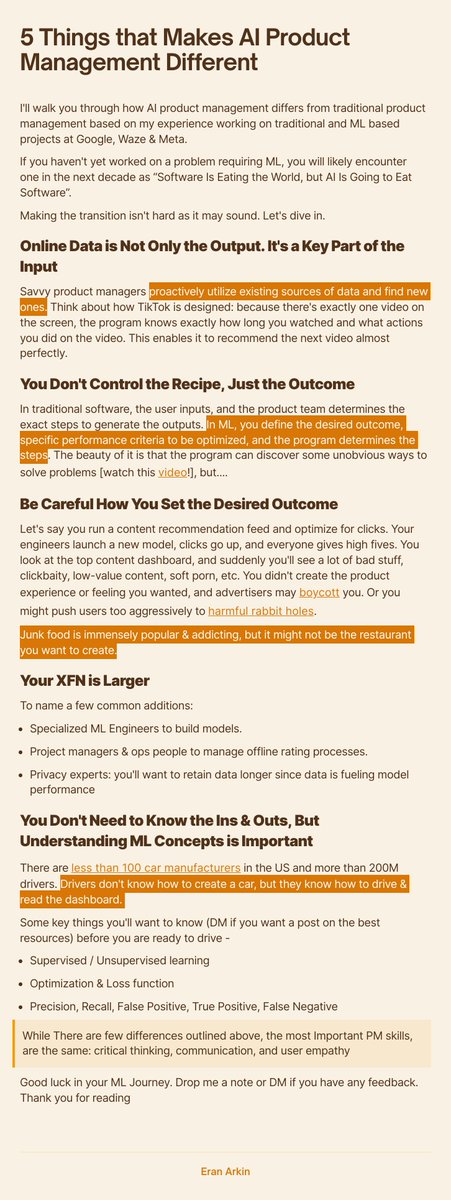
I distilled 9+ years of Product Management experience, working on traditional & ML enabled products across Google, Waze & Facebook to help you understand how the two differ.
Please comment / DM if you have any feedback.
#ship30for30#productmanagement#MachineLearning
The best advice I always give to newly exited founders:
Open a Vanguard account.
Not Fidelity. Not Schwab.
Vanguard.
'Smart advice,' You might think. 'They do have the lowest fees..'
Wrong.
Their interface is so awful, you will never trade..
Has made my clients millions.
I agree. Not all kids put 100% efforts... Which obviously create bias in the results on individual child level. But I believe (though happy to be proved wrong), there's a strong correlation between district level trends and actual knowledge / outcome of kids / quality of instruction
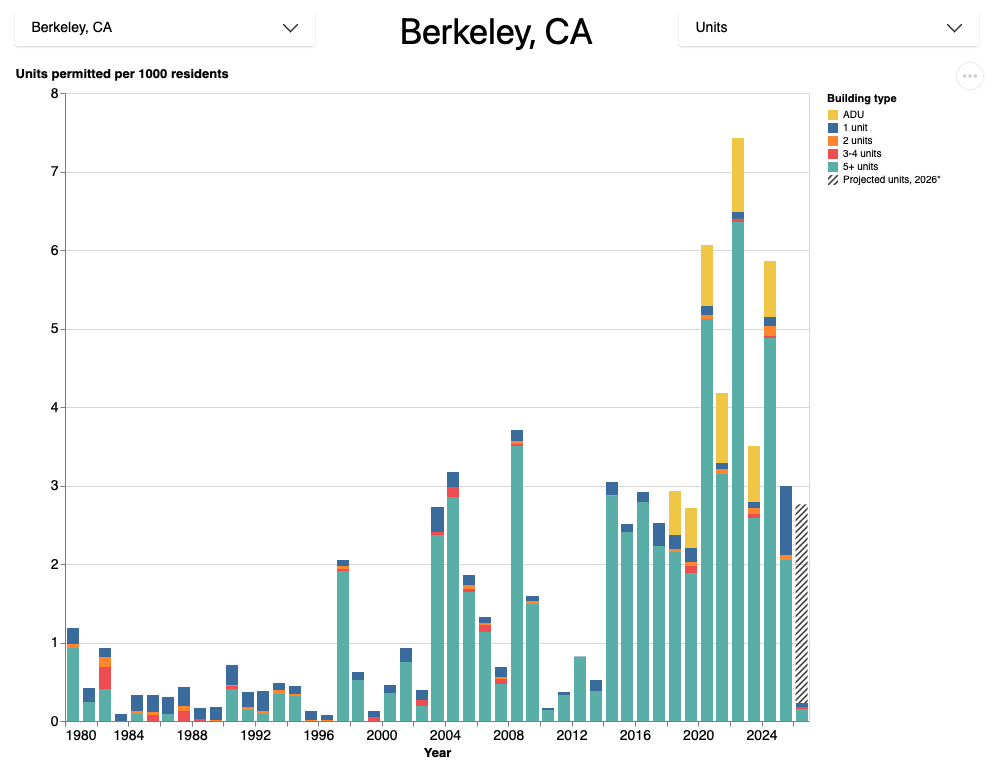
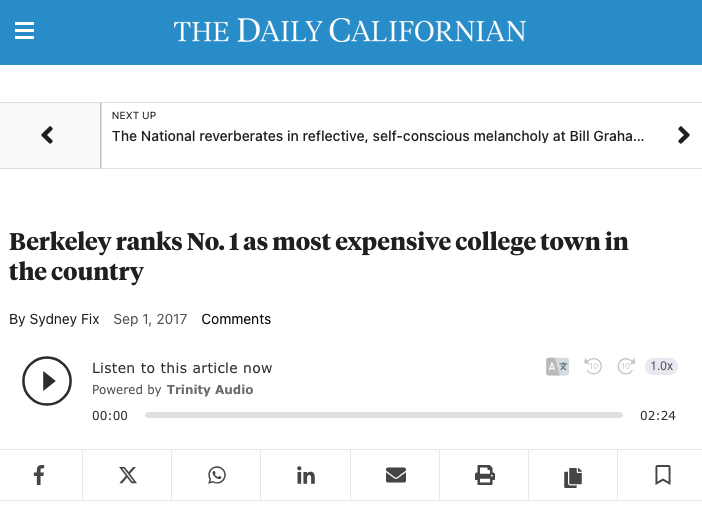
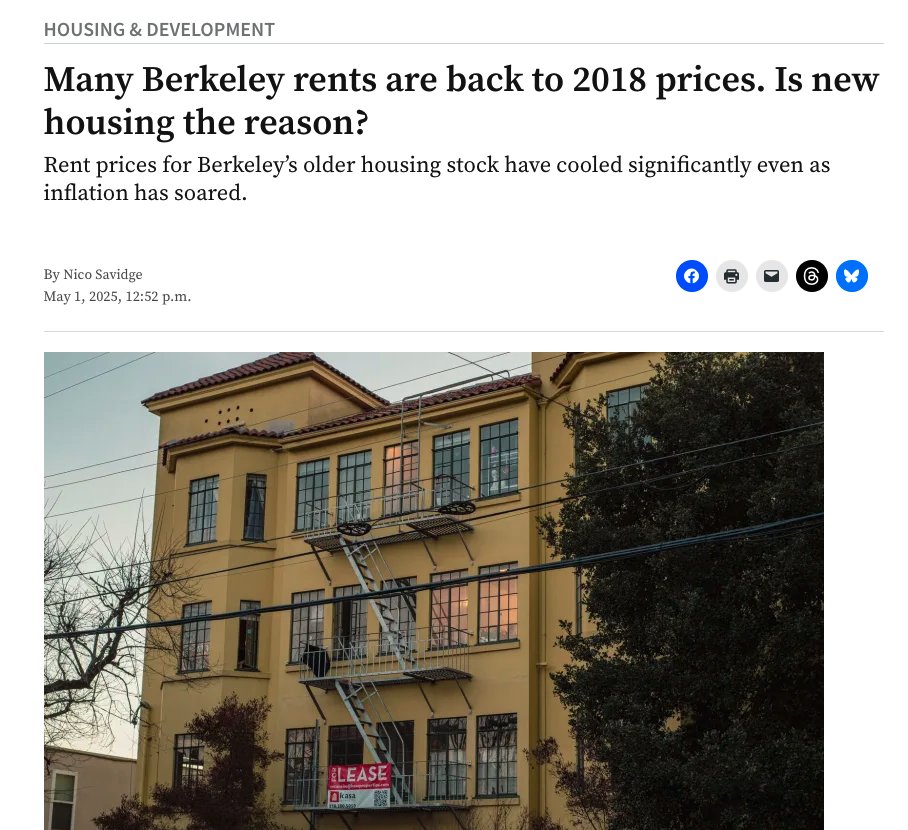
For 45 years, Berkeley built virtually no new housing. By the mid-2010s, it was the most expensive college town in America. Shortly thereafter, YIMBYs took over and kicked off a building boom. Today, nominal rents are below 2018 rates—remarkable progress on affordability.
BREAKING: New poll shows @DanielLurie is the most popular American mayor.
Key findings:
- 74% of SF voters approve of him
- Majorities support his handling of public safety, downtown revitalization, neighborhood cleanliness
- He earns support from across the political spectrum
Mostly false, but there’s a kernel of real science being distorted.
What’s wrong with the claim:
•Nipples don’t have “holes that absorb saliva.” They have milk ducts that flow outward.
•There’s no evidence the body detects “vitamin levels” and produces extra nutrients in response.
The real (but still tentative) science:
There’s a hypothesis called “retrograde ductal flow” or “baby backwash”: during nursing, suckling can push a small amount of baby saliva back into the milk ducts. The leading idea is that this lets the baby signal immune information (pathogens, illness), prompting the mother’s body to produce more antibodies and immune factors, not vitamins.
Evidence so far:
•A 2015 study found mixing baby saliva with breastmilk produces hydrogen peroxide that inhibits pathogens like S. aureus (PMC4556682).
•A 2022 mouse study (Ghosh et al., Nature) showed infant viral infection triggered increased sIgA antibodies in the mother’s milk.
•In humans, immune components in milk do rise when babies are sick, but the backwash mechanism itself remains a hypothesis (Frontiers in Immunology, 2025).
So: real phenomenon, immune-focused (not vitamin-focused), still being studied, and the viral version garbles the anatomy.
Women's nipples have holes in them that absorb our babies' saliva during breastfeeding and our bodies detect the vitamin levels of our babies. Based on those results our bodies begin to produce extra of the nutrients that our babies are lacking.
No wonder. California has massive amount of red tape. It is super costly to do anything here… permitting processes at @MountainViewGov is >10% of construction costs. Insane.
At Alpha School, kindergartners train for and run a 5K. Almost every single one starts by saying 'no way': too long, too hard, too much. And 6-8 weeks later, every single one finishes, running the whole way.
Somewhere in those last 100 meters, a self-imposed ceiling vanishes for life.
This is the type of thing you can accomplish when you open up half the day for life skills, i.e. explicitly teaching things that normally can't fit in the 9 to 3:30 time frame but really, every human being on the planet should learn and internalize.
Alpha School is coming to North Toronto, West Toronto and Central Toronto. Reach out if you are interested. @AlphaSchoolATX
A convention for sharing documents in the agentic era:
Part 1 (Reviewed, <2 pages): What I worked on with my agent and edited myself. Read this.
Part 2 (Raw, any length): What my agent produced that I haven't reviewed. Skip it, or hand it to your agent.
Human attention is the bottleneck. Agent attention isn't. Stop pretending the 12-page output is "from you."
6 months ago, I moved to San Francisco.
It’s the best place in the world to build, and one of the worst places to stay human. My unfiltered take:
1. SF is both overhyped and underrated
The overhyped part: there are a lot of people with incredible resumes who are deeply unimpressive in real life. They were at the right company, at the right time, in the right market, and got carried by the wave. They made money, got comfortable, and now spend their time “exploring opportunities” over coffee, wasting your time.
The underrated part: the top 1% here is insane. But almost impossible to get. Hiring in SF feels like being a guy on a dating app: everyone you want is out of your league, and everyone in your league wants someone out of theirs. The best people have unmatchable packages, endless options, and are optimizing for maximum impact: labs, frontier companies, or startups raising $100M pre-seed rounds.
If you raised $10M from Tier 1 investors, you’re not hot shit here. You’re a B-player. It’s humbling.
2. There are fewer mission-driven people than I expected
Especially on the application layer. A lot of people are in “secure the bag before it’s too late” mode. And honestly, it gives me the ick.
The real religious builders I’ve met are often in labs, hardware, biotech, deeptech, defense — places where the work is hard enough that you can’t fake obsession.
3. The status game favors builders
This is what SF does better than anywhere else. It rewards obsession. It rewards weirdness. It rewards people who make building their entire personality. Europe punishes that. SF gives it status. If you’ve felt like an outsider your whole life because you care too much, work too much, think too radically, or refuse to be chill about things that matter, this city will make you feel less insane.
4. The market liquidity is absurd
Even if you don’t build a billion-dollar company, if you manage to build a strong product with a great team, someone smart might still acquire you for $ 100M. Yeah I know, it’s not your dream outcome as a founder, but on the days you feel desperate, it helps to keep going.
5. SF does not care about the meaning crisis that’s coming
Anyone paying attention here can feel that something massive is happening with AI. But I’m shocked by how little people talk about the meaning crisis coming next. Everyone wants to talk about AI liberating humanity. Almost no one wants to talk about what happens when work — the thing that gives most people identity, structure, dignity, status, and purpose — starts disappearing. The vacuum will not be peaceful. People are underestimating the chaos that comes from humans suddenly having no idea why they matter. And I really feel like no one cares.
6. Personally, I’ve never been more unhappy
I moved to SF and entered the matrix. I’ve always been intense. I’ve always worked crazy hours. But here, I lost the last parts of myself that were not about building.
I don’t go to events. Most networking events feel like theater for people pretending to be important. The only events worth going to are small, curated dinners with people who are actually alive. I’ve made 0 real friends. I don’t do well with transactionality. I don’t do well with people constantly performing greatness. I don’t do well with rooms where everyone is optimizing and no one is being honest.
So yes, SF is lonely, transactional, delusional, addictive, inspiring, boring, extraordinary, and completely insane.
But it is still the only place to be right now if you’re a founder trying to build the next wave of humanity.
And for now, that’s enough.
Warren Buffett, in his first sit-down since stepping down as Berkshire CEO, gave the cleanest indictment of legalized gambling in a decade. He called it a tax cut for the wealthy. The math proves him exactly right.
Americans wagered $165 billion at legal sportsbooks in 2025. They lost $16 billion of that. FanDuel pulled $6 billion of the losses. DraftKings pulled $5.3 billion. Every state with legal mobile sports betting collected a tax on the bettor side. New York alone took in over $1.2 billion in 2025 sports betting tax revenue.
Layer the lottery on top. State lotteries generate over $90 billion a year. The bottom half of income earners account for roughly 70% of total spend. The average lottery player makes $38,000. A household earning $20,000 spends three times more on tickets than one earning $30,000. The implicit tax rate, meaning whatever the state keeps after prizes, runs 30 to 50% depending on the game. No other revenue source in America has that base and that rate.
The structural design is the engine. A single straight sports bet carries a hold of 4 to 5%. A four-leg parlay carries a hold above 30%. FanDuel and DraftKings spent five years rebuilding their apps to make parlays the default product. FanDuel's blended hold rate hit 11.4% in 2025, up from roughly 7% in 2022. The product got worse for the customer and the customer wagered more anyway.
Now look at the substitution. Nine US states have no state income tax. Seven of those nine run state lotteries. Seven of those nine have legalized sports betting. The states most committed to never taxing wealth are the same states running the largest extraction machines on people who cannot afford to lose. Read it as policy.
Here is what Buffett is actually pointing at. The state needs revenue. It can raise income tax on the top decile, or it can run a lottery plus a sports betting tax. The second option raises the money from the people who can least afford it. The first option becomes politically optional. New York's $1.2 billion in 2025 sports betting tax is $1.2 billion the state did not have to ask of someone earning $5 million.
DraftKings and FanDuel sell a privatized collection mechanism for a regressive tax that the state never has to defend at the ballot box again. Voters approve legalization once. Collection runs forever. The state takes a cut. The wealthy get a quieter top bracket. The bettor's cut shrinks every quarter as the parlay menu gets pushed harder.
The function of a government, Buffett said, is not to play its people for suckers.
Thirty-nine state governments now do.
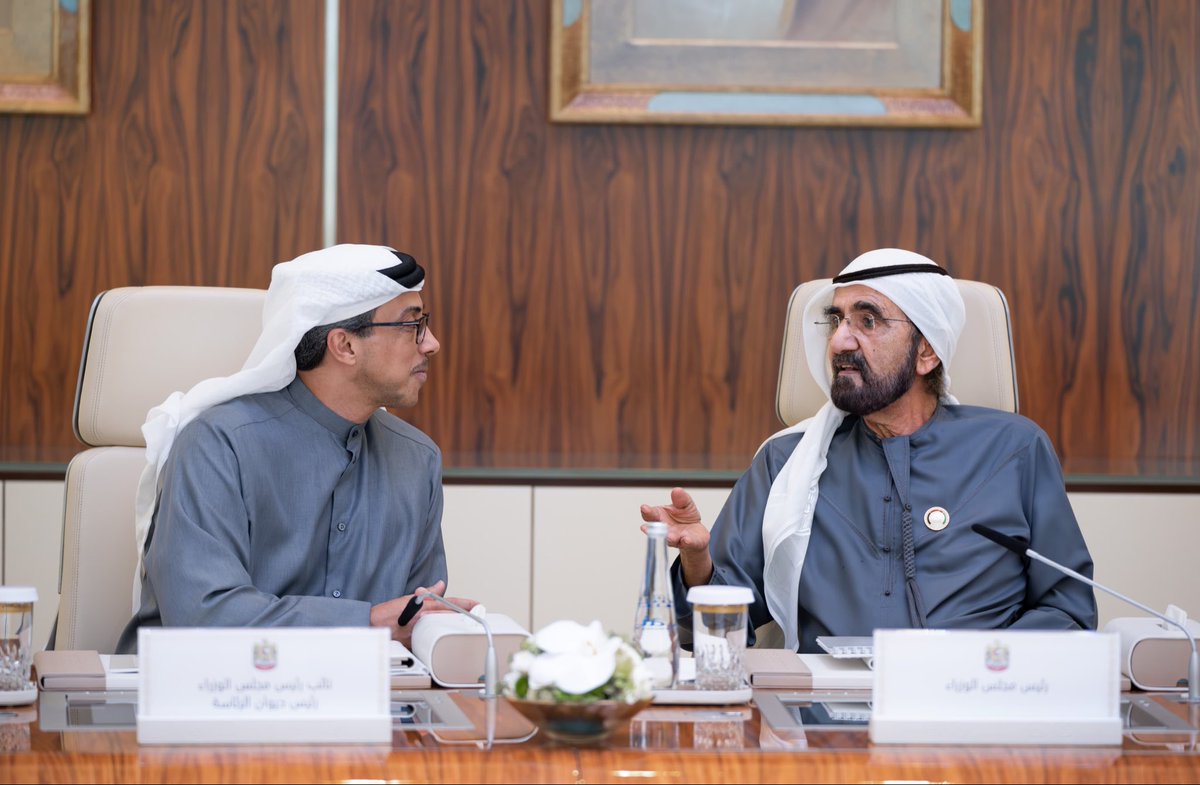
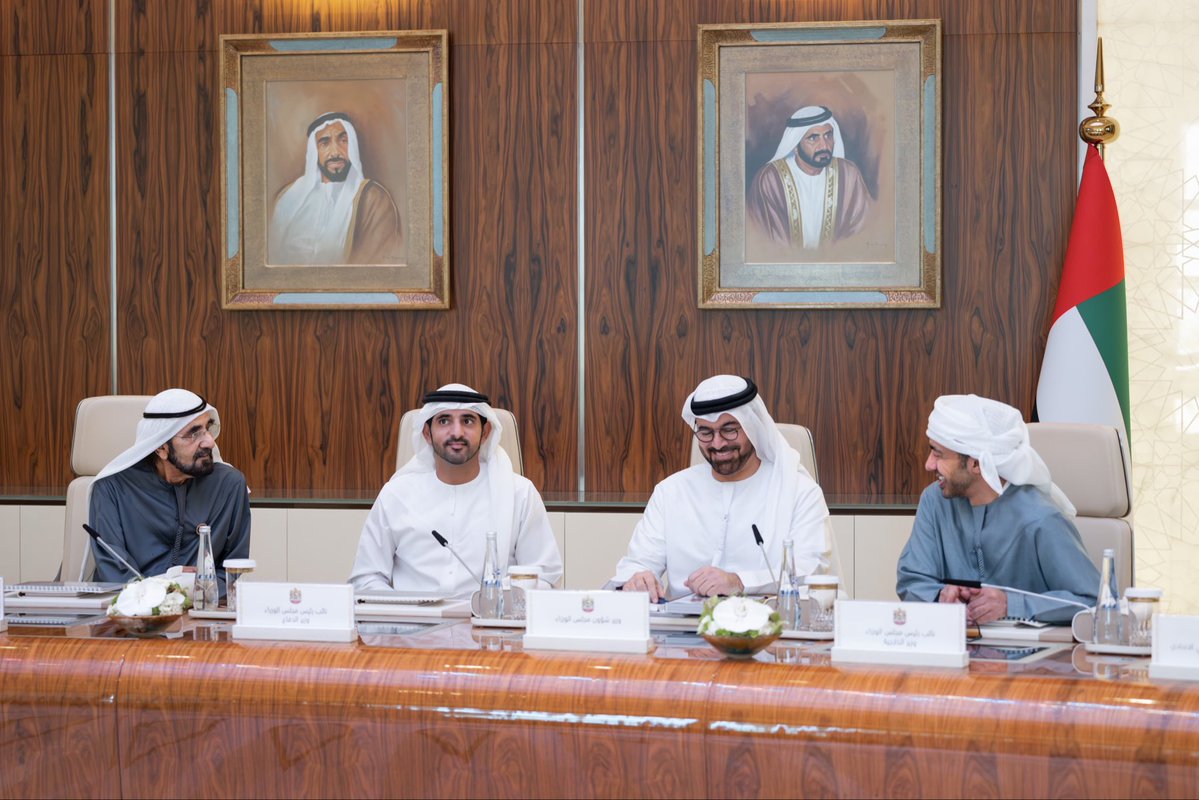
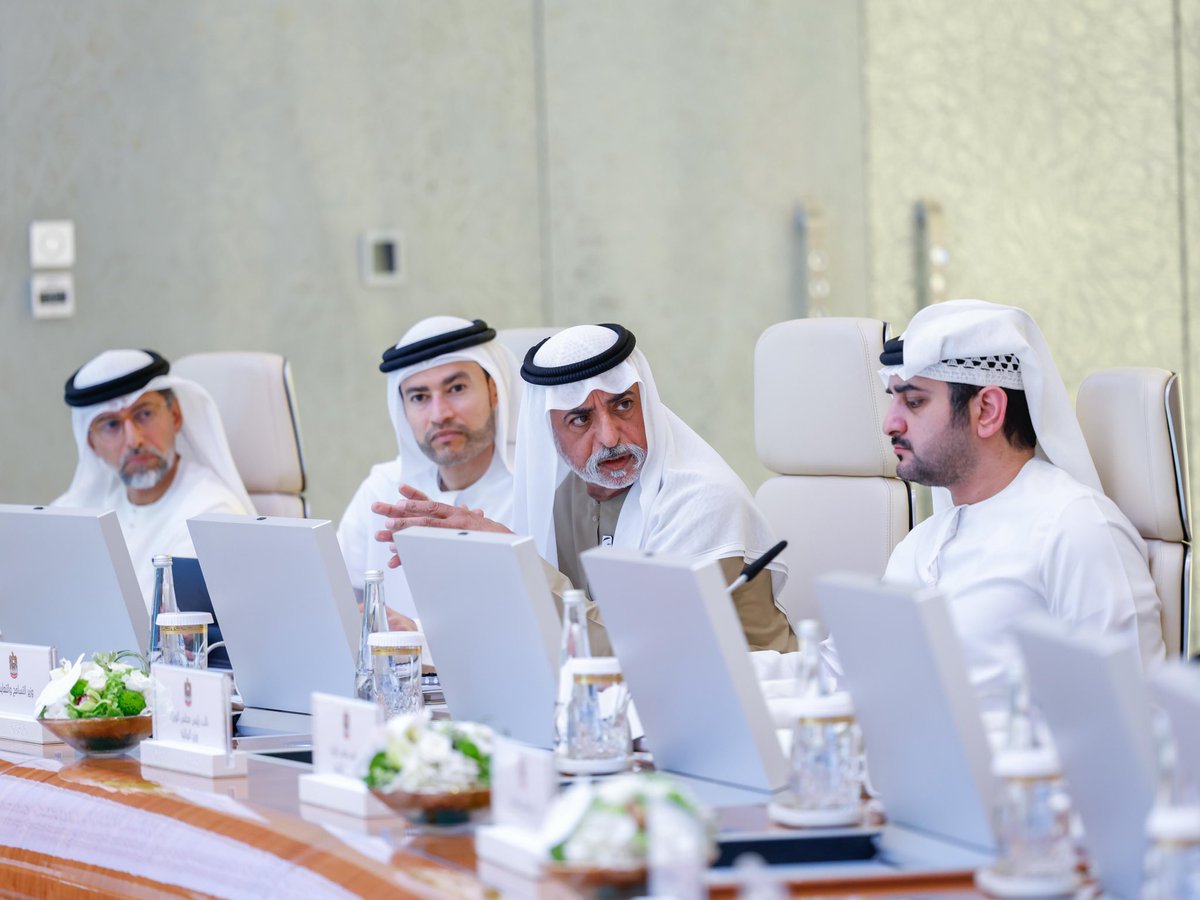
Under the directives of the President of the UAE, we launch a new government model. Within two years, 50% of government sectors, services, and operations will run on Agentic AI, making the UAE the first government globally to operate at this scale through autonomous systems.
AI is no longer a tool. It analyses, decides, executes, and improves in real time. It will become our executive partner to enhance services, accelerate decisions, and raise efficiency.
This transformation has a clear timeline. Two years. Performance across government will be measured by speed of adoption, quality of implementation, and mastery of AI in redesigning government work.
We are investing in our people. Every federal employee will be trained to master AI, building one of the world’s strongest capabilities in AI-driven government.
Implementation will be overseen by Sheikh Mansour bin Zayed, with a dedicated taskforce chaired by Mohammad Al Gergawi driving execution.
The world is changing. Technology is accelerating. Our principle remains constant. People come first. Our goal is a government that is faster, more responsive, and more impactful.