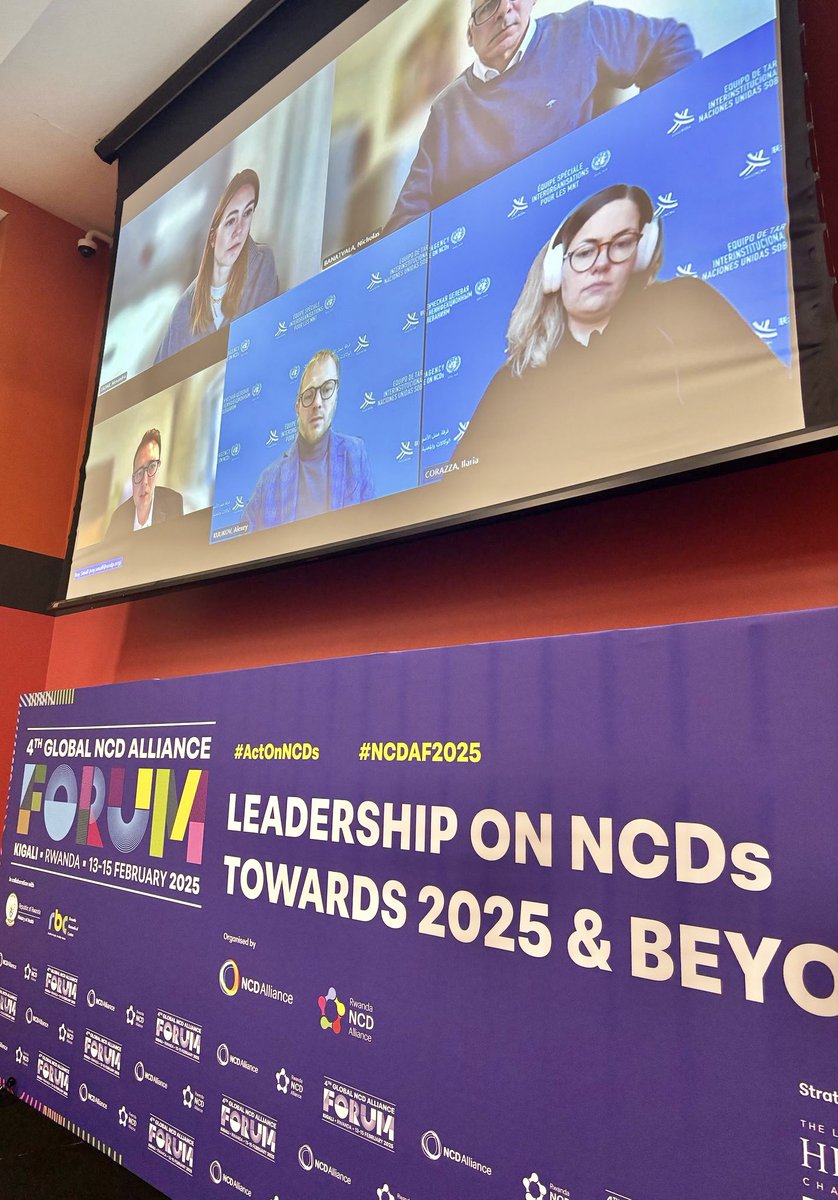
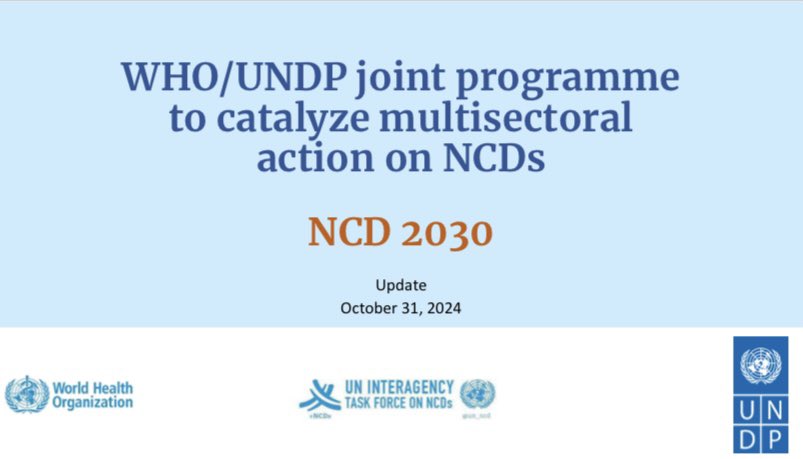
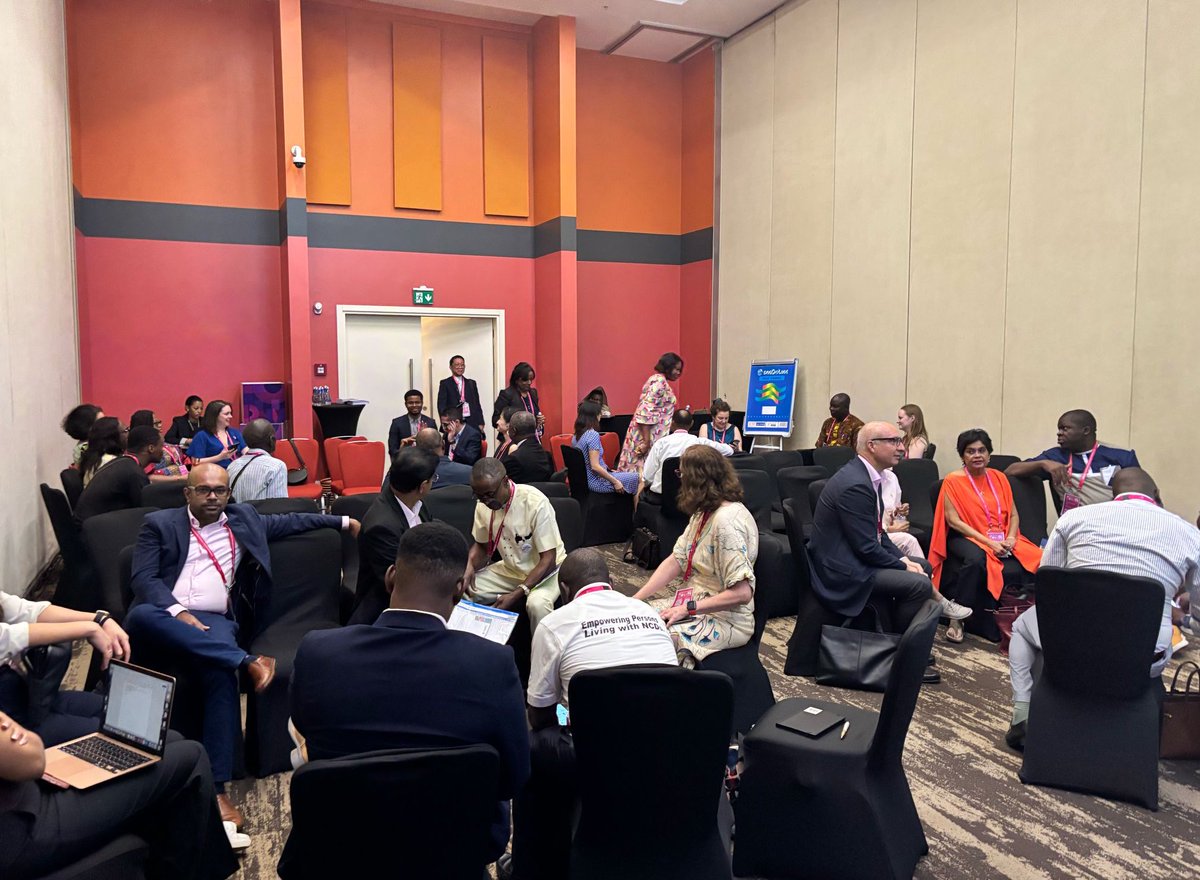
I was honored to have presented together with @UNDP at the 25th UN NCD Task Force @un_ncd meeting on the significant progress of the WHO/UNDP NCD 2030 programme. The momentum for tackling non-communicable diseases #NCDs, mental health and achieving broader health-related development goals through economic evidence is stronger than ever. We now have 131 completed or ongoing national #investment cases across 74 countries, providing governments with powerful data to drive policy and secure funding. These cases are not just reports - they are catalysts for change. The message from countries is clear: investment cases are vital tools for advocacy, budget allocation, and fostering multi-sectoral #health collaboration. 95% of surveyed countries want to refresh or expand their investment cases to maintain impact. A huge thank you to all our partners and country teams for their relentless commitment. Let's continue to scale up action, embed these tools in national systems, and work together for a healthier, more productive future.
“The NCD investment case was very important for us. In 2019, we did not have evidence-based data on NCD burden – it was very difficult to convince the deputy minister of finance to invest in this. After the first NCD investment case the ministry of finances changed their view on prioritizing the burden of NCDs." - Government official
A recently released independent report on the Task Force @un_ncd describes it as ‘an effective coordination mechanism and an exemplar of the UN working as one’, with the report highlighting its ‘high demand from both Member States and UN agencies’.
At the global level, the evaluation found that the Task Force ‘contributes to building synergies among United Nations agencies on non-communicable diseases #NCDs through working groups, joint programmes and the Health4Life Fund’ with the secretariat being ‘highly effective in convening Task Force members and coordinating its activities.’
https://t.co/GMODTwQs90
The @WHO, UNDP and @un_ncd mental health investment case shows that by acting now #Bangladesh can reduce the burden of mental health condions. The findings of the investment case demonstrate that invesng in evidence-based, cost-effece #mentalhealth intervenons would, by 2031, have both health and economic benefits.
Mental, neurological and substance use condions pose a significant challenge in Bangladesh🇧🇩, and the prevalence of #depression, anxiety, psychosis, bipolar disorder, epilepsy and alcohol use disorders as major causes of morbidity and mortality is increasing.
This presents a double challenge to Bangladesh: human suffering and a growing public #health burden, with significant social and economic losses, including lost workforce producvity due to premature death, missed days of work (absenteeism) and impaired job performance (presenteeism).
Mental health condions are highly prevalent in Bangladesh throughout the life-course, with the highest rates in people aged ≥ 60 years. The burden of mental health condions is seen in a complex context of social and environmental determinants, including urbanizaon, natural disasters and poverty. While Bangladesh has a dedicated mental health instute and two large specialized hospitals, these serve populaons in or close to the capital, Dhaka; no community follow-up services are available. The aim is to integrate mental health services into primary health care, with decentralizaon, equity and innovave programming. Mental health is currently grossly underfunded, and most Government funding is for inpaent care.
The cost of mental health condions to the Bangladesh economy in 2021 was 210.5 billion BDT (US$ 2.5 billion), equivalent to 0.76% of the 2020 GDP. Less than 1% of the annual costs were for mental health care, and the remaining 99% of costs were due to lost workforce producvity from premature death and disability. This large loss in producvity indicates that current investment in mental health care does not meet the needs of the populaon. Furthermore, the losses suggest that many sectors could benefit from investment in mental health and that mulsectoral, whole-of-society engagement is necessary.
By invesng in mental health now, Bangladesh can save almost 27 000 lives and gain almost 2 million healthy life years in the next 10 years by reducing the incidence, duraon or severity of leading mental health condions. This will drascally reduce the burden on communies and the economy.
By investing in mental health now, Bangladesh can see economic benefits of 190 billion BDT in the next 10 years, which rise to 587 billion BDT when the social value of health is included in the calculaon. The producvity gains that Bangladesh can make from invesng in mental health intervenons greatly exceed the cost of all intervenon packages (55 billion BDT).
https://t.co/lrxeaEivwo
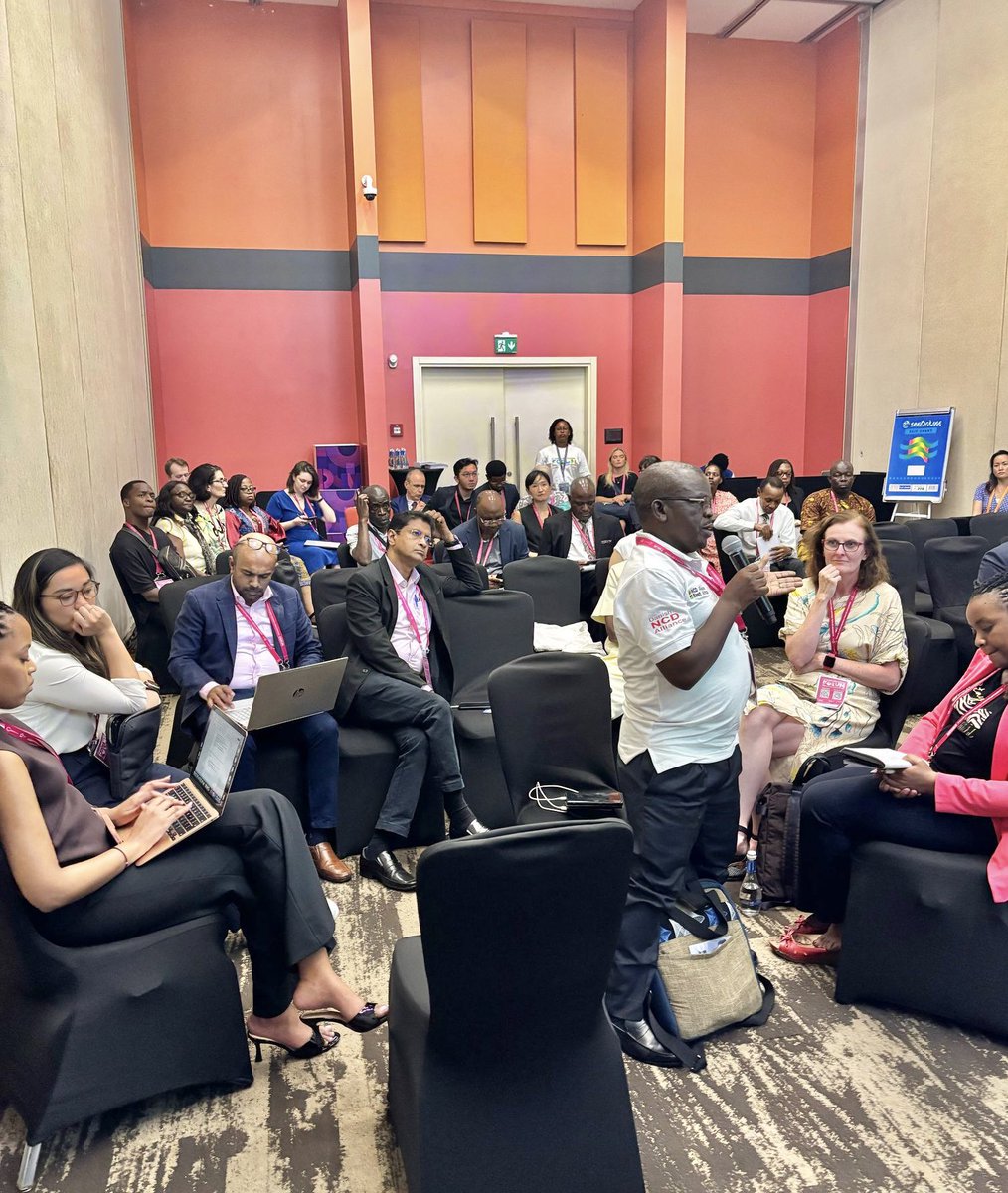
Great interactive session on the impact of @un_ncd investment cases on prevention and control of #NCDs non-communicable diseases.
Every country needs to develop and implement its own to ensure effective NCDs and broader health #governance, legislation and fiscal policies, as well as strong financial frameworks for early diagnosis and #treatment of chronic conditions and diseases.
#NCDAF2025 #Rwanda #Kigali
https://t.co/Wq7NJOXPw4
#UniversalHealthCoverage Day:
Honored to participated in a thematic dialogue led by @unfoundation@laktarr001 on Investing in Non Communicable Diseases and Mental Health.
The event was co-hosted by the Group of Friends of UHC (led by Antigua and Barbuda, Belgium, Ghana, Georgia, Japan, and Thailand), along with @WHO
I’m encouraged the foundation is placing NCDs and mental health as a priority.
I reiterated the urgent need for robust investments in the prevention and management of non-communicable diseases (NCDs) and mental health—issues that continue to devastate lives, families, and economies, especially in low-income countries.
By prioritizing NCDs and mental health, we save lives and reduce the catastrophic financial burden on households it brings.
Let’s invest in equitable and sustainable health systems. #UHCDay #UHCDay2024 #UHC
The impact of the @un_ncd investment cases:
Ethiopia 🇪🇹 :
“The investment case has been widely used as an advocacy tool since its launch in 2019, as well as a background paper guiding NCD action.
For instance, it contributed to building the argument to increase the budget of the NCD team within the Ministry of Health.
Findings from the investment case supported collaboration between Ministries of Health and Finance around the taxation on health harming products, that is, tobacco and alcohol. It was also used to support the ban on alcohol advertisement.”
https://t.co/V92SRAMIzD
At #COP29, I joined colleagues & partners to launch a new @UNDP@UNAIDS brief highlighting how climate crisis amplifies #HIV risks and deepens inequities.
Time to accelerate integrated #ClimateAction to help #EndAIDS !
Check👉 https://t.co/zuUzSKCnaG
Health taxes: missed opportunities for #health and health-care financing.
A simple solution: a one-time #tax increase on tobacco 🚬, alcohol 🍷, and sugary beverages 🥤 (so-called health taxes).
Raising prices 50% would raise US$3.7 trillion over the next 5 years - $2.1 trillion in low-income and middle-income countries and $1.6 trillion in high-income countries.
These resources could be used to invest in and realise the recent UN Summit of the Future's call to “turbo-charge” the full achievement of the #SDGs before 2030.
https://t.co/Tj73TBPwpK
Amazing progress by the @un_ncd flagship program NCD2030 by @WHO and @UNDP providing country support and developing national investment cases to prevent and control #NCDs non-communicable diseases, #mentalhealth and advance many other #health priorities.
Another virus, another potential global crisis—but this time, we can get it right.
Urgent investments & global solidarity can stop #mpox from becoming another global health crisis.
Read my new piece in @devex https://t.co/bPTmydJQ1c
@UNDP@WHO@GHS@UNICEF@UNDPHIVHealth
🚀 Major update! @UNDP, @RTI_Intl & @FCTCofficial analyzed 21 national investment cases on tobacco control. 🌍Explore 4 game-changing papers to see how tobacco control accelerates #SDGprogress, boosts the economy and advances #equity. 📈 Read more: https://t.co/uKF8Zrzx2E
We won't end malaria by only addressing malaria.
@UNDP, @UNHABITAT and @endmalaria are helping countries design comprehensive, development-focused actions.
This piece by @lucianamermet and me shows why and how this approach is being put into practice
https://t.co/qelE7WoMm4
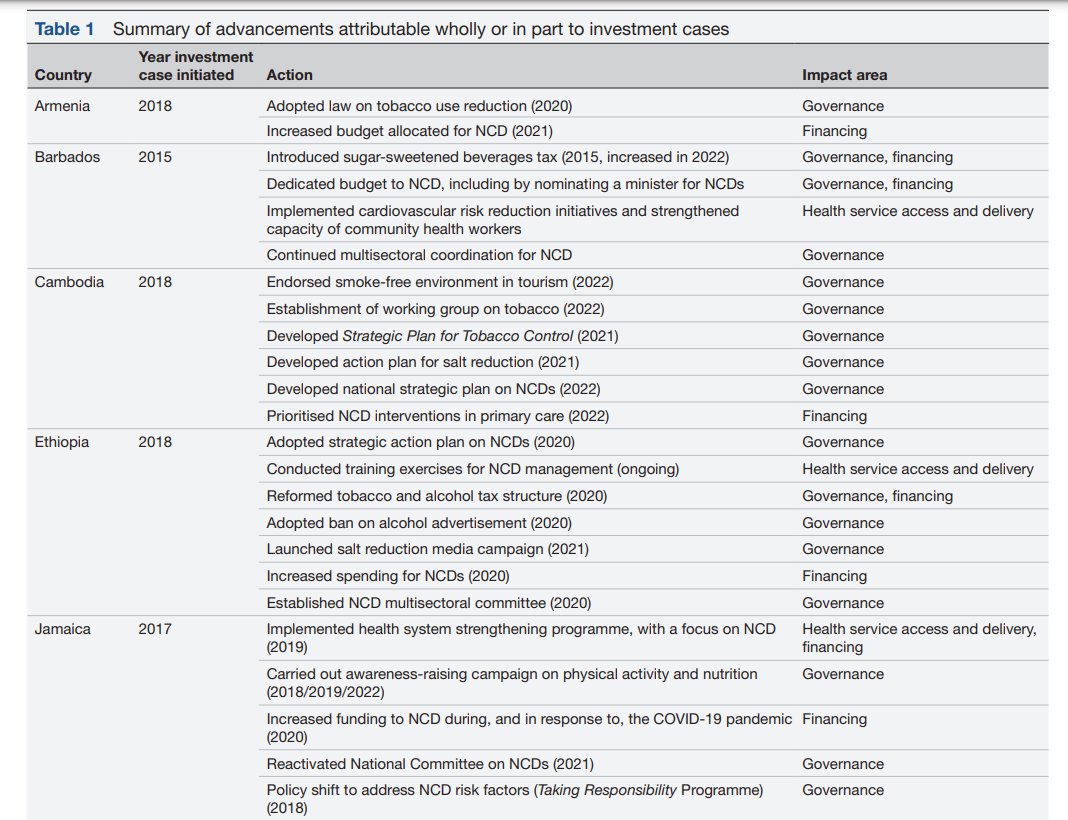
New @bmj_latest study suggests national non-communicable diseases (NCDs) investment cases are effective at catalysing prevention and control of #NCDs through strengthening governance, financing, and health service access and delivery.
🏥Governance impacts spanned new or stronger laws and/or policies, improved plans and coordination mechanisms, and scaled up public communications.
📈Financing impacts included budgetary allocations to NCDs, use of #health taxes including mobilising domestic resources and leveraging development assistance funding.
👩🏽⚕️Many of the impacts yielded broader health and #development benefits, for example, progress towards universal health coverage.
#healthforall #UHC #PHC #healthtax #health4all @un_ncd https://t.co/doATReiZK7
Health economists rejoice..! Our evidence suggests that identifying and communicating the return on investment of acting on the risk factors for non-communicable diseases #NCDs really does influence and drive domestic financing and policy changes https://t.co/XwIRd82aOg
This year's #PMAC2024 provided an opportunity to examine the often overlooked geopolitical dynamics impacting the #health and well-being of people and planet, together with pathways towards a fairer and more sustainable world. Read more: https://t.co/Ydsq1BEfwp
Tackling the dangers of Antimicrobial Resistance is 🔑 for #SDGs & all the more pressing in face of conflict & climate change.
Today I had the pleasure of discussing concrete ways 4ward w Dame Sally Davies, UK Special Envoy on AMR @UKAMREnvoy. We CAN get ahead of AMR – 2gether.
As you prepare for @WorldHealthSmt read the new Health a Political Choice with contributions from many WHS speakers- this time focused on from Fragmentation to Integration -by @GloGovProj - proud to have edited again with @jjkirton https://t.co/Mq0mz5IB2T
Our relationship with fossil fuels is perhaps the biggest social determinant of ill-health, yet we spend billions of dollars a day on subsidizing it. What should the health sector do? see our commentary in @GlobalHealthBMJ@Oddeconomics@MartenRobert https://t.co/oi5yVEIOMg
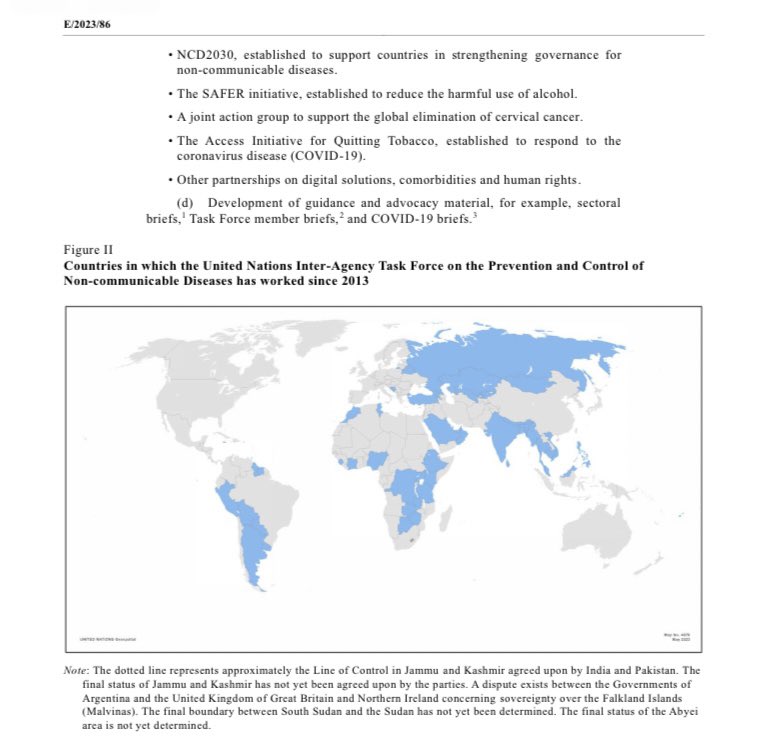
📣 Just published: Breakthrough #ECOSOC report of the @WHO Director-General on the 10-year anniversary and progress of the @un_ncd United Nations Interagency Task Force on the Prevention and Control fo Non-communicable Diseases.
https://t.co/tcuWcakNgv
Barbados 🇧🇧 fights #BigSugar for the survival of its people. The legacy of colonialism, modern-day conveniences and a #diet high in fat 🍩 and sugar 🥤have bequeathed the island a #diabetes and high-blood pressure pandemic. https://t.co/XQWFPzOmkj