Teori aku pasal isu Rohingya ni Mossad punya tactic.
Kau tengok la Rohingyan influencers semua duk bantai Malaysia dan Indonesia, only 1% of criticisms is on Myanmar. One of them dah dikatakan sdg hadap Tel Aviv.
They want to stir more local hatred on Rohingya with fake stories
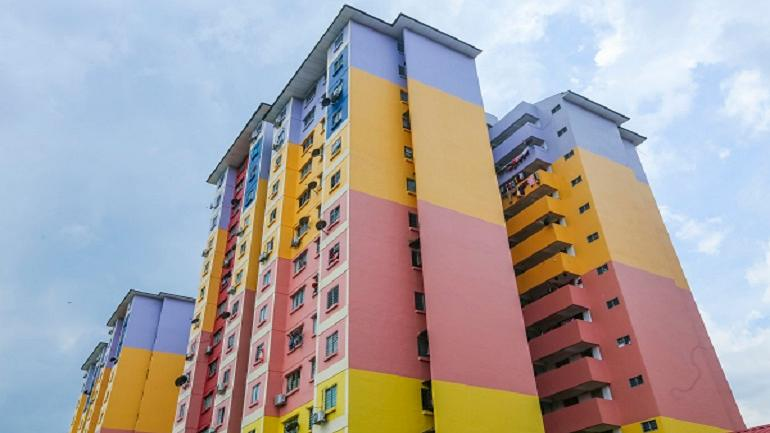
Samalah Wangsa maju, Sri Rampai pun.. Condo setiap tahun naik paling kurang 3-4 bgnn baru, tapi last build school was 30 years ago.... That's hoe we ended up with more private schools and 45 students per class. Kesian anak2 dan tenaga pengajar.
A friend told me that Singapore's HDB is a form of wealth transfer by their government.
I didn't know what he meant. Wealth transfer from who, to who, and how?
We have PPR in Malaysia. Isn't that just our version of HDB?
The more I dug, the less true that turned out to be.
Start with who each system is for.
PPR is welfare. The income cap is RM3,000 per month. Earn RM3,500 and you do not qualify. It is for the bottom half of B40.
HDB is the default. Around 80 percent of Singaporeans live in HDB flats. The income ceiling for new flats goes up to SGD 14,000 per month, roughly RM48,000. Almost everyone qualifies.
So one is a safety net. The other is the country's main housing system. That is a huge difference at the starting line.
Now financing. This is the part nobody talks about.
Every working Singaporean contributes to CPF. Roughly 20 percent of their salary plus 17 percent from their employer. That money funds the HDB downpayment. It also pays the monthly mortgage directly, no commercial bank in between.
The whole thing is a closed loop. The government builds the flat, sells it to you, holds your retirement savings, and pays itself back from your retirement savings.
In Malaysia, PPR ownership is paid through commercial bank loans. Regular mortgage. Regular interest. Regular default risk. EPF can be tapped for housing in limited ways but is not structurally integrated with public housing the way CPF is with HDB.
This is why HDB ownership is near-universal in Singapore. You almost cannot avoid owning a flat because the retirement system is built to push you toward one.
Then there is the part that turns this from a housing system into a wealth-building system.
HDB flats are sold at subsidized prices and appreciate in price almost from the moment it's sold. The HDB Resale Price Index has gone up roughly 50 percent since 2009, even though the flats are technically depreciating 99-year leaseholds. The newer the lease, the better the location, the better the resale value.
So Singaporeans who bought HDB flats in their twenties and thirties are sitting on assets that have grown alongside the country. They can sell, downgrade, and keep the difference. They can borrow against it. They can pass the lease on to family.
PPR units do not appreciate the same way. The resale market is thin. The locations are not desirable. The buyers are limited to other low-income households. The unit you bought for RM35,000 might still be worth RM35,000 fifteen years later in real terms.
So one system gives you a home and a wealth-building asset. The other gives you a home.
OK so let me circle back to my friend's claim. Why is HDB a wealth transfer?
I think I see it now.
In the 1960s and 70s, the Singapore government acquired most of the country's land under the Land Acquisition Act, often below market rates. They paid the old landowners less than the land was worth. Then they built flats on that land and sold them at subsidised prices to the population.
The wealth transfer flowed from old landowners to new flat buyers, with the government as the middleman. Land that would have made a small number of families very rich was converted into housing that 80 percent of the population could afford.
By 1985, the Singapore government owned 76 percent of the country's land, up from 31 percent in 1949. That was the foundation everything else was built on.
You might be wondering why Malaysia cannot just do the same.
The political moment for that kind of land acquisition has passed. Singapore did it during a specific window of nation-building under a one-party government. Malaysia has federalism, state land powers, multiple ethnic land claims, and a political environment where mass land acquisition would be near impossible.
So PPR is not a smaller HDB. PPR is a different programme answering a different question.
HDB asks "how do we house everyone."
PPR asks "how do we shelter the poorest."
These are not the same project.
When someone says Malaysia should have an HDB, they are really asking us to redo a 1965 nation-building exercise in 2026. That is much bigger than just building more PPR.
Did you learn something today like I did?
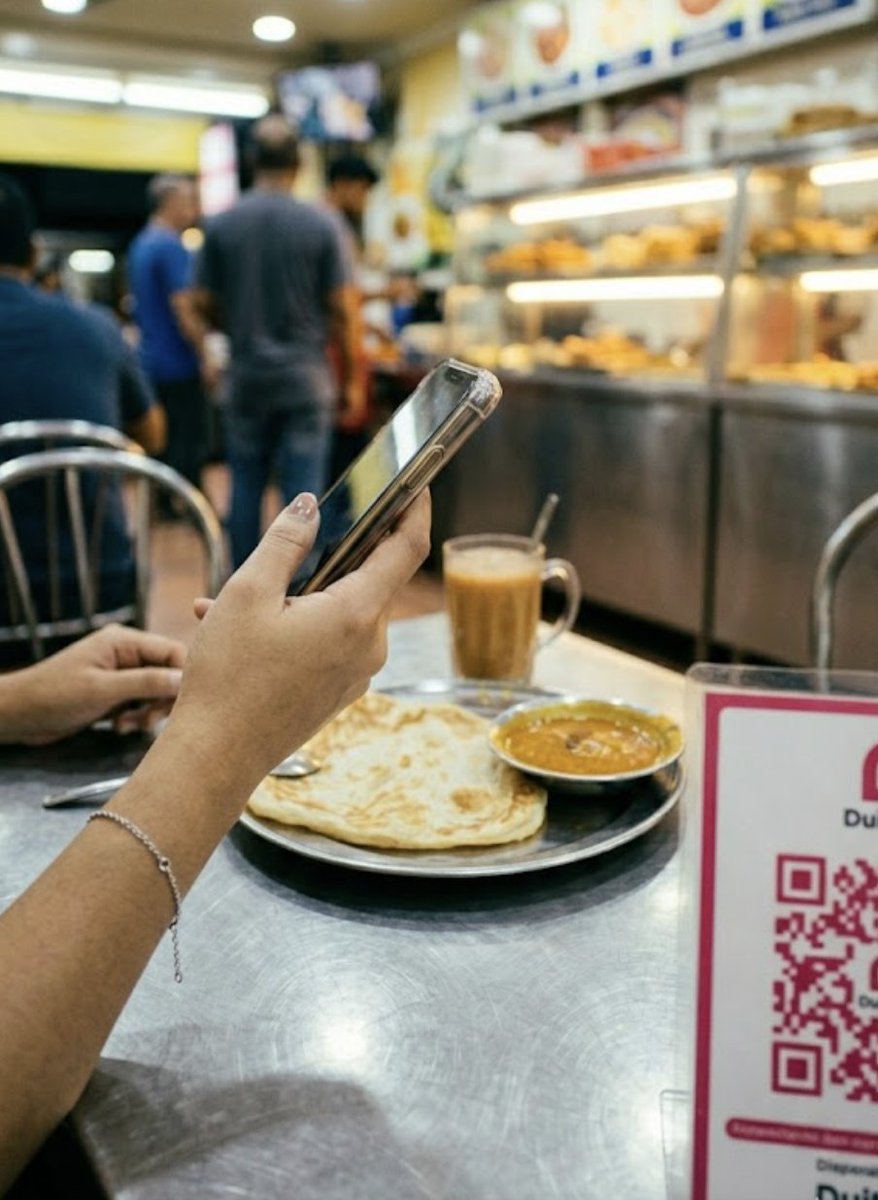
You’re at a legendary Mamak stall in KL,🇲🇾. The Roti Canai was 10/10. You reach for your wallet… and realize you only have a RM50 note.
The uncle shakes his head. "Tak ada change, boss."
Suddenly, you’re the guy hunting for a 7-Eleven just to break a note.
In the "old days," you’d have to:
Find an ATM. Wait 2 days for your crypto to off-ramp to a bank. Deal with 3% fees.
But this is 2026. I just opened my @jup_mobile, toggled to spend mode, and scanned the pink DuitNow QR code on the counter. Total time? 3 sec.
Fee? 0.00%.
My $USDC sat on-chain moments ago, now it’s Roti Canai in my stomach. This is the new standard for how money moves in Malaysia.
DuitNow QR transactions in Malaysia in 2025 alone is 3 Billion (doubled from the year before) !
APAC now commands over 60% of the world’s QR transaction volume, and the average Malaysian now makes over 538 digital payments per year.
Cash is no longer king but liquidity is.
With @JupGlobal your assets aren't trapped in a wallet anymore, they are as spendable as the phone in your pocket, anywhere in Malaysia (SOON).
Aku je ke rasa kuih dkt bazar ramadhan kalini semua tak best?
Beli2 dapat inti besar biji limau, gigit2 rasa tawar.
Balik kampung nak judge bazar sana pulak