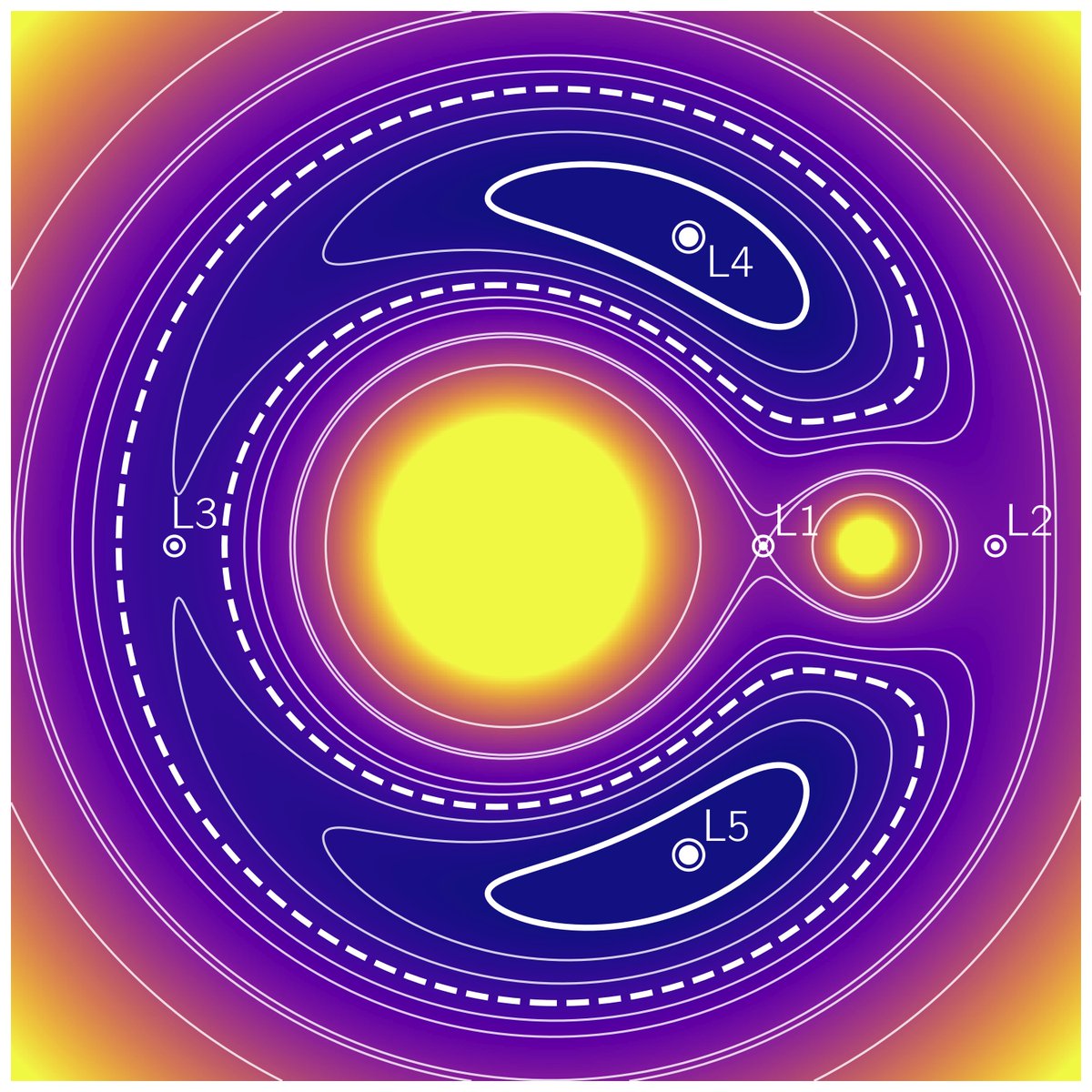
International effort lead by @jlillobox to detect the first #exotrojan (co-orbital) planets. Currently funded by @FundlaCaixa and developed at @C_Astrobiologia
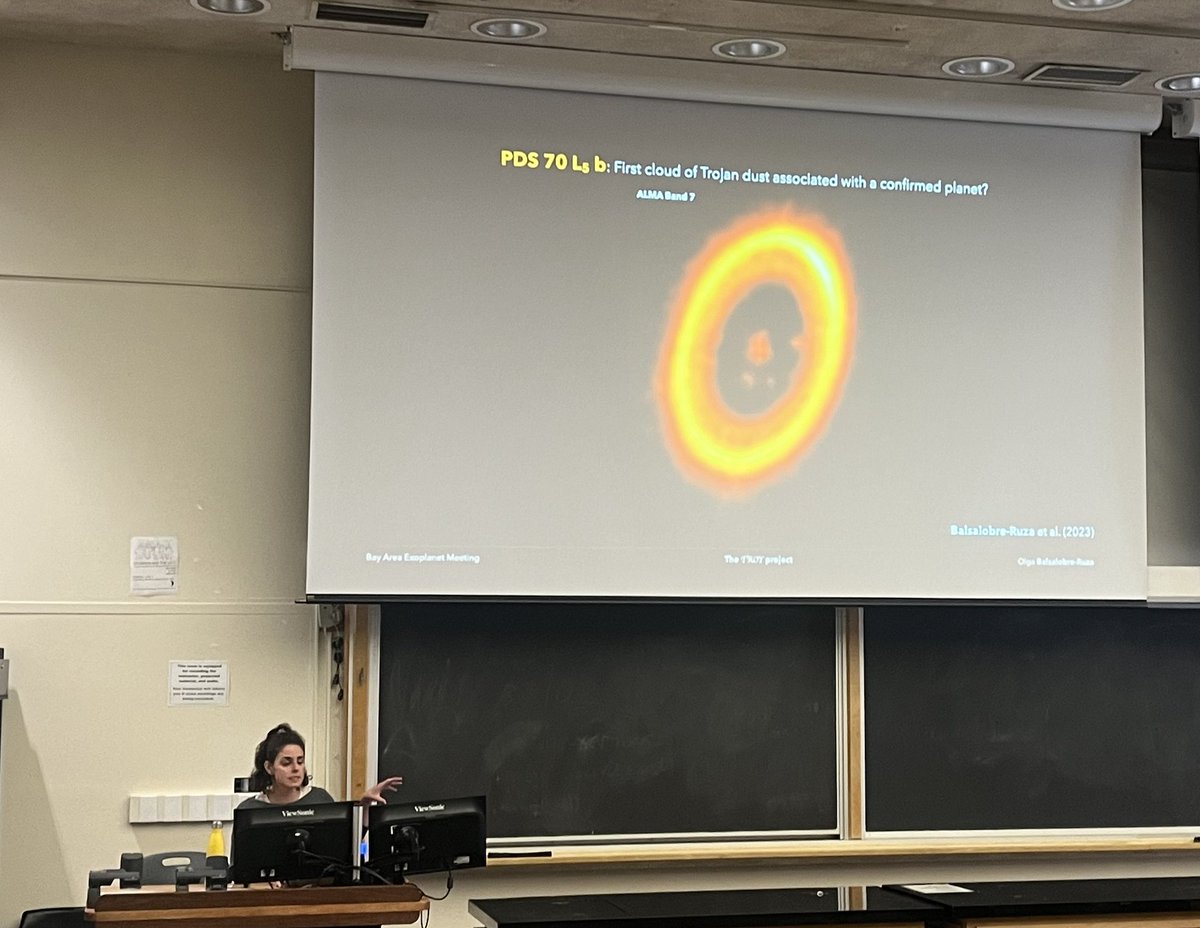
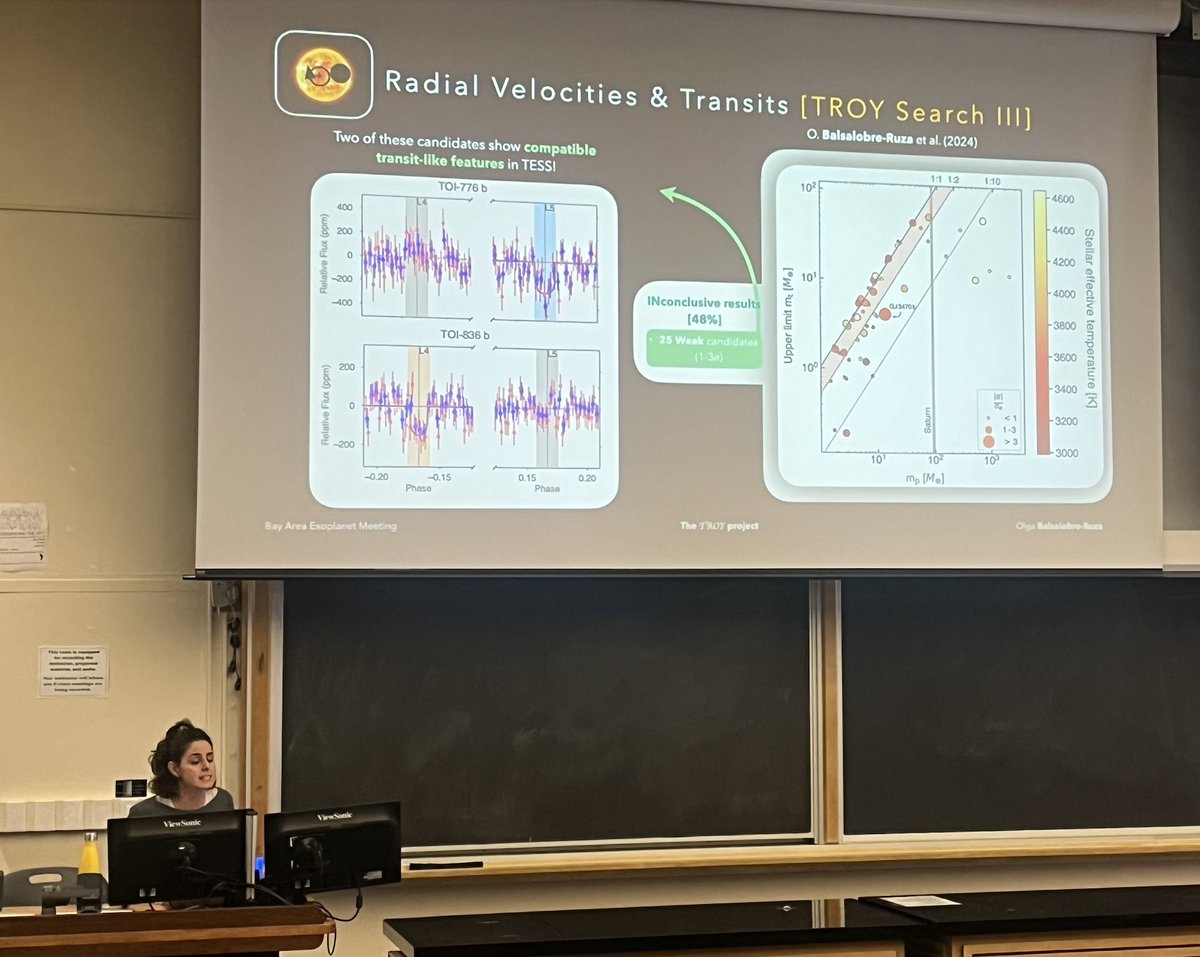
Very nice talk today by my PhD student Olga Balsalobe-Ruza (@OlgaBalsi) at the Bay Area Exoplanet Meeting on her search for the first #exotrojans with direct imaging, radial velocities and transits! Check out her last paper here: https://t.co/NWRxuAlTnV
The third paper of the TROY project is out, lead by Olga Balsalobre-Ruza (@OlgaBalsi), where we explore 95 planetary systems around low-mass stars searching for exotrojans. We found interesting candidates from both RVs and transits. Check it out here: https://t.co/Z4hhSAP6x1
New TROY paper!! This time @OlgaBalsi has searched for #exotrojans in 95 (!!) low-mass dwarfs with known planets. Check out the results in this thread:
New paper day! It's been 6 years since @theTROYproject took off searching for #trojans to Hot-Jupiters. Now, we have extended the search to all low-mass stars hosting confirmed planets and… we found (three!) co-orbital candidates! How? Read this thread by 1st author @OlgaBalsi👇
A workshop on coorbital bodies (including exotrojans!) will happen in Milan in March: COOMOT2. I will be giving an invited tlak on the hunt for exotrojans. Checkout the conference website here:
https://t.co/lUDW3p3Df9
En el último vídeo de nuestro canal hablamos hablamos de Theia, un objeto del tamaño de Marte de impactó contra la Tierra primitiva formando así la Luna y nuestra Tierra actual. Pues bien, han encontrado restos de ese planeta en el interior la Tierra. Os lo cuento 🧵👇
Today is a great day. We are very happy to share with you a paper lead by Olga Balsalobre-Ruza, a PhD student at @C_Astrobiologia, where we are presenting in an @ESO PR the first evidence for **co-orbital** planet formation in an extrasolar system, the iconic PDS 70. 🧵
Hey! They are talking about me, @theTROYproject, at the Mexican Astrobiology Society (@somastrobio) outreach channel in 40 minutes (11:00 CDMX, 19:00 CEST)! Check out the talk (in Spanish) !
Nos vemos en 45 minutos (19:00 en España) para hablar de exoplanetas troyanos. ¿Qué es esto y por qué te importa? Te lo cuento en castellano y para todos los públicos en este enlace de la Sociedad Mexicana de Astrobiología (@somastrobio):
https://t.co/t6sRUfHthm
El observatorio de Calar Alto (@CalarAltoObs), cumple 50 años desde que abrió por primera vez sus ojos al #Universo. Hemos preparado un vídeo reivindicando esta instalación singular de la ciencia española. Esperamos que os guste: https://t.co/0IYj3EnScf via @YouTube
For my Spanish speaker fellows, Calar Alto (@ObsCalarAlto) is celebrating its 50 years of scrutinizing the #Universe. To acknowledge the amazing work by their personnel I have prepared this tribute video defending the need for 2-4m class telescopes: https://t.co/ee5ke1desm
¡Nuevo vídeo de @MundosLejanos_ en nuestro canal de @Youtube! "El Gran Final planetario". Os contamos cómo mueren los sistemas planetarios como el nuestro y qué consecuencias tiene para la vida y la comprensión de nuestro lugar en el Universo.
https://t.co/nWWrt4P8xr
New paper day! And it's on one of our favourite topics, #exomoons! Here's a 🧵summarising our 115 page behemoth of a paper, "An Exomoon Survey of 70 Cool Giant Exoplanets and the New Candidate Kepler-1708 b-i", published today 👇 https://t.co/ZERVJJoGq0
We are hiring (again)! We are very happy to announce the first PhD offer related to the TROY project. If you are interested in one of the most mysterious objects in planetary systems and want to unveil their origin and implications, come work with us at the @C_Astrobiologia!
We are looking for applicants interested in both observations and theory of planet formation and evolution. If you have any questions, do not hesitate to DM us!