लाडकी बहीण योजनेतून ८० लाख महिलांना अपात्र ठरविण्यात आले. निवडणूकीच्या काळात कसलीही खातरजमा न करता घाईघाईने या योजनेची अंमलबजावणी करण्यात आली आणि आता साधारणपणे वर्ष दीड वर्षाने सरकारला या योजनेत ८० लाख महिला अपात्र असल्याचा साक्षात्कार व्हावा ही मोठी अजब बाब आहे. हे या सरकारचे राजकीय, प्रशासकीय आणि अंमलबजावणीतील सामूहिक दारुण अपयश आहे.
जनतेच्या कष्टातून निर्माण झालेला कर रुपी पैशांतून ही योजना चालविली जाते. थोडक्यात जनतेचा पैसा गेली वर्ष दीड वर्ष हे सरकार अपात्र लाभार्थ्यांना वाटत होते का असा प्रश्न उपस्थित होतो. ही संपूर्ण बाब मूळात या सरकारचे घोर अपयश उघड करणारी आहे.
हे दिलेला शब्द पाळणारे सरकार नाही. केवळ निवडणूकीतील फायदा गृहित धरून त्यांनी महिलांना खोटे आमिष दाखविण्याचा उद्योग केला असे यावरुन स्पष्ट होते. तब्बल ऐंशी लाख महिलांना अपात्र घोषित करुन या सरकारने राज्यातील महिलांचा विश्वासघात केला आहे.
हा ८० लाख हा आकडा छोटा नाही. कोणत्याही परिस्थितीत महाराष्ट्रातील प्रत्येक भगिनीस ‘लाडकी बहीण’ योजनेचे लाभ नियमितपणे मिळालेच पाहिजेत अशी आमची भूमिका आहे. यासाठी त्यांना विशिष्ट मुदतीत केवायसी करण्याची आडकाठी असू नये. राज्यातील एकही पात्र महिला या योजनेपासून वंचित राहू नये यासाठी त्यांना केवायसी करण्याची संधी कायम उपलब्ध करुन द्या.
https://t.co/zcsuZyYVxE
@CMOMaharashtra
Read this story. Carefully.
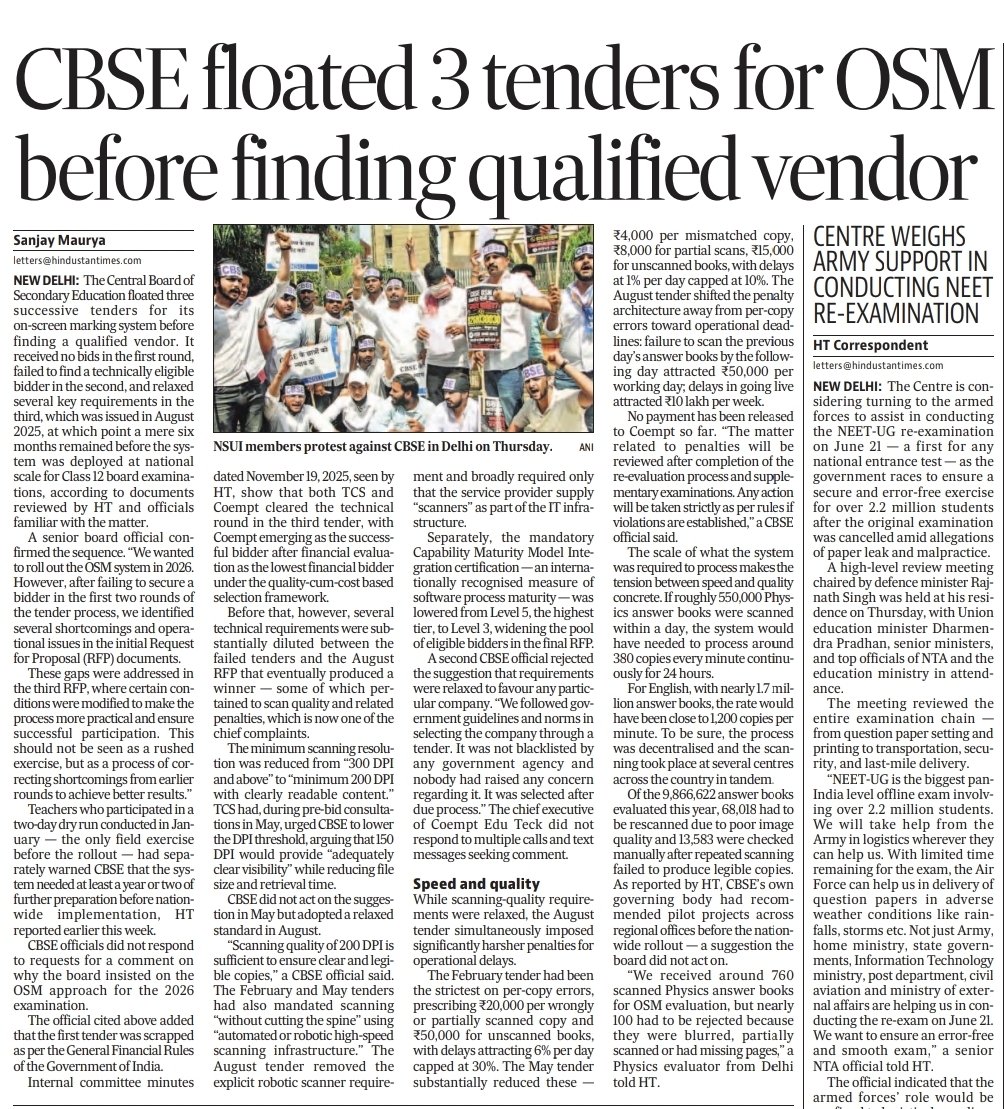
CBSE called for OSM tenders thrice. Zero bids the first time. No qualified bidder the second time. And finally, the technical bar was lowered until COEMPT could clear it.
Scanning resolution cut. Robotic scanner requirement dropped. CMMI certification lowered from Level 5 to Level 3. Penalties for errors in answer sheets removed.
TCS, India’s biggest IT services company, qualified in the third round too. TCS lost. COEMPT - a company with a spectacular track record of failure - won.
And what are CBSE students complaining about today? Badly scanned answer sheets. Missing pages. A broken evaluation portal.
Teachers had warned CBSE that the OSM system needed at least a year or two for further preparation before nationwide implementation, yet it was rushed through.
So I ask again - who wanted COEMPT to win? Who lowered the bar, step by step, until this company could clear it?
Pradhan ji and CBSE say “due process was followed.” That is not an answer, that is not accountability. The question is whether the contract was honestly awarded to the best company which could do the job correctly.
The futures of 18.5 lakh children were handed to a company that could only qualify after the rules were bent for it.
To the BJP Ministers attacking me for asking questions - I have, from day one, demanded an independent judicial probe. Expand it from CBSE to every contract awarded to COEMPT. Our youth deserve the truth.
And Modi ji, your silence on the CBSE debacle and inaction against the Education Minister tells the country what you actually care about - not the futures of lakhs of students, only the survival of your own government.
Lal Bahadur Shastri, too, appealed for sacrifice during the war with Pakistan. But he first practiced it personally. Will today’s leadership demonstrate similar restraint? Will political parties reduce campaign extravagance, publicity expenditure, and unnecessary state spending? If leadership leads by example, citizens will follow willingly. But this seems more like preparation for another sharp increase in fuel prices. Citizens will naturally reduce consumption if they can no longer afford it.
My humble appeal to the Prime Minister is this: enough of moral lectures whose burden is carried only by the people. Let us honestly admit that the economy today often appears strong on the surface but is quite vulnerable underneath. Please do not blame it just on the Iran–Israel conflict. Tell the country why the rupee has weakened significantly over the past decade. Explain why three RBI Governors resigned during your tenure. Dr. Manmohan Singh, despite being an accomplished economist and former RBI Governor himself, still believed in listening to experts. You have not run even a simple business. How will you understand it. Enough with your ‘Mann Ki Baat’. Now listen to the ‘Mann Ki Baat’ of the real economists.
Tell the nation what concrete steps the government plans to take. Call a special session of Parliament if needed - which is anyway practiced on a whim nowadays. Explain transparently how the country reached this situation and how it plans to navigate it. We have opposed many of your decisions and supported several good ones too. But nobody’s your enemy, including us, during such trying times. But this does not mean we will not raise difficult questions. Democracy cannot survive without accountability. The Prime Minister should show the nation how austerity begins at home and explain how we as a nation will come out of this crisis.
— Raj Thackeray
Jai Maharashtra,
Two days ago, Prime Minister Narendra Modi appealed to Indians to adopt austerity. Reduce gold purchases, avoid unnecessary foreign travel, consume less petrol and diesel, shift to electric vehicles, and embrace work-from-home practices. Why? Because gold and crude oil are imported, and they drain precious foreign exchange reserves. And with the Iran conflict escalating, global crude prices have surged sharply.
Fair enough. But the Prime Minister and senior leaders continue to travel across the country with massive convoys, roadshows, helicopters, flower showers, and extravagant political campaigns. Will the prime minister admit that ‘such political excesses were our mistake, and all of us including me, will not repeat it’? Why should the common man suffer for your mistakes? Is austerity meant only for the citizen and never for the political class?
Crude oil today is hovering around 90–100 dollars per barrel. But this is not the first time the world has seen such prices. During the 2008 financial crisis, during the Arab Spring of 2011–12, and the 2013–14 phase (when the BJP itself aggressively attacked the UPA over fuel prices) and again during the OPEC production cuts in 2022–23, crude prices had similarly touched these levels. During 3-4 such periods Dr. Manmohan Singh was the Prime Minister. Narendra Modi himself held the position once. Dr. Manmohan Singh did not ask citizens to stop travelling abroad. Narendra Modi himself did not make such appeals earlier either. So why now? When global crude prices had fallen to nearly 60–65 dollars per barrel, Indian citizens were still paying extremely high prices for petrol and diesel because of heavy taxation. The government earned lakhs of crores through fuel taxes. Where did that money go?
The Prime Minister once mocked the “freebie culture.” Yet elections - from Maharashtra to Bihar to West Bengal - are increasingly fought and won through precisely such populist giveaways. In Maharashtra, the ‘Ladki Bahin’ scheme has put tremendous strain on state finances. Instead of genuinely empowering women through jobs, education, and safety, governments distribute temporary cash benefits while inflation silently takes back much of that money. If the economic situation is indeed serious, will the Prime Minister openly ask all political parties to stop competitive populism?
The PM now asks citizens to reduce fuel consumption. Fine. But why did this wisdom not emerge during massive election campaigns involving thousands of vehicles, endless roadshows, and the transport of lakhs of supporters across states like West Bengal, Assam, Tamil Nadu, and Kerala? That itself would have burnt crores of liters of petrol and diesel. This didn’t occur to you when massive money power was wielded to gain votes there? Citizens are also being advised to avoid foreign travel. But how many Indians can afford international travel today? Even the middle class that can afford it is living under constant job insecurity. Students wish to study abroad because India has not invested deeply enough in higher education over the last decade, nor created enough confidence in domestic institutions. All you seem to be interested in is imposition of Hindi.
Meanwhile, foreign institutional investors have been steadily pulling money out of Indian markets. Estimates suggest that nearly ₹1.5 lakh crore has exited over the past few months. The Prime Minister and his Chief Ministers travel to colder climates to cement investment deals. But if they are making those deals with Indian companies, why even go to Switzerland for it? The Prime Minister himself is embarking on another multi-country foreign tour beginning May 15. First cancel these travels and then preach austerity.
Dear Congress supporters,
Supporting your favourite leader is absolutely fine. Every leader has their own style, strengths, and followers. But turning social media into a battlefield against fellow Congress leaders is harming the party more than helping any individual.
Whether it is supporters of VD Satheesan, KC Venugopal, Sachin Pilot, Ashok Gehlot, or anyone else ,constant attacks, mockery, and factional trolling only weaken the collective movement. Internal democracy is healthy, but blind camp politics and personality worship are not.
Our political and ideological fight is against the BJP and divisive forces, not against our own colleagues. Strong parties are built through unity, discipline, and constructive criticism ,not through online ego wars. If we behave like trolls against each other, we only damage the very cause we claim to defend.
Please retweet and share if you agree. Thank you.
#Congress #Kerala #Politics #RahulGandhi
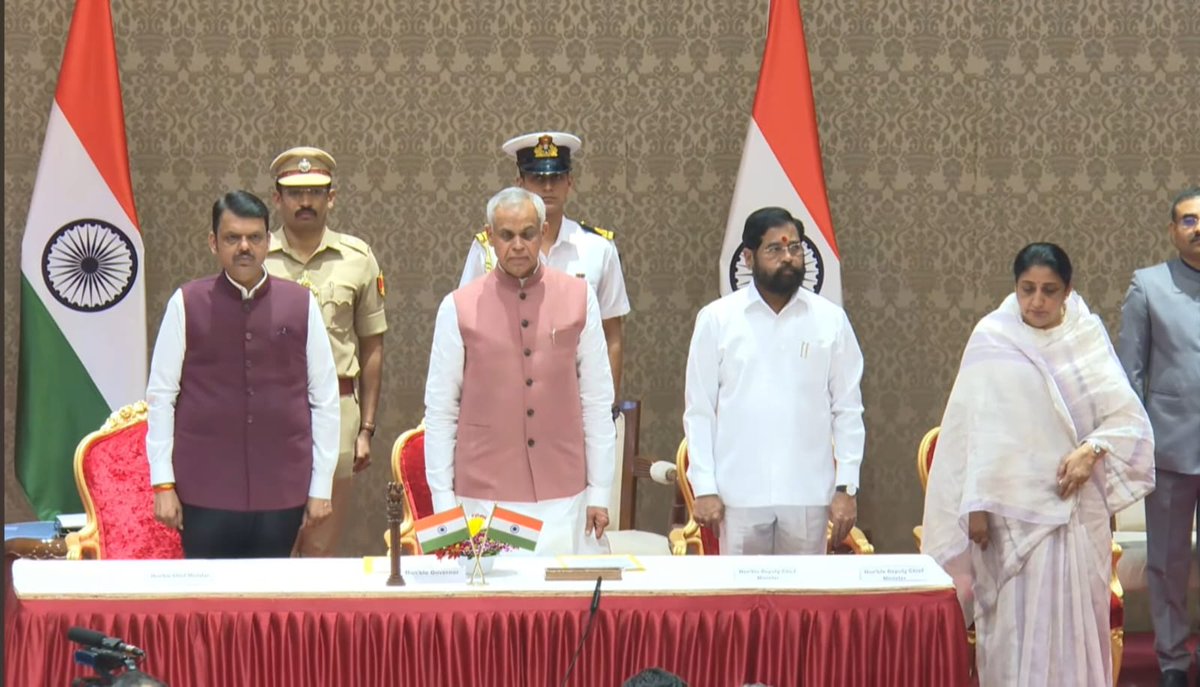
राज्याच्या पहिल्या महिला उपमुख्यमंत्री म्हणून मा. सुनेत्राकाकी यांनी शपथ घेतली, याचा आनंद आहे.
खरं म्हणजे मा. अजितदादांची जागा कुणीच घेऊ शकत नाही पण किमान सुनेत्राकाकींच्या रुपात तरी आम्ही तिथं अजितदादांना पाहू..!
डोक्यावर डोंगराएवढं दुःख असताना आणि आम्ही सर्वजण शोकाकूल असताना त्यांना शुभेच्छा तरी कशा द्याव्यात, हे कळत नाही..!
“Pakistan has a tarrif rate of 19% whereas India has a tariff rate of 50%.
Where is the friendship between Modi & Trump?”
Raghuram Rajan, Former RBI Governor
Lionel Messi is one of those rare athletes whose story transcends sport. His journey from a child fighting physical odds to a footballer who redefined excellence has moved millions across the world. As someone who has lived the life of an athlete, I hold profound respect and admiration for what he represents perseverance humility and an uncompromising pursuit of greatness.
Yet as his recent visit to India unfolded parts of it felt chaotic and left me quietly uneasy. It compelled me to pause and reflect not in judgment but in genuine concern about what we were really trying to achieve.
I fully understand the economics of sport. I understand commercial realities global branding and the magnetism of icons. I do not fault Messi in any way. He has earned every opportunity that comes his way and admiration for greatness is natural even beautiful.
But admiration must also invite introspection.
As a society are we building a culture of sport or are we simply celebrating individuals from afar.
Millions were spent for moments of proximity photographs and fleeting access to a legend. And yes it is people’s money earned honestly and theirs to spend as they choose. Still I can’t help but feel a quiet sadness wondering what might have been possible if even a fraction of that energy and investment had been directed toward the foundations of sport in our country.
Playgrounds where children can run freely. Coaches who can guide young talent. Grassroots programmes that give opportunity to those who may never otherwise be seen. Spaces where sport is not a spectacle but a daily habit a teacher and a source of dignity.
Great sporting nations are not built by moments they are built by systems. By patience. By belief in the ordinary child with an extraordinary dream.
Icons like Messi inspire us and that inspiration matters deeply. But inspiration must be met with intent. With long term commitment. With choices that reflect not just what excites us today but what will strengthen us tomorrow.
If we truly wish to honour legends like Messi the most meaningful way to do so is not through grand gestures but by ensuring that somewhere in India a young child has a field to play on a coach to believe in them and a chance to dream.
That is how sporting cultures are born. And that is how legacies endure.
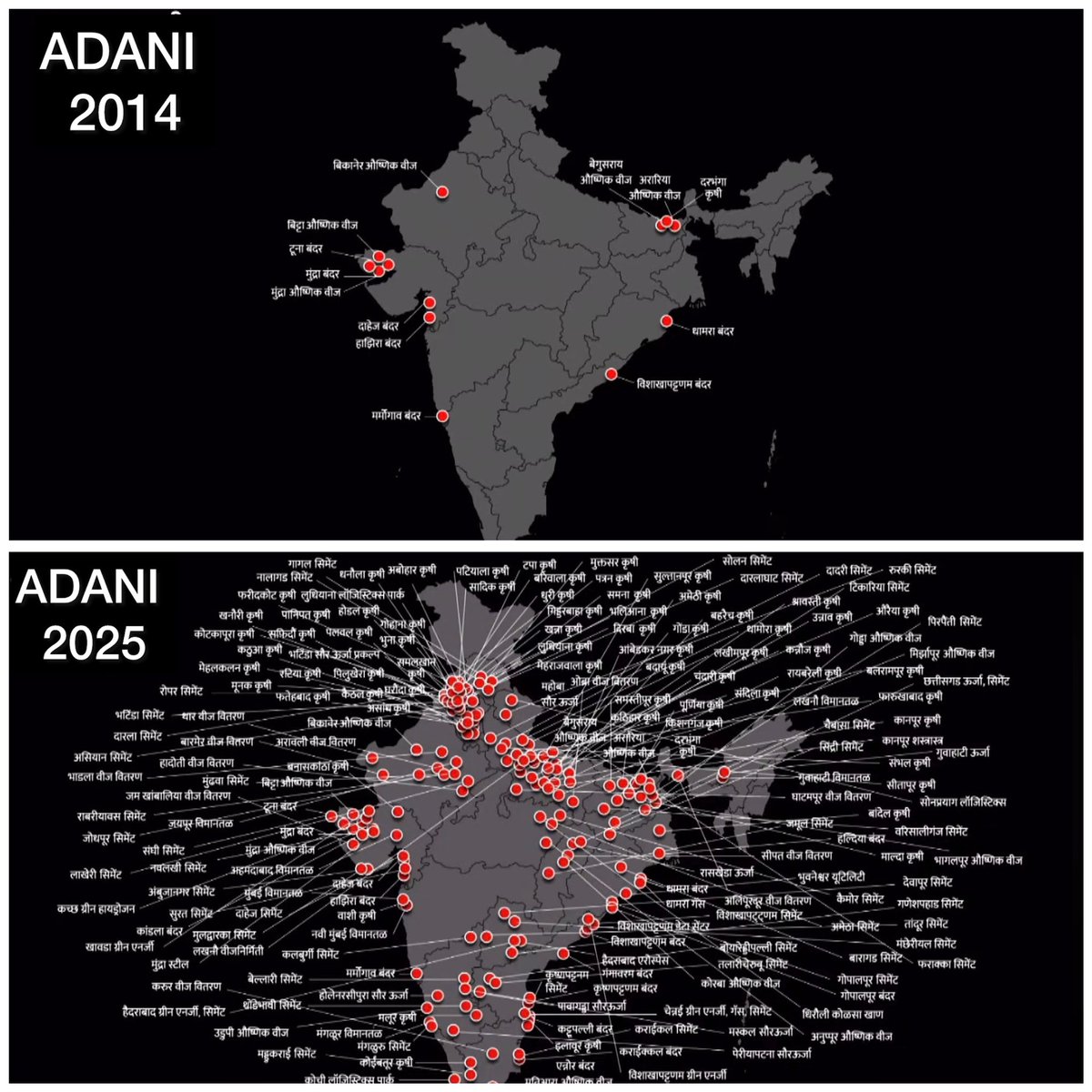
Exclusive: The Indian government allegedly directed $3.9 billion from the state-owned Life Insurance Corporation to India’s second richest man Gautam Adani’s businesses amid the mogul’s legal and financial challenges, a Post investigation reveals. https://t.co/jm9guPzG30