1/2 The purpose of general eduction science is to teach students science literacy and critical thinking, yet many courses focus on facts. Science isn’t just what we know, it’s how we know.
There is a better way: Teach skills, not facts.
https://t.co/BpCqK5tCqY
Check out our latest Substack post, an interview with Melanie Trecek-King , creator of @ThinkingPowers and Education Director for the Mental Immunity Project
https://t.co/2zFxT47QEK
I spent the last 7 weeks on the road… giving 20 presentations and workshops.
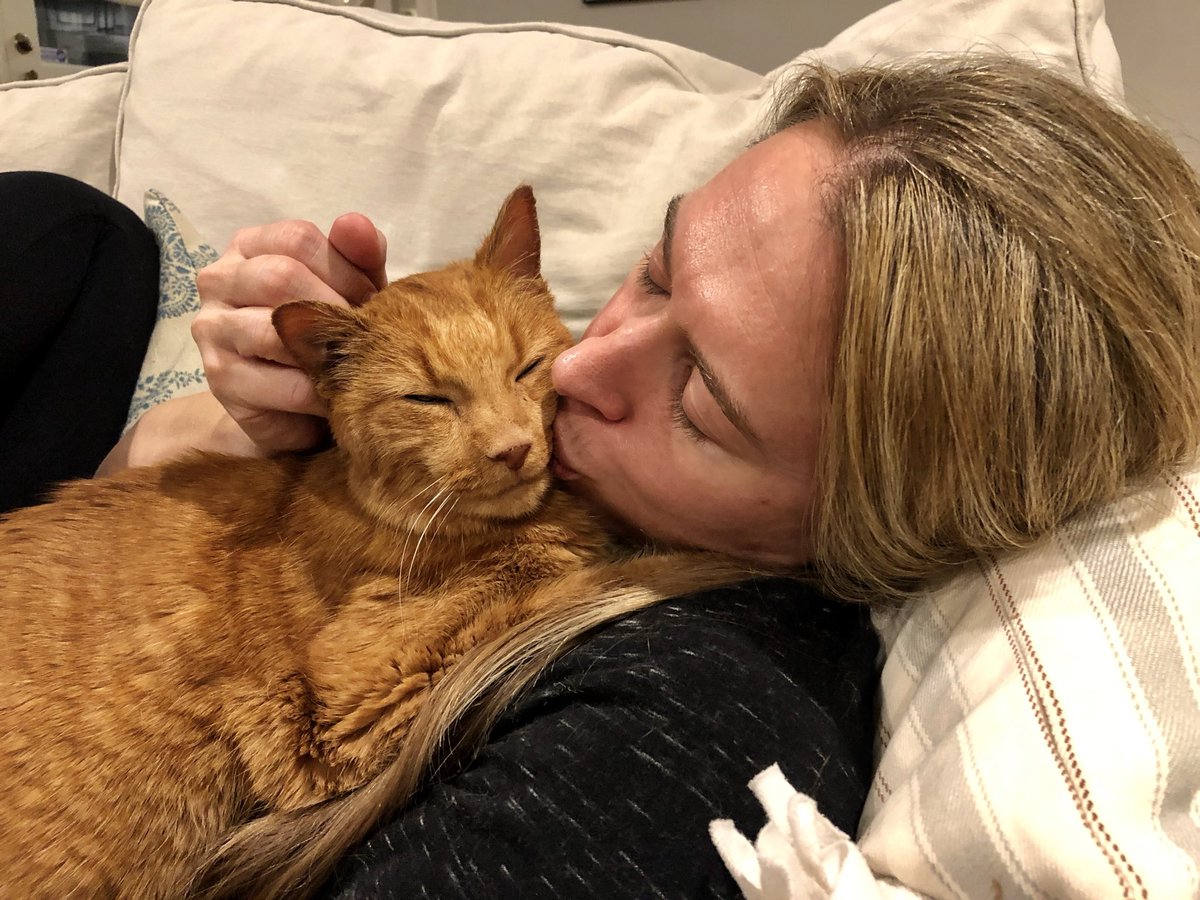
I had a wonderful time, but it’s good to be home! (I missed Dmitri 😻)
Newsapalooza in PA
Williamsville School District in NY
CSICon
STANYS in New York
@QCCornCON
@NSTA@center4inquiry
Without an understanding of how our identities and worldviews can alter our standards of evidence, pseudoscience and science denial provide cover for what we want or don’t want to believe. Read more from @ThinkingPowers in @SkeptInquirer: https://t.co/19ObbbTeUc
Conspiratorial thinking isn’t the same as critical thinking.
If our goal is to uncover real conspiracies, we need critical thinking, not conspiratorial thinking.
As @thinkingpowers writes, “Theory might win the prize for the most commonly misunderstood word in science. In everyday usage, a theory is a hunch. A guess. Pure speculation. For example, I have a theory about why my cat yells (sings?) at night — he’s calling on the spirits of his ancestors to free him from the captivity of his luxurious life.
But in science speak, a theory is exactly the opposite — it’s a broad explanation for a wide range of phenomena that’s supported by a vast amount of evidence. As science progresses and evidence accumulates, related ideas are combined into a single, clear, and powerful explanation. Theories form the basis of our scientific knowledge and are used by scientists to make predictions for further testing, and as such are continually subjected to scrutiny. Examples include gravitational theory, plate tectonic theory, evolutionary theory, cell theory, germ theory, and atomic theory. Understanding the natural world is the ultimate goal of science, and theories are about as close to the “truth” as we may ever get. So don’t be fooled when someone doubts science because 'it’s just a theory.'”
Organic food is not grown without pesticides.
Organic food is not healthier.
Organic food is not better for the environment.
Organic food can be worse ecologically - lower yield, more off-target pesticide impacts, more land use, more tillage = worse for the planet.
1/
@CaulfieldTim@dr_andrealove@jonathanstea@doritmi We adopted my Pumpkin the day after Thanksgiving in 2006. For years I made cat decorations in my pumpkins, but since we lost him a few years ago I still can’t bring myself to do it.
That guy was the best.