Peace. A seeker of knowledge. All life is interrelated. Nothing exists in isolation. Every single thing on earth contributes to every thing else. #DoTheMath
@SenateDems, @HouseDemocrats, @CTDems, @CTSenateDems, all that is being replayed on Fox News is footage of Democrats detailing subpoenas, and investigations. And affordability is NOT number one agenda as Democrats campaigned on.
@SenateDems@HouseDemocrats@CTDems@CTSenateDems Excuse my language, but you fucking up, man. Because Democrats are giving Republicans sound bites that can be used by us, Democrats. C'mon, guys.
A physical hyper-realistic model and facial reconstruction of the Turkana Boy (KNM-WT 15000), a famous Homo erectus (or Homo ergaster) youth who lived around 1.5 to 1.6 million years ago near Lake Turkana in Kenya....
Scientists estimate he was between 8 and 11 years old when he died. Despite his youth, he was already about 1.6 meters (5 ft 3 in) tall due to rapid growth patterns. The hyper-realistic sculpture shown here was created by paleoartists Adrie and Alfons Kennis for the Neanderthal Museum in Germany. While the bone structure and facial proportions are modeled directly from his fossilized skull and skeletal dimensions, soft-tissue details like hair style, skin tone, and expression are artistic interpretations.
. . . .
In 1984, Kenyan fossil hunter Kamoya Kimeu spotted a small piece of skull on a hillside near the Nariokotome River, west of Lake Turkana.
That fragment led to one of the most important discoveries in human evolution. Over the next few years, a team led by Richard Leakey and Alan Walker recovered more than 100 bones from the same individual.
They found most of the skull, the spine, ribs, pelvis, arms and legs. Earlier finds of this species were mostly teeth, jaws and skull pieces, so this was the first real look at how Homo erectus was built from head to toe.
The results were surprising. His body was tall and slender, with long legs and narrow hips, much more like ours than earlier human relatives. He was built for walking long distances in hot, open country.
Scientists have debated his exact age. Early estimates were around 11 or 12, but studies of his teeth suggest he grew faster than modern children and was likely closer to eight or nine.
His skeleton is kept at the National Museums of Kenya in Nairobi.
Even as a child, Turkana Boy already stood about 5 feet 3 inches tall, taller than many adult humans who lived in later prehistoric periods.
#archaeohistories
Yo, it look like the trees out there dancing, some even in
sequence. Like this nor'easter spinning Mother Nation's latest hits, like it's a DJ, on the two wheels of steel. 😜
Social media, reality TV shows, algorithms: Designed to distract, keep hypnotized, and brainwashed to turn people into 'sheeple'. That phrase was coined for these reasons. #WakeUp
https://t.co/t1KIQ4SMt2
We killed 500,000 of our own people, so people could have the right to own other people as property. The United States has never been a 'Christian Nation'.
- Pastor Loran Livingston
#Share
There has never been a 'Christian Nation'; (we) you don't live in one now. We had Godly people get on boats, and come over here so they could worship. Godly people.
Losers say "yesterday". Winners say "yes, today"
Meaning: Dwelling on the past leads nowhere but dormancy. Focus on today's decisions.
Dormancy is a state of suspended growth, development, and reduced metabolic activity adopted by organisms to survive environmental stress.
Peace. If we only took some time out of our 24-hour day to read, learn, and research history that has been forgotten, and lost in time. Humanity would be better off.
- Consuming history's archeological knowledge adamantly -
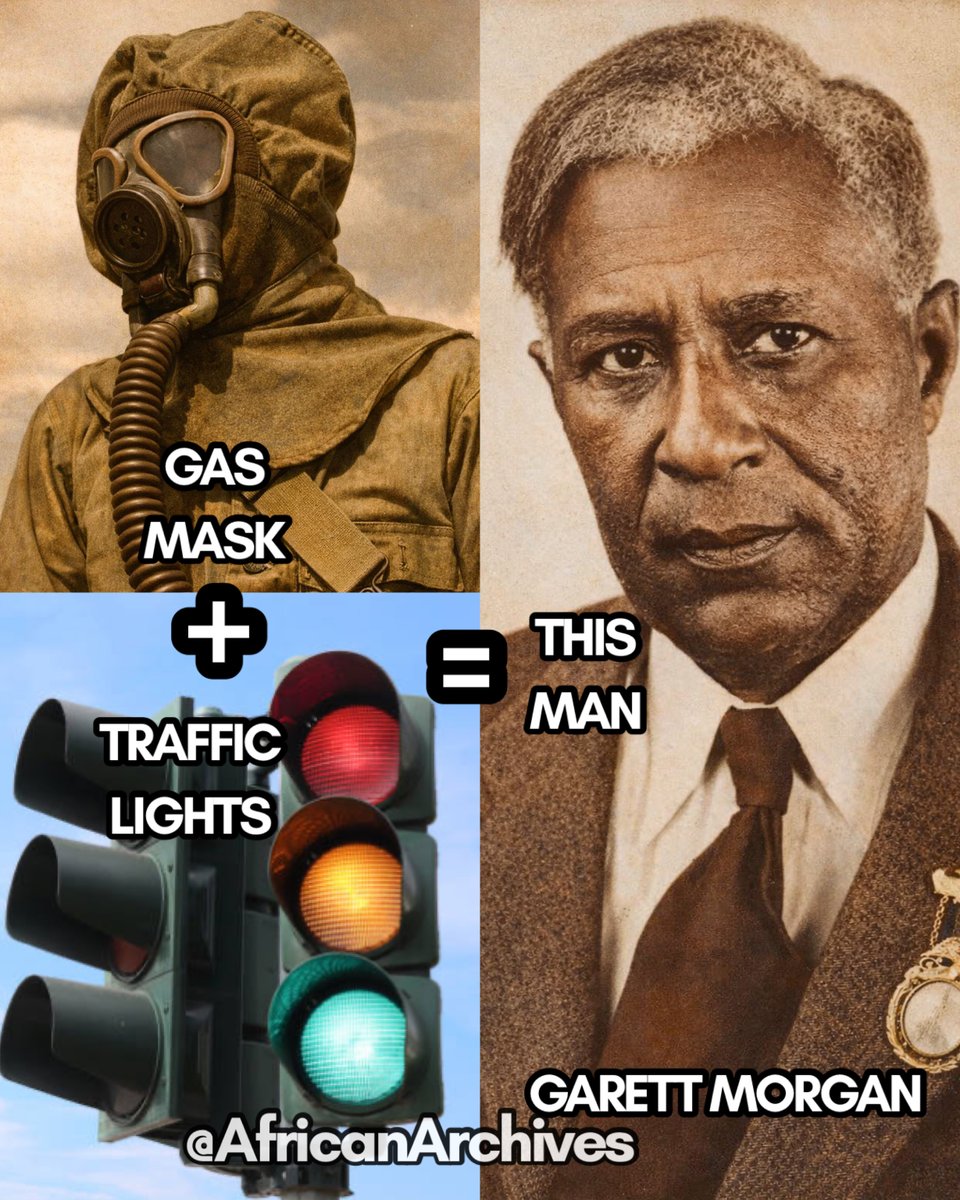
The gas mask and the modern traffic light were both invented by the same person: Garrett Morgan.
Born in 1877 to parents who had been enslaved, Garrett Morgan grew up with limited formal education but an extraordinary mechanical mind. He became an inventor at a time when Black Americans were largely shut out of patents, funding, and recognition.
In 1914, Morgan invented a breathing device designed to protect people from smoke and toxic fumes. His invention gained national attention in 1916 after an explosion trapped workers in a water tunnel beneath Lake Erie in Cleveland. Morgan and his brother used the device to rescue several men who would have otherwise suffocated. This invention later became the foundation for modern gas masks and firefighter breathing equipment.
A few years later, after witnessing a serious traffic accident, Morgan turned his attention to road safety. Cars, bicycles, and pedestrians were sharing streets with almost no regulation. In 1923, he patented an improved traffic signal that introduced a warning phase between “stop” and “go.” That idea evolved into the three-signal traffic light system used around the world today.
Despite the importance of his inventions, Morgan often faced discrimination and was sometimes forced to sell his patents through white intermediaries to be taken seriously. Even so, his work was adopted internationally and continues to save lives every day. #BlackHistoryMonth
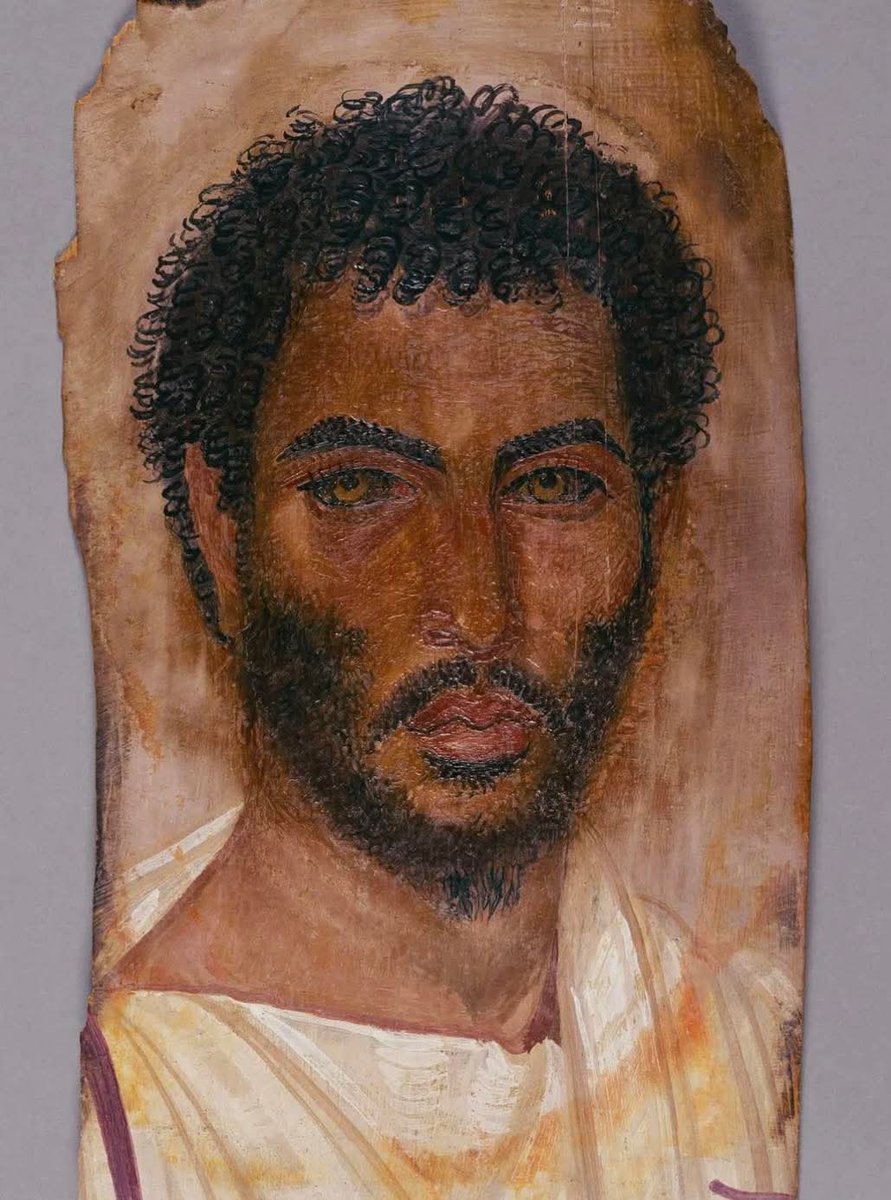
Portrait of an unidentified man that was placed over the face and upper torso of his mummy. Dated to 150–170 AD, it is painted in encaustic on a panel of linden wood, and it was originated in Roman Egypt.
This remarkable portrait belongs to a group of artworks known as the Fayum mummy portraits, a tradition that flourished in Roman Egypt between the 1st and 3rd centuries AD. Unlike the stylized depictions of faces seen in earlier Egyptian funerary art, these portraits were painted in a strikingly naturalistic style, giving us lifelike glimpses of people who lived nearly 2,000 years ago.
Painted in encaustic, a technique using hot wax mixed with pigment, the colors remain vivid even after centuries. The medium gave artists the ability to capture depth, texture, and warmth, preserving the humanity of their subjects with astonishing realism. In this particular piece, the curly hair, sharp eyebrows, and direct gaze make the man seem almost alive, as though he could step out of history and into the present.
The portrait was originally placed over the face and chest of the deceased’s mummified body, merging Egyptian burial practices with Roman artistic sensibilities. These works represent more than individual likenesses—they reflect the cultural blending of Greek, Roman, and Egyptian traditions in a society at the crossroads of the ancient Mediterranean world.
What makes the Fayum portraits so moving is the intimacy they provide. Unlike statues of emperors or gods, these images show ordinary people: merchants, soldiers, mothers, and children. Each one is a reminder that behind the ruins and relics of antiquity were lives full of stories, emotions, and identities. This man’s name may be lost to time, but his face survives as one of history’s most hauntingly personal echoes.
#archaeohistories