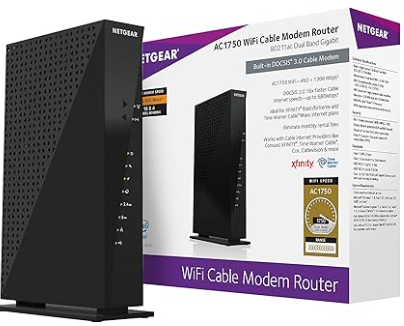
CAREFUL: MAC address blacklisted by #Spectrum. #NETGEAR Cable Modem WiFi Router Combo C6300 | Compatible with Cable Providers Including Xfinity by Comcast, Spectrum, Cox for Cable Plans Up to 400Mbps | AC1750 WiFi Speed | DOCSIS 3.0 as listed on ##Amazon.
From Google AI: "Yes, Oklo plans to sell nuclear energy directly to customers, rather than selling the reactors themselves. This will be accomplished through long-term power purchase agreements."
From Google AI: "NuScale Power is developing and plans to sell small modular nuclear reactors (SMRs); however, it has not yet sold a reactor to a customer."
US auto loan delinquency rates keep on surging:
Subprime auto loan delinquency rates just crossed above 5% for the first time in history.
Since 2022, the 60-day delinquency rate for subprime auto loans has more than DOUBLED.
Delinquency rates are now above the peak levels recorded in 2008 and 2020.
Furthermore, prime auto loan 60-day delinquencies have risen to their highest in 14 years.
All while the share of auto loan balances at least 90 days past due hit 5% in Q1 2025, in-line with the 2020 pandemic high.
The car market bubble is bursting.
From Google AI: "No, Nano Nuclear is not currently selling Zeus microreactors commercially.
Here's why:
Pre-revenue Company: Nano Nuclear Energy is currently in the development phase for its Zeus...and does not have any commercially available products."
The critique in the excerpt assumes that holding onto a stock long-term is always the best strategy, but it completely ignores survivorship bias and the reality that most stocks do not appreciate indefinitely.
1. Most Stocks Decline or Go to Zero
Historical data shows that the majority of stocks underperform or even go bankrupt over time.
For every long-term winner like Apple or Amazon, there are hundreds of stocks that have lost 90%+ or gone to zero (e.g., Lehman Brothers, Enron, Kodak).
Holding blindly means risking catastrophic losses in cases where the stock never recovers.
2. Selective Memory & Survivorship Bias
The author assumes that because one stock went from $10 to $40, it was "wrong" to trade in and out.
But in reality, most stocks don’t follow this trajectory. Many decline, stagnate, or never return to their previous highs.
Long-term holders only remember the winners but ignore the countless stocks that failed.
3. Risk of Holding Too Long
A long-term investor often faces massive drawdowns (e.g., Amazon dropped 90% in the early 2000s before recovering).
Many traders prefer taking consistent profits rather than sitting through brutal downturns.
4. Adaptive Trading vs. Blind Holding
The trader in the excerpt locked in profits consistently rather than assuming the stock would keep rising.
A stock that goes from $10 to $40 may just as easily crash to $5 before reaching that level again.
Active traders can adapt to changing market conditions, while long-term investors risk riding losses unnecessarily.
5. The Fallacy of “What If” Thinking
Saying the trader missed out on a $30 gain assumes perfect hindsight—which no one has in real-time.
If the stock had collapsed instead, the same logic would suggest the trader was smart to take smaller profits.
Final Verdict
The author’s criticism ignores market realities:
✔ Most stocks decline over time
✔ Not all stocks will appreciate indefinitely
✔ Long-term investing is only wise if you pick the right stocks
✔ Active trading provides risk management and liquidity
Day traders may not always maximize gains, but they also avoid huge losses that long-term holders often suffer.
“The banks and the Government have colluded together to financially enslave people”
Brilliant 12 year old girls - clearly articulates the Central Banking Scam that has captured every sovereign Country, in language a 12 year old can understand. 👏