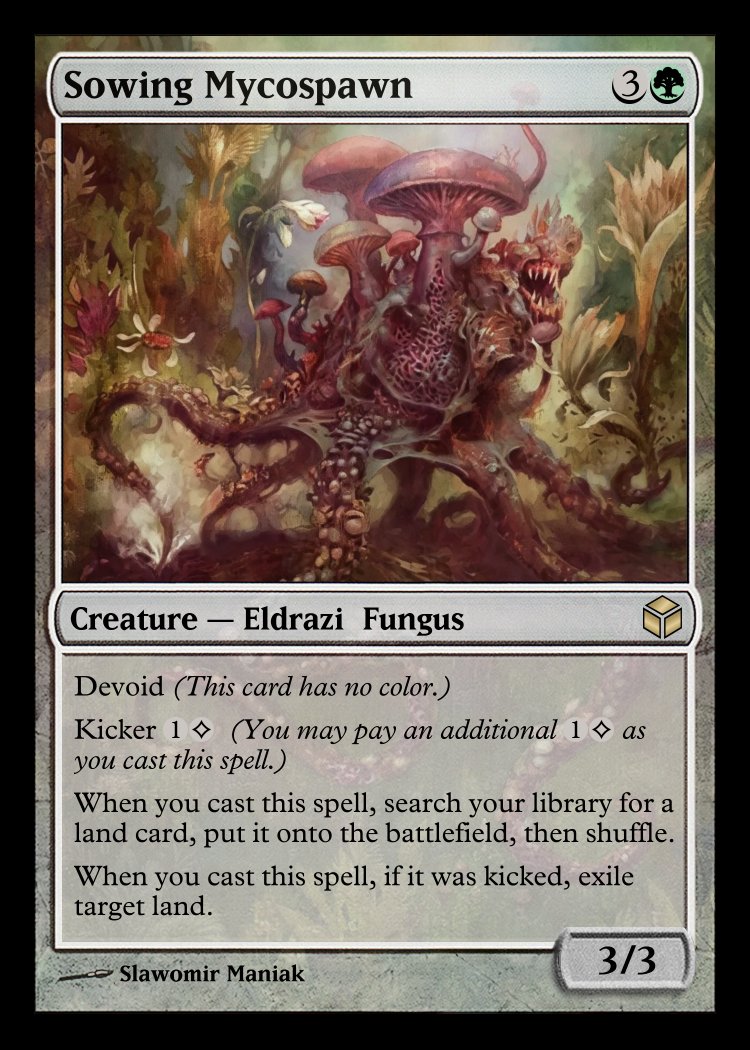
@ValerieNoName If you're into custom Magic, check out this repository of Magic Set Editor styles I built: https://t.co/MHXfPO83Nj — feel free to give it a try for your custom sets or proxies.
https://t.co/9WuYKkNm7j
Today we're rolling out Temporary Accounts on Cloudflare Workers. Any agent can now run wrangler deploy — temporary and get a live Worker in seconds. https://t.co/o5GLomVUxb
Farzapedia, personal wikipedia of Farza, good example following my Wiki LLM tweet.
I really like this approach to personalization in a number of ways, compared to "status quo" of an AI that allegedly gets better the more you use it or something:
1. Explicit. The memory artifact is explicit and navigable (the wiki), you can see exactly what the AI does and does not know and you can inspect and manage this artifact, even if you don't do the direct text writing (the LLM does). The knowledge of you is not implicit and unknown, it's explicit and viewable.
2. Yours. Your data is yours, on your local computer, it's not in some particular AI provider's system without the ability to extract it. You're in control of your information.
3. File over app. The memory here is a simple collection of files in universal formats (images, markdown). This means the data is interoperable: you can use a very large collection of tools/CLIs or whatever you want over this information because it's just files. The agents can apply the entire Unix toolkit over them. They can natively read and understand them. Any kind of data can be imported into files as input, and any kind of interface can be used to view them as the output. E.g. you can use Obsidian to view them or vibe code something of your own. Search "File over app" for an article on this philosophy.
4. BYOAI. You can use whatever AI you want to "plug into" this information - Claude, Codex, OpenCode, whatever. You can even think about taking an open source AI and finetuning it on your wiki - in principle, this AI could "know" you in its weights, not just attend over your data.
So this approach to personalization puts *you* in full control. The data is yours. In Universal formats. Explicit and inspectable. Use whatever AI you want over it, keep the AI companies on their toes! :)
Certainly this is not the simplest way to get an AI to know you - it does require you to manage file directories and so on, but agents also make it quite simple and they can help you a lot. I imagine a number of products might come out to make this all easier, but imo "agent proficiency" is a CORE SKILL of the 21st century. These are extremely powerful tools - they speak English and they do all the computer stuff for you. Try this opportunity to play with one.
Building a personal knowledge base for my agents is increasingly where I spend my time these days.
Like @karpathy, I also use Obsidian for my MD vaults.
What's different in my approach is that I curate research papers on a daily basis and have actually tuned a Skill for months to find high-signal, relevant papers.
I was reviewing and curating papers manually for some time, but now it's all automated as it has gotten so good at capturing what I consider the best of the best. There are so many papers these days, so this is a big deal.
You all get to benefit from that with the papers I feature in my timeline and on @dair_ai.
The papers are indexed using @tobi qmd cli tool (all of it in markdown files along with useful metadata). So good for semantic search and surfacing insights, unlike anything out there.
I am a visual person, so I then started to experiment with how to leverage this personal knowledge base of research papers inside my new interactive artifact generator (mcp tools inside my agent orchestrator system). The result is what you see in the clip.
100s of papers with all sorts of insights visualized. I keep track of research papers daily, so believe me when I tell you that this system is absolutely insane at surfacing insights. This is the result of months of tinkering on how to index research and leverage agent automations for wikification and robust documentation.
But this is just the beginning. The visual artifact (which is interactive too) can be changed dynamically as I please. I can prompt my agent to throw any data at it. I can add different views to the data. Different interactions. I feel like this is the most personalized research system I have ever built and used, and it's not even close.
The knowledge that the agents are able to surface from this basic setup is already extremely useful as I experiment with new agentic engineering concepts. I feel like this knowledge layer and the higher-level ones I am working on will allow me to maximize other automation tools like autoresearch. The research is only as good as the research questions. And the research questions are only as good as the insights the agents have access to.
Where I am spending time now is on how to make this more actionable. I am obsessed about the search problem here. The automations, autoresearch, ralph research loop (I built one months ago) are easier to build but are only as good as what you feed them.
Work in progress. More updates soon. Back to building.