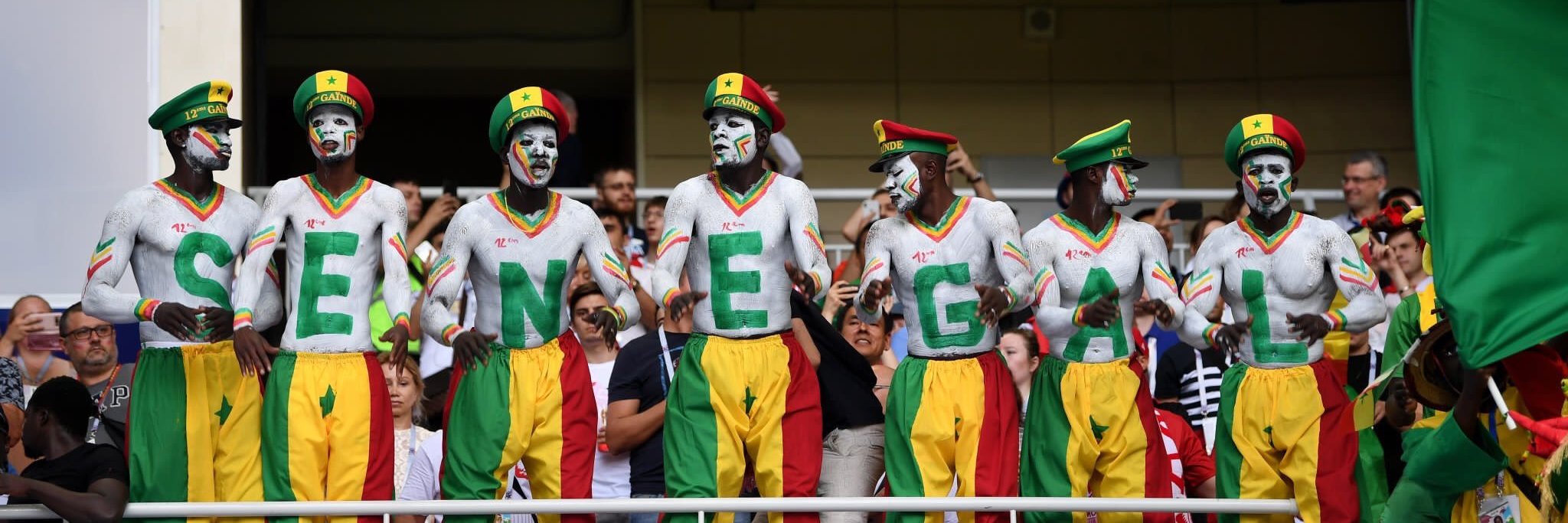
When Russia hosted the World Cup in 2018, it had to suspend normal visa rules for the tournament. Foreigners with tickets could enter visa-free, using a scheme called ‘Fan ID.’
Russia also had to do weird stuff to keep FIFA’s sponsors happy. For example, small shops near Fan Zones and stadiums could only sell Budweiser beer on match days.
So yes, FIFA absolutely does dictate conditions to host governments when it suits FIFA. Infantino pretending otherwise is nonsense.
Name one public park in your city where you can simply sit down for free.
Most Africans cannot answer that.
Lagos, Accra, Douala, Kinshasa, cities of millions where green spaces cover less than 3% of total land. Nairobi’s City Park has been shrinking for decades. The few parks still functioning in most of our capitals were built by colonial administrations in the 1800s and early 1900s. In 2026, our own governments have added almost nothing.
A functional city has parks the same way it has roads and hospitals. It is not a luxury, it is basic infrastructure that signals whether a society is organized around its people or not.
Urban planning in Africa is ours to control now. Has been for over sixty years. The colonial excuse does not survive contact with that fact.
This is not a poverty problem. It is a priority problem and our cities are failing it openly.
Kenyan police allowed Arsenal fans to gather and disperse peacefully but they never allow the same youth to protest against the government without killing some
Harvard University just voted to limit the number of A grades given in undergraduate classes to about 20% of the class. I’m not in favor of this. It deeply runs counter to how I believe education should be. We should hold a high bar, but also work mightily to support the success of 100% of learners, rather than a fraction.
Harvard’s administration took this step — over the objections of a large fraction of the student body — to counter grade inflation. Grade inflation is real: Many universities have been awarding A and B grades to ever larger fractions of students, and this has caused grade point averages (GPAs) to become less useful as signals of student skill. At the same time, we want students to succeed. The heart of the question is the role of educational institutions. Should our goal be:
- To help students succeed?
- To judge students?
Both of these have value. But my focus when working in education is almost entirely helping students succeed.
To me, it is clear that many people want to learn, to be empowered, to build skills that let them do new things! This is what we focus on at DeepLearningAI. This philosophy is also why my online courses (going back to my early online Stanford courses on Coursera) permitted an unlimited number of retries for graded assignments.
I believe in letting — and even encouraging — someone to redo something until they succeed. This is as opposed to standing in judgement of the fact they didn’t get it right the first time. Further, I want homework assignments to be designed primarily to help people practice and learn, rather than to judge their skill level. This is why I prefer to create “Practice Problems” and “Practice Labs” — questions that, when you think through them, help you to gain practice and reinforce what you know. As opposed to “Assessment Problems” designed primarily to judge skill.
But won’t Harvard’s move make GPAs more meaningful and help prospective employers identify strong candidates? Having hired a large number of people from Harvard and other institutions, I can say confidently that GPA is not an important signal. We have screening and interviewing processes that give far more accurate ways to figure out if someone is truly skilled. I do not need a wider spread in applicant GPA scores to figure out who's really good!
To be clear, there is also value in assessment. Even though standardized testing is much hated, high-quality tests like the SAT, ACT, GRE, TOEFL, etc. provide objective measures of ability in a domain. I find that most people want to learn and succeed. There are also people who want rigorous assessment (for example, to apply for school admissions), but this is a lesser need, and is not my focus when building educational products.
Harvard is often described as an “elite” educational institution. There are two ways to be elite: One option involves limiting enrollments, and then even among admitted students, cap the number of people that do well at 20%. I would rather pursue a different path: Set a high bar and teach elite, cutting-edge skills, but strive relentlessly to help everyone succeed. This way, eliteness is defined not by excluding people but by helping as many people as possible to be excellent.
[Original text: The Batch newsletter]
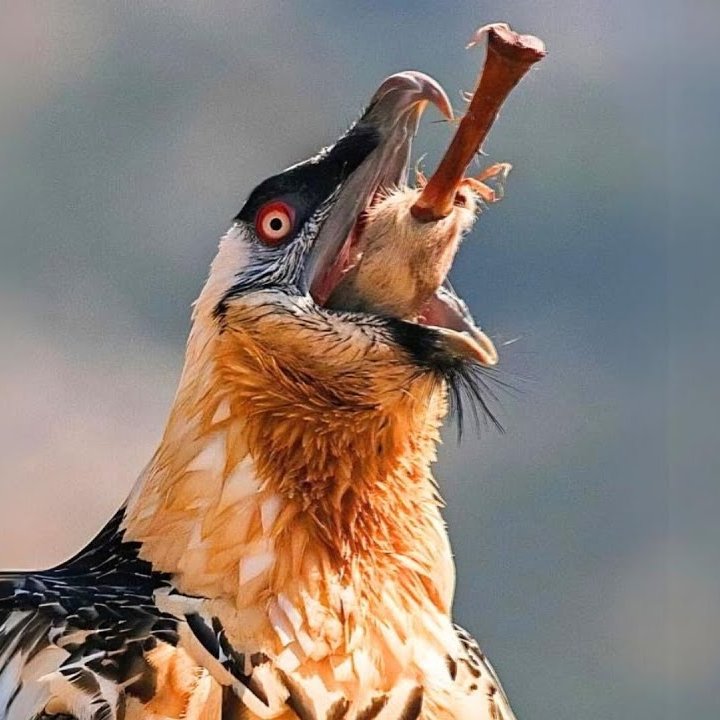
Vultures eat anthrax, botulism, rabies, and cholera for breakfast.
Their stomach acid is among the most corrosive in the animal kingdom, with a pH around 1, low enough to dissolve the bones, hide, and pathogens of dead animals that would kill almost anything else.
A vulture eating a diseased carcass isn't a vector for disease, it's a terminus. The disease chain ends in the vulture's gut, and that's pretty hardcore.
When vulture populations crashed in India in the 1990s, rotting livestock carcasses sat where vultures used to clean them.
Feral dogs and rats took over the cleanup, both of which actually do spread rabies. Researchers later linked the vulture collapse to roughly 500,000 deaths in India over the following decade.
The same collapse is now underway in sub-Saharan Africa. Six of eleven African vulture species are threatened with extinction, primarily from poisoned poaching baits.
The animals nobody finds cute are doing more public health work than most of the species we actively protect.
-British guy goes to Africa: “What’s this animal called”
-African tribesman: “We call it Okapi”
- Western scholars: “The Okapi was discovered 150 years ago by that British guy”
Planting trees is certainly good. But it doesn't create a forest. Existing forests should be aggressively protected. There is NO substitute for a natural forest.
@bakhita_esther Deep fake photos like this will become even more common in a contested political environment. However either the manipulator doesn't know or doesn't care that the gemini watermark is at the bottom right corner of the photo, and the faces are so badly distorted it is easy to spot
When we ask why taxes are soo high, we are compared to UK and Singapore.
When we ask why our debt is so high, they talk about Japan and their gdp to debt ratio.
But healthcare? Infrastructure? Education? Quality of life? Suddenly, we are comparable to Uganda and Tanzania
Kenya is one big CONFLICT OF INTEREST + POOR GOVERNANCE STUDY:
1. MCAs' companies do all the work in the Wards;
2. MPs' companies do all CDF work;
3. Governors' companies do all the work in the Counties;
4. The President and his CS companies do all the national contracts.
My commentary today: Strait of Hormuz crisis should accelerate Africa’s biofertilizer production, a shift to electric mobility and renewable energy. Fossil fuel, chemical fertilizer & food systems are joined at the hip https://t.co/yIUoafEETs
This is Ngong Suswa. We have been conned here. Look at that thin tarmac and the significant repairs on a newly finished road. This will be a cash cow because of constant repairs. In a proper country the contractor, engineers and government supervisors would be behind bars now
There’s something wrong with your country when it’s mostly foreigners and politicians who can experience a decent, stable lifestyle while citizens struggle.
There's a physicist at Stanford named Safi Bahcall who modeled this exact principle and the math is wild.
He calls it "phase transitions in human networks." When you're stationary, your probability of a lucky event is limited to your existing surface area: the people you already know, the places you already go, the ideas you've already been exposed to. Your opportunity window is fixed.
When you move, your collision rate with new nodes in a network increases nonlinearly. Double your movement (new conversations, new cities, new projects) and your probability of a serendipitous encounter doesn't double. It roughly quadruples. Because each new node connects you to their entire network, not just to them.
Richard Wiseman ran a 10-year study at the University of Hertfordshire tracking self-described "lucky" and "unlucky" people. The single biggest differentiator wasn't IQ, education, or family money. Lucky people scored significantly higher on one trait: openness to experience. They talked to strangers more, varied their routines more, and said yes to invitations at nearly twice the rate.
The "unlucky" group followed the same routes, ate at the same restaurants, and talked to the same 5 people. Their networks were closed loops. No new inputs, no new collisions.
Luck isn't random. Luck is surface area. And surface area is a function of movement.
The lobster emoji is doing more work than most people realize. Lobsters grow by shedding their shell when it gets too tight. The growth requires a period of total vulnerability. No protection, no armor, soft body exposed to the ocean.
That's the cost of movement nobody posts about. You have to be uncomfortable first. The new shell only hardens after you've already moved.