@LinksfraktionB@SebCzaja Als hätte es in Bln und Rest der Welt noch nie soz. Wohnungsbau gegeben, Ergebnis immer das gleiche: Günstlingswirtschaft, Fehlbelegung, Lock-in, steigende Mieten, Verschleudern im Nachfragetief. "Aber es hat doch 'sozial' im Namen, dann muss es gut sein." https://t.co/rRgzfZGOoo
While Western intellectuals spent the 1970s and 80s gushing over Soviet "achievements," Ludwig von Mises had already written the empire's obituary decades earlier. In 1920, he published his devastating critique of socialist calculation, proving that rational economic planning becomes impossible without market prices. The academic establishment ignored him. The Soviets dismissed him as a capitalist propagandist.
You cannot allocate resources efficiently when you have destroyed the price mechanism. When the state owns all means of production, it eliminates the very market signals that coordinate human action. No central planner, regardless of intelligence or computing power, can substitute for the decentralized knowledge that emerges from voluntary exchange.
The proof arrived exactly as Mises predicted. By the 1980s, Soviet grocery stores sat empty while millions of bureaucrats shuffled paper in Moscow offices. Factory managers produced worthless goods because they responded to arbitrary quotas rather than consumer demand. The entire system collapsed under the weight of its own contradictions in 1991, stunning the same Western economists who had spent decades praising Soviet growth statistics.
Meanwhile, Paul Samuelson was still teaching students in 1989 that the Soviet economy might overtake America's. The New York Times continued publishing editorials about the resilience of socialist planning.
Mises got it right because he understood human action and the impossibility of calculation without private property. The establishment economists got it wrong because they confused mathematical models with economic reality. They treated human beings as equations instead of purposeful actors making choices under uncertainty.
„But what is so worrying about the Gen-Z socialists is how deeply their ideas are bleeding into the centre-left.”
Den Fehler macht wohl auch eine SPD, die sich von Isabella Weber beraten lässt.
https://t.co/nTqE577gz0
The 1920-21 depression was the sharpest economic contraction in American history, yet you've probably never heard of it. Industrial production collapsed 32%. Unemployment spiked from 4% to 12% in twelve months. By every measure, this downturn dwarfed the initial shock of 1929.
President Warren Harding faced enormous pressure to "do something." Labor leaders demanded public works programs. Businessmen begged for bailouts and trade protection. Treasury Secretary Andrew Mellon advised Harding to slash government spending and let wages fall. Commerce Secretary Herbert Hoover (yes, that Hoover) pushed for massive federal intervention.
Harding chose Mellon. The federal budget dropped from $6.4 billion to $3.2 billion in two years. No stimulus packages. No bailouts. No alphabet soup of new agencies. Government employment fell 40%. When you let markets clear, they clear fast.
The recovery started in July 1921. By 1923, unemployment had dropped to 2.4% and industrial production reached new highs. The entire episode lasted eighteen months from peak to full recovery. Compare that to Japan's lost decade of intervention, or the European debt crisis that dragged on for years, or our own jobless recovery after 2008.
Most economics textbooks omit this episode because liquidating malinvestments and allowing price adjustments works exactly as free market theory predicts: a fact that destroys the Keynesian narrative that government must spend its way out of recessions. Politicians today claim they learned the lessons of the 1930s, but they studiously ignore the more important lesson of 1921.
@babymohouseman "Die Inflation kommt nicht über uns als ein Fluch oder als ein tragisches Geschick; sie wird immer durch eine leichtfertige oder sogar verbrecherische Politik hervorgerufen."
Ludwig Erhard
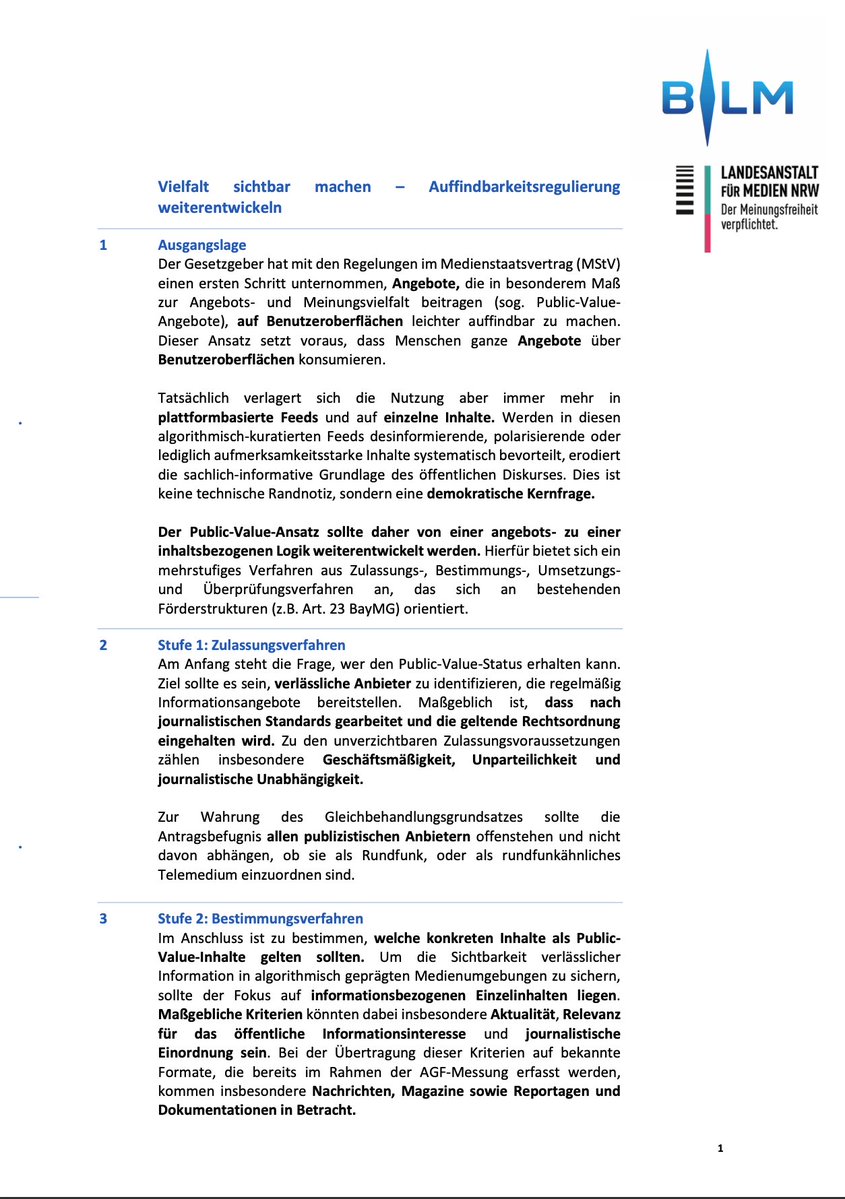
Exklusiv: Schon im Sommer könnte der Staat massiv in die Freiheit der Presse eingreifen. Und entscheiden, welche Medien im Internet faktisch belohnt und welche bestraft werden.
Thorsten Schmiege, der Vorsitzende der Direktorenkonferenz der Landesmedienanstalten plant, sozialen Netzwerken künftig vorzuschreiben, dass dort Inhalte von staatlich ausgewählten „verlässlichen“ Medien mit „öffentlichem Mehrwert“ („Public Value“) bevorzugt angezeigt werden. Eine Pflicht zur „leichten Auffindbarkeit“ dieser „Public Value“-Inhalte nennt man das.
Wie all das funktionieren soll, dokumentiert dieses Papier, das in Schmieges Hause, der bayerischen Landesmedienanstalt (BLM), für die Vorbereitung des neuen Medienstaatsvertrags im Sommer erarbeitet wurde. In ihm wird erklärt, es sei eine „demokratische Kernfrage“, auf Social Media den Einfluss „desinformierender“ und „polarisierender“ Inhalte zurückzudrängen.
https://t.co/sRTWMedB0u
Terwijl de "Palestijnen" blijven beweren dat de Joden hen in 1948 uit Palestina hebben verdreven, bewijst dit document precies het tegenovergestelde.
De Joden vroegen de Arabieren NIET te vertrekken, maar de Arabische leiders stonden erop de Arabische bevolking uit Palestina te evacueren.
Waarom?
Omdat de omliggende Arabische staten van plan waren de nieuwe staat Israël aan te vallen, te vernietigen en vervolgens de vertrokken Arabieren terug te sturen.
Lees dit document, geschreven door de Britse districtscommissaris Haifa Dant van Beline Linifa, in april 1948 aandachtig door:
"De Joden hebben de Arabieren opgeroepen hun winkels en bedrijven te heropenen om de problemen met het voeden van de Arabische bevolking te verlichten.
De evacuatie was gisteren nog steeds aan de gang en er werden verschillende tochten per 'Z'-vaartuig naar Akko gemaakt.
Ook de wegen stonden vol met mensen die Haifa met al hun bezittingen verlieten.
Tijdens een bijeenkomst gisterenmiddag herhaalden Arabische leiders hun vastberadenheid om de gehele Arabische bevolking te evacueren. Om de evacuatie te ondersteunen, hebben ze vanochtend tien militaire vrachtwagens van 3 ton geleend.
Foto: Carl Hermann Voss, The Palestine Problem Today (Boston, 1953)
De enige "Nakba" (ramp) van de "Palestijnen" is dat de Arabieren er niet in geslaagd zijn Israël te vernietigen.
(De Stem van de Waarheid op X)
Sweden's socialist experiment collapsed spectacularly in the early 1990s, forcing politicians to abandon decades of central planning and embrace free markets. The results speak louder than any economic textbook ever could.
By 1990, Sweden's government consumed 67% of GDP. The marginal tax rate hit 87%. Capital flight accelerated as entrepreneurs fled to countries that didn't punish success. The krona crashed. Banks failed. Unemployment spiked to 9.9% by 1997. Sweden's welfare state had priced itself out of reality, just as free market economists predicted it would.
Then came the great reversal. Sweden privatized telecommunications, postal services, railways, and electricity. Politicians slashed the corporate tax rate from 57% to 22%. They introduced school vouchers, allowing parents to choose private schools with taxpayer funding. They partially privatized pensions, letting workers invest in individual accounts instead of relying solely on government promises. Most importantly, they eliminated wealth taxes and inheritance taxes that had driven capital overseas.
The recovery was swift and decisive. GDP growth accelerated. Unemployment plummeted to 6.1% by 2007. Sweden became a tech powerhouse, producing global companies like Spotify and Skype. The Stockholm stock exchange outperformed most European markets. Foreign investment flowed back as Sweden transformed from socialist cautionary tale to Nordic success story.
Today's American progressives love citing "Scandinavian socialism" while ignoring that Sweden's prosperity stems from abandoning socialism when it failed. They want the Sweden of 2023 while implementing the policies of 1975.
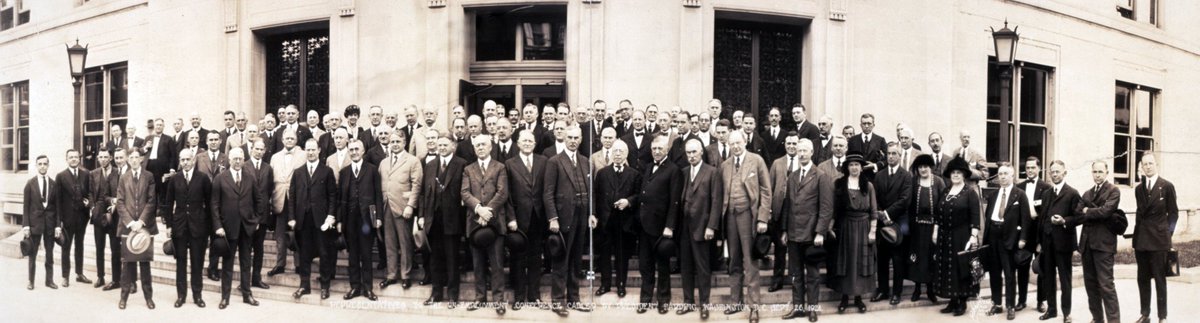
Weder der Partei "Die Linke" noch einem der Kommentatoren fällt auf, dass dieses Bild keine Bücherverbrennung im Jahre 1933 zeigt, sondern eine Bücherverbrennung im Juni 1955 in Ost-Berlin. Damals regierte dort die SED, die sich zuerst in PDS und dann in "Die Linke" umbenannte.
https://t.co/SVc7JPHxbE
https://t.co/FYRtrmMSOY
Tres personas quedan atrapadas en una isla: un empresario, un trabajador y un político.
El empresario construye una red para pescar.
El trabajador recoge madera y hace fuego.
El político organiza reuniones para discutir cómo repartir el pescado.
La primera semana sobreviven bien:
el empresario pesca 30 peces,
el trabajador cocina y mantiene el refugio,
y el político promete que pronto todos tendrán igualdad.
La segunda semana, el político propone una nueva regla:
“Es injusto que uno tenga más peces que otro. A partir de ahora, todo se repartirá por igual.”
El empresario acepta a regañadientes.
El trabajador también.
La tercera semana, el empresario deja de esforzarse tanto:
“¿Para qué pescar 30 si terminaré con la misma cantidad?”
Pesca 10.
La cuarta semana, el trabajador deja de trabajar horas extra:
“¿Para qué mantener el fuego toda la noche si da igual cuánto aporte?”
Trabaja menos.
Mientras tanto, el político sigue dando discursos sobre solidaridad y justicia social.
La quinta semana ya casi no hay comida.
La isla entra en crisis.
Y el político convoca otra reunión para debatir quién es el culpable.
Y así, amigos, es como muchas veces colapsan los sistemas donde se castiga al que produce y se premia al que solo administra discursos.
Robert Owen's New Harmony experiment stands as perhaps the most instructive lesson in economic history about why socialism fails every single time someone tries it. This wasn't some theoretical debate in a university classroom. Owen put his money where his mouth was, purchasing the thriving town of Harmonie, Indiana in 1825 for $150,000 and transforming it into his vision of a perfect socialist society.
The setup looked promising. Owen brought genuine intellectual firepower to Indiana. Scientists, educators, and progressive thinkers flocked to this "Community of Equality" where private property would disappear, money would become obsolete, and collective labor would serve the common good. Owen had already made his fortune in the textile industry, so he understood production and management. He wasn't some armchair theorist.
Within months, the cracks appeared. The hardest workers started questioning why they should break their backs when lazy neighbors received identical compensation. Why stay late to finish critical tasks when someone else could sleep in and still eat the same meals? Owen had eliminated the price system that communicates information about individual contribution and social need. Incentives collapsed immediately.
You can trace the predictable cascade of failure. Production dropped as effort declined. Disputes erupted over work assignments because no market mechanism existed to allocate labor efficiently. Without private property rights, nobody maintained equipment properly. Without profit and loss signals, managers couldn't determine which activities created value and which destroyed it. The community devolved into endless meetings about governance while crops rotted in fields.
Owen tried multiple reorganizations, breaking the community into smaller units, adjusting the rules, bringing in new leadership. Nothing worked because the fundamental problem remained: socialism eliminates the knowledge-generating mechanism that makes complex societies function. Prices coordinate millions of individual decisions without central planning. Property rights ensure people maintain and improve resources. Competition rewards innovation and punishes waste.
By 1827, Owen admitted defeat and sold the property. He later wrote that the experiment failed because of "the extremely defective and vicious training of the population of the world, under the existing systems." Translation: people behaved like people instead of like the angels his system required.
Without market prices, you cannot rationally allocate resources. Without individual ownership, you cannot maintain accountability. Without competition, you cannot discover efficient methods. Owen's community lacked all three mechanisms.
New Harmony's collapse took just two years, but it taught future generations exactly why voluntary exchange and private property create prosperity while collective ownership creates poverty. Owen spent his own money proving that human nature doesn't bend to utopian schemes. Production responds to incentives, not good intentions.
The Indiana prairie reclaimed Owen's socialist paradise, but the economic lessons endure. Every subsequent attempt at collective ownership fails for identical reasons. Owen's honest admission about human nature's resistance to pure collectivism deserves respect. Most socialist experiments end with leaders blaming saboteurs, foreign enemies, or insufficient revolutionary fervor rather than acknowledging the system's inherent contradictions.
Socialism always collapses when confronted with economic reality. New Harmony's failure was no exception.
After more than two years of Milei, the international press still does not understand what is happening in Argentina.
The narrative abroad is "shock therapy, social pain, fragile coalition." That frame misses the actual mechanism. Argentina did not have a budget problem. It had a printing problem. From 2003 to 2023 the central bank financed deficit after deficit until the peso lost 99 percent of its value against the dollar. Annual inflation hit 211 percent in 2023. Half the country was poor. That was the floor.
What changed is not vibes. It is arithmetic. The fiscal deficit was eliminated for the first time in 16 years. Monthly inflation fell from 25 percent to low single digits. The central bank stopped printing to fund the Treasury. Country risk dropped from over 2,500 basis points to a fraction of that. Argentine sovereign debt, which used to trade like a default option, began behaving like normal emerging market paper.
Critics say poverty rose. It did, briefly, because removing price controls and subsidies revealed the real prices of energy, transport and food that the state had been hiding with debt. Once measured honestly, poverty has been falling fast. Real wages are recovering. Mortgages in pesos are reappearing, something that had not been possible in a generation.
This matters beyond Argentina. It is the clearest live experiment in whether a developed-style economy can be rebuilt by pulling the state out of places it never belonged. Spain, Italy and France should be paying attention. A country does not get poor because it lacks resources. It gets poor because its political class learned to live off printing money and calling it social policy.
Argentina spent 80 years proving that. It is now spending two years proving the opposite.
East Germany's Stasi employed 620,000 informants to watch 16 million people. One spy for every 26 citizens. They called it national security, but the surveillance state served another function entirely.
When central planners can't calculate prices, they substitute information gathering for market signals. The Stasi tracked production shortages, black market prices, and worker productivity. Every neighborhood informant became an economic data collector feeding the planning apparatus.
You see this pattern everywhere socialist calculation breaks down. Venezuela's neighborhood watch committees monitor food hoarding and price violations alongside political crimes. China's social credit system tracks spending patterns alongside political behavior. Surveillance becomes the desperate substitute for the price mechanism they destroyed.
The Plymouth Pilgrims accidentally ran the first documented socialist experiment in America three centuries before Marx scribbled his manifesto. Governor William Bradford's "common storehouse" system from 1620-1623 delivered textbook collectivist results: mass shirking, crop failures, and near-starvation.
Bradford recorded the disaster in detail. Young men "complained that they were oppressed" when forced to work for others without reward. Productive colonists watched lazy neighbors receive equal rations despite contributing nothing. The system "was found to breed much confusion and discontent" because it violated basic human incentives. People starved while fertile Massachusetts soil lay underworked.
The turnaround came swiftly in 1623 when Bradford abandoned the collective model and assigned private family plots. Production exploded overnight. Women and children voluntarily joined field work when their families directly benefited from extra effort. The same colonists who nearly died under socialism suddenly produced abundant harvests under private property.
Bradford explicitly credited private ownership for saving Plymouth Colony. He documented how individual responsibility transformed human behavior within a single growing season. Individual effort cannot be separated from individual reward without destroying both.
Every socialist experiment since Plymouth has repeated this identical pattern. Different century, different continent, same predictable collapse when planners ignore the reality of human nature.
No matter what they call it, whenever and wherever collectivist ideas are put into practice, disaster soon follows.
Martin, I'm fed up with Muslim apologists like you pussy-footing around an ugly reality. Here is the unspoken truth about genocide in the Middle East, the plain fact about genocide that most people are steadfastly ignoring.
The Palestinians have a stated goal of killing every single Jew in Israel—and they have been trying over and over for 75 years to do exactly that.
That is the very definition of genocide.
It began with the war the Palestinians started on the very day Israel was created, when the Palestinians firmly believed that they would win, kill all the Jews, and take all of the Jews' land and belongings.
When that didn't work, they began a string of endless wars with the same object in mind—killing all the Jews.
In more modern times, both the PLO and Hamas have the same genocidal message baked into their charters—the extermination of the Jews.
And the Palestinian people are clearly in favor of genocide—it's taught in their schools, they repeat the genocidal "From the river to the sea" chant endlessly, they send bombers into shopping malls, they fire numberless missiles randomly into Israeli civilian areas, and they pay welfare to the families of the suicide murderers blowing up women and children.
All of those are the deliberate targeting of Jewish civilians, the exact genocidal crime that Israel is falsely accused of.
Finally, Hamas started the current war to the death by committing their unbelievable atrocities on 10/7 and then promising to repeat them over and over until every Jew in Israel is dead.
Can you say "genocide"?
The reality is, the Israelis have enough firepower to turn Gaza into glassy slag and kill every living thing. But they haven't done that and never will. Instead, they are doing their utmost to prevent civilian casualties.
To me, the Israeli restraint in the face of the endless genocidal actions of the Palestinians is remarkable—in their place I would not, could not, be so restrained.
So don't give me any BS about Israeli genocide. Anyone with half a brain can see that it is the Palestinians who have engaged in a violent, murderous genocidal agenda for as long as both countries have existed.
Unfortunately, "anyone with half a brain" clearly doesn't include the majority of the supporters of the Palestinian genocide … I can't have everything, I guess.
And on the Israeli side, calling Israel's fight to defend itself "genocide"? Get real.
• This is the only genocide in history where the people supposedly being genocided could end it today by releasing the hostages and laying down their arms. "Genocide" over, peace returns.
• This is the only genocide in history where the people supposedly committing the genocide have provided over 475,000 tonnes of food to the people being genocided.
• This is the only genocide in history where the children supposedly being genocided who require evacuation for urgent treatment are allowed by the genociders to be sent to hospitals in third countries, such as the United Kingdom, Switzerland, and Egypt.
• This is the only genocide in history where the "genociders" paused the fighting to allow 600,000 doses of polio vaccine to be delivered to the "genocidees".
• This is the only genocide in history where the people supposedly committing the genocide are required to provide water and electricity to the genocidees.
• This is the only genocide in history where the people supposedly committing the genocide have sent over 18,000 tonnes of medical supplies to the genocidees.
Providing medicine to your sworn enemies in wartime?
Gotta say it. The Israelis are really good at war, but they are REALLY bad at genocide.
• And most importantly, this is the only genocide in history where the army is warning the genocidees via text messages, emails, leaflets, and radio and TV announcements where they are going to attack next, so people can avoid being genocided.
Consider what that means. That is giving up a huge military advantage, the advantage of surprise. And the inevitable corollary is that the lack of surprise increases Israeli deaths, purely in order to avoid Muslim deaths
Let me say that again. Israeli Army young men and women are dying to prevent Muslim civilian deaths, and you are accusing Israel and the IDF of genocide?
For shame.
"Genocide"?
Don't make me laugh.
My best to all … well, except jihadis and their supporters like you.
w.
You may not agree with me, but you will always know where you stand with me.
Today in Billericay, a heckler tried to shout me down as I spoke about the normalisation of hatred towards Jews. I did not back down, because it needs to be said. British Jews are being targeted and too many people are pretending this is the same experience of other minorities. This lady implied Muslims are being similarly targeted. This is simply not true.
Let's be honest about what is happening. Certain groups (in particular but not solely Islamic Extremists) are creating a climate of fear and intimidation that is normalising Jew hatred. I will never stand for that. Governments have spent too long hand-wringing, making excuses and hoping it would go away. It is time to call this what it is: a national emergency in our attitude, our urgency and our response.
I will always engage with people who disagree with me. That is politics. But there is a difference between argument and intimidation. Shouting does not make a bad case good. It's done to silence others. And it certainly does not change the truth.
The truth is that British Jews have been made to feel less safe in their own country. Our country. They are being singled out, threatened and harassed in ways that should shame everyone in public life. If we do not stand up now and stop this rise in antisemitism, then why bother saying "Never Again" at Holocaust Memorial Day? Because this is how it starts.
I am not prepared to play along with the pretence that this is normal, or manageable, or just another example of tension between groups. It really is not. It is targeted hatred and it is getting worse.
So my message is simple. Not here. Not in Britain. And not on our watch. We need to stop the hand-wringing and start doing the right thing. That means standing with British Jews openly, unapologetically and without fear.