California's Digital Financial Assets Law takes effect this Wednesday, July 1. After multiple delays since its 2023 signing, the most consequential state crypto licensing regime in the U.S. since New York's BitLicense is finally live.
A quick orientation. The DFAL applies to anyone engaging in "digital financial asset business activity" with California residents — exchanging, transferring, storing, or issuing digital assets. That captures exchanges, custodians, wallet providers, stablecoin issuers, kiosk operators, and many tokenized asset platforms. Crucially, it applies regardless of where you're located. A BVI exchange, a Cayman fund admin, a Singapore wallet provider — if you serve California residents, you're in scope.
A few things worth flagging.
First, the safe harbor. As of Wednesday, you cannot engage in covered activity unless you either hold a DFAL license or have submitted a "completed application" that's still under review. The application opened March 9 via NMLS. The Morrison Foerster, Womble Bond, and Latham client alerts have been flagging this for months. If you serve California residents and haven't filed yet, you're now operating without authorization the moment the calendar flips.
Second, this is its own regime, not just MTA-relabeled. DFAL imposes distinct obligations on capital and liquidity, custody and segregation, consumer disclosures, AML programs, record retention, asset listing diligence, and stablecoin issuance. The DFPI has proposed but not yet finalized rules that would relieve dual MTA licensing for incidental fiat transmission. Until those PRO 02-23 rules are final, prudent compliance is dual licensing, not one or the other.
Third, the extraterritorial scope is the operational sleeper. A non-California entity that serves California residents is squarely in scope. For crypto founders structured offshore — Cayman foundations, BVI opcos, Panama foundations — the entity structure does not insulate from California licensing. The only paths are full geoblocking of California IP addresses with robust controls, structural carve-outs from "covered activity," or licensure.
Fourth, the precedent matters. New York's BitLicense established the template that "if you serve our residents, you license here." California is now the second major state to adopt this model with teeth. Texas and Florida have signaled they're studying it. The state-by-state crypto licensing patchwork that GENIUS, CLARITY, and the SEC/CFTC framework were supposed to solve federally is hardening in the meantime.
For crypto companies, payments fintechs, custodians, and any platform with California user touchpoints: this week is the deadline that's been theoretical for two years. It's not theoretical anymore.
Law360 this week revisited the Quebec Superior Court's annulment of an arbitral award for AI overreliance — first publicly reported case globally.
ARIHQ v. Santé Québec, 2026 QCCS 1360. Justice Sheehan found the arbitrator's central citations — three court decisions, a doctrinal article, an arbitral award — didn't exist. Annulment grounded not in "fake cases bad" but in the deeper rule: drafting reasons is non-delegable. AI may assist, never drive.
trend is global and accelerating. Sixth Circuit sanctioning all five attorneys in Whiting. Alabama Supreme Court dismissing an appeal entirely in Ibach v. Stewart because the briefs were so infected the court "had nothing to review." Qatar contempt finding in Sheppard. ADGM wasted-costs in Arabyads.
the duty hasn't changed. Rule 11, the Model Law, basic procedural fairness — all the frameworks predate AI. what's changed is the visibility of failures.
defensible AI architecture for adjudicative work has the same shape everywhere: source-linked citations, jurisdiction-gated workflows, explicit verification gates, and a human who visibly authors the reasoning. tools that produce final outputs under thin "review" frameworks are running into doctrinal walls.
Sandstone raised $30M Series A this week, led by Lightspeed with Sequoia and others following on. $40M total raised in six months. 40x revenue growth in the last 90 days. Customers include Wayfair, Mercury, Grindr, MasterClass, ElevenLabs, Cox Media.
What makes this interesting isn't the round size — it's the wedge.
Harvey, Legora, Crosby, and the rest of the high-profile legal AI category have been building for law firms. Sandstone is building for in-house. Different buyer, different problem, different unit economics. As the founders put it: "in-house legal has been underserved by software for too long, and it's finally fixable."
The in-house thesis is sharper than people realize. A senior in-house lawyer answers three questions every day — is this worth the business outcome, have we agreed to this before, what happens if we're wrong — and answers them from institutional memory built over years. Generic AI produces something that looks right but doesn't know the playbook. The defensible product is the one that connects counterparties, matters, obligations, contracts, and history into a single working surface that learns the company's specific patterns.
Three implications I'm sitting with.
First, this widens the AI-native legal stack in a way that affects outside counsel directly. AI-native in-house teams will require less outside counsel for routine work — review, redlining, vendor agreements, NDAs, standard commercial terms. The hours that used to flow to BigLaw mid-level associates for that work are going to evaporate. The outside counsel that survives will be the firms doing genuinely complex, novel, or high-stakes work where institutional judgment matters more than pattern-matching.
Second, this is the in-house mirror of the BigLaw build-vs-buy question. Kirkland is spending $500M to build proprietary AI. Sandstone is offering in-house teams the equivalent capability without the build cost. Every general counsel now has to ask: do we license a vertical platform like Sandstone, build on Claude for Legal, or rely on our outside firms' tools? The answer affects every legal AI vendor's enterprise pipeline.
Third, the convergence is real. AI-native in-house teams need AI-native outside counsel. The friction of working with a traditional firm — paper-driven workflows, slow turnaround, no shared context, opaque pricing — becomes unbearable when your internal stack is moving 10x faster. This is the pull-through opportunity for firms like ours. Companies running Sandstone aren't going to send their fund formation, securities, M&A, or crypto work to a firm that still bills by the hour and emails Word attachments.
The legal industry is being rebuilt on both sides of the engagement letter. In-house buyers and outside counsel are both going AI-native. The firms in the middle — the ones telling clients they "use AI" while running traditional workflows underneath — will find themselves squeezed from both directions.
one week after committing $500M to AI, Kirkland & Ellis launched its first product: a proprietary fund formation platform built with Palantir.
four observations as someone who does fund formation work daily:
PE/VC fund formation is the highest-leverage legal AI use case nobody outside the practice fully appreciates. hundreds of pages of LPA, side letters, subscription docs, investor terms — mostly minor variations on prior deals. classic pattern-matching problem.
Palantir's involvement matters more than the headline. they don't sell AI, they sell ontologies. the connective tissue between funds, obligations, market terms, investor relationships. data architecture, not a chatbot.
exclusive to Kirkland. Latham, Paul Weiss, Simpson now have to build with another partner or commoditize on off-the-shelf. Harvey, Legora, Claude for Legal just lost a tier of enterprise upside.
the fund formation stack is about to bifurcate. Kirkland clients get speed + precedent depth. AI-native firms can deliver similar speed at a fraction of the cost for sub-$500M funds. the middle — traditional firms at $1,200/hr with no proprietary tech — gets squeezed from both ends.
the playbook is being rewritten in real time.
Kirkland & Ellis is spending $500M to build its own AI platform. $100M+ this year, hundreds of millions more over the next 3-4 years.
three takeaways:
BigLaw is done licensing. the most profitable firm in the world is saying off-the-shelf isn't enough. expect Latham, Skadden, Paul Weiss to follow. every legal AI vendor now has to ask whether their biggest potential clients will be customers or competitors.
This is defense, not offense. Kirkland is protecting $10.6B in revenue from AI-native firms (Crosby, Gosai, Enter) that will commoditize the work BigLaw bills $1,500/hr for.
The gap widens from here. Kirkland funds this from a single year's free cash flow. most AmLaw 100 firms can't. the middle of the market — too small to build, too generic to differentiate — is going to be the hardest place to be.
it's not technology replacing lawyers. it's lawyers with proprietary technology replacing lawyers without it.
FIS powers ~12% of the global economy and is partnering with Anthropic on a Financial Crimes AI Agent. compresses AML investigations from days to minutes.
US banks spend $35-40B/year on AML compliance, most of it on investigators manually assembling evidence across disconnected systems.
But the real story isn't speed. it's the architecture: client data stays in FIS-controlled infrastructure, every conclusion links to source data, every decision stays with a human investigator, every step is auditable.
in regulated work, AI output is only useful if it's defensible. the model is a commodity. the governance layer around it is the actual product. same lesson as Heppner for privilege applied to AML.
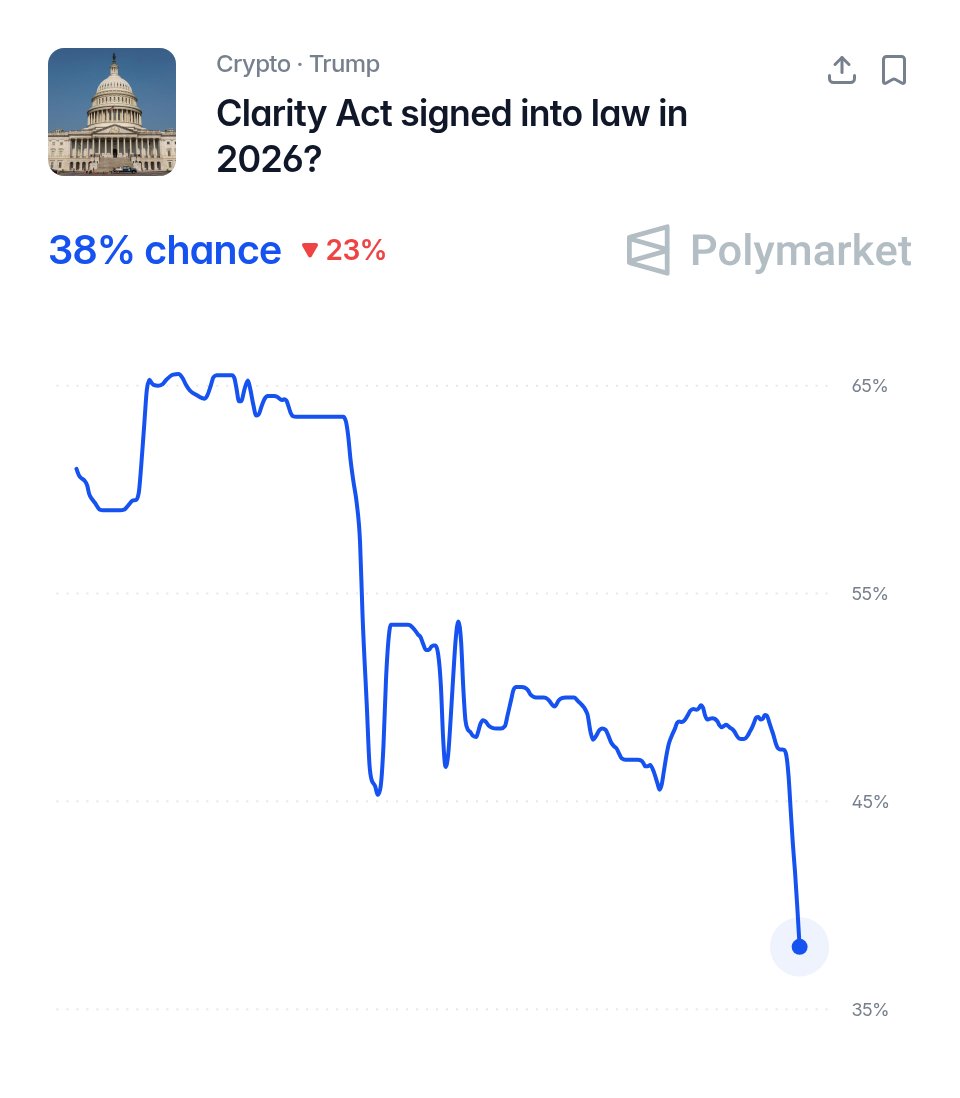
CLARITY Act is back. Senate compromise on stablecoin rewards endorsed by Coinbase, Blockchain Association, CCI.
Even if it clears committee, it still has to reconcile with last year's House version, and the calendar is shrinking fast. Galaxy puts 2026 odds at ~50-50.
But the framework isn't waiting for Congress. March SEC/CFTC interpretive release, April broker-dealer guidance, Atkins' Innovation Exemption — there's enough in place right now to structure properly. founders who wait for legislative certainty will be implementing under someone else's playbook.
The CLARITY Act is back from the dead. After weeks of stalled negotiations, a Senate compromise on stablecoin rewards has emerged, and Coinbase, the Blockchain Association, and the Crypto Council for Innovation have publicly endorsed it. Brian Armstrong's response was three words: "Mark it up."
The compromise preserves activity-based rewards tied to real participation on crypto platforms — what Paul Grewal called "what the bank lobby said they wanted." Bank trade associations are still pushing back, arguing the carve-outs recreate shadow-deposit dynamics outside the prudential perimeter. The Senate Banking Committee has scheduled a markup hearing for Thursday.
This matters more than the headlines suggest. Even if the Senate version passes committee, it still has to be reconciled with the House version from nearly a year ago. The legislative calendar is tight, midterms are approaching, and Galaxy's research desk still puts the odds of 2026 passage at roughly 50-50.
The strategic point I keep making to clients: the regulatory framework isn't waiting for Congress anymore. The SEC and CFTC March joint interpretive release drew the jurisdictional lines. The April broker-dealer staff statement carved out a path for non-custodial interfaces. Atkins' Innovation Exemption signal opened the door for tokenized securities. Each of these is more concrete than CLARITY, and each is actionable today.
For founders, the message hasn't changed: structure for the framework that exists, not the bill that might pass. Entity formation, token classification, registration analysis, custody architecture, AML programs — the work is the work, whether CLARITY clears the Senate this summer, gets pushed to a lame duck session, or slips to 2027.
The teams that move now will set the precedents. The ones waiting for legislative certainty will be implementing under someone else's playbook.
CFTC Chairman Mike Selig told CoinDesk this week that the agency is building AI tools to review crypto registration applications and conduct market surveillance. This is happening because the CFTC has lost more than 20% of its workforce, and AI is filling the gap.
Two takeaways for anyone building in crypto.
First, the application process is changing in real time. Selig said AI will flag incomplete forms, inadequate descriptions, and obvious errors before they ever reach a staff reviewer. Sloppy filings used to mean delays. Now they'll mean automatic rejection. The premium on getting your registration package right the first time just went up significantly.
Second, this is a structural shift in how crypto regulation will be administered. The CFTC is positioning to become the primary US crypto regulator under CLARITY (if it passes), and Selig is signaling that the agency intends to scale through automation, not headcount. That means more rules-as-code, more pattern-matching enforcement, and less room for ambiguity in how filings are structured.
For founders preparing CFTC registrations or anticipating digital commodity exchange/broker registration under CLARITY, the practical implication is clear: build for machine-readability. Clean structure, complete disclosures, no ambiguity. The AI doesn't extend benefit of the doubt.
The other implication is for legal practice itself. If regulators are using AI to review filings, firms that aren't using AI to draft them are operating at a structural disadvantage. The asymmetry won't last long.
SEC Chair Paul Atkins announced this week at the Economic Club of Washington that the agency is finalizing an "Innovation Exemption" — a regulatory sandbox that would let market participants issue and trade tokenized securities on-chain for 12 to 36 months without full registration, subject to volume caps, whitelisting, and periodic reporting.
This is a significant shift. For a decade, the question of how to bring securities on-chain in the US has been answered with enforcement actions. The Innovation Exemption flips the framing — instead of requiring full registration before any tokenized issuance can happen, it creates a defined runway for compliant experimentation under SEC oversight.
The timing matters. RWA tokenization passed $27 billion in April. BlackRock's BUIDL, Amundi's SAFO ($400M raised in three weeks), Legal & General bringing £50B on-chain — institutional issuance is already happening. The Innovation Exemption is the formal permission structure that lets it accelerate without bespoke no-action letters and case-by-case structuring for every issuer.
Two important caveats. First, this is still a political signal — Atkins was clear that his April 21 remarks aren't a binding rule. The text is under White House review. Second, the exemption is bounded — volume caps, whitelisting, periodic reporting, and a 12-36 month window suggest this is a runway to full compliance, not a permanent carveout.
For founders building tokenized securities products, this is the moment to start preparing. The teams that file early under a finalized exemption will set the precedents for everyone who follows. Custody structure, transfer agent arrangements, KYC/whitelisting infrastructure, secondary trading venue registration, ongoing disclosure obligations — these are real questions that need real answers before the rule is final, not after.
The infrastructure for institutional on-chain finance is being built right now. The legal architecture has to keep pace.
Tokenization has Washington's attention.
“We are on the cusp of releasing an 'innovation exemption' to begin facilitating the trading of tokenized securities onchain.”
SEC Chairman Paul Atkins, speaking at the Economic Club of Washington, outlining the regulatory framework coming for tokenized securities.
“I launched Project Crypto to modernize the securities rules and regulations to facilitate markets' moving onchain.”
Washington is no longer debating whether tokenized securities belong in the market. It's writing the rules for them to coexist with the existing legacy financial system.
The CLARITY Act is hanging by a thread. April was a lost month - Senator Tillis is still negotiating with banks over stablecoin yield treatment, and the calendar is shrinking fast as midterms approach.
For an industry that finally got the GENIUS Act across the finish line last summer, the slowdown on market structure is jarring. GENIUS was the easy bill. CLARITY is the harder one - it has to draw the SEC/CFTC jurisdictional line, build a registration regime for digital commodity exchanges and brokers, and reconcile competing visions on decentralization and DeFi. That's why every additional negotiation point compounds.
The practical takeaway for builders: don't wait for the bill. The SEC and CFTC have already moved on their own - the March 17 joint interpretive release on token taxonomy, the April 13 Trading & Markets staff statement on broker-dealer registration for crypto interfaces, and now Atkins' Innovation Exemption signal at the Economic Club this week. Regulators are filling the gap administratively while Congress negotiates. Founders who structure around current agency guidance will have a smoother path than those waiting for legislative certainty that may slip into 2027.
The era of "we're waiting on Congress" as a regulatory strategy is over. There's enough framework in place right now to make real structural decisions - entity formation, token classification, registration analysis, custody architecture. The teams treating CLARITY's delay as an excuse to defer compliance work are going to be caught flat-footed when it does pass, or when an agency comes knocking in the meantime.
The regulatory picture is coming into focus faster than most people expected. GENIUS Act is signed and in implementation - FinCEN, FDIC, OCC, and Treasury all dropped proposed rules in the last two weeks alone. the July 2026 deadline for final rulemaking is real.
If CLARITY passes the Senate, we'll have the first comprehensive federal framework covering both stablecoins and digital asset market structure. that's a massive shift from "regulation by enforcement" to actual rules of the road.
For founders building in crypto right now, this is the moment to get your house in order. securities classification, money transmission analysis, custody structure, issuer licensing - these aren't theoretical questions anymore. the compliance clock is ticking and the rules are being written in real time.
This is exactly the work we do at @gosailaw, helping crypto companies navigate the transition from regulatory ambiguity to actual frameworks. the teams that move now will have a structural advantage over those scrambling to comply after the deadlines hit.
Congress has worked tirelessly to give builders the rules they need.
It’s time for members of the Senate on both sides to hammer out the final details of the Clarity Act.
When rules are defined, both consumers and entrepreneurs win.
The GENIUS Act unlocked stablecoin innovation.
The Clarity Act can do the same across crypto.
two states recognizing DUNAs in a matter of weeks. the legal infrastructure for DAOs is finally catching up to the technology.
for anyone building onchain - this matters more than most people realize. without entity recognition, DAOs have unlimited joint and several liability for every member. DUNAs solve this by giving DAOs a legal wrapper that provides limited liability, the ability to enter contracts, and a path to regulatory compliance without sacrificing decentralization.
the real question now is whether other states follow, and whether founders start structuring around DUNAs vs. the traditional foundation + Cayman wrapper model. for many projects, a US-domiciled DUNA could be a cleaner, cheaper, and more defensible structure than the offshore stack.
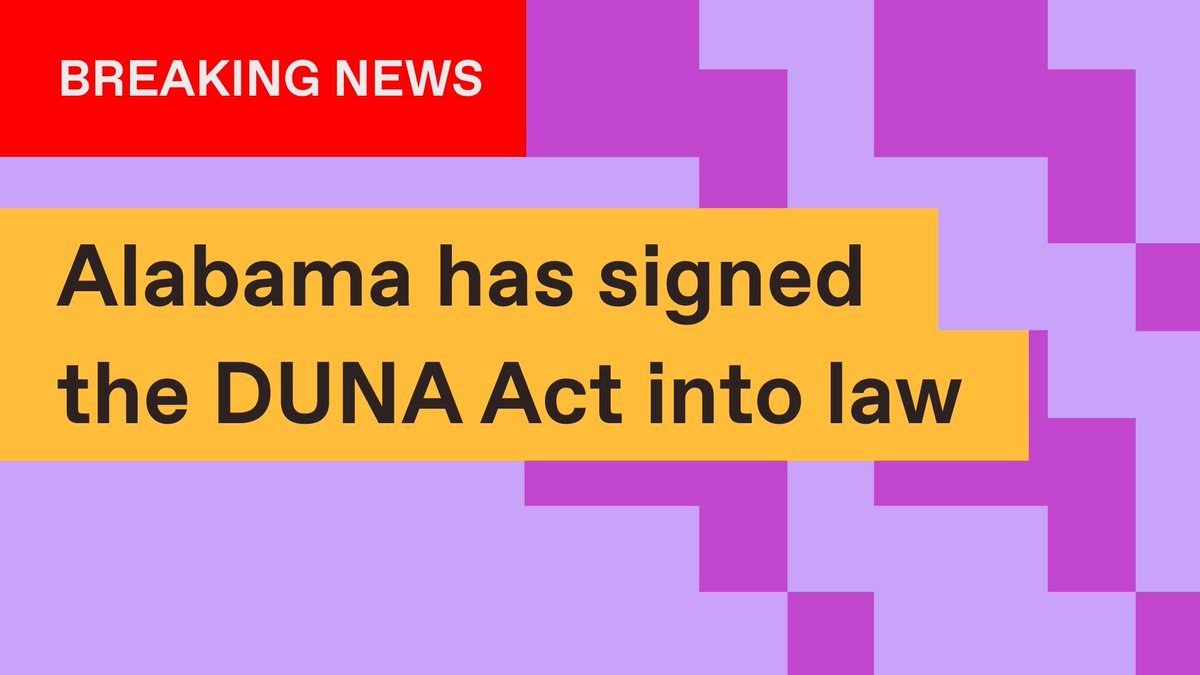
BREAKING NEWS: Alabama has signed the DUNA Act into law.
It becomes the second state after Wyoming to grant DAOs legal status and limited liability protections.
we use Claude across almost everything we do. this Word integration with tracked changes is the kind of thing that actually changes daily legal work. not flashy demos, but AI that lives where the work happens. redlines, drafting, revision cycles.
Claude for Word is now in beta.
Draft, edit, and revise documents directly from the sidebar. Claude preserves your formatting, and edits appear as tracked changes.
Available on Team and Enterprise plans.
this is important because it's not ChatGPT this time — it's Westlaw's CoCounsel. a purpose-built legal AI tool from the most established legal research platform in the industry. and it still hallucinated quotes and misrepresented holdings.
the problem was never which AI tool you use. it's whether you have a lawyer who actually reviews the output. the 6th Circuit is saying what every court will eventually say: AI can draft, but the lawyer signs. if you file it, you own it.
this is exactly why the AI-native law firm model matters. at @gosailaw we build AI into every workflow, but the entire system is designed around lawyer-in-the-loop verification. the firms that win aren't the ones avoiding AI. they're the ones building infrastructure that makes AI output reliable before it ever touches a court filing.
the sanctions here are career-altering: no compensation, removed from the case, referred to disciplinary proceedings, opinion sent to the bar. and it all started with a file named "CoCounsel Skill Results." don't let your AI tool name your briefs.
More lawyers misusing AI (Westlaw's CoCounsel):
6th Cir. opinion today focuses on criminal defense attorney who "used artificial intelligence to draft the briefs in this case and then filed them without properly verifying the cited legal authorities."
"The first tell" that AI use was in play was the file name of the principal brief: "CoCounsel Skill Results."
"CoCounsel is the name of Westlaw’s internal artificial-intelligence platform."
"Further suspicions arose" when the briefs included three fake quotations and several misrepresented case holdings.
Lawyer admitted he directed a staff member to upload district court docs to CoCounsel to create a first draft of the brief.
He said this was his first time using Westlaw CoCounsel.
Court notes that the fact that the cases are real, and only the quotes were fake, "does not absolve him."
"The fact remains that Howe committed inexcusable transgressions during the appellate phase of this case. And that misconduct had consequences."
Sanctions:
-Lawyer will not be compensated under Criminal Justice Act for time spent on the appeal.
-Referred to Chief Judge of 6th Cir. to consider disciplinary proceedings.
-Opinion to be served on E.D. Ky. chief judge and clerk and Disciplinary Clerk for Kentucky Bar Association.
-Lawyer removed from further representation in the case.
At what point does a court disbar someone for AI hallucinations instead of just fining them?
We're at 1,200+ cases. $109k sanctions. Entire cases dismissed. State supreme courts grilling attorneys on the record. And the numbers are still accelerating.
We're three years past Mata v. Avianca and the sanctions are getting bigger, not smaller. The answer was never "don't use AI." The answer was always "build AI that's actually designed for legal work." The market is sorting this out the hard way.
https://t.co/c97eOUtCbv