This guy quietly built the best physics textbook on the internet, and he gives it away for free.
His name is Bartosz Ciechanowski.
He is an ex-iOS engineer who writes interactive articles about physics, math, and engineering as a weekend hobby.
The site is called https://t.co/o0y0n63P48.
Open the article on the Mechanical Watch. Drag the watch to spin it. Pull a slider and the case peels away so you can look inside. Wind the mainspring by hand. Slow down time and watch the escapement click, the balance wheel breathe, the date wheel turn.
Nothing is a video. Everything is a live 3D simulation running in your browser tab.
He has done this for:
→ The Moon and its tides
→ GPS satellites
→ Gears and mechanical watches
→ The internal combustion engine
→ Bicycles and how they stay upright
→ Cameras, lenses, and light
→ Sound waves
→ Airfoils and how planes fly
Every article is thousands of words long with dozens of hand-coded interactive diagrams.
He writes them alone in his spare time. He publishes only a few per year. In his own words, he wants to keep the content accessible to everyone without ads or paywalls.
No publisher. No university. No company behind him.
One person is quietly shipping better science education than most universities charge tens of thousands a year for.
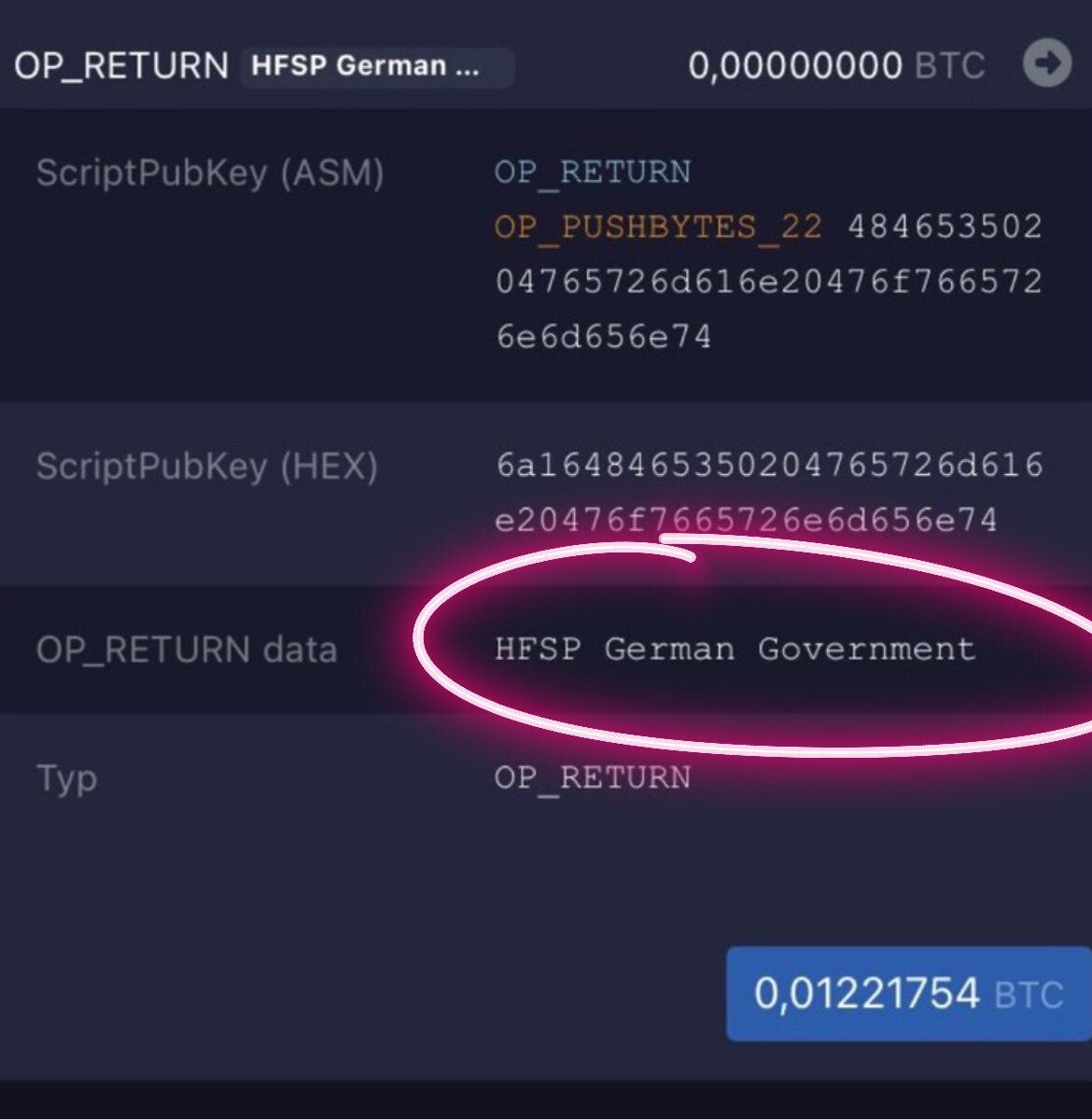
After Germany sold ALL its bitcoin, somebody sent them a $1.87 transaction, inscribing the message: “HFSP German government” 😂 👏
Germany's Bitcoin would be worth $4.86 BILLION today
"DEPECHE MODE: M"
The cinematic experience from award-winning Mexican filmmaker Fernando Frias is coming to cinemas and IMAX worldwide for a limited time beginning Tuesday, October 28.
Tickets go on sale September 17. Visit https://t.co/MjXpFV5XA0 for more details.
#DEPECHEMODEM
@NeilJacobs You think Bitcoin is just digital gold? It's the red pill, Neo. Swallow it, and you'll see how deep the rabbit hole of fiat illusion goes. Freedom awaits those who hodl. The choice is yours.
As someone who grew up with Knight Rider and K.I.T.T., I couldn't be more excited about the Grok integration with Tesla.
The future should look like the future
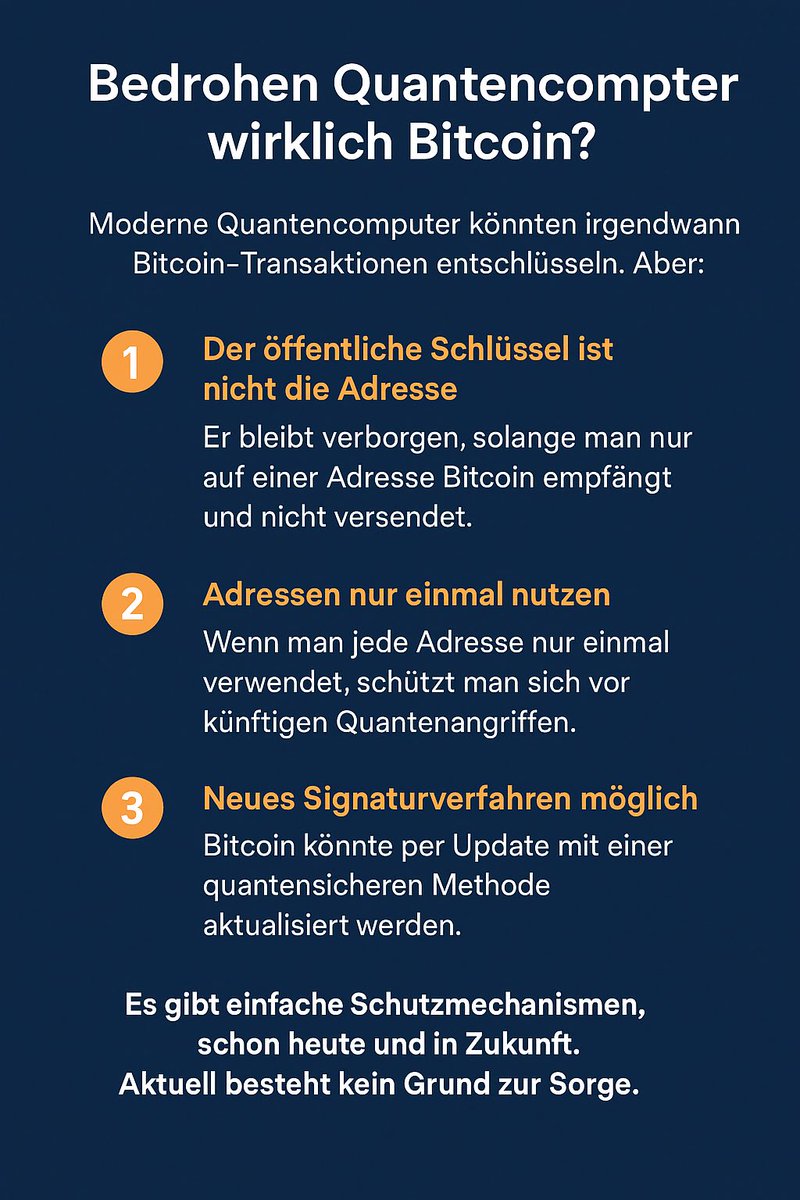
🔐 Bedrohen Quantencomputer wirklich Bitcoin?
Frank Thelen hat vor einer „echten Gefahr“ gewarnt:
„Fortschritte im Quantencomputing bedrohen die Verschlüsselung von Bitcoin – und es gibt keine Roadmap.“
Diese Diskussion ist wichtig – aber sie braucht Fakten. Hier kommt eine verständliche Einordnung – ohne Hype, ohne Tech-Blabla:
⸻
🧩 Was genau ist das Problem?
Bitcoin basiert auf Kryptografie – also auf mathematischen Verfahren, die sicherstellen, dass:
- nur du deine Coins ausgeben kannst (per digitaler Unterschrift),
- niemand Transaktionen manipulieren kann.
Ein Teil davon ist das sogenannte ECDSA-Verfahren – es erzeugt aus deinem privaten Schlüssel (quasi deinem Tresorschlüssel) einen öffentlichen Schlüssel. Dieser wird wiederum zu einer Adresse, über die du Bitcoin empfangen kannst.
Der Knackpunkt:
Ein sehr starker Quantencomputer könnte irgendwann den öffentlichen Schlüssel nehmen und daraus den privaten zurückrechnen – also deinen digitalen „Tresor“ knacken.
⸻
🔍 Aber: Ist das heute schon ein Risiko?
Nein. Und hier ist warum:
1.✅ Der öffentliche Schlüssel ist nicht die Adresse.
Deine Bitcoin-Adresse ist ein stark verschlüsselter Fingerabdruck des öffentlichen Schlüssels.
Solange du nur empfängst, aber nie sendest (oder jede Adresse nur einmal nutzt), bleibt dein öffentlicher Schlüssel unsichtbar – und damit auch nicht angreifbar.
2.✅ Nur wenn du von deiner Adresse aus Coins verschickst, wird der öffentliche Schlüssel sichtbar – und damit theoretisch angreifbar.
3.✅ Aber selbst dann: Ein Quantencomputer müsste die Verschlüsselung in wenigen Minuten knacken, bevor deine Transaktion im nächsten Block bestätigt ist.
Das ist mit heutiger Technik meilenweit entfernt. Selbst Google, IBM und Co. sind noch nicht ansatzweise so weit.
⸻
🛡 Wie kann man sich schützen?
Ganz einfach:
- Verwende jede Adresse nur einmal. Das machen viele Wallets automatisch.
- Damit bleibt dein öffentlicher Schlüssel unsichtbar – selbst für künftige Quantencomputer.
- Und: Die Bitcoin-Community kann und wird ein neues, quantensicheres Verfahren einführen – wenn es nötig wird.
⸻
🧠 Fazit:
- Ja, Quantencomputer sind ein Thema – aber ein langfristiges.
- Nein, Bitcoin ist nicht schutzlos – schon heute gibt es einfache Schutzmechanismen.
- Und ja, es ist möglich, das Signaturverfahren zu aktualisieren – das braucht Zeit und Planung, aber keine Panik.
⸻
Bitcoin wurde gebaut, um langfristig zu überleben.
Wenn wir sachlich bleiben, zuhören und weiterentwickeln, dann schafft es das auch.
⸻
💬 Was denkst du: Wie realistisch ist das Szenario?
Und wie offen ist Bitcoin wirklich für Veränderungen, wenn es darauf ankommt? 🔐
Hat dir der Beitrag geholfen? Dann teile und interagiere, damit es mehr Menschen hilft 🫶🏼