In the 1960s, a direct flight to Neptune would have taken nearly 30 years. That was longer than most spacecraft could survive. Reaching the outer planets seemed almost impossible.
But one engineer, working quietly with a pencil, found a way around this problem.
Gary Flandro, a scientist at NASA’s Jet Propulsion Laboratory, was asked to study how spacecraft might travel to the distant planets despite the limits of rocket technology at the time. Fuel was scarce, and engines were not powerful enough for such long journeys.
Flandro turned to a clever idea from physics called a gravity assist, sometimes known as a planetary slingshot. The concept is simple in principle. When a spacecraft passes close to a large planet, the planet’s gravity pulls it in and then flings it forward. In doing so, the spacecraft steals a tiny bit of the planet’s motion around the Sun. The planet slows down by an amount too small to notice, but the spacecraft gains a huge increase in speed without using any fuel.
With only paper, pencil, and the limited computers of 1965, Flandro calculated the future positions of Jupiter, Saturn, Uranus, and Neptune. What he found was remarkable. In the late 1970s, these giant planets would line up in a rare formation. This alignment would allow a single spacecraft to travel from one planet to the next, gaining speed at each step.
This opportunity appears only once every 176 years.
Flandro showed that a spacecraft could use Jupiter’s gravity to reach Saturn, then use Saturn to reach Uranus, and finally use Uranus to reach Neptune. This chain of boosts would cut the travel time to Neptune from about 30 years down to just 12.
This elegant piece of mathematics changed everything.
It became the foundation for the Voyager 1 and Voyager 2 missions, both launched in 1977. Thanks to this precise planning, the two spacecraft sent back the first close images of the outer planets. They later continued their journey beyond the solar system, becoming the first human-made objects to enter interstellar space.
All of it began with a simple insight, worked out by hand, that turned an impossible journey into a reachable one.
💡 Complex questions, clear answers — basically, what does recognizing the State of Palestine mean?
🕊️ Former Israeli PM Ehud Olmert & former Palestinian FM Nasser Al-Qidwa explain the key steps, one year after the #ParisCall for the Two-State Solution.
#2People2States1Future
Delighted to host the GEO reception.
🇯🇵 reaffirms its strong commitment to the GEO Post-2025 Strategy and to advancing #EarthIntelligenceForAll — especially turning Earth observation data into practical action for resilience and disaster risk reduction. 🌏
@GEOSecretariat
Thank you, Japan, for bringing the GEO community together on the occasion of the 2026 GEO Symposium and GEO-21 Plenary, creating space to strengthen the partnerships that make Earth Intelligence for All possible. 🇯🇵🤝🌏
@mextjapan@JAXA_jp
🕊️ "Paris can send out strong messages to ensure that the voice of peace is heard" One year after the #ParisCall, we take stock of the advances made and the road still ahead with Yasmina Asarguis (@j_jaures ).
#2People2States1Future
Did you know?
As one of the world's largest users of satellite data, @ECMWF ingests over 800 million observations every day into its forecasting system. At the GEO-21 Plenary, ECMWF reaffirmed its commitment to working with GEO and @EuroGEO_eu, highlighting the value of #EO data in its transformation into decision-ready information.
Continuous investment in #EarthIntelligenceforAll is essential to build a resilient future.
📖 https://t.co/IfiIjHq8Iq
🕊️ Today, as we mark the one-year anniversary of the Paris Call for the Two-State Solution Conference, we pay tribute to Ofer Bronchtein, who passed away on May 18th.His words remain with us: "More and more Israelis and Palestinians are seeking another path." His work lives on.
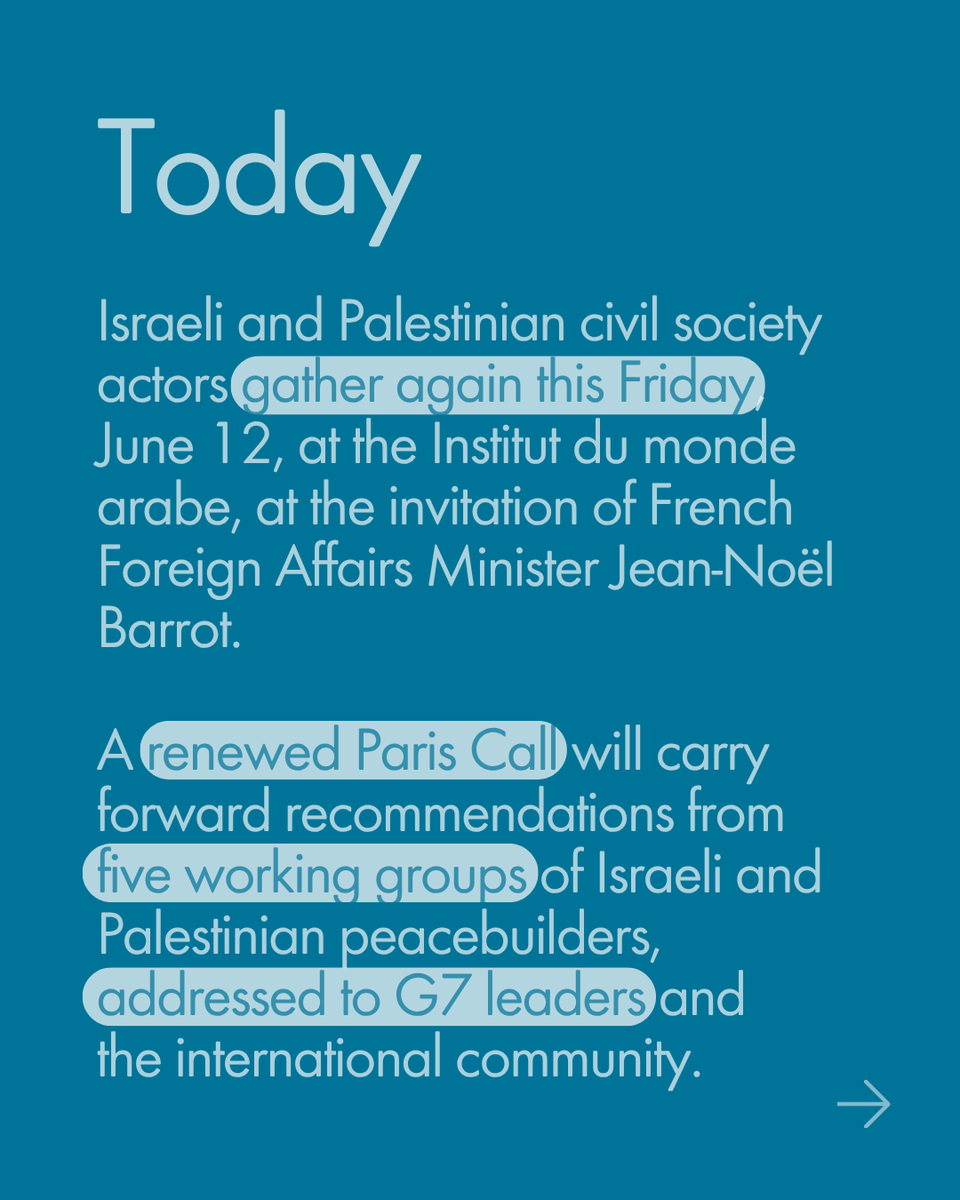
🕊️One year after the #ParisCall for the Two-State Solution, Israeli and Palestinian civil society actors gather again in Paris today.
👉Discover “Building a Shared Future for Israel-Palestine”, a project that was showcased at the latest edition of our annual Forum.
#2Peoples2States1Future @francediplo@PrinciplesPeace@ALLMEP@lesguerrieres
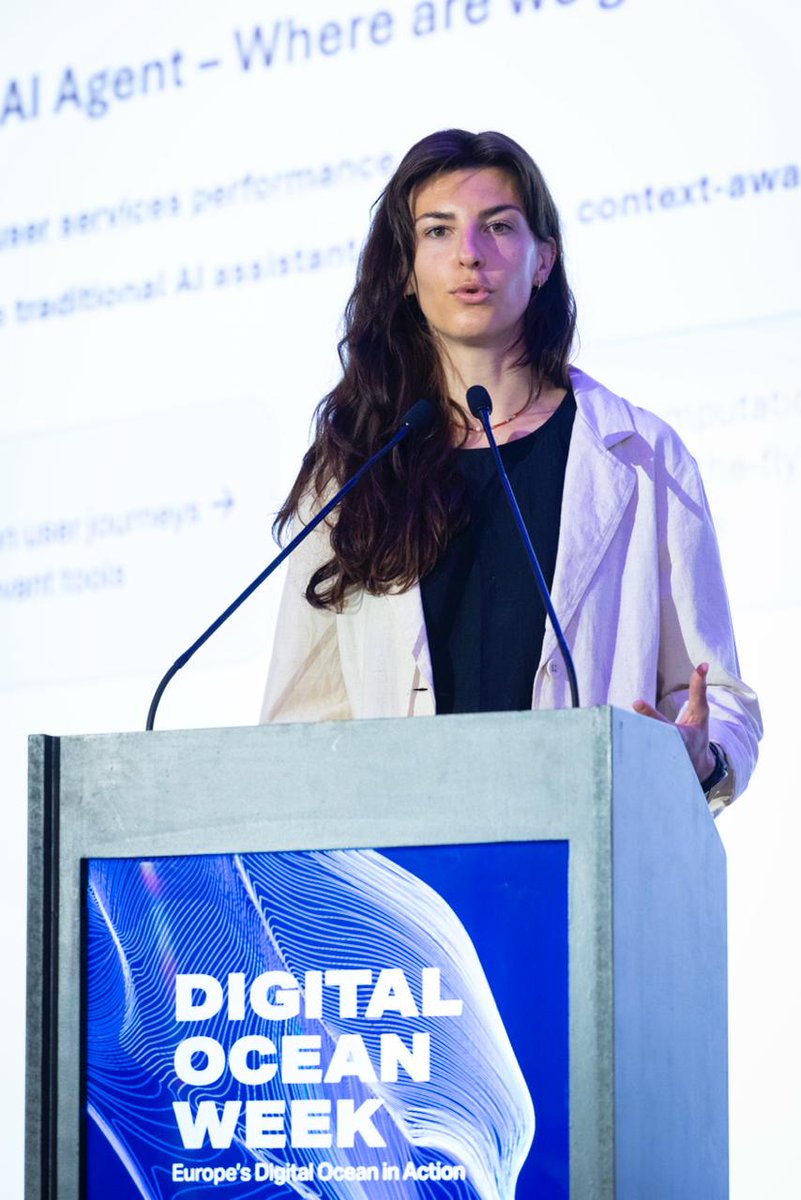
The second day of the #AIOceanForum opened with the fourth session, focusing on AI agents and new interfaces to access ocean knowledge.
#DigitalOceanWeek
The interesting part of agentic package security is that risk often appears in the gap between components.
A gateway setting.
A plugin permission.
A local file path.
An MCP server.
A skill instruction.
None of them may look severe alone.
The chain is where the risk appears.
That is why isolated package review is not enough.
See what your OpenClaw setup exposes-> https://t.co/JQgGWCz5a6
🕊️One year after the #ParisCall conference, Israeli & Palestinian civil society actors gather again in Paris today.
A renewed Call, shaped by peacebuilders, will bring concrete recommendations to #G7 leaders and the international community.
#2Peoples2States1Future@francediplo
Session #1 of the #AIOceanForum focused on the transformative role of AI in ocean modelling, drawing on insights from representatives of research institutions & the industry.
Mercator Ocean presented GLONET, its neural network-based ocean forecasting system.
#DigitalOceanWeek
Registration is now open for the 10th #AfriGEO Symposium, organized by @NASRDA_Official and @AfriGE0.
📍 Abuja, Nigeria
📅 5–8 October 2026
Join policymakers, scientists, and practitioners to advance #EarthIntelligenceforAll for climate resilience, sustainable development, biodiversity, and disaster risk reduction across Africa.
🔗 https://t.co/3X5Z8AySi7
From @NECCTON to BG4Sea, Session #2 of the #AIOceanForum at #DigitalOceanWeek explored how AI is advancing the observation and modelling of marine ecosystems.
Exciting week with @LDNTechWeek! Had a great time on stage with Helen Czerski to discuss the immediate relevance of geospatial AI – connecting AI with real world applications! The intersection of space and AI is moving faster than ever. 🚀🛰️
Session #3 of the #AIOceanForum gave startups and companies a stage to showcase practical AI applications for the ocean, from ship routing and offshore wind farms to preventing vessel–whale collisions.
#DigitalOceanWeek
🧒💻 On June 15, under France’s #G7 Presidency label, the Paris Peace Forum, https://t.co/LYvqLfqhkd & the @HumanTechF convene a high-level event to launch a Youth Manifesto and present new science on how to build beneficial GenAI for children.
#AI#Children#Diplomacy
The current #AIOceanForum roundtable is exploring the integration of AI into Ocean Modelling.
The discussion brings together experts in oceanography and advanced technologies, bridging Earth observation and artificial intelligence.
#DigitalOceanWeek#AIforOcean