@backnotprop@t3codes Thanks, I like the "guided review". Will give it a look!
On another note, I just read an article that boiled the concept down to one neat line:
"Don't wait for your agents. Let them wait on you."
Great Intro! 😄
I’ve also been reading about these Chinese “transfer station” proxies that supposedly pool API keys and resell cheaper access (at big discounts). Not sure how much of the recent leaks are feeding into that vs pure distillation, but it seems like another channel these keys can end up in.
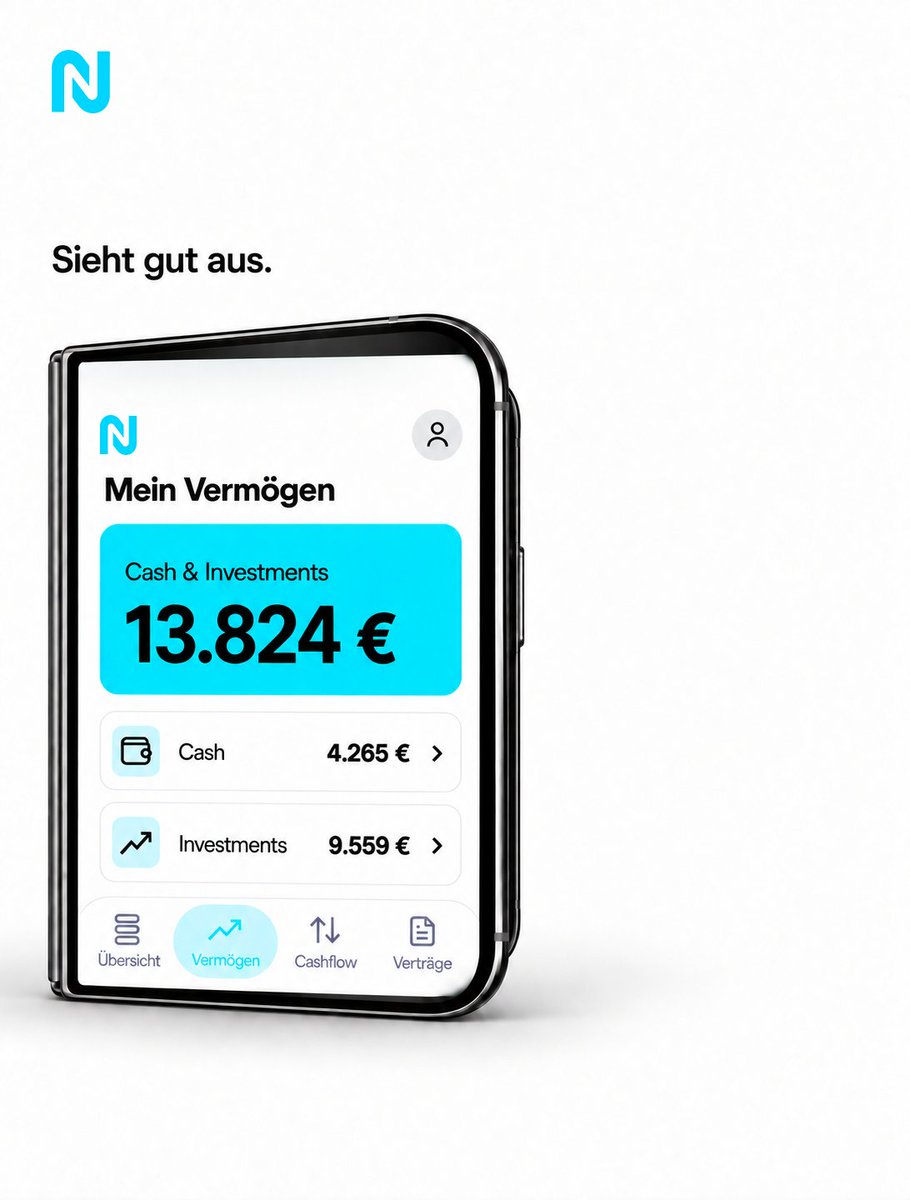
Falls Du noch suchst: Genau dafür haben wir nobank gebaut.
Du verbindest Deine Konten, wir führen die Umsätze zusammen, kategorisieren Deine Einnahmen und Ausgaben und zeigen Dir erkannte Verträge sowie Deinen aktuellen Monatsüberschuss.
Wir sind gerade erst live gegangen!
Hier ein kurzer Einblick 👇
https://t.co/2JdtysKEpK
It also patiently waits for the pull request review and validations to pass.
The code review is done by a Claude action.
Still need to justify the Claude subscription!
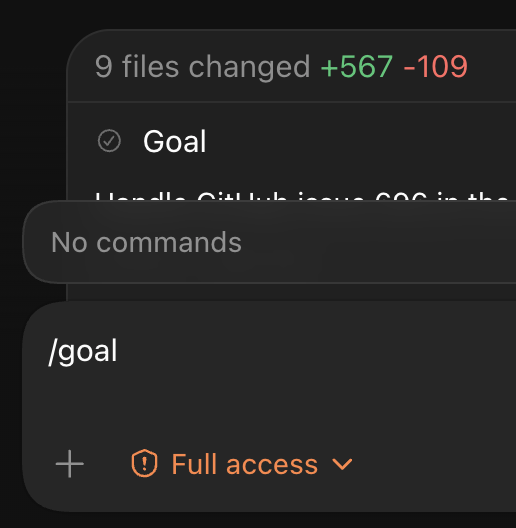
/goal seems to be working in the Codex App in addition to the documented experimental feature in Codex CLI.
Just wonder why the command is not highlighted / known.
It´s truly working without a break.
Even ignoring my human-in-the-loop instruction (plan -> review -> ok -> implement) when working on a GitHub issue 😅
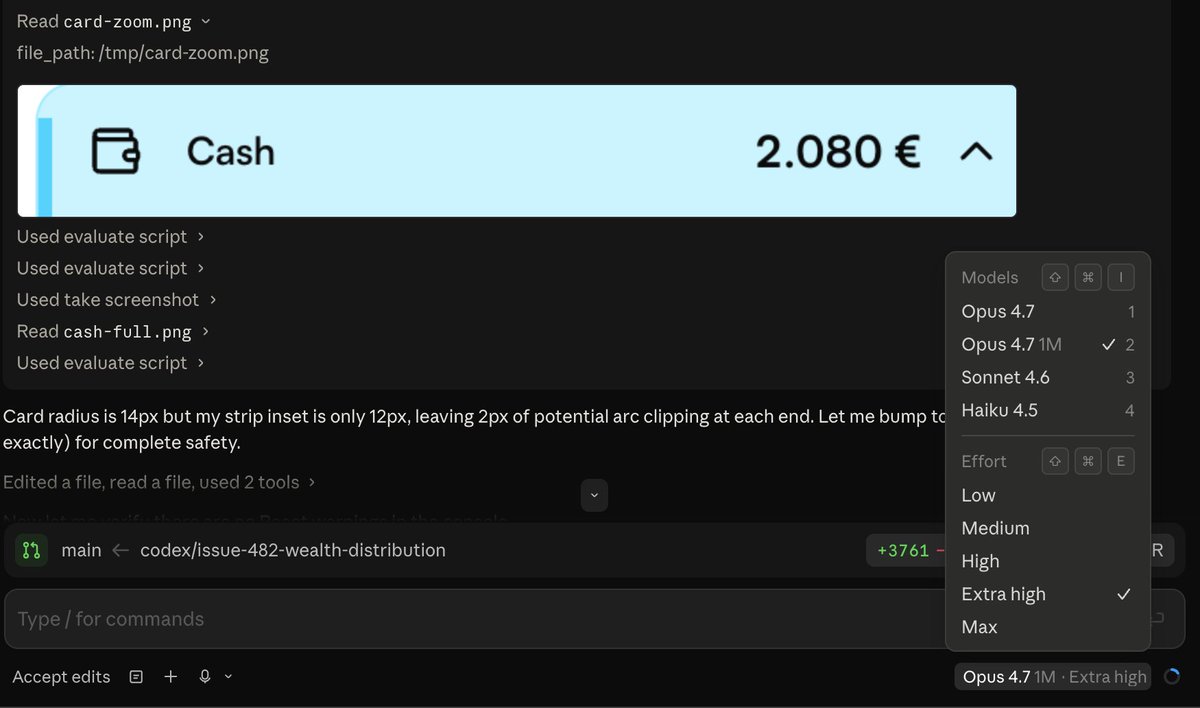
It´s still on it, testing the just developed feature in the browser with playwright, taking screenshots while it´s working towards its goal.
@benedictk__ Is this known to be unknown in the Codex App?
This resonates with me:
"In practice, product engineering means asking what user problem the task is really solving, defining success before implementation, naming the constraints that must not be violated, identifying who could be harmed or confused by the change, distinguishing measurable improvement from real improvement, and planning rollout and rollback before shipping"
Currently doing:
- WHY: ask which exact problem it solves for the user
- WHAT: define acceptance criteria on user stories (ai uses them to test against)
- HOW: name the hard rules, map the blast radius
- WHEN: plan rollout and rollback before shipping
I would also add:
LOOP: close the feedback loop: ai verifies visually + via tests, real users confirm
@kentcdodds "Taste, the last redoubt, fell when the models started A/B testing themselves against millions of users in real time and updating their own weights based on what shipped."
I did just that yesterday. Spinning up a beefy Hetzner 48c instance for some ML training.
It lets you easily create a box, deploy the code, run the training, get the model, shut the box down to save money.
A `manage .sh` script does all the heavy lifting: Tailscale VPN (no exposure to the public internet) and full reproducibility at any given time.
It runs the `hcloud` CLI under the hood.
Several cross-reviews between Claude Code and Codex. Can be easily used for other projects or regenerated for specific architectures.
It sets up Supabase, a FastAPI backend, a web app, and a training server, which is itself connected via a local private network. Total setup deployed in less than 5 minutes from scratch.