Building Solen in public: turning Shopify visitor behavior into tested store improvements. Looking for a technical cofounder.
Strategy consultant / Skema BS.
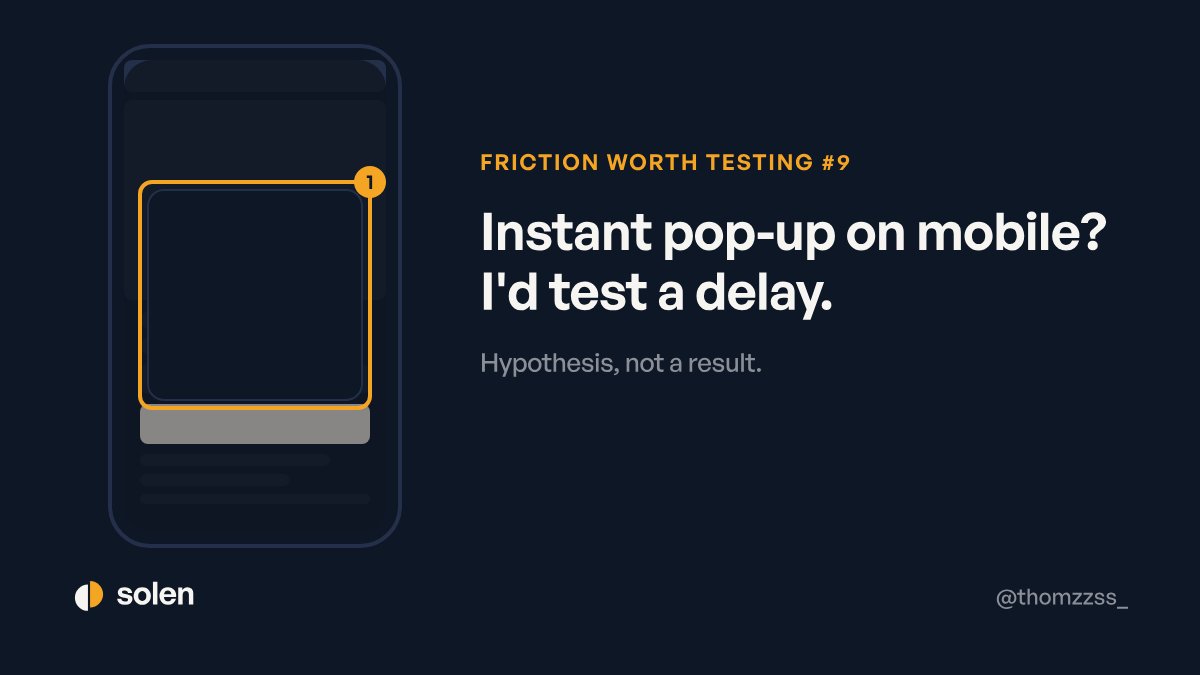
Shopify friction worth testing #9:
Email pop-up firing in the first seconds on mobile.
Hypothesis: it interrupts visitors before they see the product.
Test: trigger it on scroll depth or exit intent instead.
Metric: bounce rate, signups, conversion.
Uncomfortable truth: many small stores don't have enough traffic to A/B test every idea.
That's not a reason to stop testing. It's a reason to test fewer, bigger changes, with one primary metric.
Everything Solen recommends gets reviewed by me before a merchant sees it.
Not scalable. Intentional.
Every correction I make is a line in the spec of what the product needs to learn.
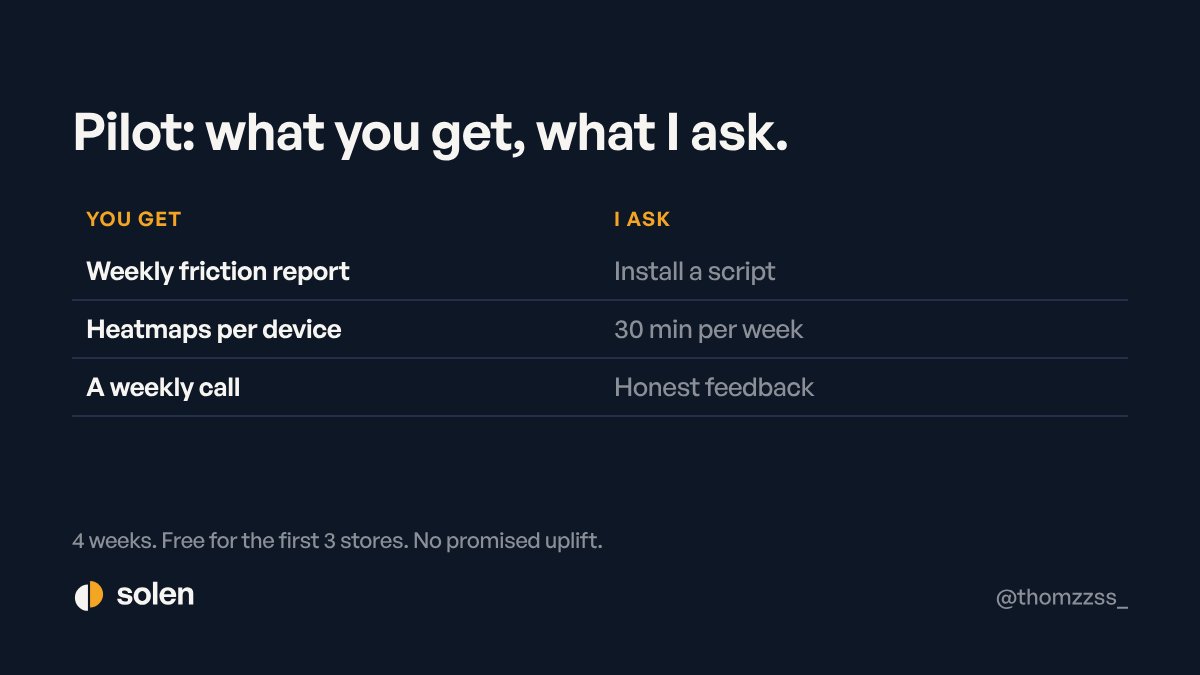
Pilot offer I'm testing:
4 weeks, weekly report of the frictions I'd prioritize, heatmaps per device, a weekly call.
In exchange: install a script, 30 min/week, honest feedback.
Free for the first 3 stores. No promised uplift.
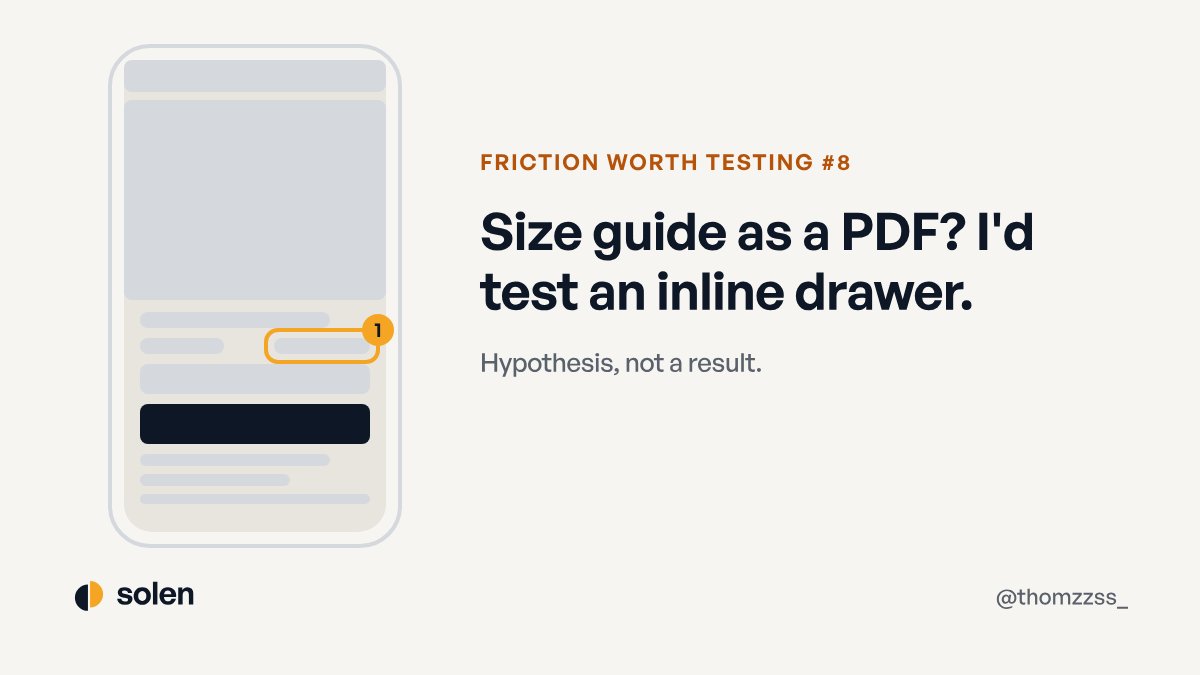
Shopify friction worth testing #8:
Size guide opens a new page or a PDF.
Hypothesis: shoppers leave the flow and don't come back.
Test: inline size guide in a drawer.
Metric: add-to-cart rate on apparel product pages.
Why Europe first for Solen, not the US:
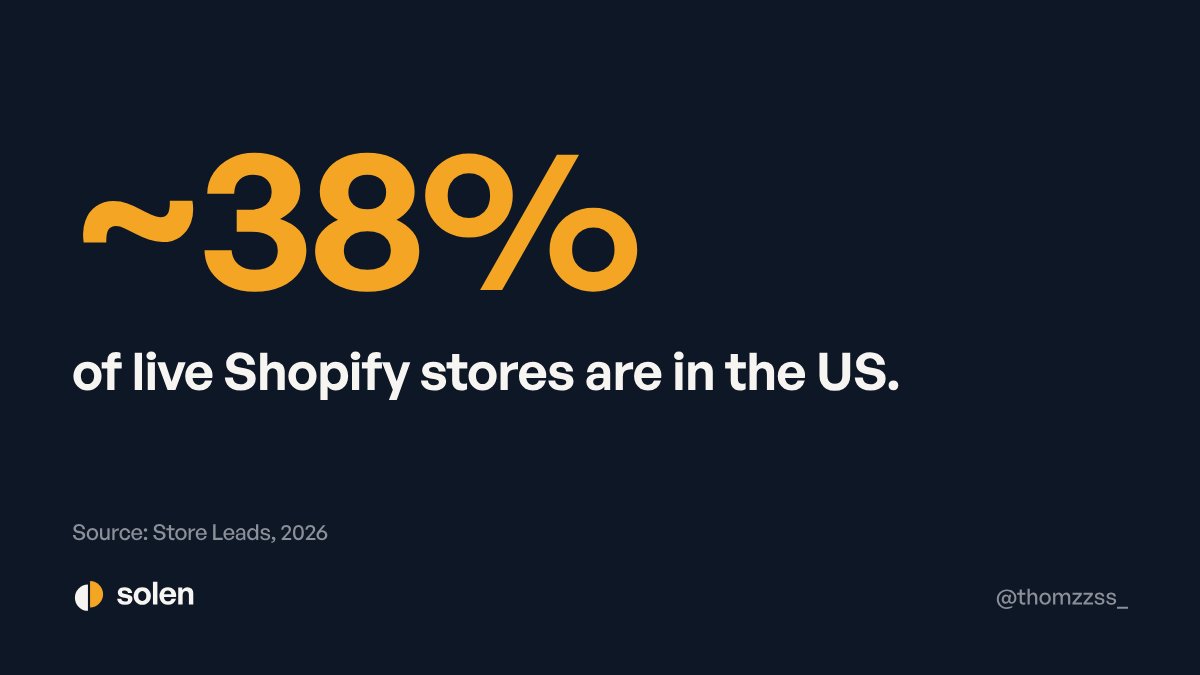
The US has ~38% of live Shopify stores. But I'm a solo founder, French-speaking, zero budget.
Where I learn fastest beats where the market is biggest. For now.
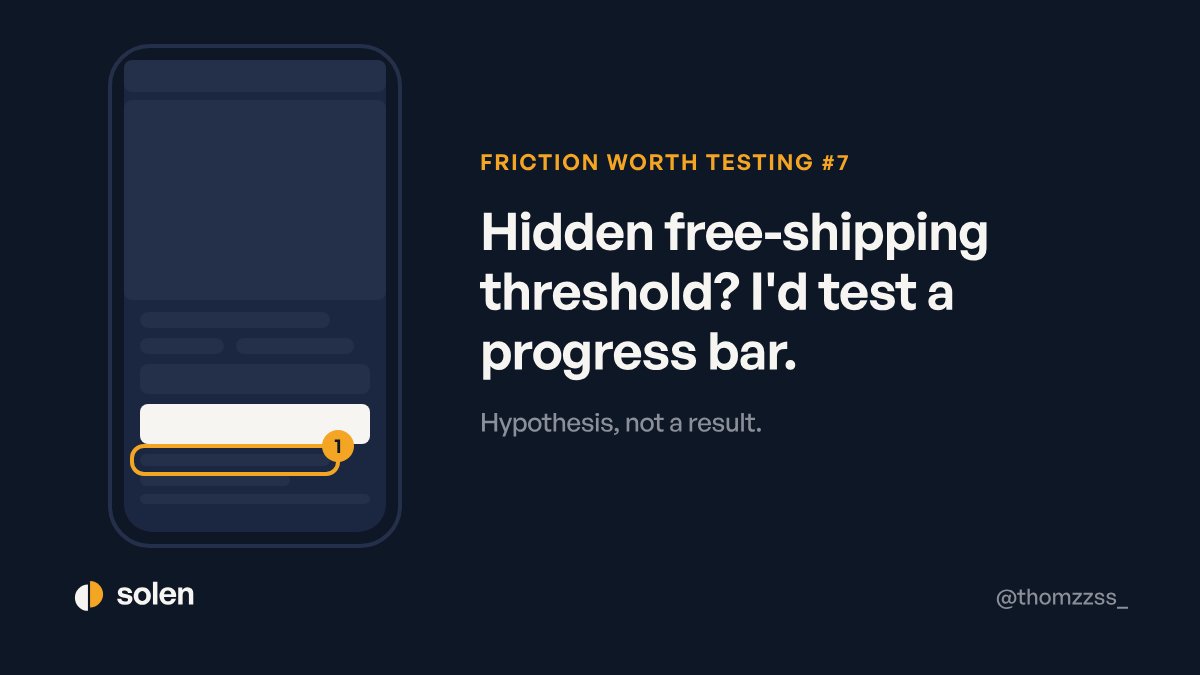
Shopify friction worth testing #7:
A free-shipping threshold nobody sees until the cart.
Hypothesis: showing progress ("$12 away from free shipping") nudges order size.
Test: progress bar in the cart drawer vs none.
Metric: average order value.
So what replaces a viral badge for an invisible product?
My bet: public audits. Each one shows the thinking, starts a conversation, and sometimes becomes an interview.
We'll see if the bet holds.
I studied how Tally reportedly grew to millions in ARR, bootstrapped.
Core loop: a "Made with Tally" badge every respondent sees.
That loop doesn't transfer to Solen. Optimization is invisible to shoppers.
No badge possible, unfortunately.
Things that should always stay human, in my view:
– prices
– promotions
– checkout
– legal copy
– core branding
Software can suggest. A person decides.
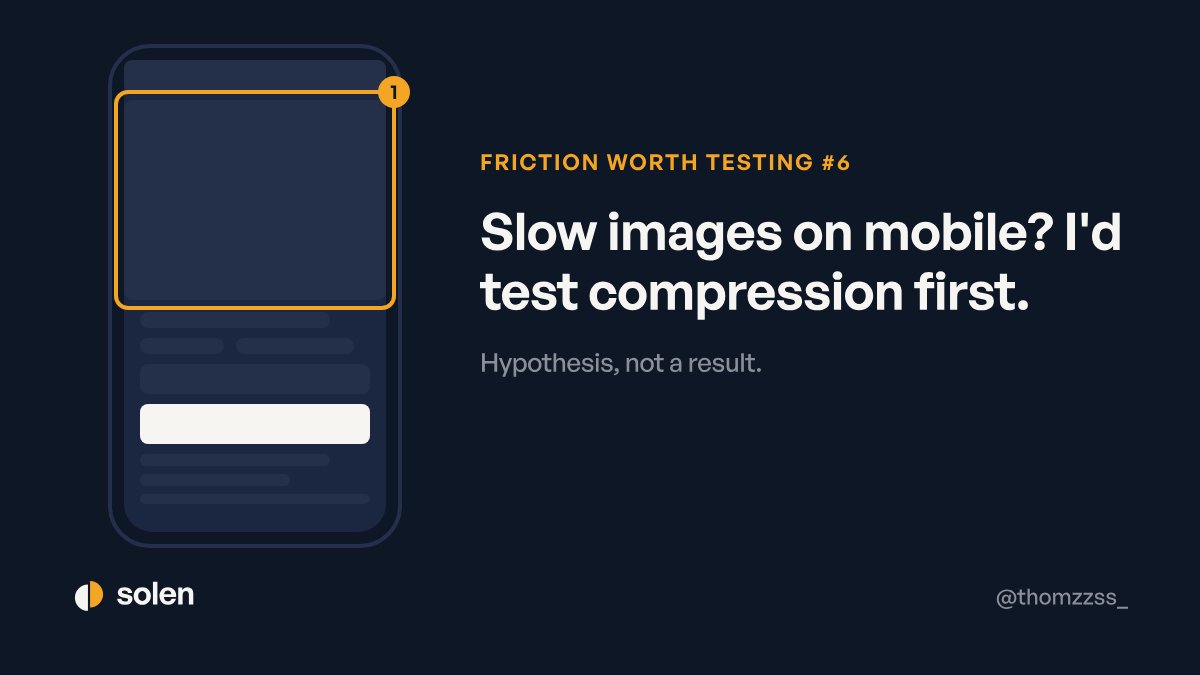
Shopify friction worth testing #6:
Heavy product images that load slowly on mobile data.
Hypothesis: some visitors bounce before the page is usable.
Test: compressed images, lazy-load below the fold.
Metric: mobile bounce rate on product pages, load time.
Something I'm unsure about: the traffic threshold.
I use 10k visitors/month as a working filter for interviews. It's not a statistical rule.
Below what traffic does behavior analysis stop being useful? Open question.
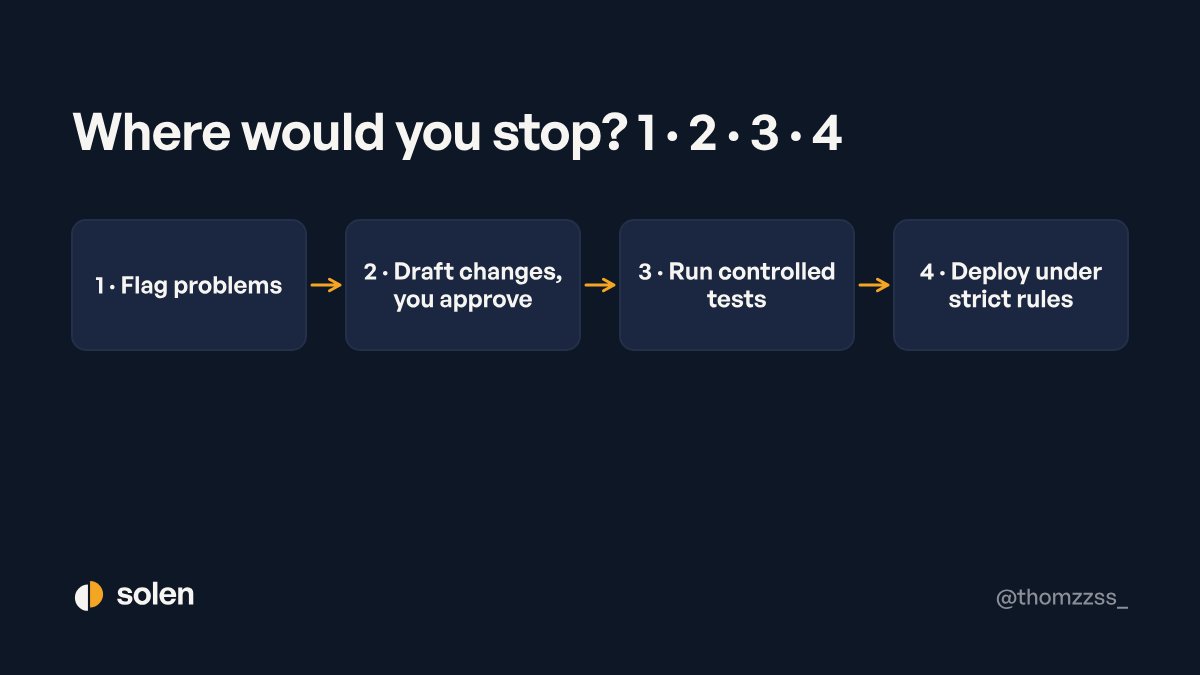
Autonomy ladder I'm testing with merchants:
1. Flag problems
2. Draft changes, you approve
3. Run controlled tests
4. Deploy under strict rules
Where would you stop? Reply with a number.
Solen v0 architecture, no magic:
tracking script → Express API on Vercel → Supabase events table → heatmap + LLM analysis endpoints
Simple on purpose. The hard part isn't the stack, it's knowing what to recommend.
Shopify friction worth testing #5:
Return policy buried in the footer.
Hypothesis: first-time buyers hesitate without it.
Test: one line near the buy button stating the actual policy.
Metric: conversion of new visitors.
Week 1 of posting 3x/day, building my Shopify app.
Followers: 54 → 86
Impressions: 1.3K
Replies: 30
Store owners interviewed: 0
The replies taught me more than the views.
Week 2 goal: 5 store owner conversations.