Nigerian fuel marketers are increasingly importing refined petroleum products originally produced by the Dangote Petroleum Refinery through the offshore ship-to-ship (STS) trading hub in Lomé, Togo, in a growing trade pattern...
https://t.co/5EyAX3bOPv
@BusinessDayNg In case you don't understand what is going on...
So it's cheaper to buy what was refined right under our noses from outside the country... This is crazy!
The very first time I was arrested was in 1984. I was 17. It was during a #FreeSouthAfrica demonstration in front of the South African embassy in Washington, DC. There were many of us, hundreds maybe, but some had agreed ahead of time that they would defy police orders and breach the line. About 10 of us, arm in arm, rocking left to right, singing 🎶 We Shall Overcome 🎶
We heard the first police warning, then the second, then the final warning (my own case was a bit complicated but that’s for another day). We were then handcuffed and taken into custody. Despite the circumstances, and the risk to my future, I was incredibly proud to stand in solidarity with my brothers and sisters from Mandela’s country. He was still in prison and the ANC was a “terrorist organization.”
When the end of Apartheid came, Mandela freed, I felt so much optimism for the future of South Africa and for all of our future as Africans, as it felt so intrinsically linked.
Now, I wonder, where did it go wrong? When did so many South Africans develop this hatred for other Black people like them, just because they happened to be born across a border created by the White man? I don’t have the answer. I understand that the promise of a free South Africa has never truly come to fruition. The ANC that led the movement to freedom has not shown the same success in governing.
I don’t regret supporting the anti-apartheid movement. It was the right thing to do, and I would do it again. I only hope there can be some real introspection in South Africa to get to the root of this African on African hatred.
The struggle was never only about ending Apartheid. It was about building dignity for all Africans. That work is far from done. Because until that happens, the dream we all marched for, the dream of a truly free South Africa, and therefore of a free Africa, will remain unfinished.
A new report from the U.S. Commission on International Religious Freedom (USCIRF) confirms Fulani militants caused more deaths than Boko Haram or ISIS over the past year by mostly targeting Christian farming communities in Nigeria.
Commenting on the report, Open Doors CEO Henrietta Blyth said:
"My heart has been broken as I have heard stories from women and men who have seen their beloved family members butchered in front of them or carried off into a life of slavery."
BETWEEN ODINKALU AND OTTI: THE CHEF OF BITTER MEALS AND ITS SERVING HOST
By Citizen Bolaji O. Akinyemi
A people accustomed to sugary lies will naturally struggle with the bitterness of truth.
And yet, history teaches us that civilizations are not destroyed by bitter truths. They are destroyed by the sweet lies leaders and citizens collectively choose over inconvenient realities.
It was therefore not accidental that when Chidi Anselm Odinkalu rose to deliver his lecture titled “Governance as Dignity: Three Years of Impact and of Shaping the Future of Abia State and Beyond,” the atmosphere immediately changed from celebration to contemplation.
For those who know Prof. Odinkalu, this was expected.
He belongs to that shrinking tribe of public intellectuals in Nigeria who have chosen truth over access, conscience over convenience, and nation over proximity to power.
Over the years, whether confronting military impunity, judicial compromise, electoral fraud, constitutional abuse, insecurity, or the collapse of public institutions, Odinkalu has maintained a stubborn consistency: speaking truth to power even when power was unwilling to listen.
At different moments in Nigeria’s democratic journey, he has publicly challenged governments across party lines on:
the dangerous erosion of constitutionalism;
the weaponization of state institutions;
the destruction of civic trust;
the normalization of insecurity;
and the tragedy of leadership without legitimacy.
Unlike many elite commentators who become suddenly mute once proximity to power is achieved, Odinkalu has retained the uncomfortable discipline of intellectual honesty.
He has consistently warned Nigeria that no nation survives when legitimacy is stolen, institutions are weakened, and governance becomes disconnected from the dignity of the people.
That is what makes him the perfect Chef for bitter meals.
Not because he enjoys bitterness.
But because he understands that societies sick from denial cannot heal without difficult truths.
Yet every Chef requires a host willing to place such meals before the public table.
That host, on this occasion, is Alex Chioma Otti.
Humility may well be the rarest virtue in political power. It takes unusual confidence for a man occupying authority to invite into his political dining room a public intellectual known not for flattery, but for intellectual knives sharpened on truth.
Most leaders prefer praise singers.
Few invite diagnosticians.
Most want applause.
Few tolerate mirrors.
But there is something profoundly symbolic about Governor Alex Otti not merely hosting this lecture, but allowing its uncomfortable truths to breathe publicly.
For only a leader who has personally tasted the bitterness of truth can confidently serve it to others.
And only a leader who understands the difference between insult and correction will permit an honest civic audit in a political culture addicted to propaganda.
This is important because what Prof. Odinkalu placed before the public was not an ordinary commemorative speech.
It was a civic manual.
A manual on:
governance;
dignity;
legitimacy;
constitutionalism;
regional competitiveness;
institutional memory;
democratic accountability;
and nation building.
Beneath the commendation of ongoing developments in Abia State lies something deeper and more uncomfortable:
an intellectual unravelling of the Nigerian condition itself.
More specifically, the lecture interrogates two difficult subjects many avoid in public conversation:
the marginalization of Nd’Igbo within the Nigerian federation and the internal compromises of Igbo political leadership itself.
For decades, many conversations about Igbo marginalization have conveniently stopped at accusation against the Nigerian State. But Odinkalu pushes the discussion further by confronting a harder truth:
that external injustice alone cannot explain internal collapse.
A region blessed with some of the most entrepreneurial, resilient, educated, and globally successful citizens in Africa must also interrogate the quality of leadership and civic choices that weakened its bargaining power within Nigeria.
That conversation is bitter.
But necessary.
The lecture forces critical questions:
How did a people historically associated with enterprise become trapped under decades of destructive governance?
How did electoral illegitimacy become normalized?
How did civic resistance weaken?
How did public institutions become captured by political sorcerers and patronage networks?
And how can governance itself become a tool for restoring collective dignity?
These are not comfortable discussions.
They are bitter meals.
But bitterness, often, is a function of the taste bud of the person to whom truth is served.
To citizens emotionally invested in propaganda, truth tastes offensive.
To political opportunists, truth tastes dangerous.
To ethnic extremists, truth tastes insulting.
To corrupt elites, truth tastes hostile.
But to citizens genuinely interested in rebuilding society, truth however bitter remains medicinal.
This is why the intellectual density of Prof. Odinkalu’s lecture cannot and should not be consumed in one sitting.
It demands digestion.
Reflection.
Interrogation.
Public conversation.
For that reason, this intervention will proceed as a serialized civic conversation.
The lecture shall be broken into thematic courses, each capable of standing independently while contributing to a larger national reflection on governance, legitimacy, development, leadership, constitutionalism, regional competitiveness, and democratic responsibility.
The courses ahead will explore:
the tragedy of “desgobierno” or un government;
governance as dignity;
the constitutional purpose of leadership;
rebuilding enterprise economies;
education and healthcare as foundations of civilization;
the future of the knowledge economy;
diaspora power;
women led development;
security architecture;
and the democratic responsibility of citizens in protecting good governance.
This therefore is not merely a celebration of a government.
It is a conversation about the future of society.
The Chef has prepared the meal.
The Host has courageously placed it on the table.
My duty, as the waiter in this civic banquet, is simply to open the serving dishes one after the other and encourage the public to help themselves consciously to a meal prepared for the health of both society and nation.
History will now determine whether the people merely taste it…
or truly digest it.
@alexottiof
JPMorgan CEO Jamie Dimon just released the 35-min edited version of the 90-min master class he gave to 400 of his top executives.
- complacency, arrogance and bureaucracy kill companies.
he explains exactly how to fight all three.
35-min and you'll learn the management playbook of the CEO
who has run America's largest bank for 20 years.
bookmark - the most practical management lecture from Wall Street.
Let me trace the timeline here because nobody's connecting it.
Step 1: Scrape the entire internet. Every book, every article, every conversation, every piece of art, every forum post. Do it without asking. Do it without paying.
Step 2: Train a model on all of it. Call it "artificial intelligence."
Step 3: Go to BlackRock's Infrastructure Summit and announce: "We see a future where intelligence is a utility, like electricity or water, and people buy it from us on a meter."
Step 3 is where you sell people's own knowledge back to them. On a meter.
They took the collective output of human thought, compressed it into a model, and now they want to charge you by the token to access a version of what you and everyone you know already created.
One Reddit user put it perfectly: "They stole all this data from us, the people, our life's work, creativity, art, by devouring the internet and blowing through all copyright laws. Now they want to sell it back to us in the form of a utility."
Imagine if someone photocopied every book in the public library, burned the library down, and then opened a subscription service for the copies.
That's the metered intelligence business model.
And they're pitching it to infrastructure investors as though they invented water.
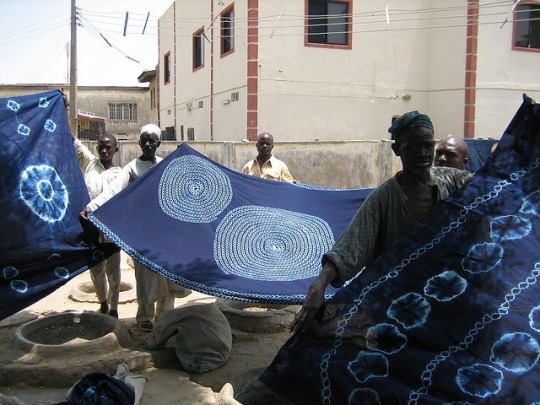
A lot of attention is paid to craft traditions in Western Europe and North America, such as handsewn Hermes leather goods and bespoke Savile Row suits. But the uneven focus leads some to believe that things made outside of these places are low quality.
This is not true. 🧵
THERE ARE CURRENTLY 14 PUBLIC COMPANIES IN THE WORLD WORTH MORE THAN $1 TRILLION
🥇 Nvidia $NVDA: $5.2T
🥈 Google $GOOGL: $4.7T
🥉 Apple $AAPL: $4.5T
4. Microsoft $MSFT: $3.1T
5. Amazon $AMZN: $2.9T
6. Taiwan Semiconductor $TSM: $2.1T
7. Broadcom $AVGO: $2T
8. Saudi Aramco: $1.8T
9. Tesla $TSLA: $1.6T
10. Meta Platforms $META: $1.6T
11. Samsung: $1.3T
12. Berkshire Hathaway $BRK.B: $1T
13. Micron $MU: $1T
14. SK Hynix: $1T
10 are from the United States 🇺🇸
2 are from South Korea 🇰🇷
1 is from Saudi Arabia 🇸🇦
1 is from Taiwan 🇹🇼
Caribbean people are such natural poets. Reading a book set in Jamaica and the barber name his shop 'Addis Ababa Shop'
I'm so tickled by how clever that is 🤣
“In practice, however, technology is never neutral, because it takes on the characteristics of those who devise it, finance it, regulate it and use it.”
THANK YOU POPE LEO FOR SAYING THIS.
Time for the “technology is a tool with no inherent moral position” idea to die!
"Don't be deterred by their threats to rig elections. This time, our votes must count. If it doesn't count, those who refuse count it, we will count them."
- Peter Obi on 2027 elections.