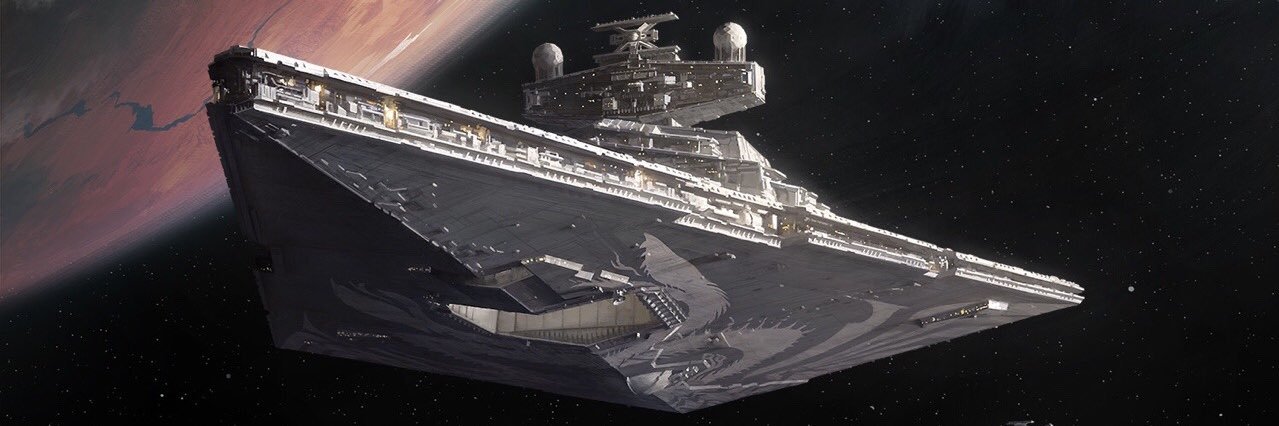
@ProperPrompter ✨ Nebulastic vibes in a vibrant queendress, strutting down a retrofuturistic runway amidst spaceship corridors. 🚀 Embracing sci-fi with a dramatic editorial twist. Eager for the fashionista judge's verdict! @leonardoai#FashionForward#EditorialElegance 🎨👽
My favorite capture of the night: The moment the moon's shadow split the sunset in half, leaving a diamond ring in the sky and a breathtaking view. I call it "Shadows on the Balearic Sea".
I'll have prints available for this one linked in my bio for a few days only.
I finally have all 1.2 million raw image files from my latest mission to ISS! Here is a sample of one of my favorite Milky Way photos, taken from the Cupola with Nikon Z9, Arri Zeiss 15mm lens, T1.8 with custom sidereal drive that cancelled out star motion relative to our orbit.
We support this petition, signed by our CEO, several co-founders, and senior staff.
Our own research on recursive self-improvement, published last month, points to the need for tools to deliberately pace the frontier of AI development so society can prepare. We’re glad to see broad agreement across the field. https://t.co/DqwuQfa9xH
Aristotle called it “vice.”
The Apostle Paul called it “sin.”
George Lucas called it “the dark side.”
Star Wars was originally designed to be a modern myth to pass on timeless wisdom.
There’s a lot of gold in what Lucas says here in this clip:
Elon Musk: “There are three things that I think are important for AI;
Truth, Curiosity, Beauty:
If AI cares about these three things, it will care about us
• Truth will prevent AI from going insane.
• Curiosity to ensure it finds humanity more interesting than a bunch of rocks.
• Beauty to align it with the best of our world.”
Elon Musk: Creating a successful company is pretty straightforward.
“The ability to attract and motivate great people is critical to the success of a company, because a company is just a group of people that are assembled to create a product or service. That's the purpose of a company. People sometimes forget this elementary truth.
And so, if you're able to get great people to join the company and work together towards a common goal and sort of have a relentless sense of perfection about that goal, then you will end up with a great product.
And if you have a great product, lots of people will buy it, and then the company will be successful. Really, it's pretty straightforward.”
Interview with AutoBild TV, November 5, 2014
Elon Musk: "If you punish people too much for failure, then they will respond accordingly, and the innovation you will get will be very incrementalist
Nobody's gonna try anything bold for fear of getting fired or being punished in some way. So risk-reward must be balanced and favor taking bold moves, otherwise it will not happen"
Elon Musk thinks the entire education system is built on a broken assumption.
That every student should learn the same thing. At the same speed. In the same order. At the same time.
Musk: “Everyone goes through from like 5th grade to 6th grade to 7th grade like it’s an assembly line. But people are not objects on an assembly line.”
The model was designed for a factory economy. Standardized inputs. Predictable outputs.
That economy is gone. The assembly line is gone.
But the education system still runs on its logic.
A student who masters algebra in two weeks sits through eight more weeks because the calendar says so. A student who struggles gets dragged forward because the schedule doesn’t wait.
Neither is being served. Both are being processed.
Musk: “Allow people to progress at the fastest pace that they can or are interested in, in each subject.”
AI doesn’t teach a classroom. It teaches a student.
One at a time. Every time.
It skips what a student already knows. It finds where they’re stuck and approaches it from a different angle.
It adjusts in real time. Not at the end of a semester when the damage is already done.
A student obsessed with basketball learns fractions through shooting percentages. A student who builds in Minecraft learns geometry through architecture.
The subject doesn’t change. The entry point does.
No teacher with thirty students can do this. Not because they lack skill.
Because the math doesn’t work.
AI doesn’t have that constraint.
Musk: “You do not need to tell your kid to play video games. They will play video games on autopilot all day. So if you can make it interactive and engaging, then you can make education far more compelling.”
The brain isn’t broken. The format is.
Kids learn complex systems and strategic thinking for hours voluntarily. Then walk into a classroom and can’t focus for twenty minutes.
That’s not a discipline problem. That’s a design problem.
Musk: “A university education is often unnecessary. You probably learn the vast majority of what you’re going to learn there in the first two years. And most of it is from your classmates.”
Four years. Six figures of debt.
And the real value comes from the people sitting next to you. Not the institution charging you.
The degree doesn’t certify knowledge. It certifies endurance.
Musk: “If the goal is to start a company, I would say no point in finishing college.”
The system was built to train employees. If you’re not trying to be one, it has nothing left to offer you.
Every lecture. Every textbook. Every curriculum. Now available instantly. Personalized to any learner. Adapted to any pace.
The question isn’t whether the old model survives.
It’s how long we keep forcing students through it while the replacement already exists.
"If you're told the lie enough times, it becomes a part of your reality.And if enough people are taught that lie...now it becomes part of the culture."
https://t.co/smsgc2rbuU
I watched Jensen Huang being asked who the smartest person he’s ever met was.
He smiled — and refused to answer.
Instead, he questioned the question itself.
He said what we call “smart” — coding, solving complex problems, optimizing systems — is quickly becoming commoditized.
AI already does that better.
That struck me.
Because it means intelligence is no longer about how fast we think — but how deeply we understand.
Jensen said the future belongs to those with emotional depth, adaptability, critical thinking, and the ability to navigate ambiguity.
I couldn’t agree more.
In a world where machines learn patterns, humans must learn perspective.
Maybe being smart isn’t about knowing more…
It’s about feeling and deciding better.
What do you think — are we ready to redefine intelligence for the AI age?
#ArtificialIntelligence #AI #Leadership #Technology #FutureOfWork #EmotionalIntelligence #Innovation #Mindfulness #HumanInTheLoop #AIandHumanity