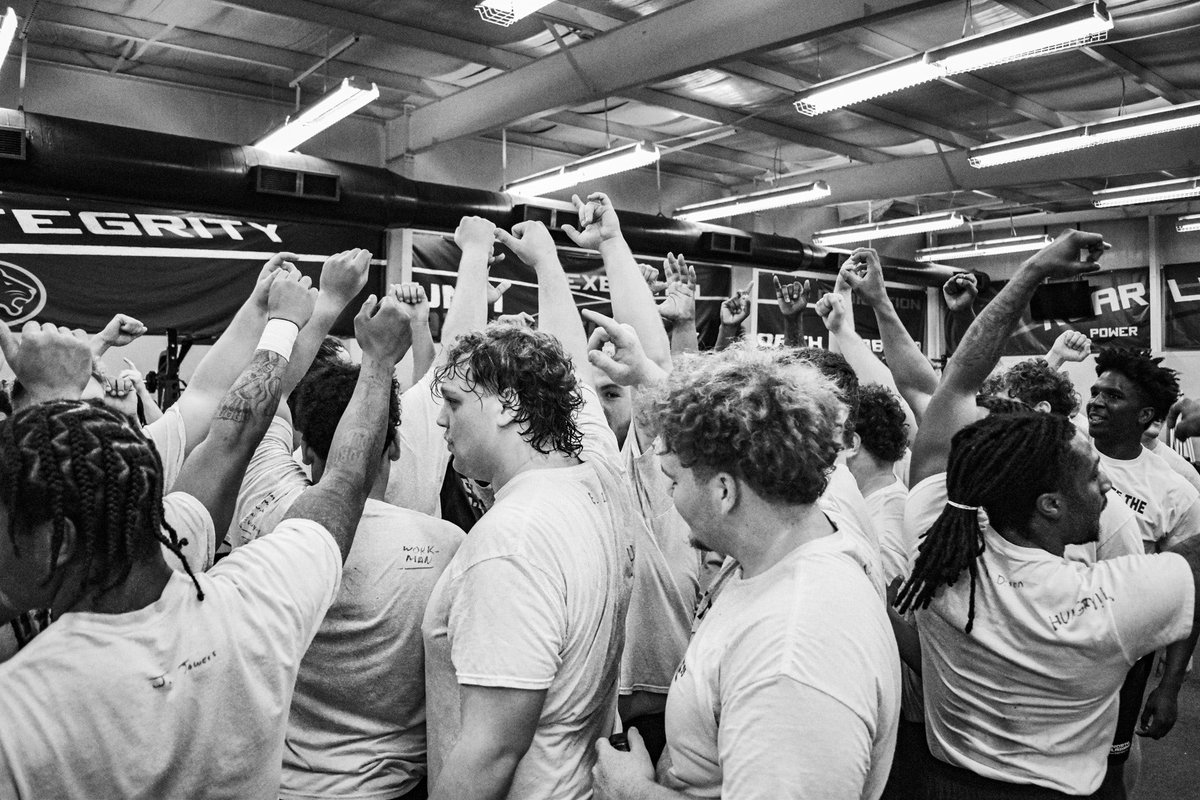
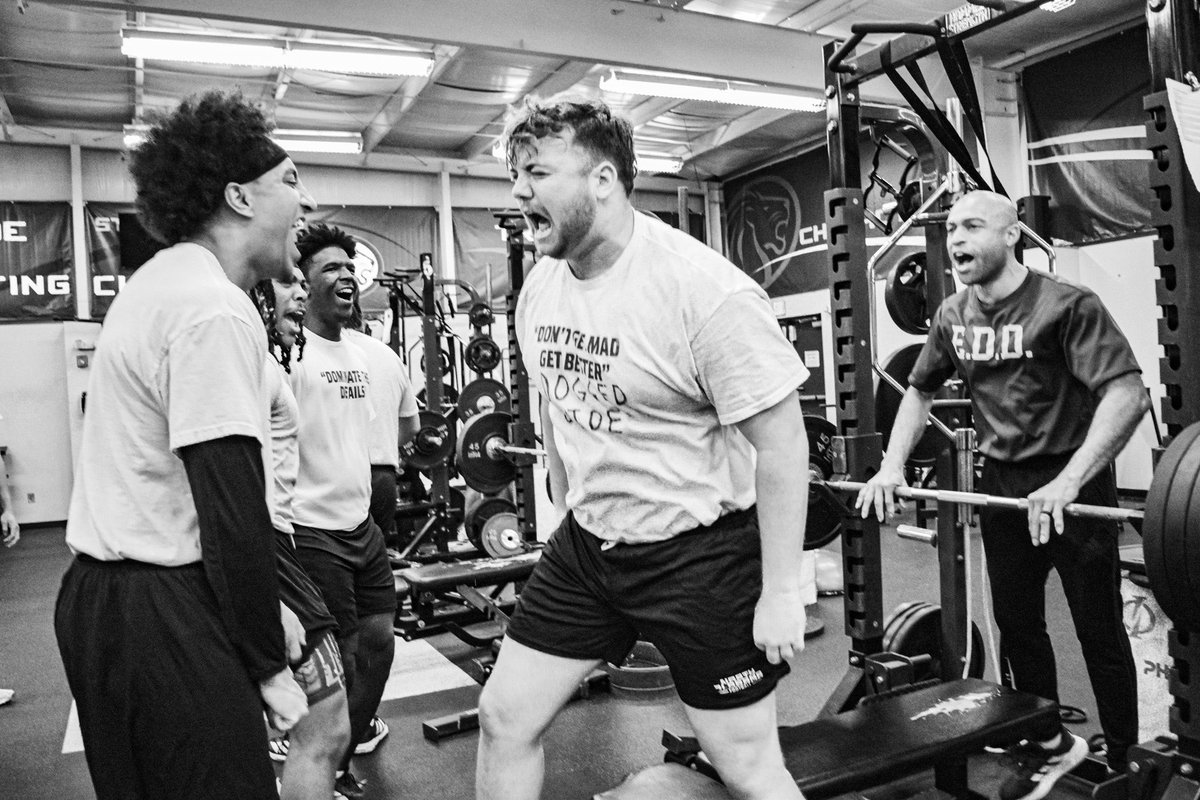
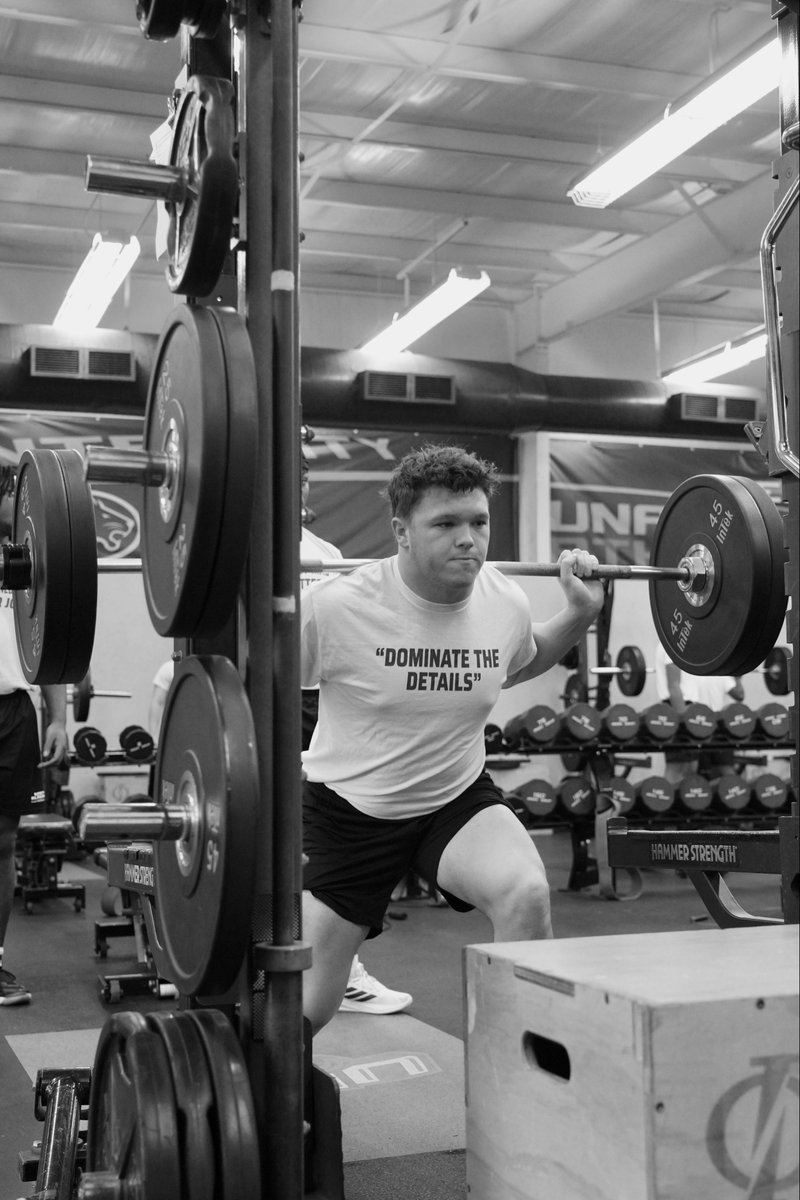
“Am I going to run face first and smack him in his head… to win this game”
Ian Danney, owner, CEO, & founder of Performance Enhancement Professionals has trained elite athletes like James Harrison, Sydney McCloughin, & Mike Tyson to name a few. All of them have the “grit” that makes champions… but can you train grit?
Ian Danney believes you can. You have to learn the boundaries & push them. You can’t treat an athlete like a delicate flower then expect them to show toughness in high pressure moments.
Full video on my YouTube page.
https://t.co/GdOcI6yx00
#Grit #ChroniclesOfaFatMan #PerformanceEnhancementProfessionals #ChroniclesOfaFatman
Division 1 football players training in a compensatory acceleration style (CAT) upper body strength regimen were compared to a traditional regimen in their off-season. The CAT group was instructed to perform the positive rep as explosively as possible. The traditional group performed repetitions at a traditional tempo.
At the end of both off-season training programs, both power and strength were assessed. Power was tested with a seated medicine ball throw and a force platform plyometric push-up test. Strength was assessed by a one rep max in the bench press.
Both groups increased strength and power. The group that trained in a Compensatory Acceleration Training (CAT) style improved their bench press by nearly double the amount of the traditional group. Average power, as expected, increased significantly more in the group that trained explosively.
Jones, K. K., Hunter, G. G., Fleisig, G. G., Escamilla, R. R., & Lemak, L. L. (1999). The effects of compensatory acceleration on upper-body strength and power in collegiate football players. Journal of Strength & Conditioning Research (Allen Press Publishing Services Inc.), 13(2), 99-105.
Practical Application
Fred Hatfield was ahead of his time advocating Compensatory Acceleration Training. It is simply superior! Training adaptations are not just a result of weight on the bar. Adaptations from training are a byproduct of tension and duration. You respond to how much force produced, how fast the force was produced, how long you produced it, and how many times you produced it. Force=mass x acceleration. More tension is result of greater bar speed. Maximal strength training and power adaptations can result from lifting weights with maximal force; one more reason to compensatorily accelerate weights.
I first heard this 30 years ago at age 17, when my trainer Jay Schroeder DRILLED it into my soul. I still remember the day we met. He told me, “I don’t want you to squat 450 pounds in 3 seconds… I want you to squat 350 pounds in ½ second. THAT’S power.”
To train with him, he forced me to write a daily training log that timed the concentric portion of EVERY rep, EVERY set, EVERY exercise with a stopwatch. I did this for 6 straight months before he allowed me to train at his gym.
It took over an hour daily to write the log, but what I learned about my body and performance was invaluable. Training with this intent changes everything: to move max weights at high speed, EVERYTHING matters. Technique and position must be flawless, no power leaks. You learn to eccentrically LOAD, not just drop with gravity and momentum. My body awareness skyrocketed.
Speed is king. Details and intention matter. I stopped caring about increasing my max and started caring about moving my max FASTER. It’s the primary reason I transformed myself from a walk-on who ran 4.8 to a first-round pick who ran 4.3.
In-season speed gains 🏈✅
Speed doesn’t pause when the season starts, especially at the highest level
Shoutout to Zac Woodfin, @Coach_J_Shaw, and the rest of the Titans performance staff for finding ways to build speed inside real constraints of an NFL-season
It’s been a pleasure collaborating with coaches who make development happen, even when it’s hardest. Here's to the next one 👊
Photo and article credit: @PaulKuharskyNFL