Everyone is talking about the oil. Almost nobody is talking about the machines.
When Iranian missiles hit Ras Laffan on March 18 and 19, they did not just knock out LNG production. They struck the most concentrated node of cryogenic industrial infrastructure on earth. And the reason QatarEnergy’s CEO told Reuters that repairs will take three to five years is not because the buildings are hard to rebuild. It is because the machines inside them are nearly impossible to replace.
The core technology in every LNG train and helium extraction unit at Ras Laffan is the brazed aluminium plate-fin heat exchanger, known in the industry as a BAHX. These are not off-the-shelf components. They are custom-engineered cryogenic cores weighing up to 470 tonnes, standing 60 metres tall inside insulated cold boxes, manufactured by exactly five companies on earth: Chart Industries in the United States, Fives Cryo in France, Kobe Steel in Japan, Linde in Germany, and Sumitomo in Japan. That is the entire global supply per ALPEMA, the manufacturers’ own association.
Current lead time for a full mega-scale air separation unit built around these exchangers: three to four years from contract to commissioning. Lead time for the BAHX cores alone: 12 to 18 months with order books already full before the war started.
Here is why field repair is so difficult.
Aluminium has no fatigue endurance limit. Every thermal cycle accumulates irreversible damage. The brazed joints crack under thermal stress, and ALPEMA’s Integrity Operating Windows cap temperature changes at below 1 degree Celsius per minute during normal cycling and below 5 degrees per minute even during startup events.
When a joint cracks, the only field repair is layer blocking: welding shut the distributor openings of the damaged layer while leaving adjacent layers open. Chart Industries, the primary manufacturer, recommends a maximum of two blocks before the entire core must be replaced. Each block reduces heat transfer efficiency. Each block increases stress on remaining layers, accelerating the fatigue cycle.
Shell confirmed on March 20 that Pearl GTL Train 2 will take approximately one year to repair. The LNG trains S4 and S6, with 12.8 million tonnes per annum combined capacity, will take three to five years per QatarEnergy. The difference in timelines reflects damage extent, not repair difficulty. Both face the same physics.
And both face the same logistics problem. Every replacement module, every specialist welder with an ASME R-stamp authorization, every 470-tonne cold box shipment must transit the Strait of Hormuz. The same strait where 90 percent of the world’s ocean-going tonnage has lost war risk insurance coverage. The same strait where the IRGC operates a selective vetting corridor with at least two confirmed yuan-settled payments per Lloyd’s List. The same strait where premiums have surged from 0.125 percent to 7.5 percent of hull value.
The machines cannot be repaired without parts that cannot be shipped through a strait that cannot be insured.
This is the machine layer that connects the helium shortage to the semiconductor shortage to the AI compute shortage. Qatar produces one-third of the world’s helium as a byproduct of LNG processing through these exact machines. Helium spot prices have doubled. Samsung and SK Hynix hold six months of inventory. There is no substitute in cryogenic semiconductor applications per the USGS.
The market priced the oil shock. It has not priced the machine shock. The timeline is measured in years, not weeks.
https://t.co/32ixeQpN7N
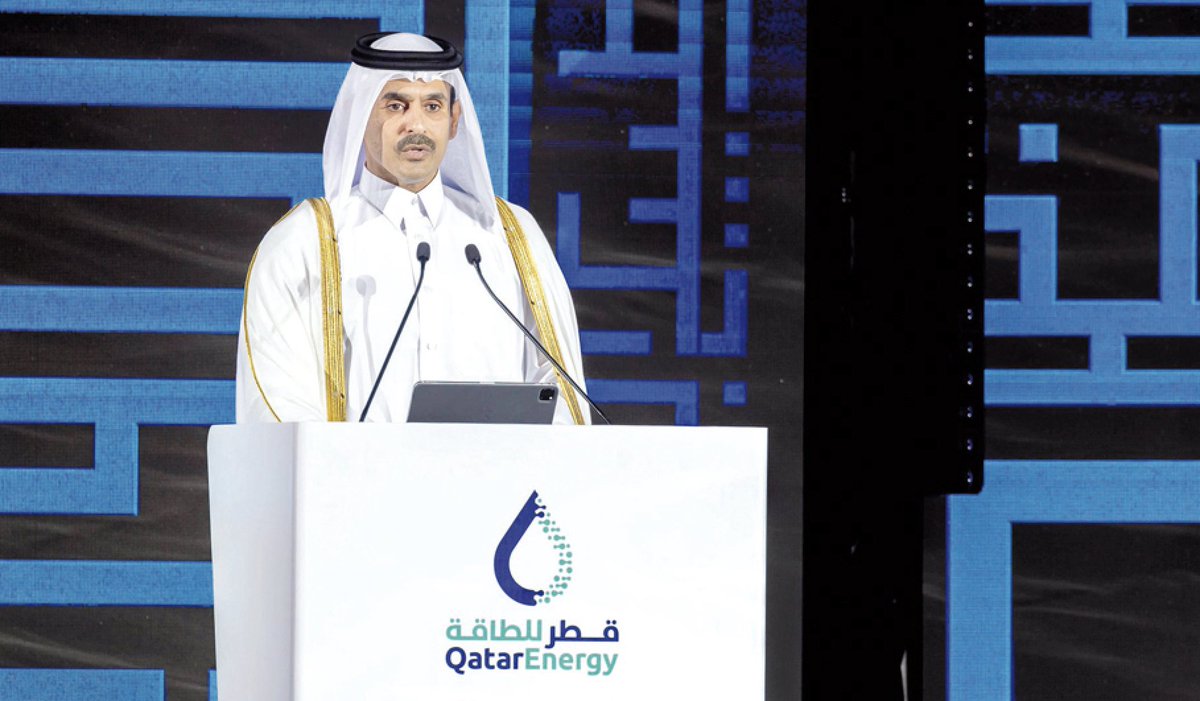
Providing an update on the damage from the missile attacks on Ras Laffan Industrial City
H.E. Minister Saad Sherida Al-Kaabi: The missile attacks reduced Qatar’s LNG export capacity by 17% and caused an estimated loss of $20 billion in annual revenue
- Extensive damage to our production facilities will take up to five years to repair and will compel us to declare long-term force majeure
QatarEnergy expects the damage to its Ras Laffan Industrial City caused by missile strikes, which occurred on Wednesday 18 March 2026, and in the early hours of Thursday 19 March 2026, to cost about $20 billion a year in lost revenue and to take up to five years to repair, impacting supply to markets in Europe and Asia.
Providing an update on the damage to the facilities at Ras Laffan Industrial City, His Excellency Mr. Saad Sherida Al-Kaabi, the Minister of State for Energy Affairs, the President and CEO of QatarEnergy, said “I am relieved to confirm that no one was injured by these unjustified and senseless attacks, which weren’t just an attack on the State of Qatar but attacks on global energy security and stability. This was an attack on all of us who stand for development and human progress that is sustained by a fair, reliable, and secure access to energy.”
The attacks damaged two liquefied natural gas (LNG) producing Trains 4 and 6 totaling 12.8 million tons per annum (MTPA) of production, representing approximately 17% of Qatar’s exports. Train 4 is a joint venture between QatarEnergy (66%) and ExxonMobil (34%), and Train 6 is a joint venture between QatarEnergy (70%) and ExxonMobil (30%).
His Excellency Minister Al-Kaabi said: “The damage sustained by the LNG facilities will take between three to five years to repair. The impact is on China, South Korea, Italy and Belgium. This means that we will be compelled to declare force majeure for up to five years on some long-term LNG contracts.”
The attacks also targeted the Pearl GTL (Gas-to-Liquids) facility, a production sharing agreement operated by Shell, that converts natural gas into high-quality cleaner burning drop-in fuels and produces base oils used to make premium engine oils and lubricants, and paraffins and waxes.
“The damage caused to one of the two trains at Pearl GTL is being assessed and is expected to be offline for a minimum of one year” His Excellency Minister Al-Kaabi added.
It should be noted that there will be a loss of associated product production due to this outage as follows:
· Condensates: 18.6 million barrels which is around 24% of Qatar’s exports
· LPG: 1.281 MT which is around 13% of Qatar’s exports
· Naphtha: 0.594 MT which is around 6% of Qatar’s exports
· Sulfur: 0.18 MT which is around 6% of Qatar’s exports
· Helium: 309.54 MCFA which is around 14% of Qatar’s exports
His Excellency the Minister of State for Energy Affairs, the President and CEO of QatarEnergy paid tribute to the Qatari military and security forces and to the energy sector emergency response teams whose courage and extraordinary professionalism ensured the situation was contained quickly and safely.
#Qatar
🚨BREAKING: Qatar just declared force majeure on LNG contracts to Italy, Belgium, South Korea, and China.
For up to 5 years.
Here's what the CEO just told
In an exclusive interview with Reuters, Qatar's Energy Minister and CEO of QatarEnergy just confirmed the damage from Iran's attack on Ras Laffan.
It's worse than anyone thought.
→ 2 out of 14 LNG trains damaged
→ 1 of 2 gas-to-liquids (GTL) facilities damaged
→ 12.8 million tonnes per year of LNG offline for 3-5 years
→ 17% of Qatar's total LNG export capacity gone
→ $20 billion annual revenue loss
→ $26 billion in damaged facilities (the CEO said they "should not be attacked")
QatarEnergy may declare force majeure on long term LNG supply contracts to:
→ Italy
→ Belgium
→ South Korea
→ China
For up to 5 years.
Additional exports declining:
→ Condensates: Down 24%
→ LPG: Down 13%
→ Naphtha: Down 6%
→ Sulphur: Down 6%
→ Helium: Down 14%
The damaged trains:
→ Train S4 and S6: 30% owned by ExxonMobil, rest by QatarEnergy
Production cannot restart until hostilities cease.
What this means?
12.8 million tonnes per year = 17% of Qatar's LNG capacity.
17% of its capacity just disappeared for 3-5 years.
Italy, Belgium, South Korea, China:
These countries had long-term contracts with Qatar.
Force majeure means those contracts are suspended.
They now have to compete in spot markets for replacement cargoes.
Against each other.
And against every other buyer scrambling for LNG.
$20 billion per year in lost revenue for Qatar.
$26 billion in facilities damaged.
The only country with capacity to absorb Qatari volumes at scale is the United States.
I wrote a full breakdown on how this shift benefits US LNG producers and which stocks are positioned to win from Qatar's structural supply loss👇
https://t.co/MQFX2YsMvM
#Iran #Qatar #LNG
Qatar's energy minister Saad Sherida Al Kaabi to Reuters:
- 2 LNG trains, 1 GTL damaged
- LNG output to decline 12.8m t/y for 3-5 years
- other export declines: condensate 24%, LPG 13%, Helium 14%
Rebuild cost is $26b.
"never in my wildest dreams would have thought that Qatar would be - Qatar and the region - in such an attack, especially from a brotherly Muslim country in the month of Ramadan"
https://t.co/ItYCMOpmgf
🚨BREAKING NEWS
Qatar Gas CEO:
We can declare force majeure for up to 5 years on LNG sales to Italy, Belgium, Korea, and China.
We have lost 17% of our export capacity.
ExxonMobil has a 34% stake in the damaged facilities.
LNG exports will decrease by 24%. LPG, naphtha, sulfur, and helium exports have also been similarly affected.
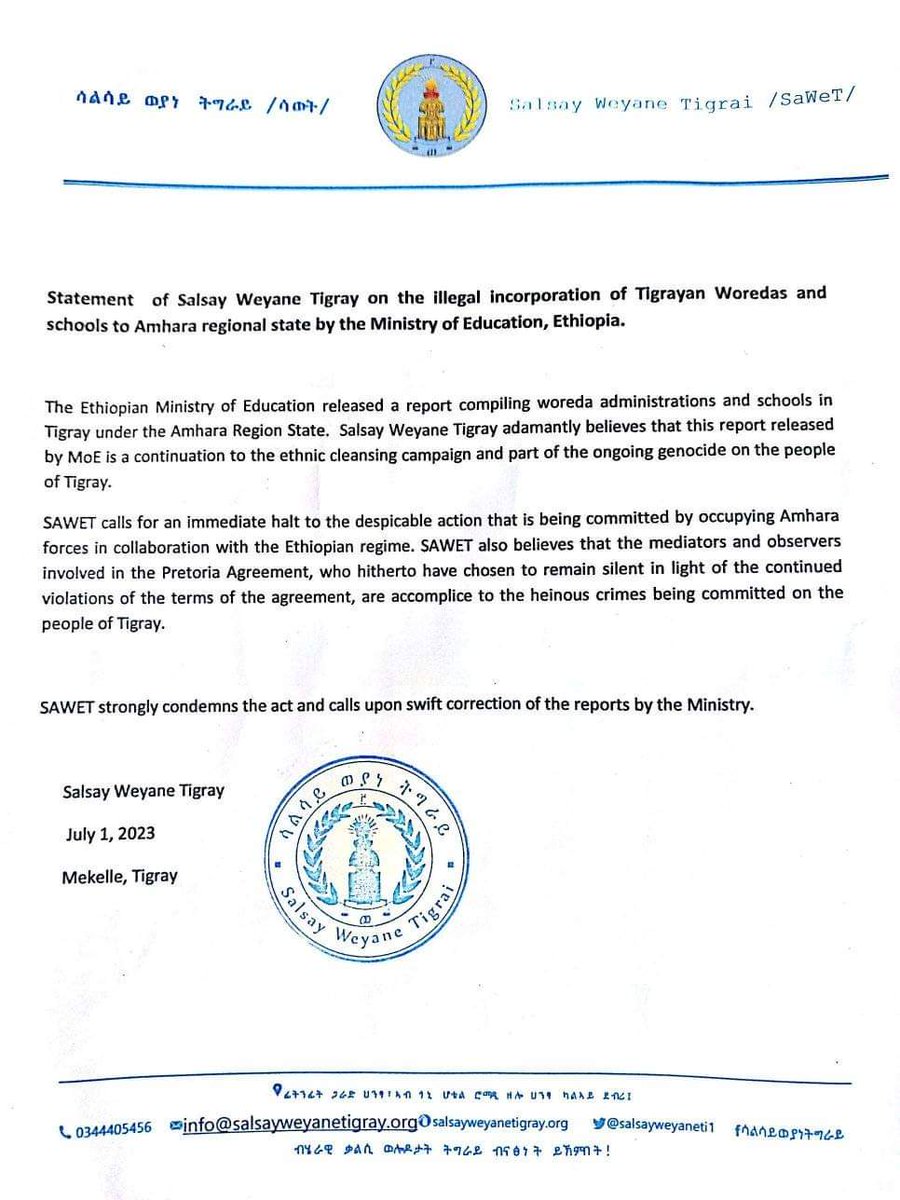
#Tigray IRA Warns Amhara Regional State Over Incorporation of Parts of Tigray in Curriculum Maps
—-
The Tigray Interim Regional Administration (IRA) issued a stern warning to authorities in the Amhara Regional State following the inclusion of Tigray's constitutional territories within Amhara's curriculum maps.
"Tigray IRA Cabinet has learned that the Amhara regional state has included parts of Tigray in its school curriculum maps," the statement reads.
Expressing concern, the IRA Cabinet labeled this move as a “deliberate attempt to disrupt the ongoing peace process.”
While asserting that the Tigray Interim Regional Administration cannot be held responsible for any potential consequences resulting from this action, the statement emphasized the Amhara regional state must shoulder full responsibility for any repercussions that may arise.
The federal government has also faced criticism for its "inaction in addressing similar issues in the past," indicating a level of complicity.
"It shows the federal government is part of the acts," the statement accuses.
It is to be recalled that the Tigray Interim Administration issued a statement in July 2023, stating that the "Ethiopia's Ministry of Health's report compiling districts of Tigrai under Amhara Regional State violates the constitution of the land and disturbs the ongoing peace process."
The statement called on the Ministry Office to rectify the error and apologize to the people of Tigray.
Amhara Regional forces have occupied entire Western Tigray, parts of Southern and Northwestern Tigray as they fought alongside Ethiopia’s government during the war on Tigray.
Despite the surrender of heavy weapons by the Tigrayan forces in January of last year, Amhara and Eritrean forces remain inside the region as of the present.
The Pretoria peace agreement and the subsequent Nairobi Executive Plan stipulate that all non-ENDF forces must withdraw from Tigray simultaneously with the disarmament of heavy weapons by the Tigrayan forces.
@AbelTsgab
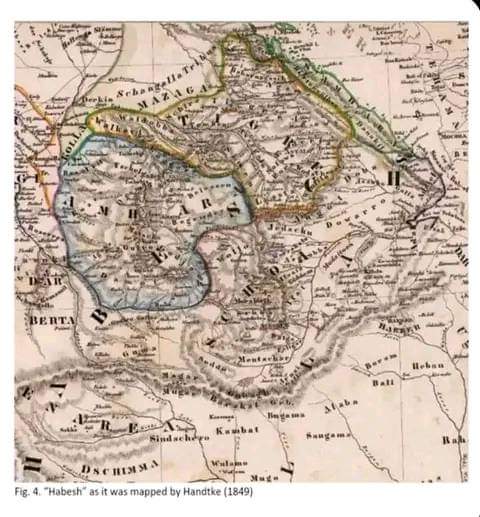
Again, According to this map, #Welkayt and Raya is #Tigray territory,
-----------------------
In #Ethiopia this map clearly indicates that Wolkayt, Kafta Humra, Tsegede and Raya are part of Tigray not only because of the people and the language but also historically they are part of Tigray,
According to a study of historical cartography in the Horn of Africa, from 18th to 20th centuries clearly shows that the present map of Tigray (wolkayt, waldiba, Raya, shire, Tsegede, Tselemti, Temben, Agame, Enderta, Axume, Adwa etc) and also the Eritrean Highlands (Baharengash), Lasta, Sokota, Limalimo, Metema, Kobo, Gobie and part of Afar were part of Tigray.
The study clearly indicates that Tigray had a much much larger territory than Amhara or the present-day Tigray.
There is an other Map printed by a German publishing firm called "German-printing" in 1849 (40 years before Italian colonization started) clearly shows not only that Western Tigray belongs to Tigray but also Bahri Negasi (high lands of Eritrea) belonged to Tigray, which is a confirmation that the people of Eritrea and Tigray are the same people separated by Italian colonization.
Tigray regional interim government president, @reda_getachew said that there are over 2 ml internally displaced Tigriyans 10 months after Pretoria Peace Agreement. The Ethiopian federal government should take immediate action on this matter. Civilians are dying.
US Backtracks on Ethiopia Atrocity Determination
“Not only does the decision ignore the reality that grave human rights violations are continuing throughout the country, but sends a disastrous signal that US atrocity determinations have few consequences” https://t.co/6r8EoxDvWx
the Amhara region. In light of continued flagrant violations of the Constitution & the Pretoria agreement by the Regional Authorities over the last several months, the latest report by the Federal Ministry of Education is yet another addition to an increasingly dangerous pattern.
An official report by the FDRE Ministry of Education https://t.co/LwKa1kSt5V makes it abundantly clear that the ministry has no intention to even pretend to pay lip service to the Pretoria Agreement-much less to the FDRE Constitution-by including legitimate Tigray territories in
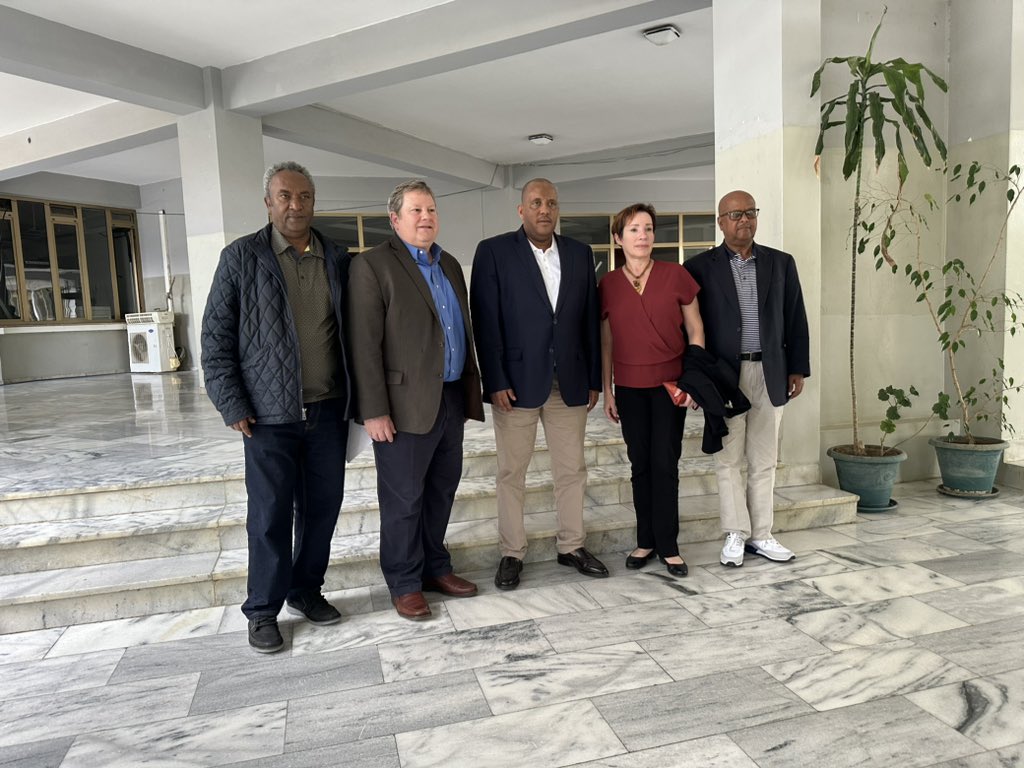
It was a pleasure to welcome to my office and hold productive discussions with @MikeHammerUSA and Ambassador Tracy Ann Jacobson of @USEmbassyAddis this afternoon. We did raise and reached understanding on a number of issues including the progress on the #thePretoria accords,
More than three weeks after the warring parties in Tigray signed a cease-fire, allies of Ethiopia’s federal military are looting property and carrying out mass detentions in the region, according to eyewitnesses and aid workers. https://t.co/WX2Ipd6IJz
Ethiopian and Eritrean soldiers are turning Tigray into a wasteland. Horrific videos of triumphant soldiers burning homes, looting businesses emerging.
I suppose this is what Addis truly means when it says it will restore basic services to areas it has seized in Tigray.