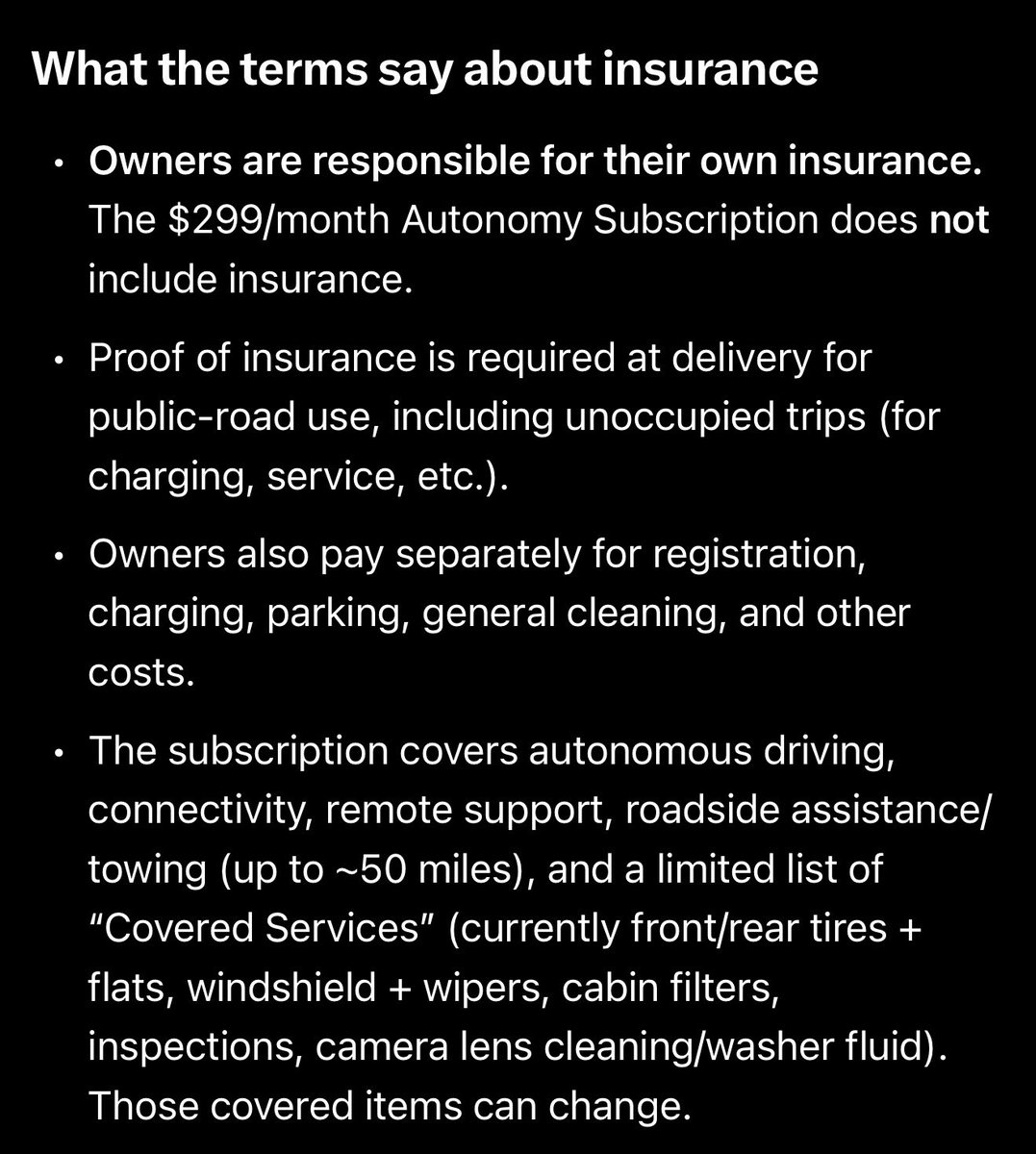
For personal use of Cybercab, Tesla can offer their existing insurance (same offered to all other Tesla owners). It will be hard to find a personal auto insurer that will touch Cybercabs.
For commercial use of Cybercabs, I don't think Tesla plans to cover them per their guidance.
So there's this void where you can own a Cybercab for personal use where insurance is TBD but not yet for commercial use where insurance is available.
I bet all Cybercabs will running under commercial entities (aka LLCs). Even if you own one, just park it under an LLC. Not need to own it personally.
How do you price insurance for a robot?
New episode with Sergey Litvinenko (@tilegres_), co-founder and CEO of @koop_ai.
What stuck with me is how granular this gets. Koop can rate each robot on its own and charge by the hours it works, so physical work starts to look like API usage: you pay for what you use.
As he put it: "We're going to list every single humanoid like it's a fleet of cars, and you'll be able to track the rate for each, even if it's across different customer sites."
0:35 Sergey Litvinenko and Koop
6:50 What underwriting decides
10:27 How Koop prices a robot
13:21 Hours, not miles, for robots
22:53 Ten people, nearly instant quotes
25:20 How Koop uses AI and Claude Code
31:50 Safety certifications and EU regulation
46:04 Tesla Cybercab, Waymo, and fleets
49:20 Owning a robotaxi vs. owning a home
1:08:32 Where humanoids will work first
1:14:40 Cyber risk and hacked robots
1:28:39 Robots as an asset class
Your robot passed the demo. Then procurement asks for proof of insurance.
We broke down what robot insurance covers, how it's priced, and how telemetry, operating environment and safety controls affect the cost.
Check it out here ➡️ https://t.co/vnHzIFiUhV
@Jason This is human perception: omg a robot made a mistake... meanwhile human drivers cause a million deaths worldwide. Changing perception will take time and will require resources (safety, regulations, insurance, media)
My conversation with @audrow about robotics, robot insurance, and AV promiseland.
We also discussed a recently published IN BOTS WE TRUST 2026 report, that summarized Koop's (@koop_ai) last five years of underwriting Physical AI.
A few insights 🧵:
How do you price insurance for a robot?
New episode with Sergey Litvinenko (@tilegres_), co-founder and CEO of @koop_ai.
What stuck with me is how granular this gets. Koop can rate each robot on its own and charge by the hours it works, so physical work starts to look like API usage: you pay for what you use.
As he put it: "We're going to list every single humanoid like it's a fleet of cars, and you'll be able to track the rate for each, even if it's across different customer sites."
0:35 Sergey Litvinenko and Koop
6:50 What underwriting decides
10:27 How Koop prices a robot
13:21 Hours, not miles, for robots
22:53 Ten people, nearly instant quotes
25:20 How Koop uses AI and Claude Code
31:50 Safety certifications and EU regulation
46:04 Tesla Cybercab, Waymo, and fleets
49:20 Owning a robotaxi vs. owning a home
1:08:32 Where humanoids will work first
1:14:40 Cyber risk and hacked robots
1:28:39 Robots as an asset class