This was Toulouse, almost 700km from Paris, yet invaders smashed the place up.
They need to go back.
We didn't build a first world to have the third world tear it down.
Remove them.
Understand what these street shows are actually about. They have plenty of mosques to pray in. They are demonstrating their intention to infiltrate and take over our nation. They are so confident of our weakness, they rub our faces in it by doing this.
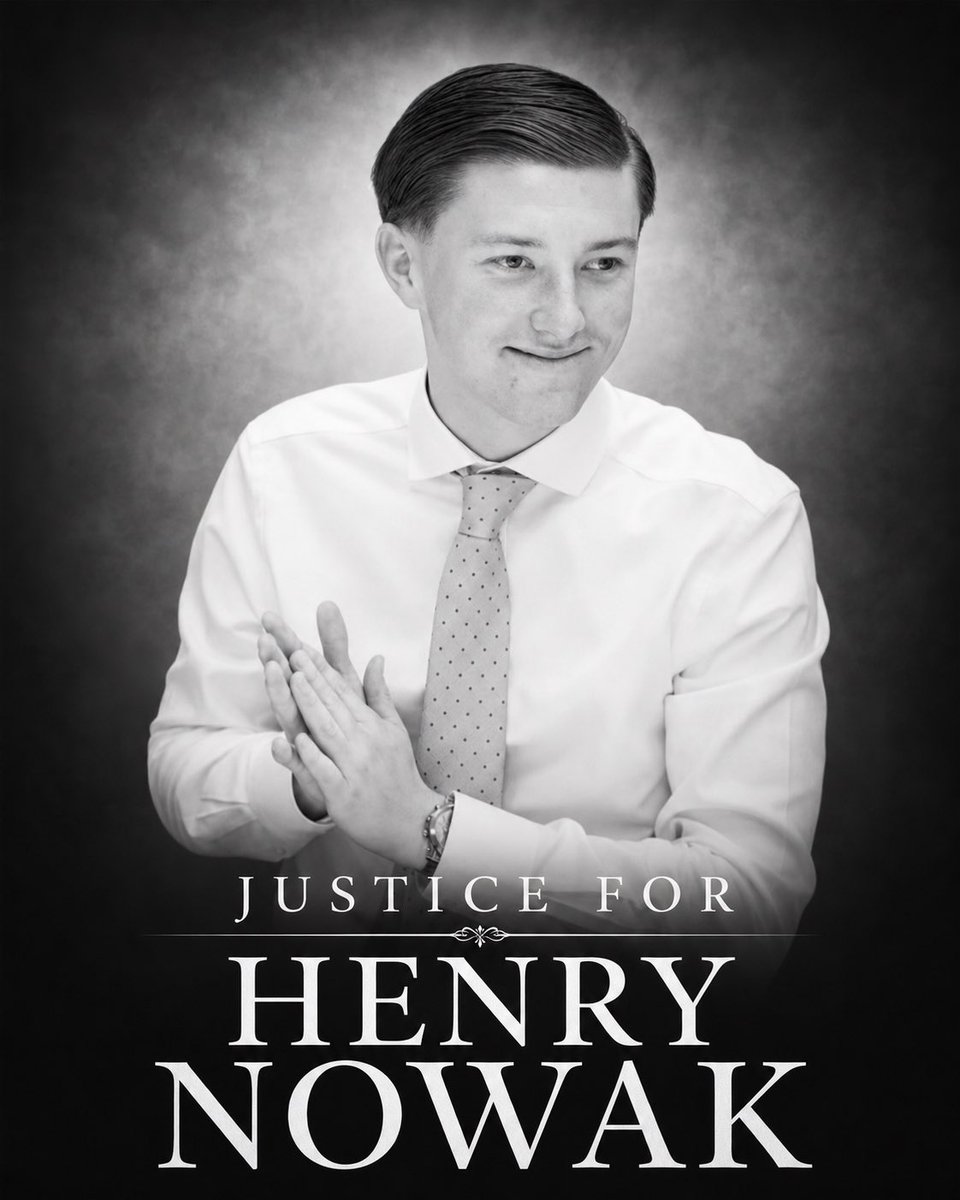
An 18-year-old kid gets stabbed in the street. He’s running for his life, begging for help, and instead of saving him, the police handcuff him while he bleeds out because the attacker claimed “racism.”
They let him choke on his own blood. No urgency. No humanity. Just cold, ideological policing.
Months later? Still no names. Still no suspensions. Still no accountability.
Meanwhile, the same UK police have arrested over 12,000 people for social media posts.
They move at lightning speed to jail citizens for tweets and online comments, yet they can’t even name or discipline the officers who allegedly let a stabbing victim die in handcuffs on the street.
This is the definition of two-tier policing: aggressive against ordinary people speaking online, but protective when it comes to their own failures and protecting the narrative.
The British people deserve real justice, not another cover-up.
Justice for Henry Nowak.
No screaming. No fires. No broken glass. No threats, or machetes, or chants of “Allahu Akbar.”
Just well-mannered, civilized Brits working to save their country from barbarism.
Je veux présenter mes excuses, au nom des Français, pour avoir enfanté la French Theory (qui a enfanté la pire des merdes idéologiques : le wokisme).
Nous avons donné au monde Descartes, Pascal, Tocqueville. Et puis, dans les ruines intellectuelles de l'après-68, nous avons donné Foucault, Derrida, Deleuze. Trois hommes brillants qui ont fabriqué, dans l'élégance de notre langue, l'arme idéologique qui paralyse aujourd'hui l'Occident.
Il faut comprendre ce qu'ils ont fait. Foucault a enseigné que la vérité n'existe pas, qu'il n'y a que des rapports de pouvoir déguisés en savoir. Que la science, la raison, la justice, l'institution médicale, l'école, la prison, la sexualité, tout n'est qu'une mise en scène de la domination. Derrida a enseigné que les textes n'ont pas de sens stable, que tout signifiant glisse, que toute lecture est une trahison, que l'auteur est mort et que le lecteur règne. Deleuze a enseigné qu'il fallait préférer le rhizome à l'arbre, le nomade au sédentaire, le désir à la loi, le devenir à l'être, la différence à l'identité.
Pris isolément, ce sont des thèses discutables. Combinées, exportées, vulgarisées, elles forment un système. Et ce système est un poison.
Car voici ce qui s'est passé. Ces textes, illisibles en France, ont traversé l'Atlantique. Les départements de Yale, de Berkeley, de Columbia les ont absorbés dans les années 80. Ils y ont trouvé un terreau qui n'existait pas chez nous : le puritanisme américain, sa culpabilité raciale, son obsession identitaire. La French Theory s'est mariée à ce substrat, et l'enfant de ce mariage s'appelle le wokisme.
Judith Butler lit Foucault et invente le genre performatif. Edward Said lit Foucault et invente le post-colonialisme académique. Kimberlé Crenshaw hérite du cadre et invente l'intersectionnalité. À chaque étape, la matrice est française : il n'y a pas de vérité, il n'y a que du pouvoir, donc toute hiérarchie est suspecte, toute institution est oppressive, toute norme est violence, toute identité est construite donc négociable, toute majorité est coupable.
Voilà comment trois philosophes parisiens, qui n'ont probablement jamais imaginé leurs conséquences pratiques, ont fourni le logiciel d'exploitation à une génération entière d'activistes, de bureaucrates universitaires, de DRH, de journalistes, de législateurs. Voilà comment on a obtenu une civilisation qui ne sait plus dire si une femme est une femme, si sa propre histoire mérite d'être défendue, si le mérite existe, si la vérité se distingue de l'opinion.
C'est de la merde pour une raison simple, et il faut la dire calmement. Une civilisation se tient debout sur trois piliers : la croyance qu'il existe une vérité accessible à la raison, la croyance qu'il existe un bien distinct du mal, la croyance qu'il existe un héritage à transmettre. La French Theory a entrepris de dynamiter les trois. Pas par méchanceté. Par jeu intellectuel, par fascination du soupçon, par haine de la bourgeoisie qui les avait nourris. Mais le résultat est là. Une génération entière a appris à déconstruire et n'a jamais appris à construire. Une génération entière sait soupçonner et ne sait plus admirer. Une génération entière voit le pouvoir partout et la beauté nulle part.
Je m'excuse parce que nous, Français, avons une responsabilité particulière. C'est notre langue, nos universités, nos éditeurs, notre prestige qui ont donné à ce nihilisme son emballage chic. Sans la légitimité de la Sorbonne et de Vincennes, ces idées n'auraient jamais traversé l'océan. Nous avons exporté le doute comme d'autres exportent des armes.
Ce qui se construit maintenant, en silicon valley, dans les labos d'IA, dans les startups, dans les ateliers, dans tous les lieux où des gens fabriquent encore des choses au lieu de les déconstruire, c'est la réponse. Une civilisation se reconstruit par les bâtisseurs, pas par les commentateurs. Par ceux qui croient que la vérité existe et qu'elle vaut qu'on s'y consacre. Par ceux qui assument une hiérarchie du beau, du vrai, du bon, et qui n'ont pas honte de la transmettre.
Alors pardon. Et au travail.
My seemingly healthy, strong father Daniel “Dad Timpf” Timpf died very unexpectedly on the evening of May 7 at just 69 years old.
It does not seem like enough to simply call him my father, because he was so much more than that. He was my rock, my hero and my best friend. He was loyal, funny, kind, selfless, hard-working, and so devoted to his children that it was impossible to be near him and not find yourself inspired. He was a writer, a painter, a sailor, and somehow knowledgeable on every subject from world history to literature to accounting. He was the most dependable person anyone has ever met. I always felt like, as long as I had his phone number, there was not a problem I could not solve. I needed him here with me; I am not okay, and I am far from the only person who feels this.
The birth of my son in February 2025, his first grandchild, was supposed to be a happy new beginning for our family. A family that had been already once devastated by an untimely loss: the loss of my mother Anne Marie to a rare disease in 2014 just a matter of weeks after her diagnosis.
The joy of my son’s birth was, of course, complicated by my also very unexpected breast cancer diagnosis just a matter of hours before going into labor with him. During this time, my dad did what he did best, which was to save the day. As soon as he heard about my diagnosis, he simply got into the car and started driving to New York -- making it through the tunnel just as my son was born…on the day that happened to be his own birthday, as well.
In the tumultuous time of a simultaneous new cancer diagnosis and new baby, my dad was the sole reason for our stability, rushing in to help care for our son, and returning to do so again for my double mastectomy, reconstructive surgery, and any time that we ever needed him. It was an awful, awful year… but I found so much joy and hope throughout it by watching the beauty of a very special relationship form between my son and my father. This horrible thing that was happening was creating such a very special bond between the two of them -- almost making the terrible thing worth it -- and I was so excited to see how that bond would grow.
The bond was of top priority for my father, who visited from Michigan often. I saw him last on the Monday before he died, and my son was so proud to help his grandfather push his suitcase down to the car as he left. The goodbyes were quick. Why wouldn’t they be? We would all see each other again at the beginning of June, when we would all head to Texas for my shows and to see my grandpa. We wanted to make sure that my son could spend as much time as he could with his great-grandfather. He is, after all, 93.
I was certainly not over the trauma of my cancer or having to amputate the breasts I so badly wanted to feed my son with, but the one thing I could always count on to get me through my worst moments was seeing my son’s and my father’s faces light up when they saw each other, be it during the visits or our routine morning and bedtime FaceTime calls.
That is, at least, until I had to hear over the phone from a doctor I had never met in an emergency room in the same town up north that I’d previously announced to my father that I was pregnant that my dad was dead; I would never see him again, and neither would my son. It would turn out that last year was not the hard one, after all. Rather, it was the one I would now do anything to relive. I would amputate my breasts every year just to be able to speak with him one more time, even for five minutes.
I am currently living an unimaginable horror. For many people, this is a tragic story. For me, it’s my life. I do not know how I will recover from it. I only know that I have to for the sake of what is left of my family.
The next time the Dems scream that the price of gas is Trump's fault, show them this video of Joe Biden's Energy Sec. Jennifer Granholm saying, “The president does not control the price of gasoline.”